Artwork
Que Diable Monsieur Ne Bougez donc pas...
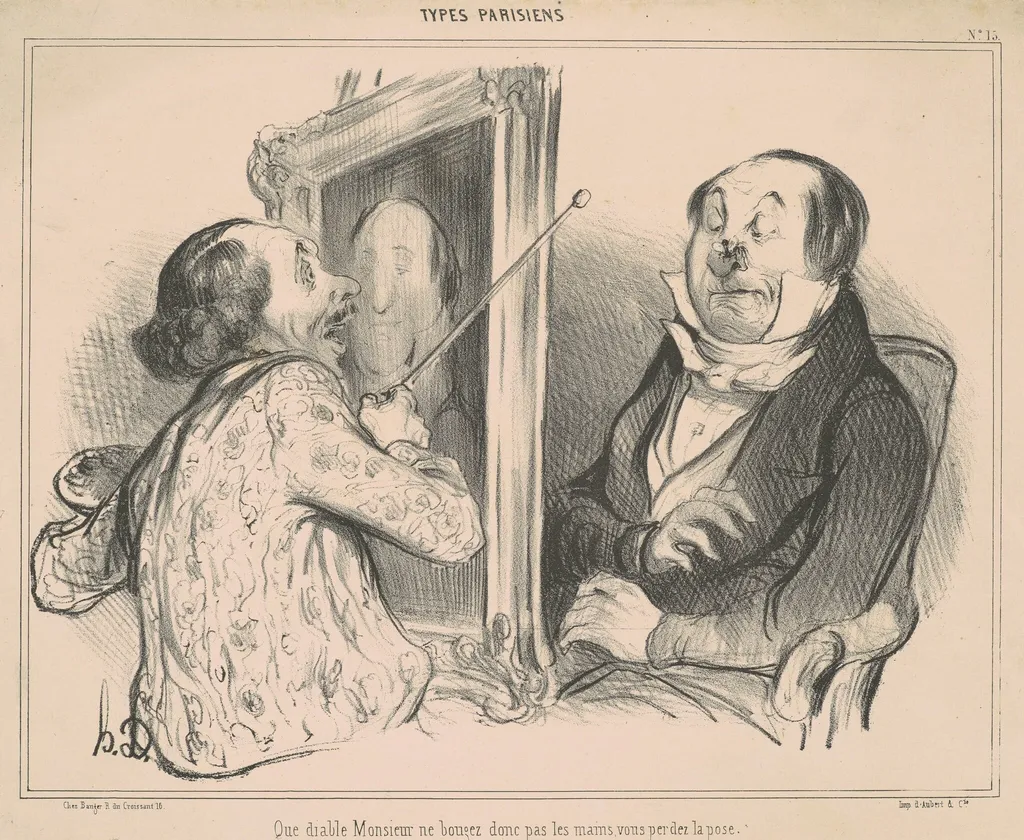
Que Diable Monsieur Ne Bougez donc pas... is an ink print by the Romanticist artist Honoré Daumier. It dates from 1838 and is held in the collection of the National Gallery of Art.
About this work
Overview
This lithograph by Honoré Daumier captures a quiet, unguarded moment between two men engaged in the act of viewing art. Rendered in soft tonal contrasts, the scene lacks theatricality, instead emphasizing the ordinary intimacy of artistic dialogue. The title, a French exclamation, suggests mild exasperation, hinting at the tension between observation and instruction.
Subject & Meaning
The focus on their posture and gaze, rather than the artwork itself, underscores the social ritual of interpretation and the quiet authority of critique.
Two men, one seated and gesturing with a stick toward a canvas, the other standing with arms crossed, are locked in silent exchange. Neither is an artist in the traditional sense; their roles suggest critic and observer, or perhaps mentor and pupil. The focus on their posture and gaze, rather than the artwork itself, underscores the social ritual of interpretation and the quiet authority of critique.
Technique & Style
Daumier employed lithography to achieve a spontaneous, sketch-like quality. Lines are loose yet deliberate, with ink washes creating depth without detail. The figures are simplified, their expressions conveyed through posture rather than facial features. This economy of form aligns with Daumier’s broader interest in capturing human behavior through minimal, expressive means.
History & Provenance
Created in the mid-19th century, this print likely originated as part of Daumier’s series for satirical journals, though it stands apart from overt political commentary. It was produced during a period when lithography allowed artists to reach broader audiences. Its survival in museum collections reflects its quiet resonance with observers of artistic practice beyond the academy.
Context
In 19th-century France, public discourse around art was expanding beyond elite circles. Daumier’s work often reflected this democratization, portraying everyday encounters with culture. This scene mirrors the growing presence of amateur critics and the informal spaces where art was discussed — salons, studios, and private collections — away from institutional authority.
Legacy
Daumier’s depiction of artistic exchange influenced later realist and modernist artists interested in the social dimensions of creativity. The lithograph’s restraint and psychological nuance set it apart from more dramatic portrayals of artists at work. It remains a subtle testament to the quiet, repeated rituals that sustain artistic culture beyond the canvas.
Artist & collection
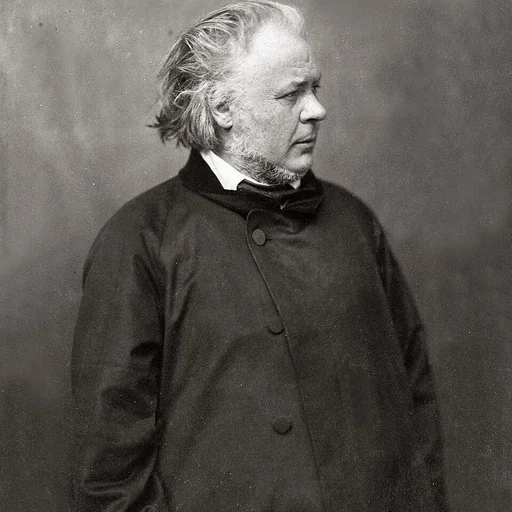
Artist
Honoré-Victorin Daumier was a French painter, sculptor, and printmaker, whose many works offer commentary on the social and political life in France, from the Revolution of 1830 to the fall of the Second French Empire in 1870.

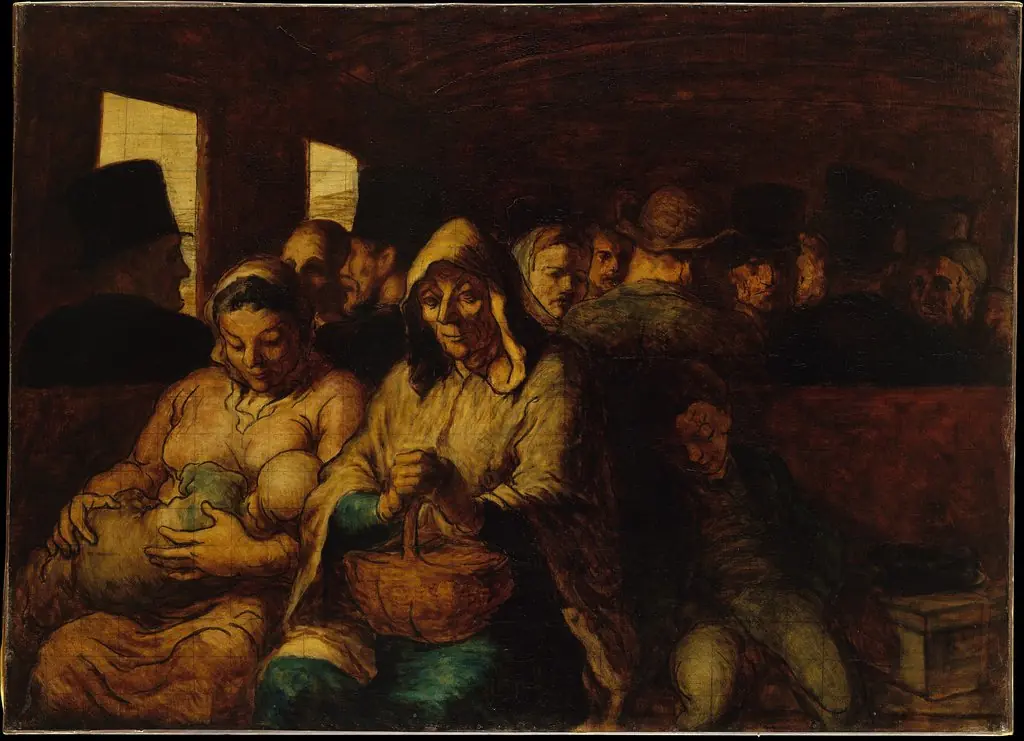
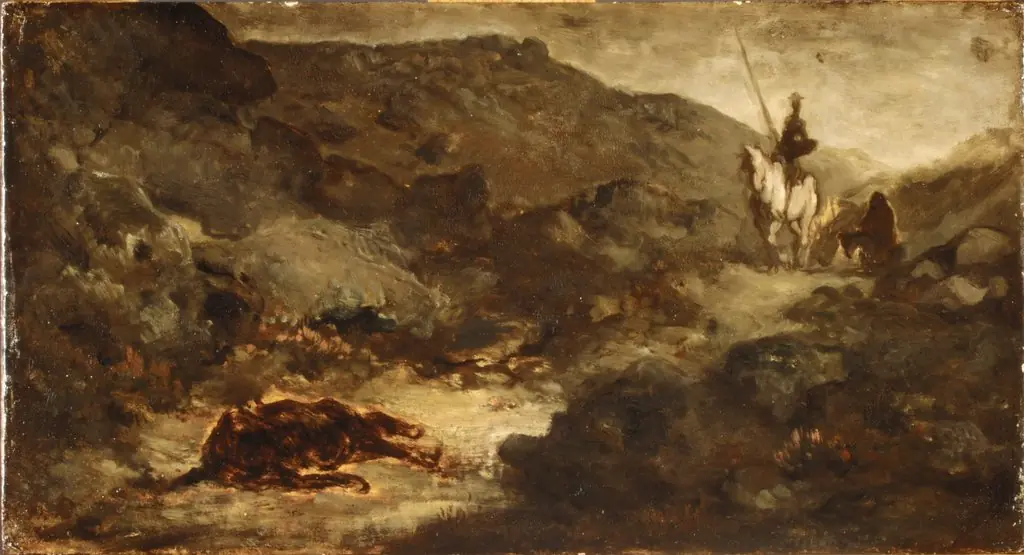

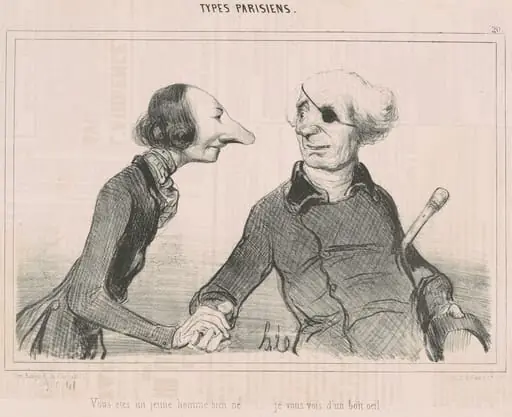 Vous êtes un jeune homme bien né!...
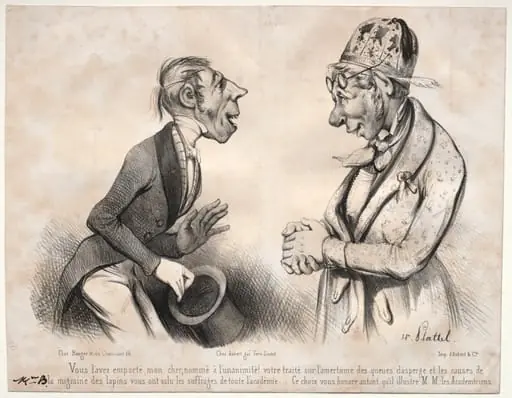 Vous l'avez emporté, mon cher, nommé à l'unanimite!
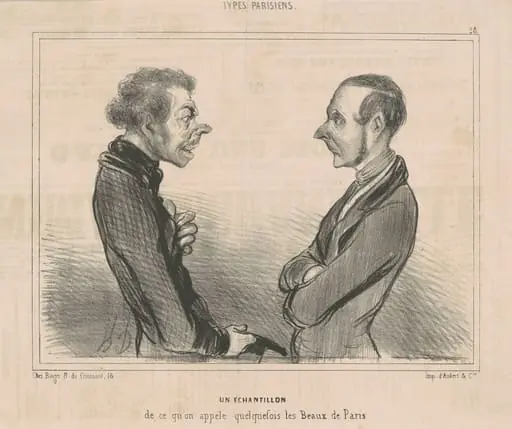 Un échantillon de ce qu'on appèll...les beaux de paris
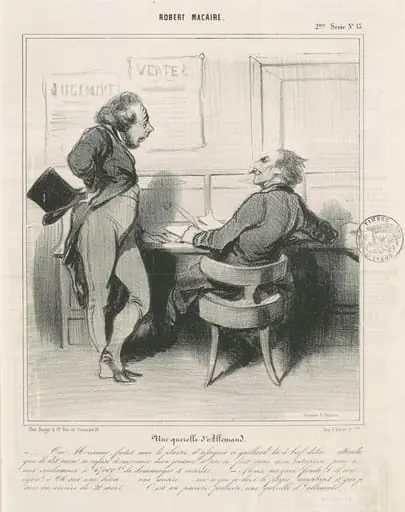 Une querelle d'allemand
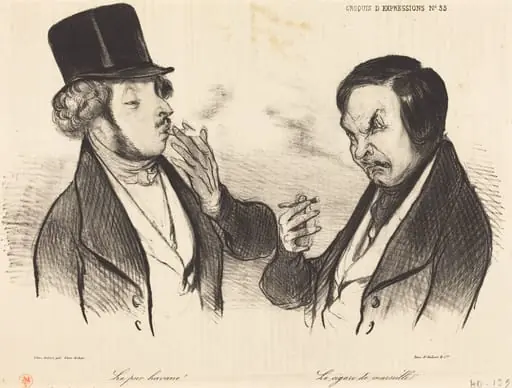 Le pur havane! Le cigare de marseille
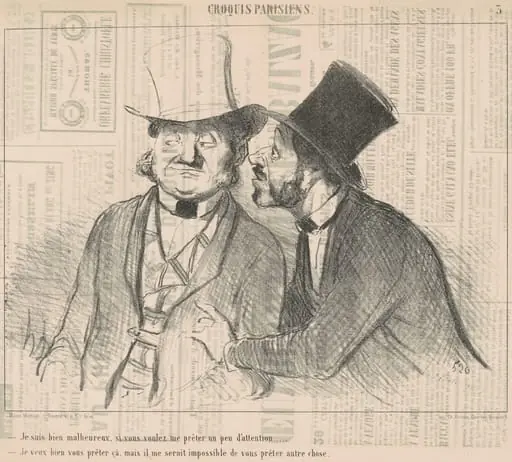 Je suis bien malheureux, si vous voulez ...
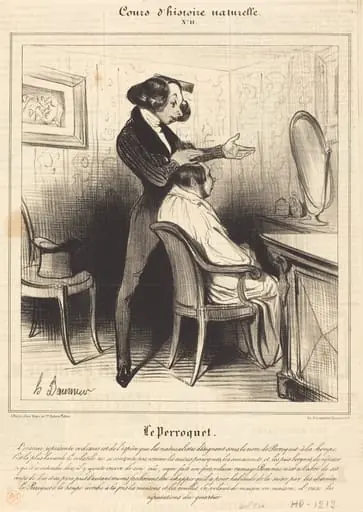 Le Perroquet
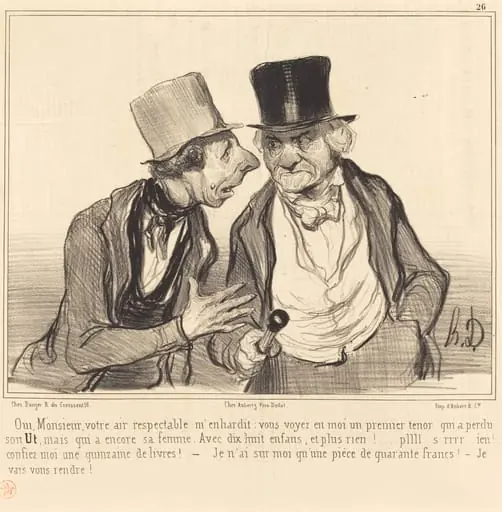 Oui, Monsieur, votre air respectable m'enhardit...
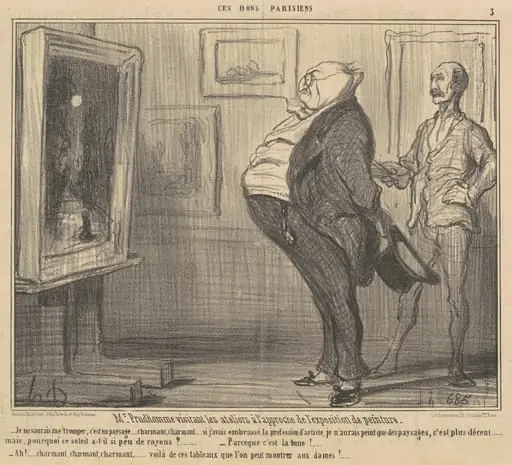 M. Prudhomme visitant les ateliers ...
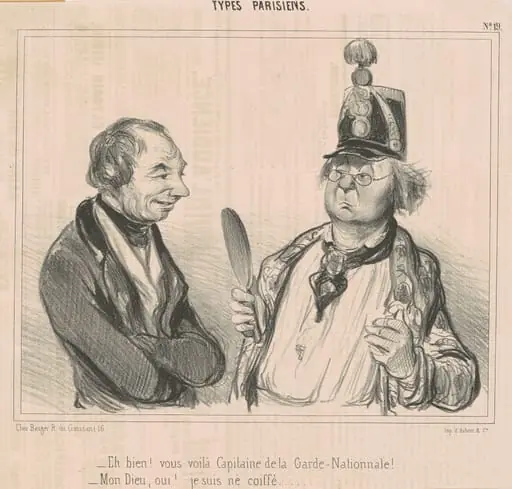 Eh bien! Vous voila capitaine de la garde nationale