Artwork
Quelle chance! J'ai tué un frquet!
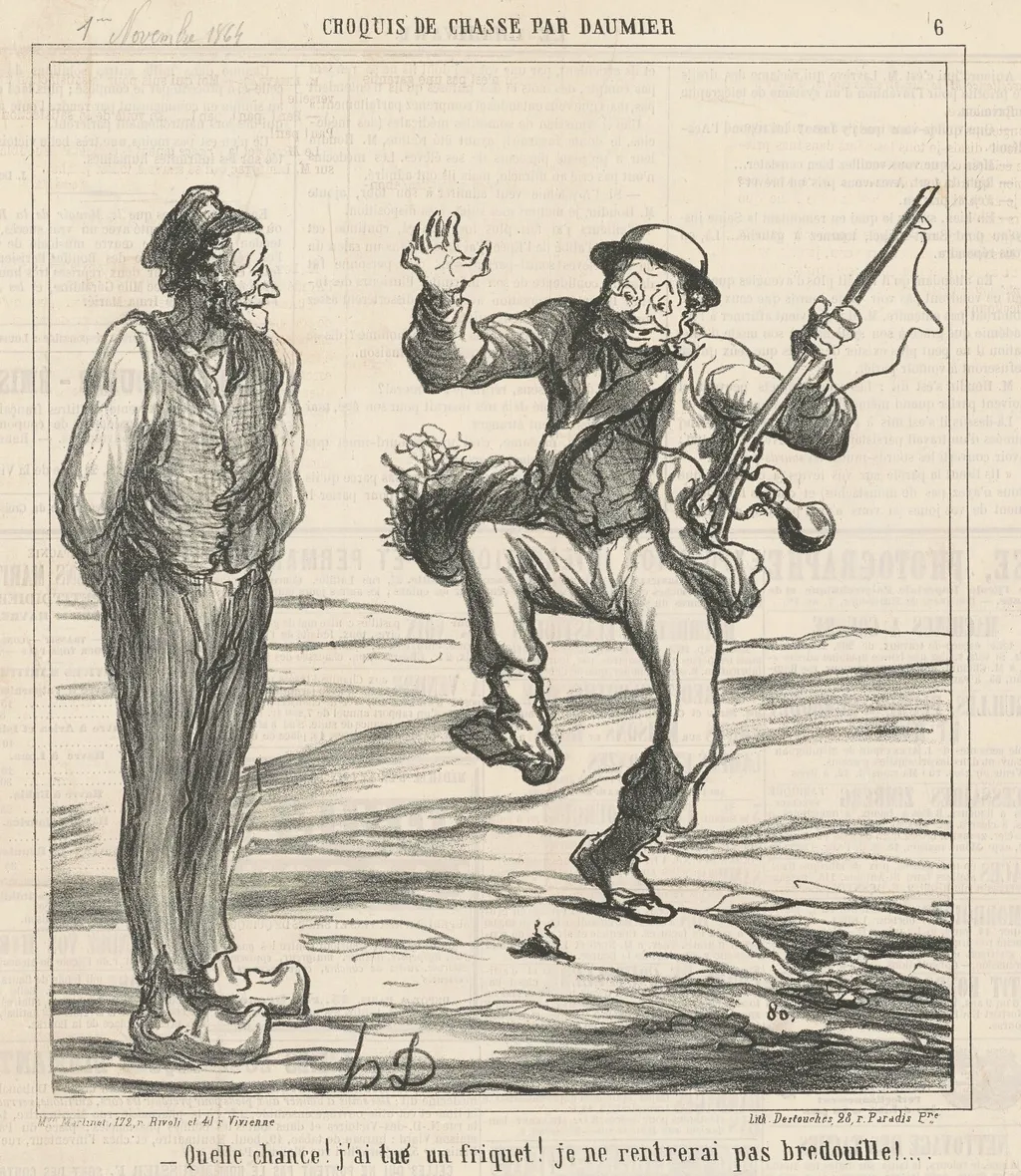
Quelle chance! J'ai tué un frquet! is an ink print by the Impressionist artist Honoré Daumier. It dates from 1864 and is held in the collection of the National Gallery of Art.
About this work
Overview
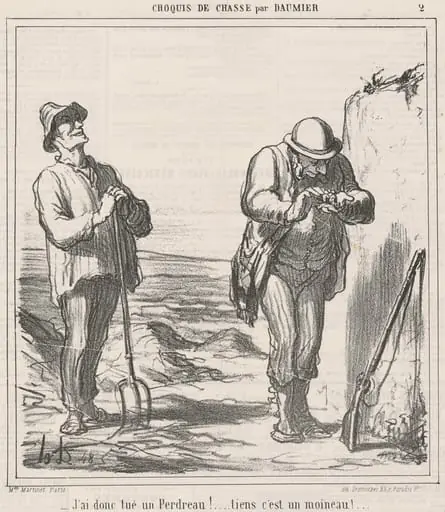
Created in 1864, this lithograph by Honoré Daumier captures a fleeting, humorous moment between two men in a rural setting. The title, translating to 'What luck! I've killed a frquet!', suggests an absurdly trivial triumph. Daumier uses the simplicity of the scene to underscore the absurdity of human self-importance, a recurring theme in his graphic work.
Subject & Meaning
The image portrays one man exulting over a small bird he claims to have killed, while the other reacts with disbelief. The term 'frquet'—likely a regional or invented word for a minor bird—heightens the satire. Daumier mocks the tendency to inflate minor achievements into grand events, reflecting broader social pretensions among the lower and middle classes in mid-19th-century France.
Technique & Style
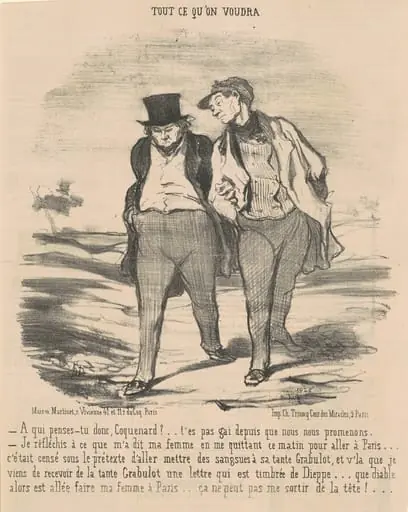
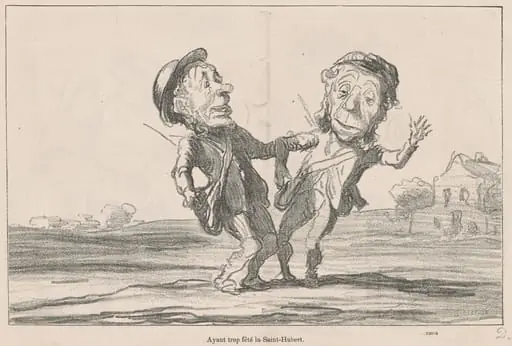
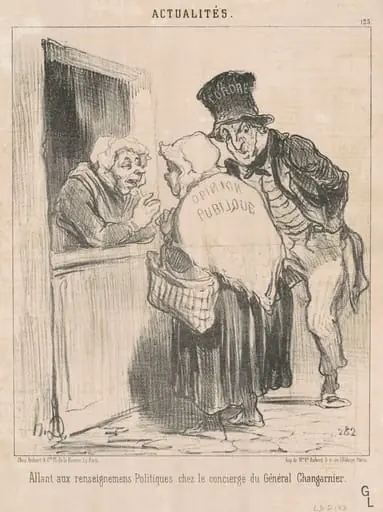
Daumier employed lithography to achieve rapid, expressive lines and tonal contrasts. The figures are rendered with exaggerated gestures and facial expressions, typical of his caricatural approach. The background is minimal, focusing attention on the interaction. His loose, energetic strokes convey movement and emotion without detailed realism, emphasizing narrative over precision.
History & Provenance
This print was produced during a period when Daumier regularly contributed to satirical journals like Le Charivari. Though not tied to a specific publication, its style aligns with his serialized social commentaries from the 1860s. The work remained in private collections after its initial circulation, reflecting its status as a lesser-known but characteristic example of his graphic output.
Context
In post-revolutionary France, satire was a vital tool for critiquing social norms. Daumier’s prints often targeted the pretensions of ordinary citizens, not just the elite. This image fits within a broader body of work that used humor to reveal the gap between aspiration and reality, especially among those newly empowered by urbanization and shifting class structures.
Legacy
His ability to distill complex social observations into single, vivid moments remains a hallmark of his graphic legacy.
Daumier’s lithographs, including this one, influenced later generations of illustrators and cartoonists who valued expressive line and social insight over technical polish. Though less celebrated than his political satires, works like this reveal his consistent focus on human folly. His ability to distill complex social observations into single, vivid moments remains a hallmark of his graphic legacy.
Artist & collection

Artist
Honoré-Victorin Daumier was a French painter, sculptor, and printmaker, whose many works offer commentary on the social and political life in France, from the Revolution of 1830 to the fall of the Second French Empire in 1870.