Artwork
Quittant le valachie
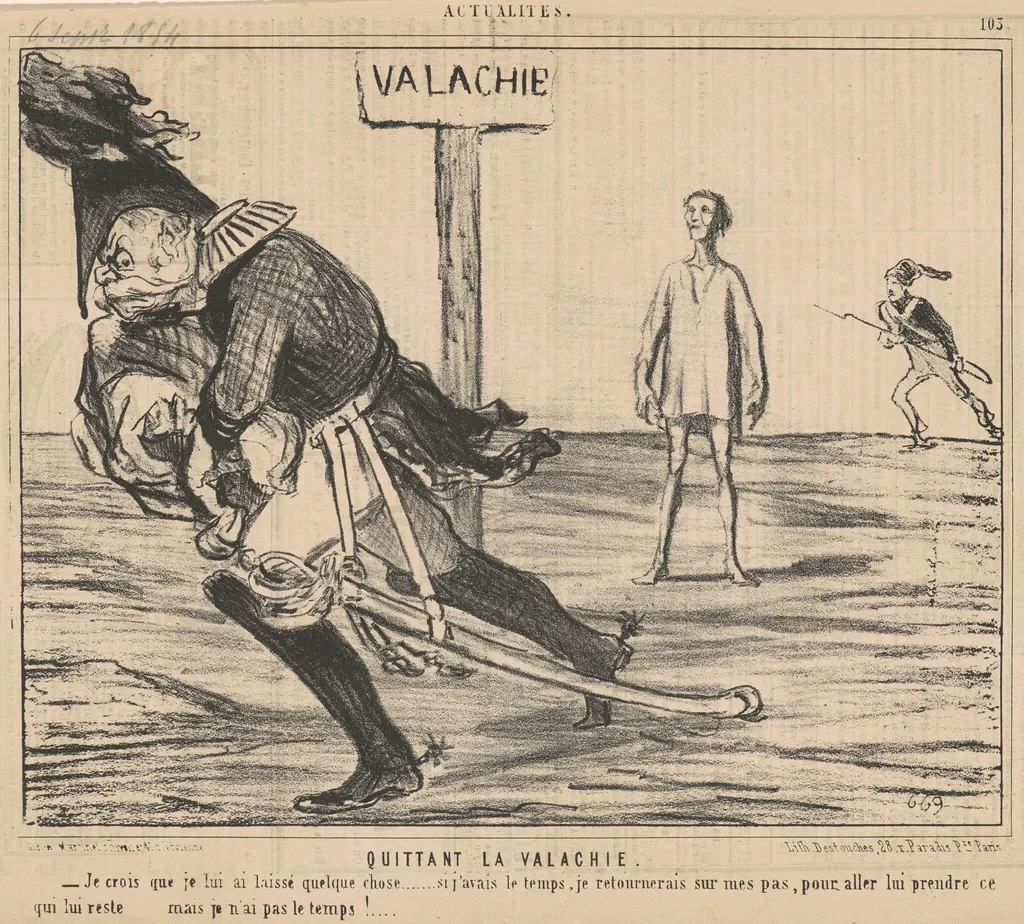
Quittant le valachie is an ink print by the Impressionist artist Honoré Daumier. It dates from 1854 and is held in the collection of the National Gallery of Art.
About this work
The joke lands hard: the man’s clothes look silly, and the sign feels like a trap.
This lithograph shows a man in a tall hat fleeing a sign that says "VALACHIE." He’s in a hurry, arms flapping. Two others react behind him—one looks confused, the other runs too.
Daumier made this in 1854. It pokes fun at Wallachia, a place seen as backward in his day. The joke lands hard: the man’s clothes look silly, and the sign feels like a trap.
Look up Daumier, Honoré next—this is one of his sharper political jokes.
Overview
Quittant le valachie is a lithograph created by Honoré Daumier in 1854. It captures a fleeting, chaotic moment in a satirical landscape, using the medium’s capacity for rapid reproduction to amplify its social commentary. The scene unfolds with minimal detail but maximal motion, typical of Daumier’s approach to visual wit.
Subject & Meaning
The image centers on a man in an exaggerated hat and billowing garments fleeing a sign marked 'VALACHIE.' Behind him, two figures react: one bewildered, another also in flight. The scene mocks perceptions of Wallachia as a place to escape, reflecting mid-century French stereotypes about Eastern Europe as backward or undesirable. The absurdity of the figure’s attire and panic underscores the satire.
Technique & Style
Daumier employed lithography to achieve loose, energetic lines that suggest movement rather than define form. Ink washes and rough contours convey urgency without precision. The composition is deliberately unbalanced, with diagonal motion pulling the eye across the frame. This stylistic economy aligns with his work in periodicals, where immediacy and legibility were essential.
History & Provenance
Created in 1854, the print emerged during a period when Daumier was producing political and social satire for publications like La Caricature and Le Charivari. Though not part of a known series, it reflects his ongoing critique of public anxieties and national prejudices. Its survival in museum collections suggests early recognition of its sharp cultural observation.
Context
In mid-19th-century France, Wallachia was often portrayed in popular discourse as a distant, impoverished region, associated with political instability and rural backwardness. Daumier’s image taps into these biases, using physical comedy to expose the absurdity of such stereotypes. The print functions as a mirror to urban French attitudes, not as a depiction of actual events.
Legacy
The lithograph remains a quiet example of Daumier’s ability to distill complex social attitudes into single, resonant images. While less famous than his depictions of lawyers or laborers, it illustrates his consistent use of caricature to question prejudice. Its enduring presence in collections underscores its value as a document of cultural perception in the age of mass media.
Artist & collection

Artist
Honoré-Victorin Daumier was a French painter, sculptor, and printmaker, whose many works offer commentary on the social and political life in France, from the Revolution of 1830 to the fall of the Second French Empire in 1870.









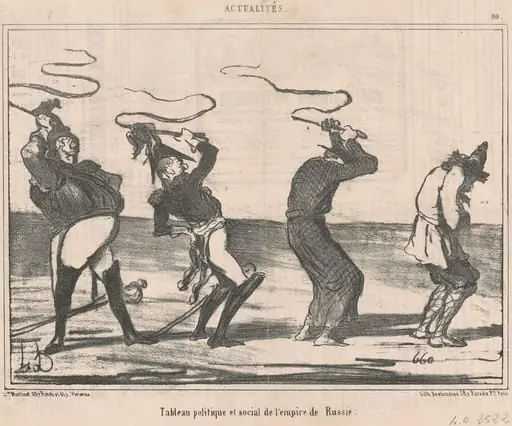 Tableau ... de l'empire de russie
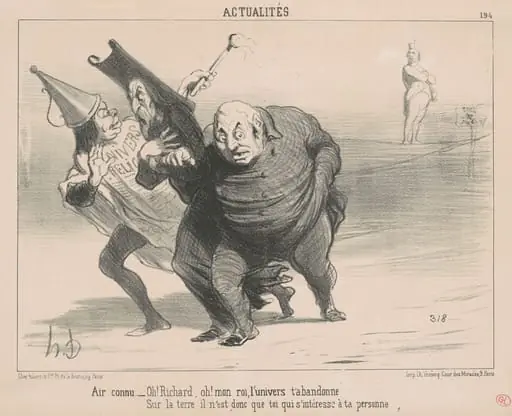 Air connu: Oh! Richard, Oh! Mon roi ...
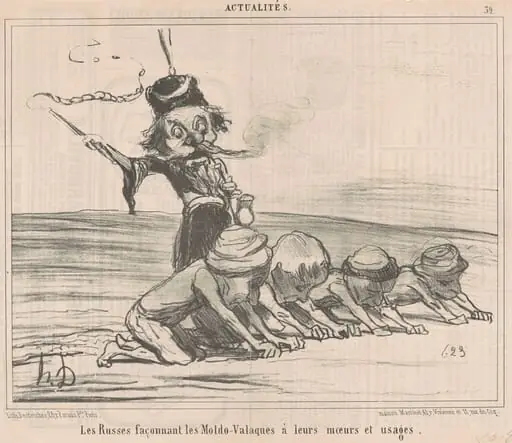 Les facconnant les Moldo-Valaques ...
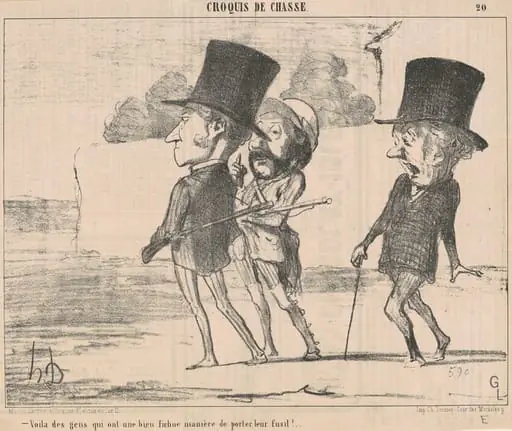 Voila des gens ont une ... fichue maniére ...
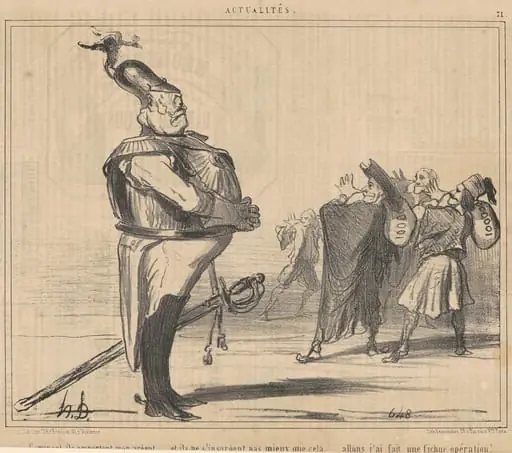 Comment, ils emportent mon argent ...
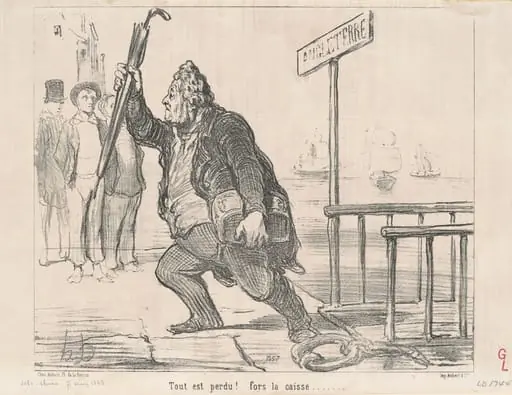 Tout est perdu! Fors la caisse
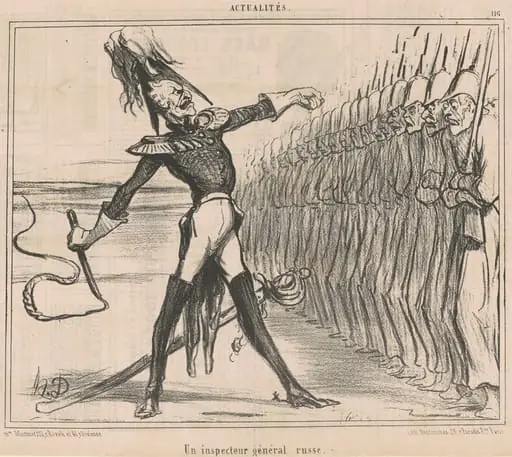 Un inspecteur général russe
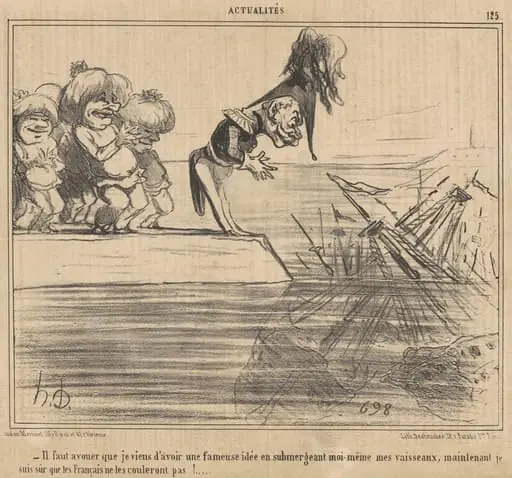 Il faut avouer que je viens d'avoir une ...
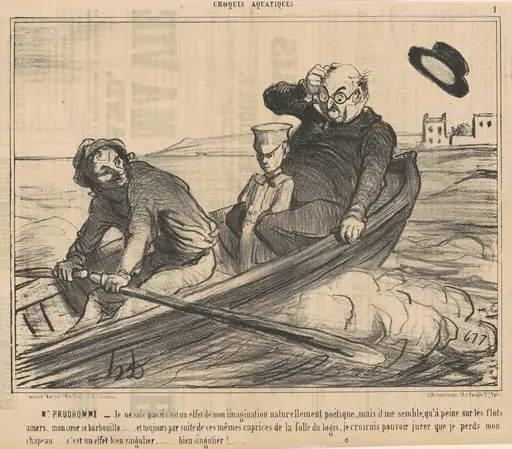 M. Prud'homme ... Je ne sais pas si ...