Artwork
Robert Macaire banquier et juré
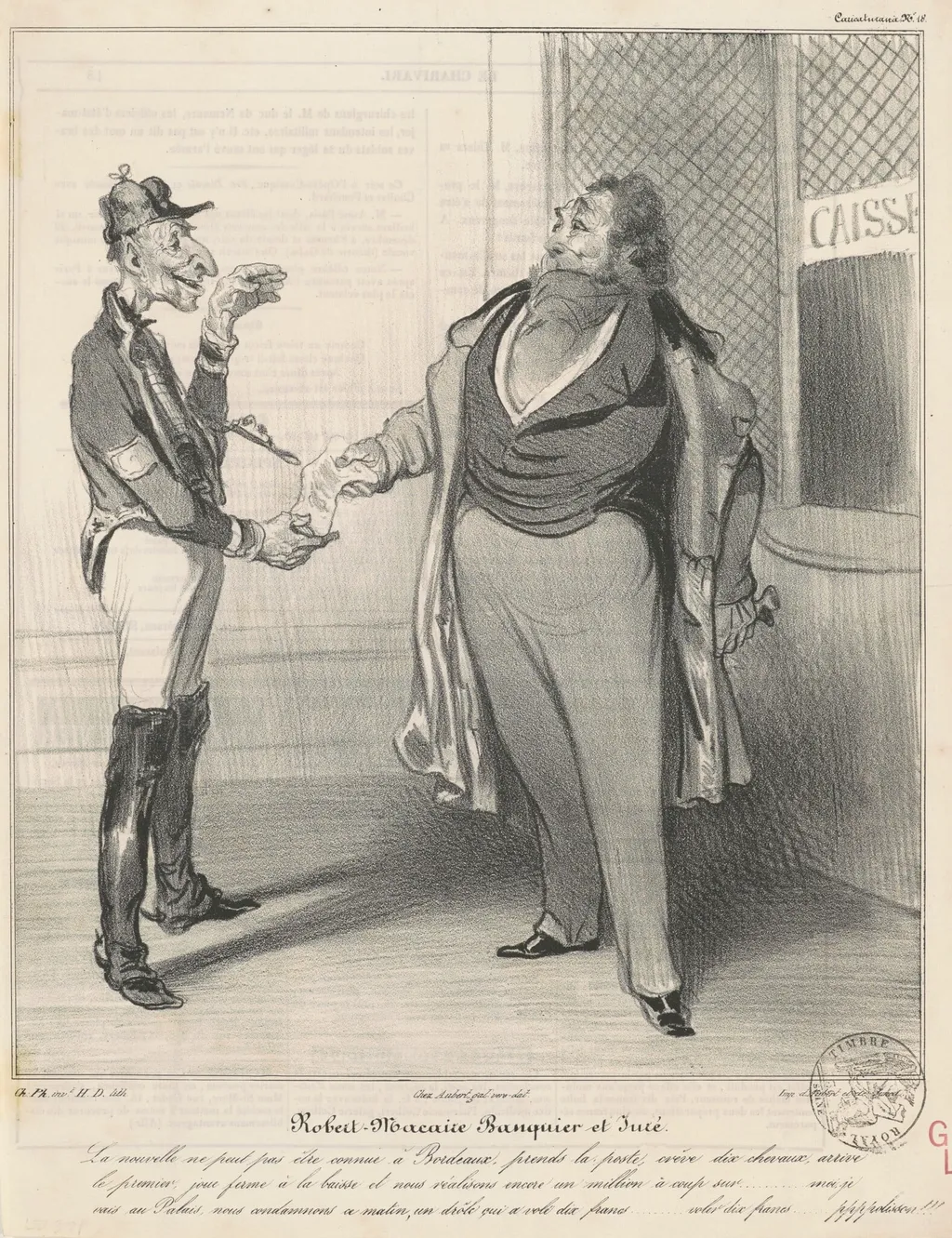
Robert Macaire banquier et juré is an ink print by the Romanticist artist Honoré Daumier. It dates from 1836 and is held in the collection of the National Gallery of Art.
About this work
Overview
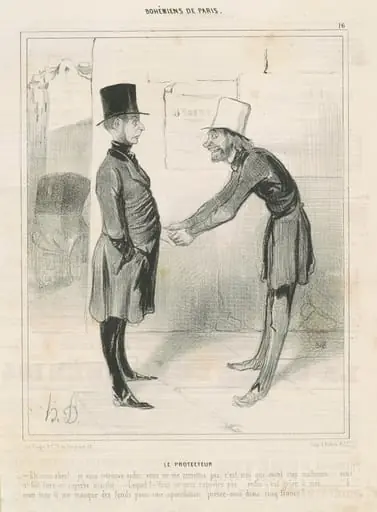
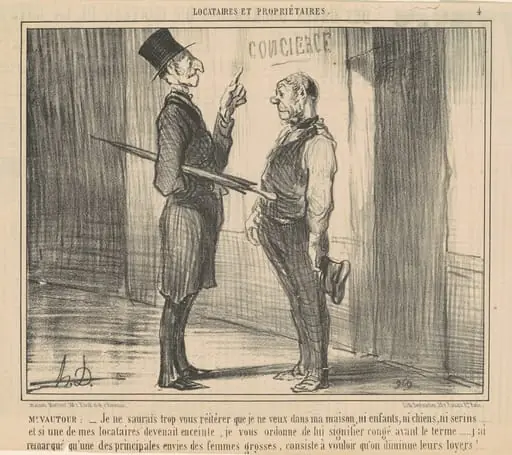
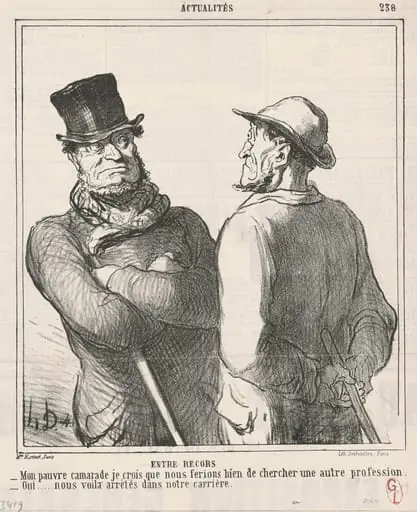
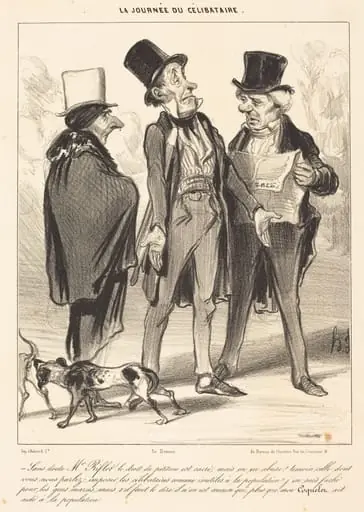
Honoré Daumier’s lithograph titled Robert Macaire banquier et juré presents a compact scene of two men clasping hands. Rendered in black‑and‑white line work, the image captures a moment of agreement, inviting viewers to consider the underlying relationship between the figures.
Subject & Meaning
The two figures are distinguished by contrasting dress and posture: the left‑hand participant appears dominant, while his counterpart adopts a more deferential stance. This visual opposition suggests a commentary on the hierarchy of power and class that characterized mid‑19th‑century French society.
Technique & Style
Executed as a lithographic print, Daumier employs bold, gestural lines and stark tonal contrasts to emphasize the characters’ silhouettes and the tension of the handshake. The medium allows for rapid reproduction, aligning with the artist’s practice of disseminating satirical observations through print media.
Context
Created during a period when Daumier frequently targeted political and social institutions, the work reflects his engagement with contemporary debates about banking, law, and the manipulation of public trust. The title references the notorious fictional swindler Robert Macaire, linking the image to broader critiques of corruption.
Legacy
While not as widely reproduced as Daumier’s caricatures, this lithograph exemplifies his ability to fuse humor with incisive social critique. It continues to be cited in studies of 19th‑century French visual satire and the role of printmaking in shaping public opinion.
Artist & collection

Artist
Honoré-Victorin Daumier was a French painter, sculptor, and printmaker, whose many works offer commentary on the social and political life in France, from the Revolution of 1830 to the fall of the Second French Empire in 1870.