Artwork
S'administrant la discipline ...
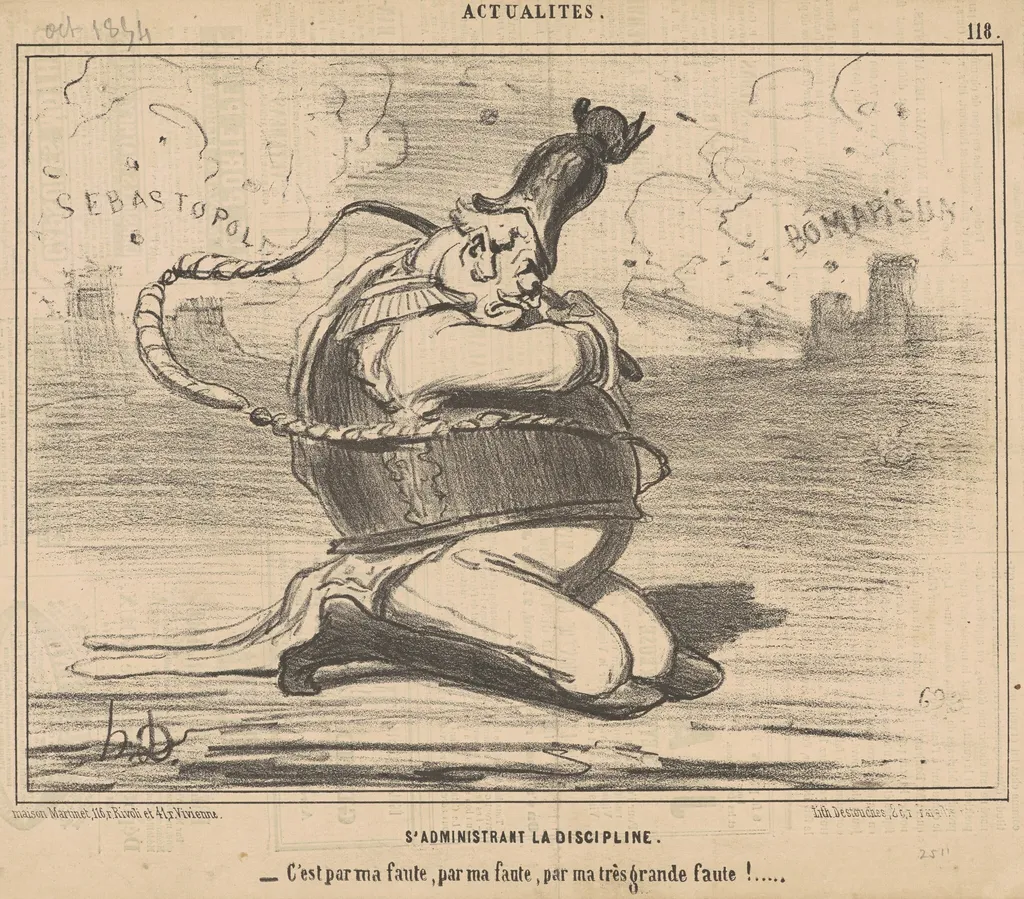
S'administrant la discipline ... is an ink print by the Impressionist artist Honoré Daumier. It dates from 1854 and is held in the collection of the National Gallery of Art.
About this work
Overview
This lithograph by Honoré Daumier presents a solitary soldier bound in ropes, kneeling before an unseen authority. Rendered in the medium of lithography, the work employs loose, expressive lines to convey tension and absurdity. The scene is stripped of narrative detail, focusing instead on the physical and psychological weight of punishment within a rigid military structure.
Subject & Meaning
The figure, clad in a military uniform and an exaggerated helmet, appears subjected to a humiliating act of discipline.
The figure, clad in a military uniform and an exaggerated helmet, appears subjected to a humiliating act of discipline. The inclusion of place names—Sebastopol and Bomarsund—references recent conflicts in the Crimean War, suggesting the critique extends beyond individual misconduct to systemic militarism. The image mocks the ritualized nature of military punishment, framing it as both arbitrary and dehumanizing.
Technique & Style
Daumier used lithography to achieve rapid, gestural marks that emphasize emotion over precision. The ink washes and uneven lines create a sense of urgency and instability, contrasting with the rigid forms of the soldier’s uniform and the faint architectural outlines behind him. This stylistic choice amplifies the satirical tone, making the scene feel both immediate and surreal.
History & Provenance
Created in the early 1850s, the print was likely produced for a French satirical journal, where Daumier regularly published political commentary. It emerged during a period of heightened state control under Napoleon III, when public dissent was suppressed. The work circulated among urban readers familiar with military campaigns and bureaucratic excesses, serving as a quiet act of resistance.
Context
Daumier’s imagery responded to France’s involvement in the Crimean War and the broader European trend of militarizing civilian life. His prints often targeted institutional hypocrisy, using caricature to expose the gap between official rhetoric and lived reality. In this piece, the soldier’s helplessness mirrors the public’s powerlessness against authoritarian structures.
Legacy
The print remains a key example of 19th-century political satire in print form. Daumier’s ability to distill complex social critiques into single, visceral images influenced later generations of cartoonists and social realists. Though not widely exhibited in his lifetime, the work’s sharp economy of form and unflinching critique have secured its place in the history of visual dissent.
Artist & collection

Artist
Honoré-Victorin Daumier was a French painter, sculptor, and printmaker, whose many works offer commentary on the social and political life in France, from the Revolution of 1830 to the fall of the Second French Empire in 1870.









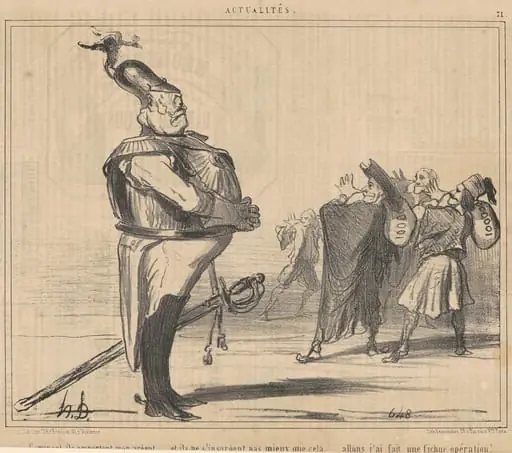 Comment, ils emportent mon argent ...
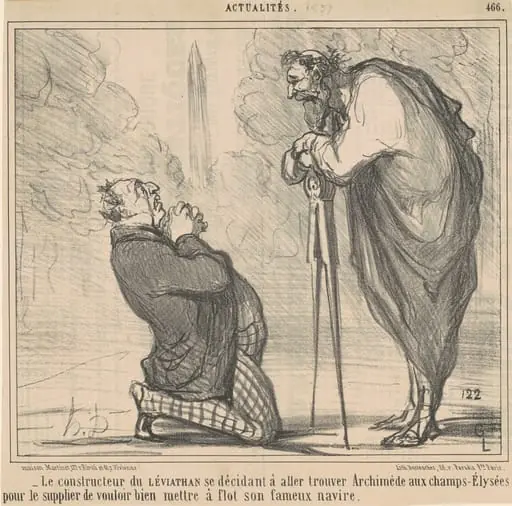 Le constructeur du Léviathan se décidant ...
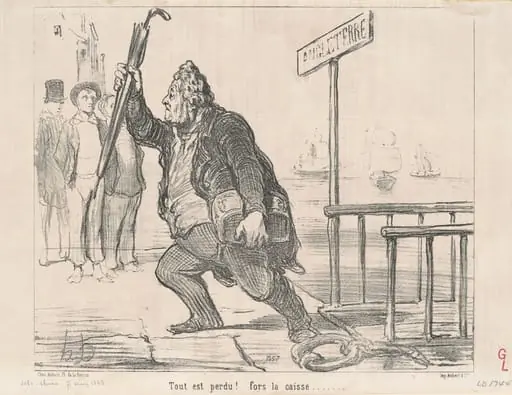 Tout est perdu! Fors la caisse
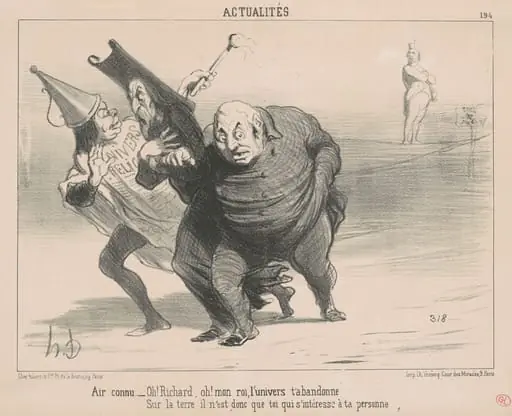 Air connu: Oh! Richard, Oh! Mon roi ...
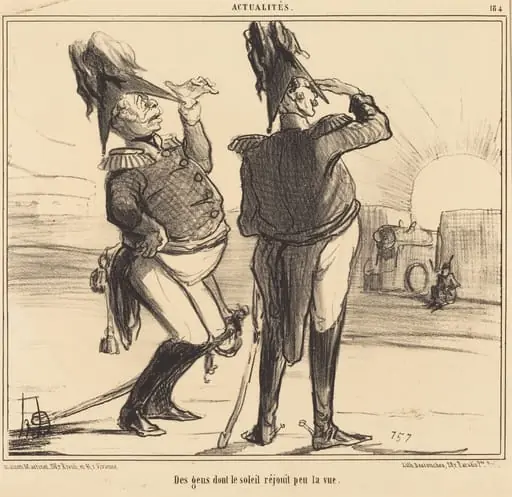 Des gens dont le soleil réjouit peu la vue
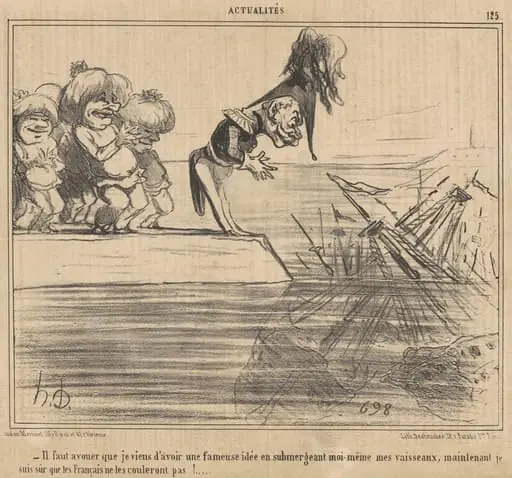 Il faut avouer que je viens d'avoir une ...
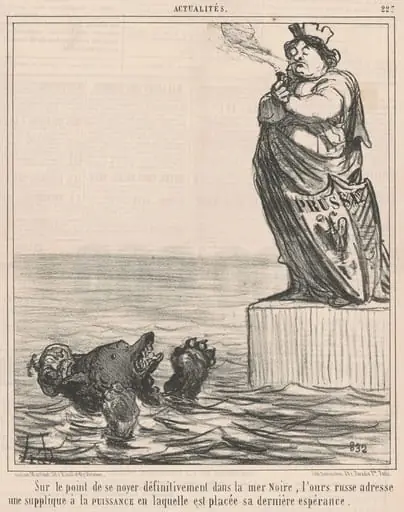 Sur le point de se noyer ...
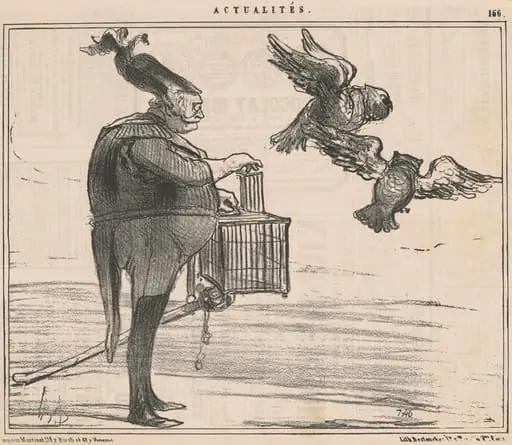 Deux Grands-Ducs Lachés ... sur Sébastopol