Artwork
Tiens! Moi qui croyais que nous venions de découvrir ...
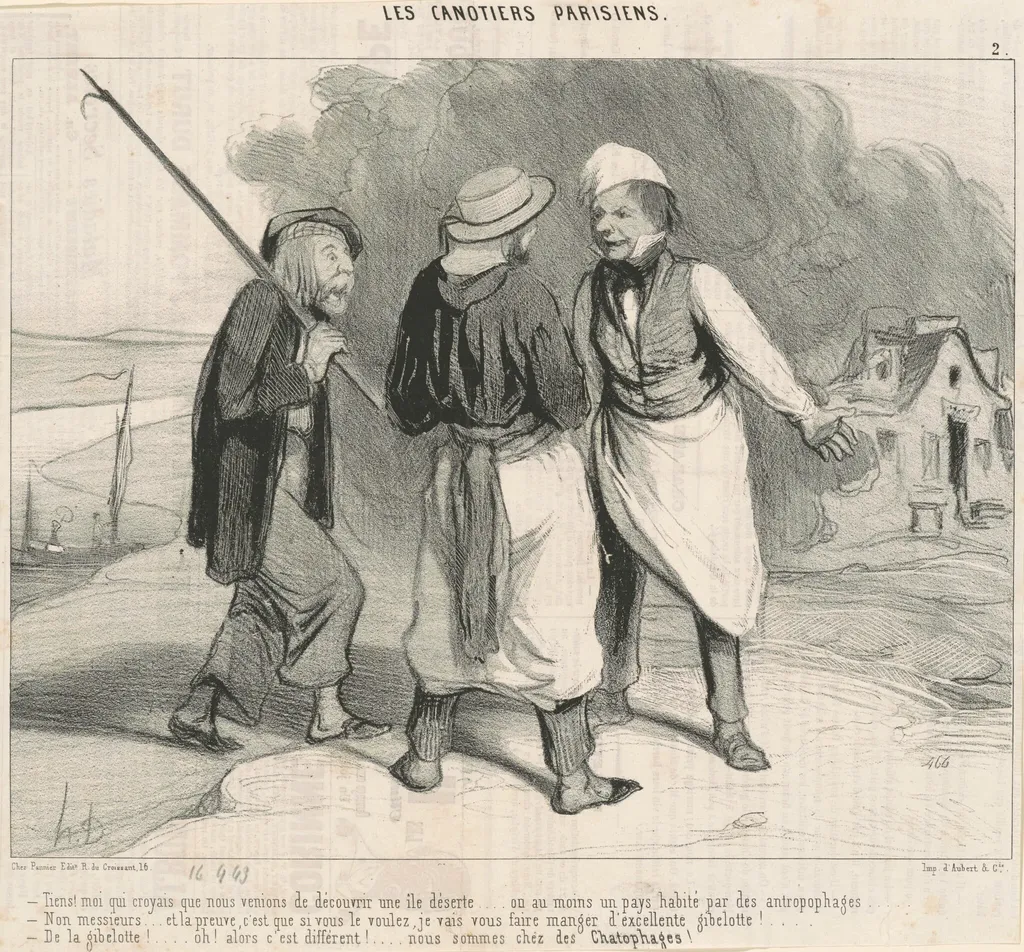
Tiens! Moi qui croyais que nous venions de découvrir ... is an ink print by the Romanticist artist Honoré Daumier. It dates from 1843 and is held in the collection of the National Gallery of Art.
About this work
Overview
The composition is restrained, with minimal background elements—a cabin and a boat—anchoring the figures in a mundane yet deliberate setting.
This lithograph by Honoré Daumier presents a quiet riverside scene featuring three men in formal attire, engaged in intimate conversation. The composition is restrained, with minimal background elements—a cabin and a boat—anchoring the figures in a mundane yet deliberate setting. Daumier’s use of lithography allows for subtle tonal variations, emphasizing gesture over narrative clarity. The work belongs to a broader series of prints that observe social behavior with irony, often without overt satire.
Subject & Meaning
The three men, leaning inward as if sharing a confidential observation, appear to be reacting to something unseen along the riverbank. One gestures toward the water, suggesting discovery or suspicion. The title, a French exclamation of surprise, implies irony—perhaps mocking the notion of novelty in a world where such moments are routine. Daumier invites viewers to question the sincerity of social rituals and the performative nature of shared revelation.
Technique & Style
Daumier employed lithography to achieve a range of soft grays and sharp contrasts, using ink washes and hatching to define form without outline. Figures are rendered with exaggerated yet economical lines, their postures conveying psychological tension. The background is deliberately muted, focusing attention on the interplay of bodies and expressions. This technique, common in his journalistic prints, prioritizes emotional resonance over detail, transforming ordinary scenes into subtle social commentaries.
History & Provenance
Created during the mid-19th century, this print emerged from Daumier’s prolific output for satirical periodicals like La Caricature and Le Charivari. Though unsigned and undated in many impressions, its style aligns with works from the 1840s–1860s. It circulated widely among middle-class audiences, often as standalone sheets collected for their observational wit. Its survival in multiple institutional collections reflects its status as a representative example of his graphic oeuvre.
Context
Daumier worked amid France’s shifting political landscape, where censorship restricted direct criticism. His prints circumvented bans by embedding commentary in everyday scenes—conversations, commutes, public gatherings. This lithograph fits that pattern: no overt symbols of power, yet the tension in the men’s posture suggests unease with authority or the illusion of discovery. It reflects a society where meaning was concealed, and observation became a form of resistance.
Legacy
Daumier’s lithographs, including this one, influenced later generations of realist and expressionist artists for their psychological depth and formal economy. Unlike overt political cartoons, his quiet scenes endure for their ambiguity and restraint. The work exemplifies how printmaking could elevate the mundane into a medium for nuanced critique, shaping modern visual storytelling beyond the boundaries of traditional narrative art.
Artist & collection
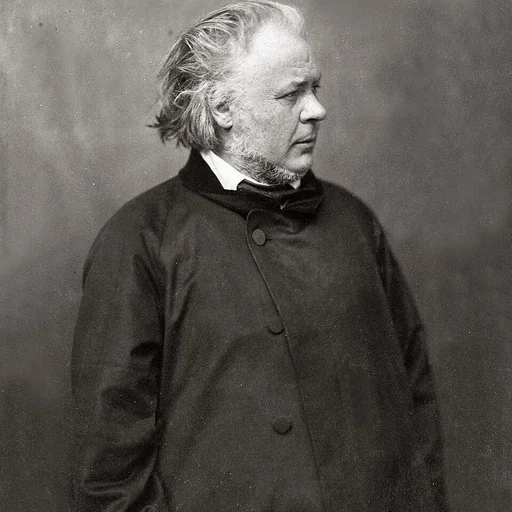
Artist
Honoré-Victorin Daumier was a French painter, sculptor, and printmaker, whose many works offer commentary on the social and political life in France, from the Revolution of 1830 to the fall of the Second French Empire in 1870.









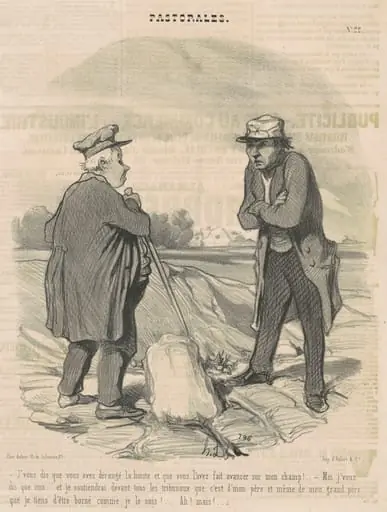 J'vous dis que vous avez dérangé la limite ...
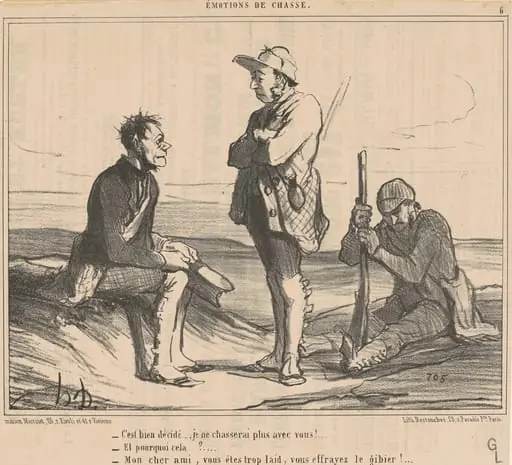 C'est bien décidé ... Je ne chasserai plus avec vous! ...
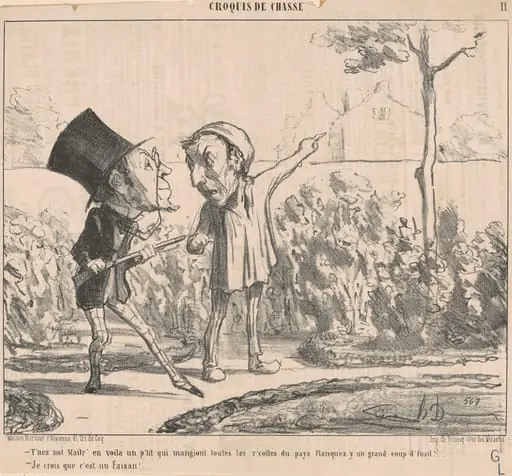 T'nez not' maitr' en voila un p'tit ...
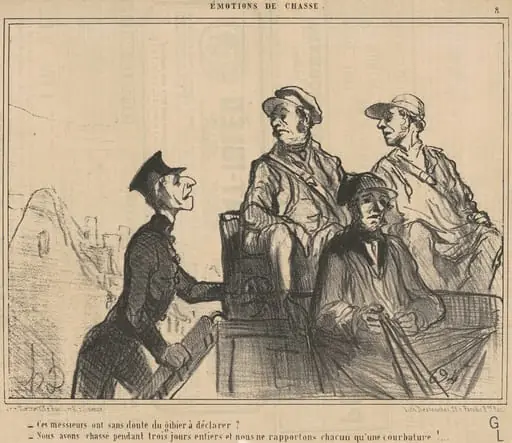 Ce messieurs ont ... du gibier a déclarer? ...
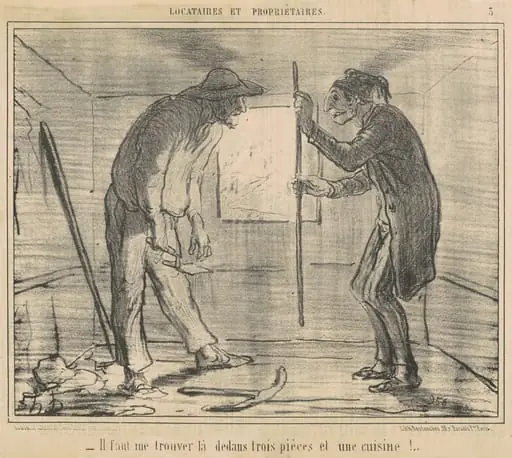 Il faut me trouver ... trois pièces ...
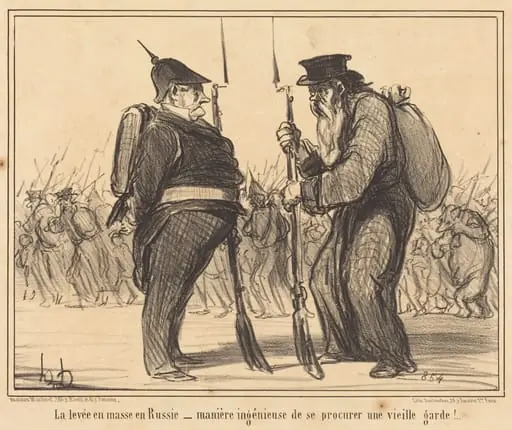 La Levée en masse en Russie...
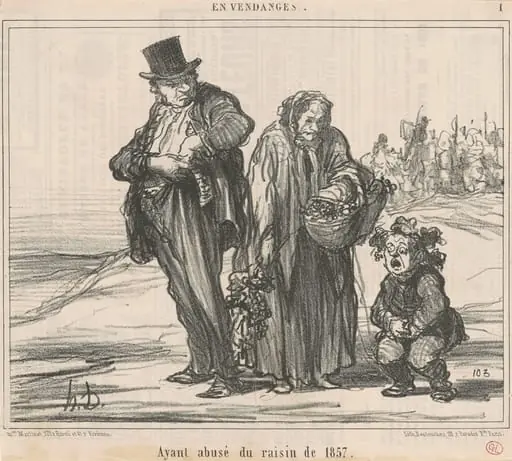 Ayant abusé du raisin de 1857
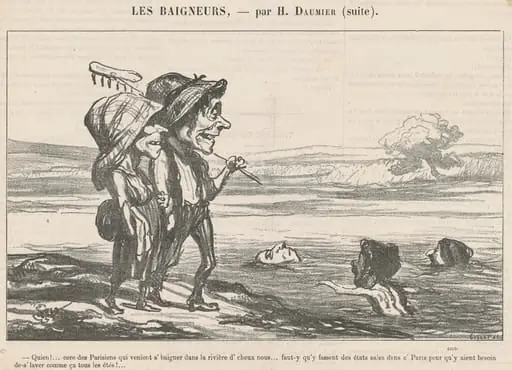 Quien! ... Core des parisiens qui veniont s'baigner ...
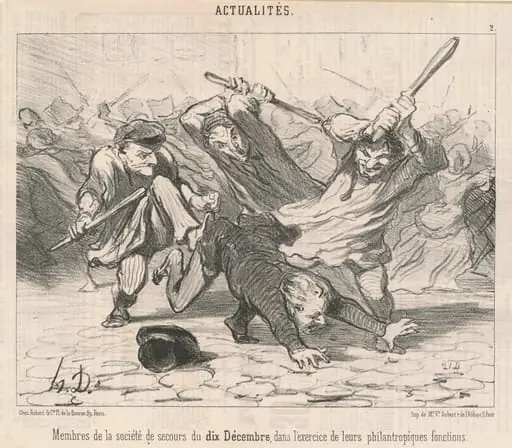 Membres de la société de secours du Dix-Décembre ...