Artwork
Il faut me trouver ... trois pièces ...
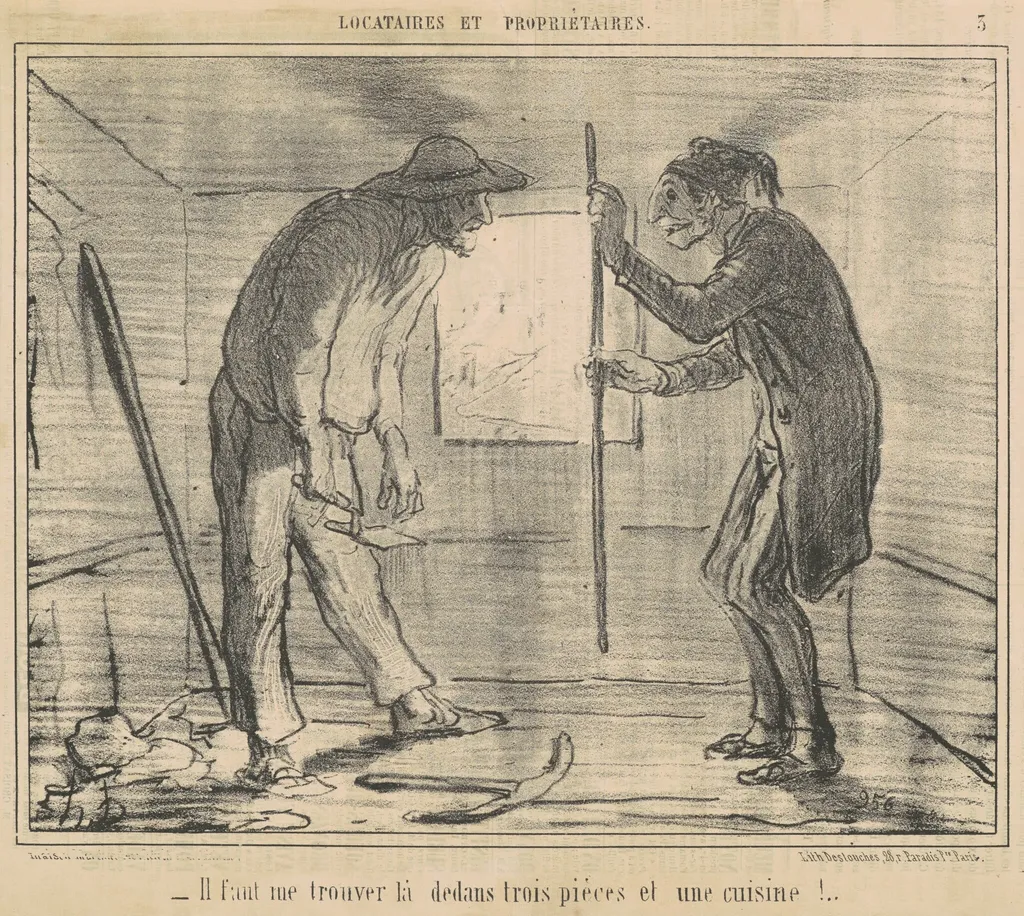
Il faut me trouver ... trois pièces ... is an ink print by the Impressionist artist Honoré Daumier. It dates from 1856 and is held in the collection of the National Gallery of Art.
About this work
Overview
Rendered in ink on paper, the work belongs to a series of social commentaries that observe everyday urban life in mid-19th century France.
This lithograph by Honoré Daumier captures a quiet, tense exchange between two figures in a sparsely furnished interior. Rendered in ink on paper, the work belongs to a series of social commentaries that observe everyday urban life in mid-19th century France. The composition relies on minimal detail to emphasize posture and expression, inviting viewers to infer the nature of the interaction without explicit narrative cues.
Subject & Meaning
The two figures represent a tenant and a landlord, their physical stances encoding their social positions. The hunched figure, clutching an object—possibly money or a document—appears deferential, while the upright figure, supported by a cane, exudes authority. Their dialogue, though silent, suggests a negotiation over rent or housing conditions, reflecting the economic pressures faced by urban dwellers during Daumier’s time.
Technique & Style
Daumier employed lithography to achieve rapid, expressive lines with tonal variation. His brushwork is loose yet precise, using ink washes to suggest volume and shadow without modeling form in detail. The figures are caricatured but not grotesque; their exaggerations serve to highlight behavioral patterns rather than mock individuals, aligning with Daumier’s satirical yet empathetic approach to social observation.
History & Provenance
Created during the 1840s or early 1850s, this print likely appeared in a French periodical such as La Caricature or Le Charivari, where Daumier regularly published his social critiques. Its survival as a standalone print suggests later collection by private or institutional patrons. No definitive provenance is recorded, but it aligns with the broader archive of Daumier’s lithographic output preserved in major European collections.
Context
Daumier worked amid rising urban poverty and housing shortages in Paris following industrialization. His prints often targeted the hypocrisy and power imbalances of bourgeois society. This image fits within a body of work that documents the quiet struggles of the working class, using domestic interiors as stages for economic and moral tensions invisible in official records.
Legacy
Daumier’s lithographs, including this one, influenced later realist and expressionist artists by demonstrating how everyday scenes could carry profound social weight. His use of caricature to critique class structures prefigured modern graphic journalism. Though little known to the public today, his prints remain studied for their economy of form and unflinching observation of human behavior under pressure.
Own this work as a print
Artist & collection
Artist
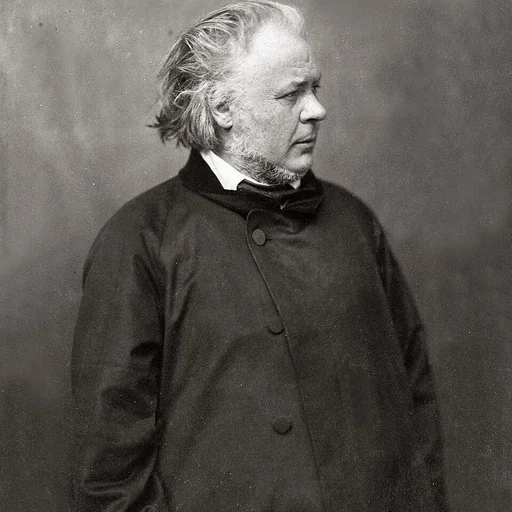
Honoré-Victorin Daumier was a French painter, sculptor, and printmaker, whose many works offer commentary on the social and political life in France, from the Revolution of 1830 to the fall of the Second French Empire in 1870.









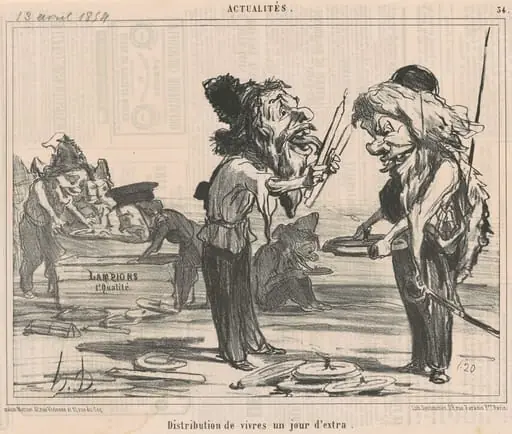 Distribution de vivres un jour d'extra
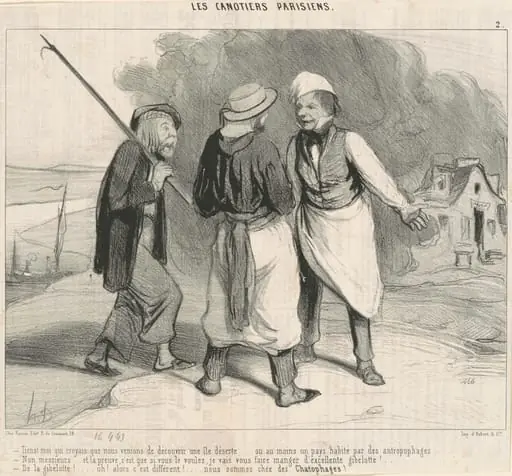 Tiens! Moi qui croyais que nous venions de découvrir ...
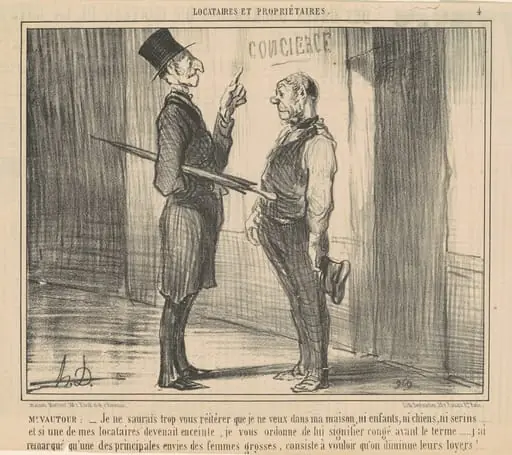 M. Vautour: Je ne saurais trop ...
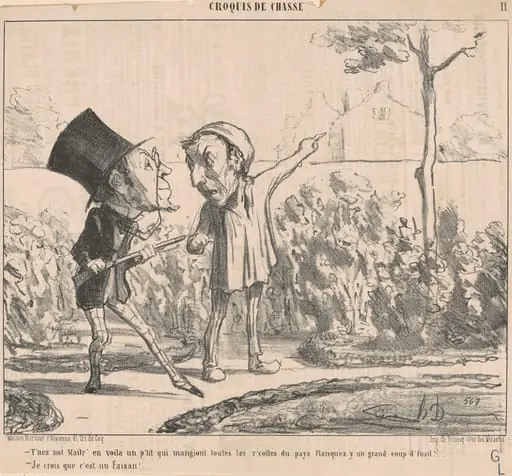 T'nez not' maitr' en voila un p'tit ...
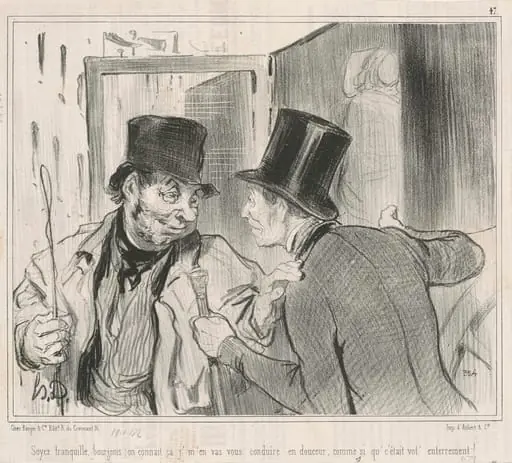 Soyez tranquille bourgeois, on connait
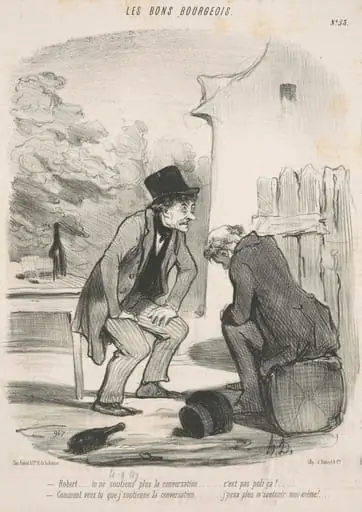 Robert ... tu ne soutiens plus la conversation ...
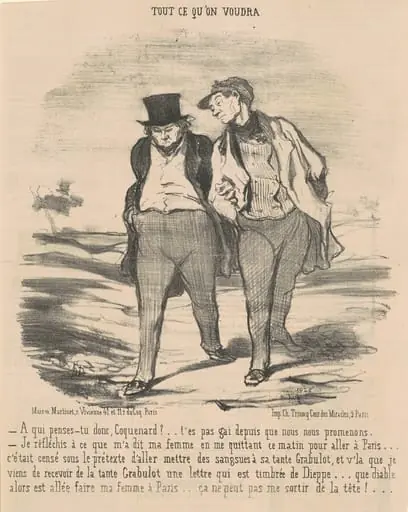 A qui penses-tu donc, coquenard? ...
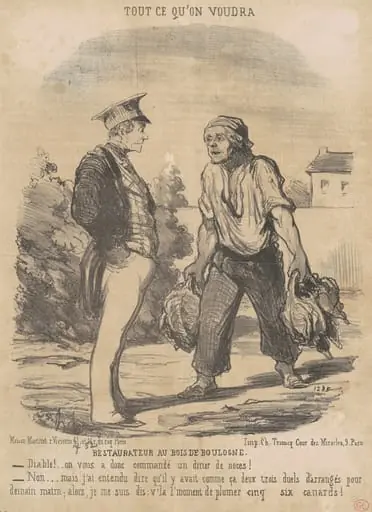 Restaurateur au Bois de Boulogne