Artwork
Toujours le livre de M. Flourens
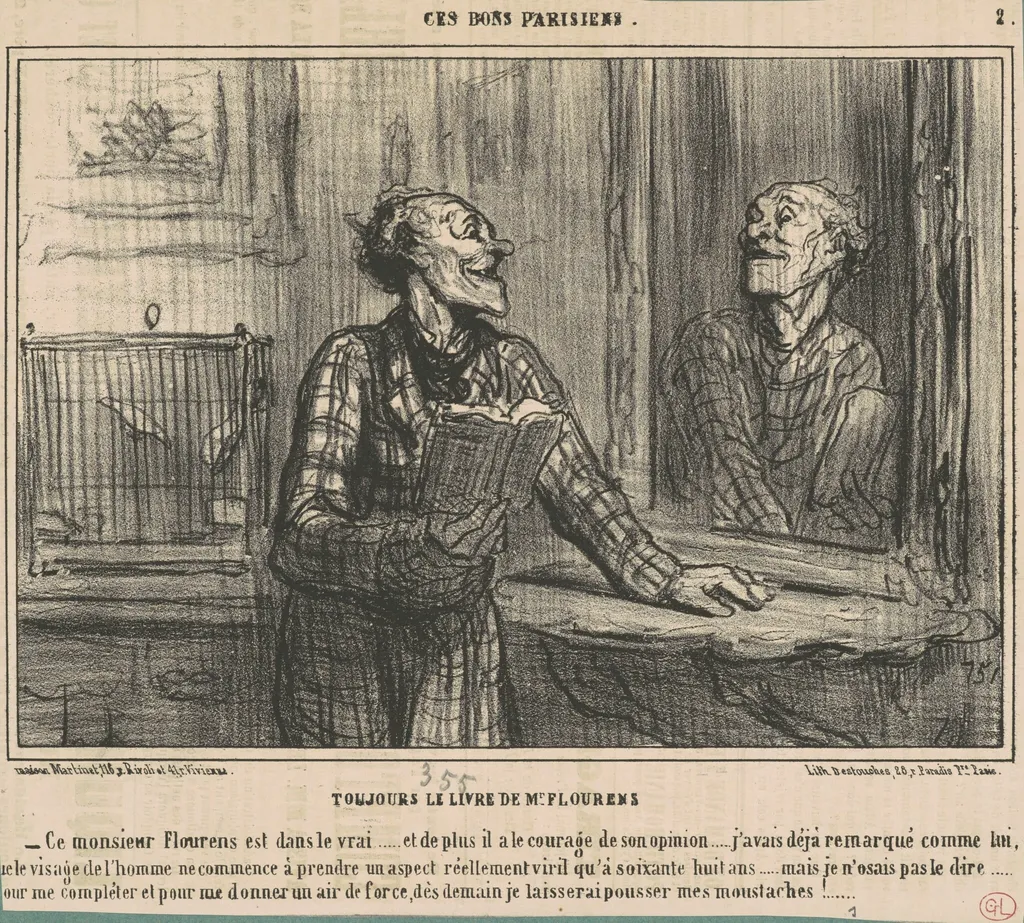
Toujours le livre de M. Flourens is an ink print by the Impressionist artist Honoré Daumier. It dates from 1855 and is held in the collection of the National Gallery of Art. "Toujours le livre de M.
About this work
Overview
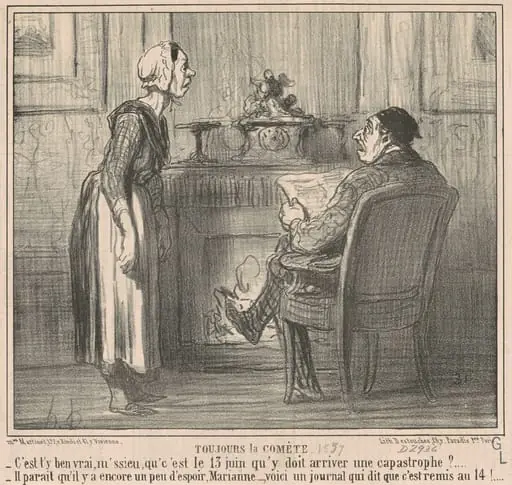
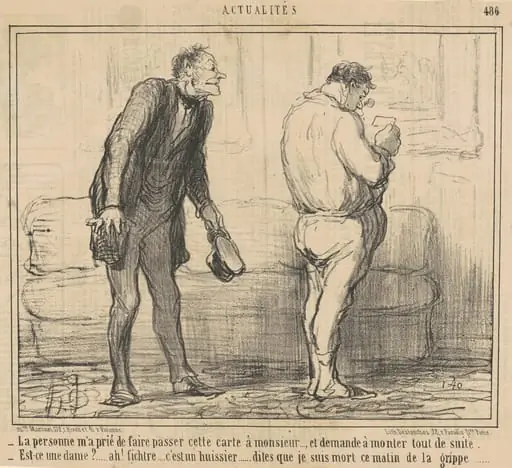
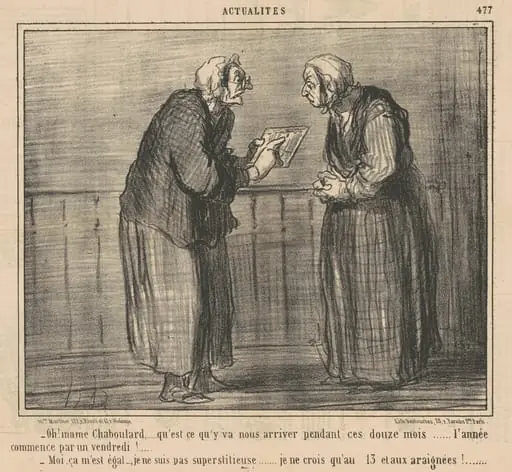
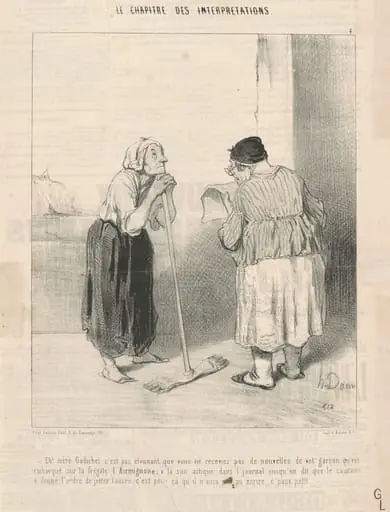
"Toujours le livre de M. Flourens" is a lithographic print by Honoré Daumier that captures a brief, informal scene of two elderly men sharing a book. Rendered with energetic, sketch‑like lines, the work conveys a moment of quiet conversation within a modest interior, emphasizing the immediacy of everyday life rather than formal portraiture.
Subject & Meaning
The composition shows the two men bent over an open volume, one gesturing toward the text while the other leans in with a mixture of concentration and amusement. Their exaggerated facial expressions and twisted postures suggest a humorous rapport, highlighting the pleasure of shared reading and the subtle social bonds that arise in ordinary domestic settings.
Technique & Style
Daumier employed lithography, drawing directly onto a prepared stone with greasy ink before transferring the image to paper. The technique allows for bold, uneven strokes and a spontaneous quality that mirrors a rapid sketch. Thick, scratchy lines animate the figures and surrounding space, reinforcing the lively atmosphere and Daumier's characteristic focus on the quirks of human behavior.
History & Provenance
A comparable sketch of a similar subject is held by the National Gallery of Art in Washington, indicating the artist’s repeated exploration of this theme.
Created as part of Daumier’s series of observational studies, the print reflects his interest in capturing fleeting moments of daily life. A comparable sketch of a similar subject is held by the National Gallery of Art in Washington, indicating the artist’s repeated exploration of this theme. The work remains in the public domain, circulating in collections that document 19th‑century French printmaking.
Artist & collection
Artist
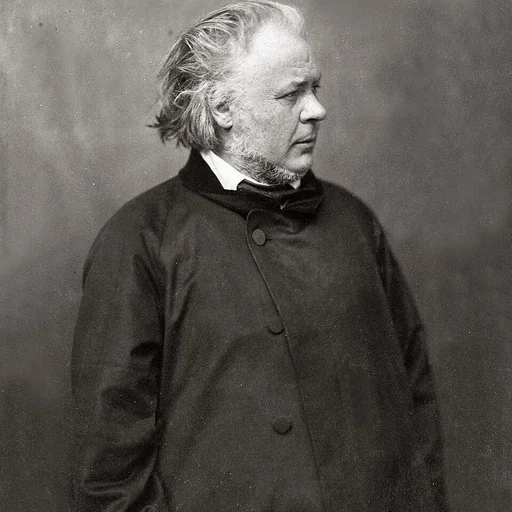
Honoré-Victorin Daumier was a French painter, sculptor, and printmaker, whose many works offer commentary on the social and political life in France, from the Revolution of 1830 to the fall of the Second French Empire in 1870.