Artwork
Un ami qu'on a invité ...
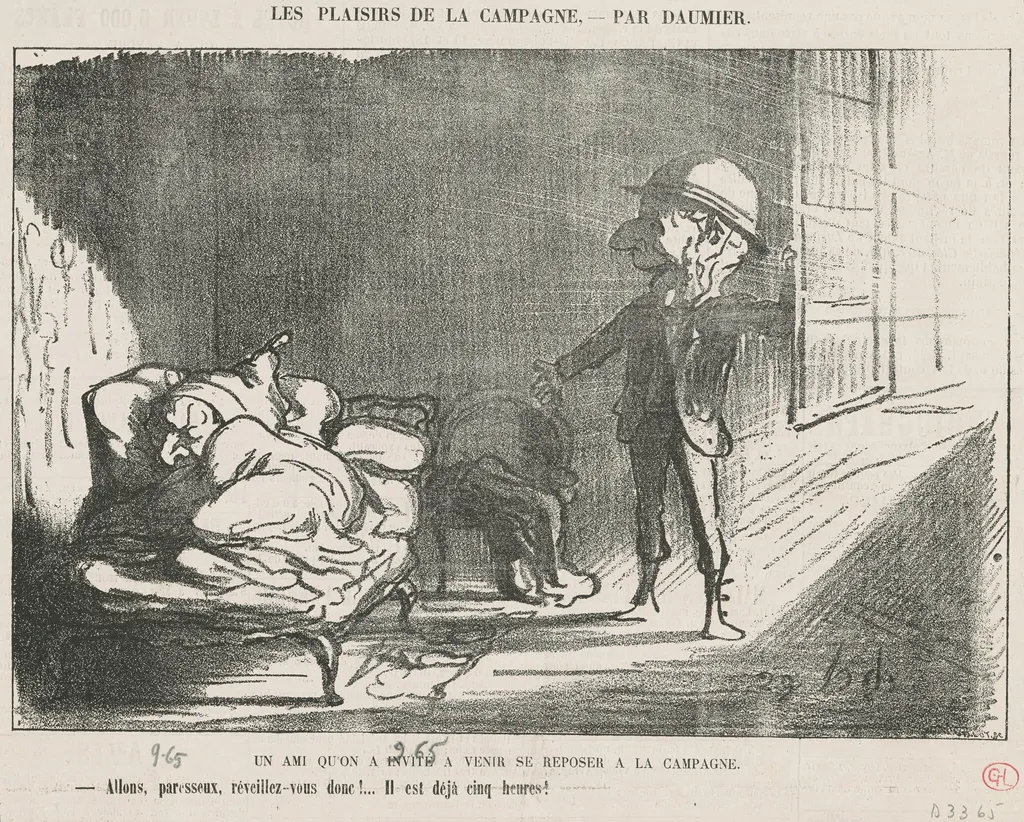
Un ami qu'on a invité ... is an ink print by the Impressionist artist Honoré Daumier. It dates from 1865 and is held in the collection of the National Gallery of Art.
About this work
Overview
Honoré Daumier’s lithograph titled *Un ami qu’on a invité* portrays a cramped, poorly illuminated interior. A reclining figure is shown only by his head and an arm protruding from a modest bed, while a second figure stands nearby, his posture and features rendered in a deliberately exaggerated, almost cartoonish manner.
Subject & Meaning
The composition juxtaposes a passive, vulnerable sitter with an active, flamboyant visitor, suggesting a narrative of intrusion or unsolicited assistance. Daumier’s caricatural treatment amplifies the emotional contrast, inviting viewers to contemplate social dynamics and the absurdity of everyday encounters.
Technique & Style
Executed in lithography, the work demonstrates Daumier’s command of the medium’s capacity for bold line work and tonal variation. The artist employs stark chiaroscuro to model the dim space, while the exaggerated anatomy of the standing figure reflects his characteristic satirical style.
History & Provenance
Created during Daumier’s prolific mid‑19th‑century period, the print was produced in limited numbers typical of his lithographic output. It has circulated among private collections and museum holdings, illustrating the artist’s sustained interest in social commentary through printmaking.
Context
Daumian prints often addressed contemporary life with humor and critique, and this piece aligns with his broader oeuvre of caricature and genre scenes. The intimate setting and exaggerated characters echo the social satire prevalent in French visual culture of the 1850s.
Own this work as a print
Artist & collection
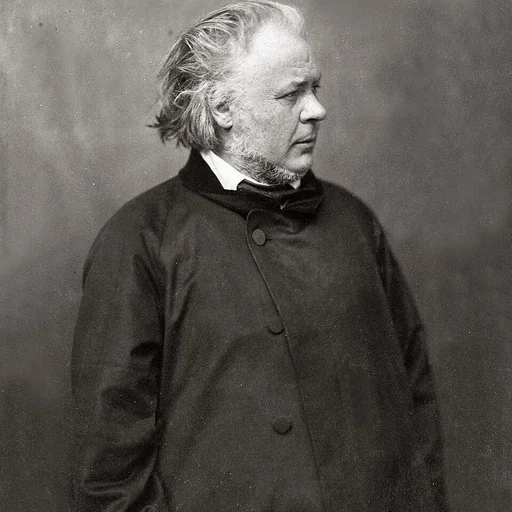
Artist
Honoré-Victorin Daumier was a French painter, sculptor, and printmaker, whose many works offer commentary on the social and political life in France, from the Revolution of 1830 to the fall of the Second French Empire in 1870.