Artwork
Une envie de femme grosse
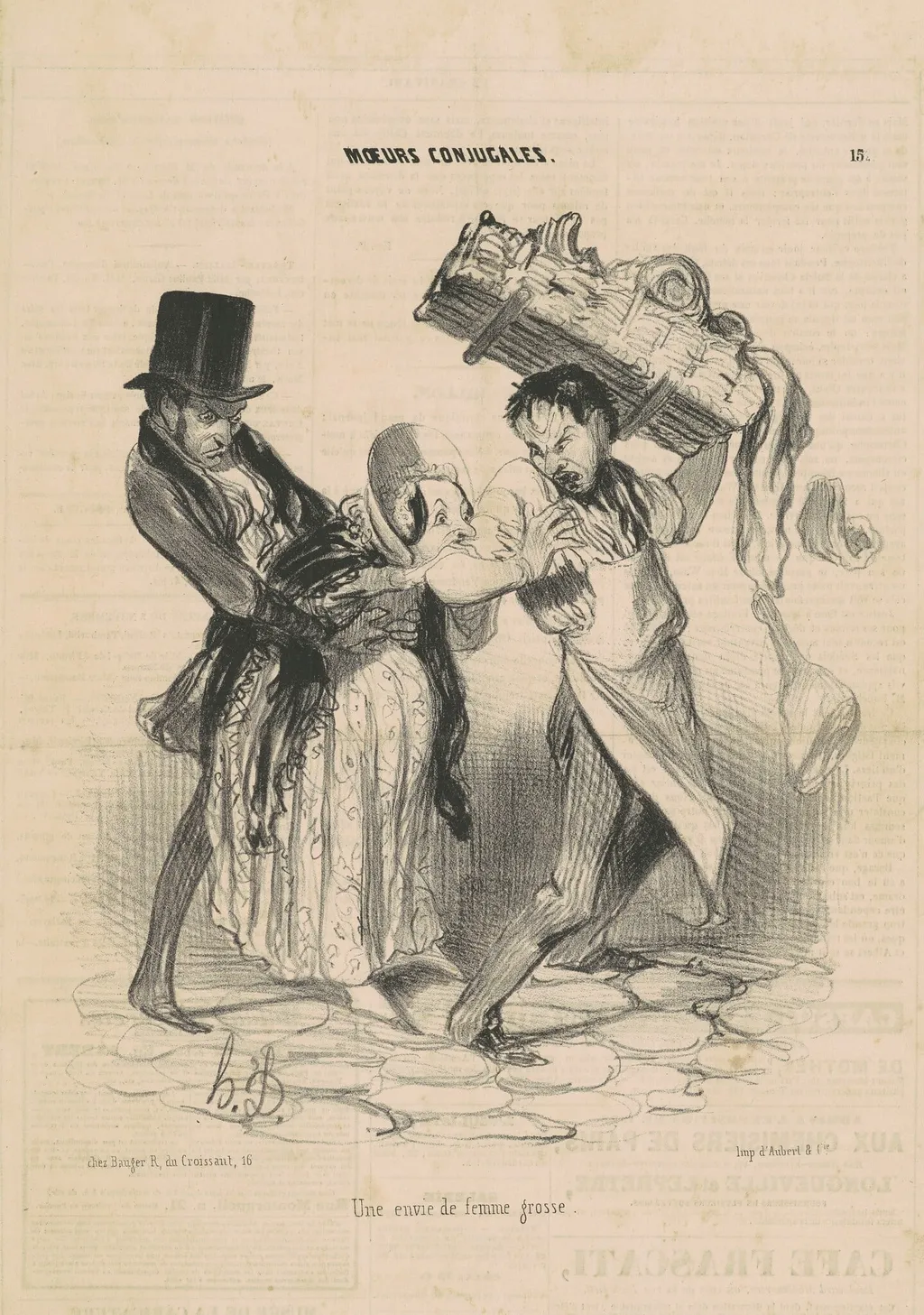
Une envie de femme grosse is an ink print by the Romanticist artist Honoré Daumier. It dates from 1839 and is held in the collection of the National Gallery of Art.
About this work
Overview
Honoré Daumier created this lithograph as part of his series critiquing bourgeois life in mid-19th-century France. The work depicts a domestic dispute centered on an infant, rendered with sharp line work and expressive distortion. Its simplicity as a print allowed wide circulation, reinforcing Daumier’s role as a social observer through accessible imagery.
Subject & Meaning
The scene portrays a man and woman locked in a physical struggle over a cradle, their exaggerated gestures underscoring absurdity rather than genuine concern. The infant, calm and untouched, becomes a silent witness to their frenzy. Daumier uses this dynamic to mock the performative desires of adults who treat children as objects of competition or status, not care.
Technique & Style
Executed in lithography, the image relies on bold, fluid lines and high contrast to amplify emotional intensity. Facial expressions are caricatured—mouths agape, brows furrowed—while clothing details distinguish social standing. The composition channels chaos through diagonal tension, yet the baby’s stillness anchors the scene with ironic calm.
History & Provenance
Produced during Daumier’s prolific period for illustrated journals, this print likely appeared in a weekly publication such as Le Charivari. Its mass reproduction aligned with his aim to reach a broad public. No specific early ownership records survive, but it remains part of major institutional collections today, preserved as a key example of his graphic satire.
Context
In 1840s France, rising urban middle-class families increasingly idealized domesticity, even as childcare became a source of social anxiety. Daumier’s work responded to this tension, highlighting contradictions between societal norms and human behavior. His prints often targeted hypocrisy, using humor to reveal the gap between appearance and reality in everyday life.
Legacy
This lithograph exemplifies Daumier’s enduring influence on visual satire. Its blend of psychological insight and formal economy anticipates later cartooning and social commentary in 20th-century art. Though created for ephemeral publication, its sharp observation of human folly continues to resonate in depictions of parenting and domestic conflict.
Artist & collection
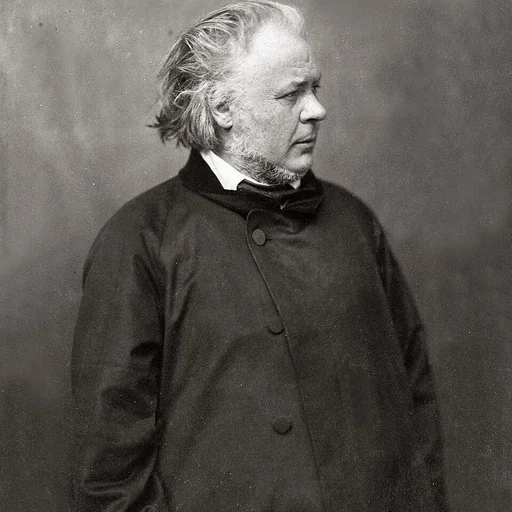
Artist
Honoré-Victorin Daumier was a French painter, sculptor, and printmaker, whose many works offer commentary on the social and political life in France, from the Revolution of 1830 to the fall of the Second French Empire in 1870.