Artwork
Bien venu qui apporte
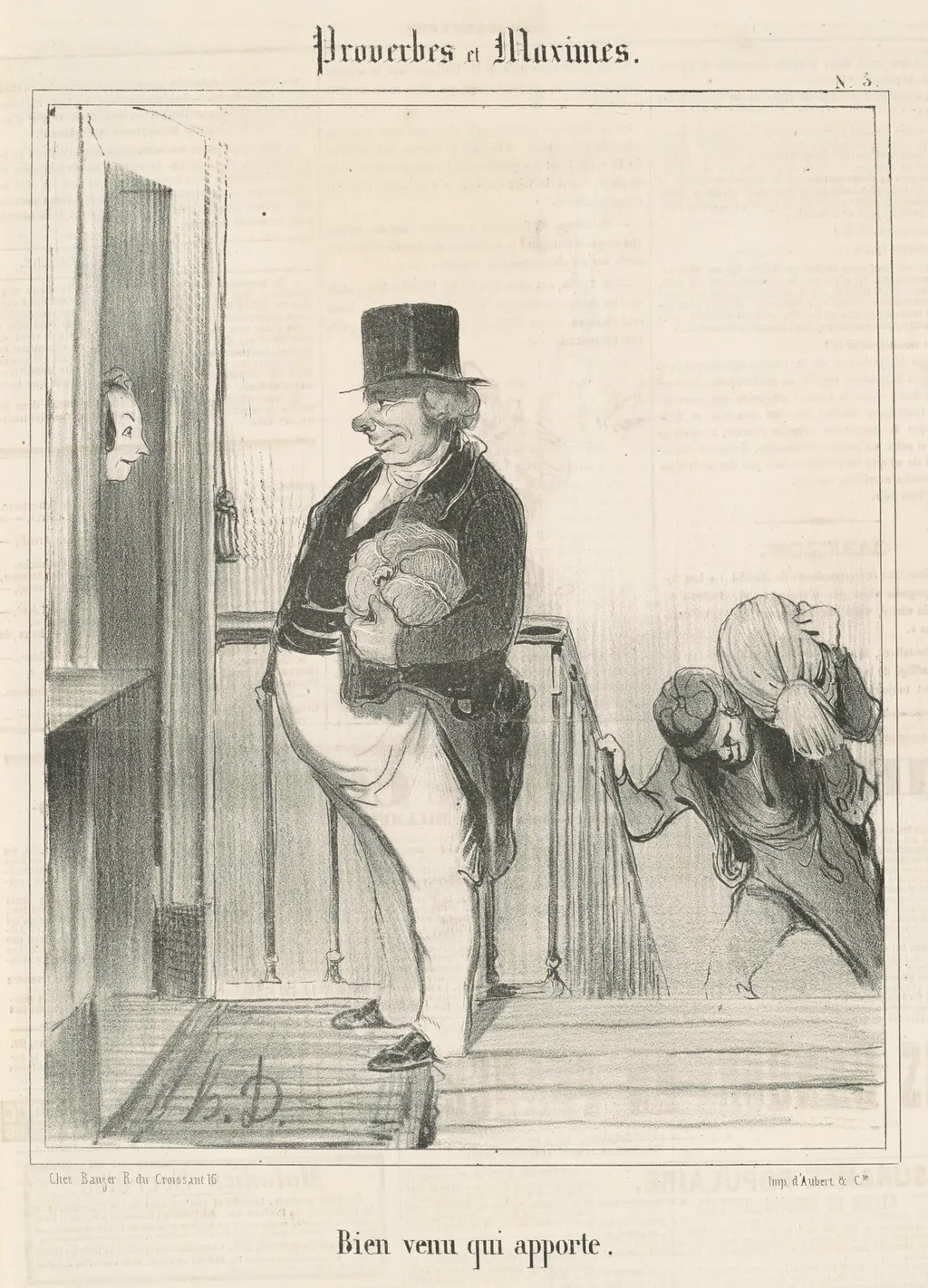
Bien venu qui apporte is an ink print by the Romanticist artist Honoré Daumier. It dates from 1840 and is held in the collection of the National Gallery of Art.
About this work
Overview
Bien venu qui apporte, a lithograph by Honoré Daumier, captures a fleeting moment of interaction at a doorstep, conveying a blend of humor and poignancy through the depiction of a portly man and a partially visible figure behind a door.
Subject & Meaning
The subject, a portly man, reveals his character through expressive posture and attire, inviting interpretation of his personality and the nature of his anticipated encounter. The scene offers insights into social dynamics and character study.
Technique & Style
Created using lithography, the work showcases Daumier's mastery of this medium, known for its ability to convey nuanced expressions and textures, enhancing the emotional depth of the captured moment.
Context
Part of Daumier's broader oeuvre focused on social observation, this lithograph reflects his interest in portraying everyday life and the people in it, often with a critical or humorous lens.
Legacy
While specific legacy details of 'Bien venu qui apporte' are not highlighted, it contributes to Daumier's reputation as a keen observer of 19th-century French society, influencing subsequent artists in the depiction of everyday life.
Artist & collection
Artist
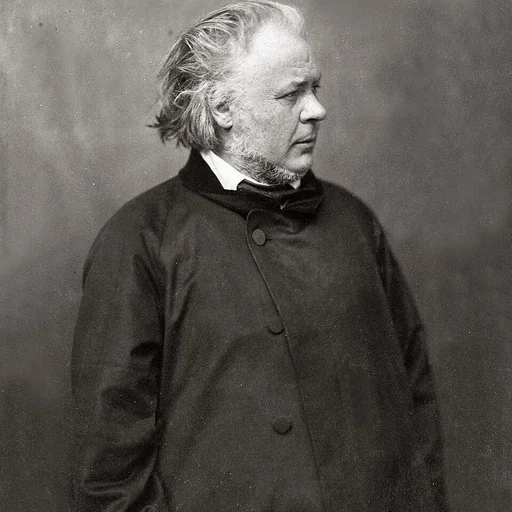
Honoré-Victorin Daumier was a French painter, sculptor, and printmaker, whose many works offer commentary on the social and political life in France, from the Revolution of 1830 to the fall of the Second French Empire in 1870.

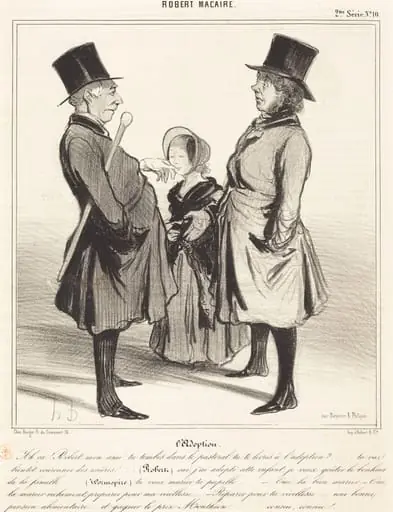 L'Adoption - Ah ça! Robert, mon ami...
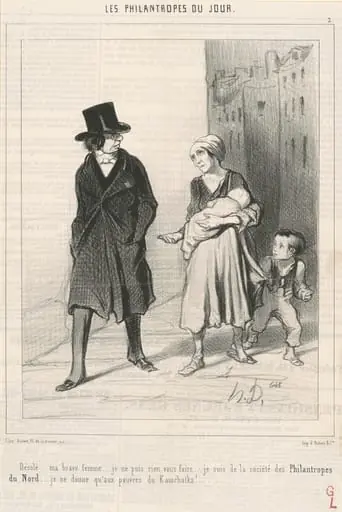 Désolé ... Je suis de la société des philantropes du nord ...
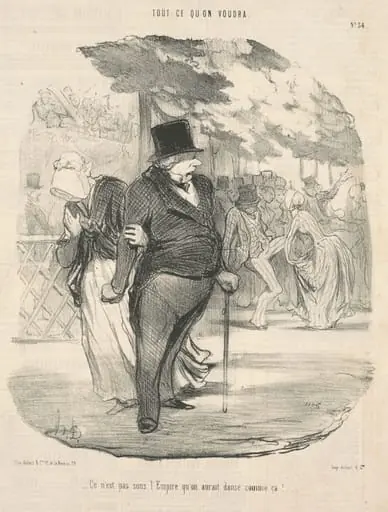 Ce n'est pas sous l"empire qu'on aurait dansé comme ca! ...
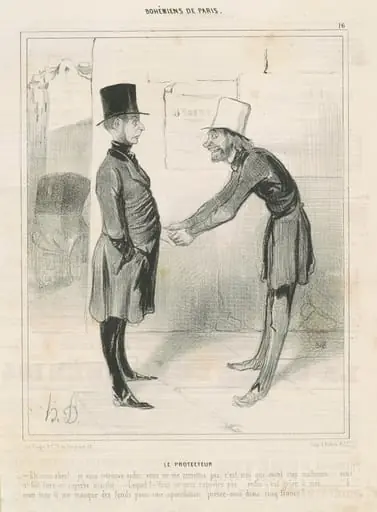 Le Protecteur
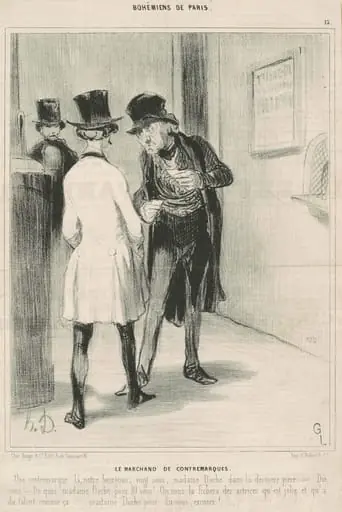 Le marchand de contremarques
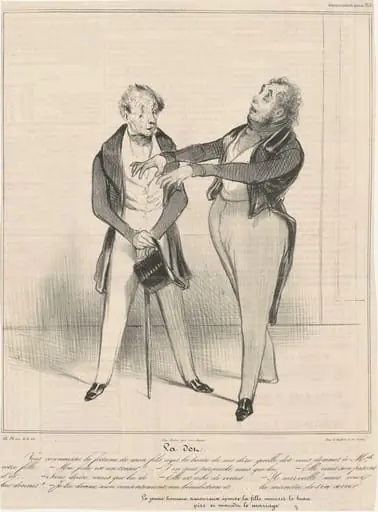 La Dot...vous connaissez la fortune...
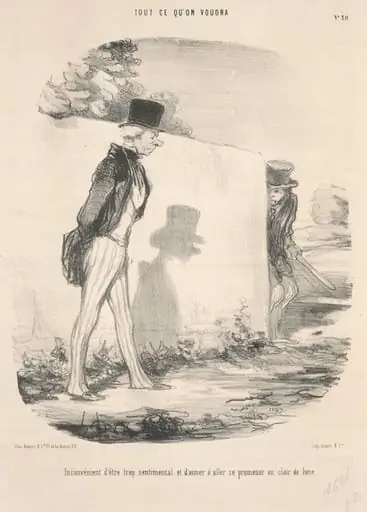 Inconvènient d'être trop sentimental ...
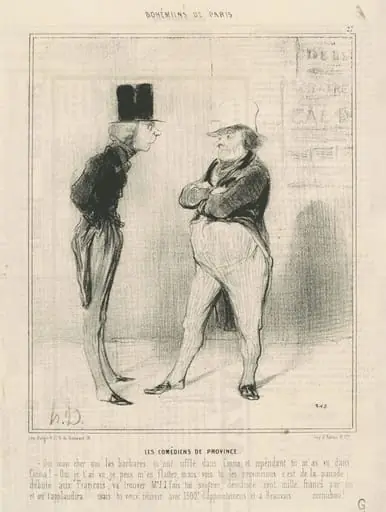 Les comédiens de province
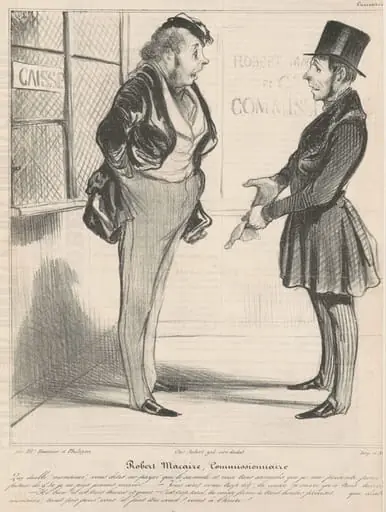 Robert Macaire commissionnaire