Artwork
Une lecture intéressante et rafraichissante
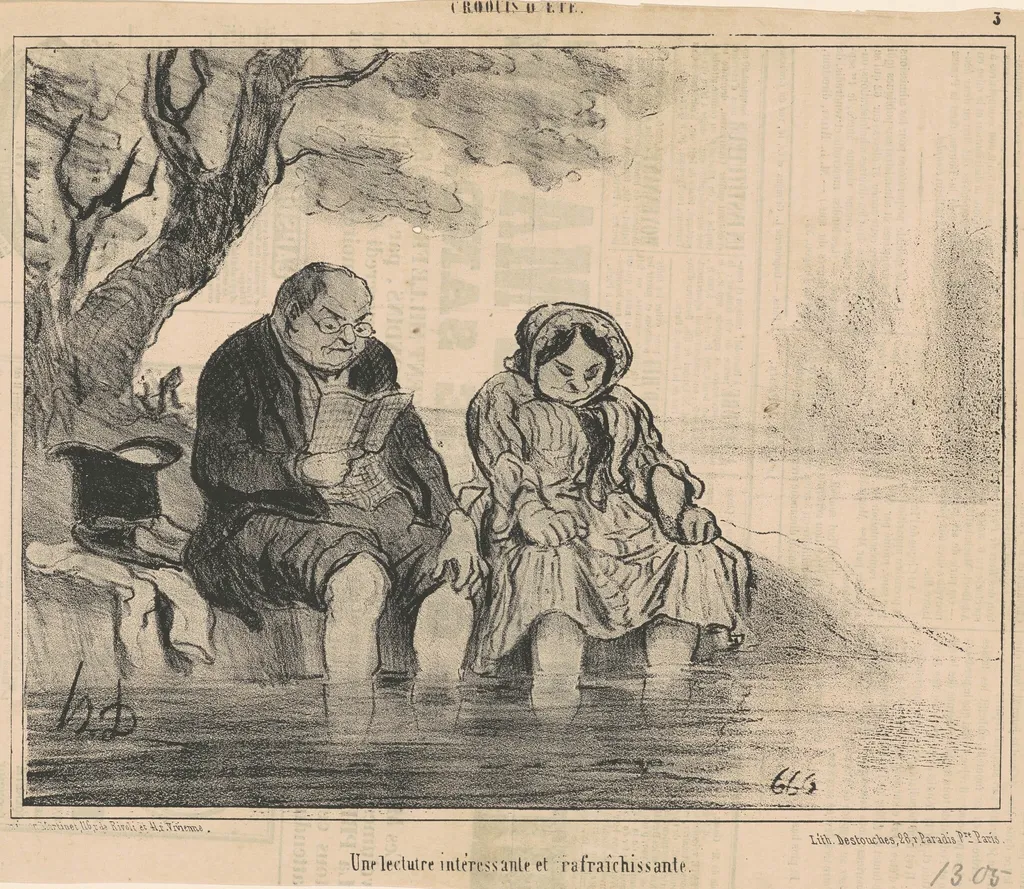
Une lecture intéressante et rafraichissante is an ink print by the Impressionist artist Honoré Daumier. It dates from 1854 and is held in the collection of the National Gallery of Art.
About this work
Overview
Its simplicity and attention to detail make it a representative example of his printmaking, which reached broad audiences through affordable reproduction.
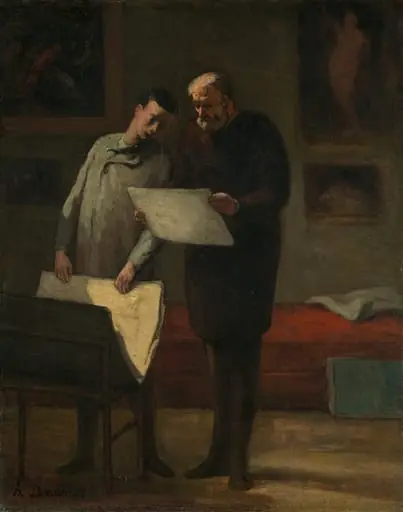
This lithograph by Honoré Daumier portrays a quiet moment of shared reading between two individuals beside a still body of water. Rendered in the lithographic technique, the image reflects Daumier’s interest in ordinary urban and suburban life during the mid-19th century. Its simplicity and attention to detail make it a representative example of his printmaking, which reached broad audiences through affordable reproduction.
Subject & Meaning
A man in a top hat and dark coat and a woman in a bonnet and long dress sit side by side, absorbed in a large sheet of paper. Their posture suggests intimacy and mutual engagement, not performance. The scene avoids drama, instead emphasizing stillness and private companionship. The setting—calm water, distant trees, and hazy sky—enhances the sense of respite from urban bustle, hinting at a fleeting moment of peace in daily routine.
Technique & Style
Daumier employed lithography, drawing directly on limestone with greasy crayon to create tonal contrasts. The print’s soft lines and muted gradations capture texture in fabric and foliage without heavy shading. His style favors economy of line and expressive gesture over detail, allowing the figures’ posture and arrangement to convey mood. The medium enabled mass production, aligning with his goal of making art accessible beyond elite circles.
History & Provenance
Created during Daumier’s prolific period of social commentary prints, this work likely dates to the 1850s or 1860s. It was produced as part of a series documenting middle-class leisure, circulating in periodicals or as standalone prints. While its exact publication history is undocumented, its survival in museum collections reflects its recognition as a representative example of Daumier’s observational printmaking.
Context
In mid-19th century France, rising literacy and leisure time expanded public interest in domestic and outdoor recreation. Daumier’s prints responded to this shift, portraying scenes of reading, strolling, and quiet conversation among the bourgeoisie. Unlike grand historical paintings, his work found value in unremarkable moments, offering a counter-narrative to academic art’s idealism.
Legacy
Daumier’s lithographs, including this one, helped redefine printmaking as a vehicle for social observation rather than mere illustration. His influence extended to later realist and modernist artists who valued everyday subject matter and expressive line. Though not widely exhibited in his lifetime, his prints gained scholarly attention in the 20th century as foundational to modern graphic art.
Artist & collection
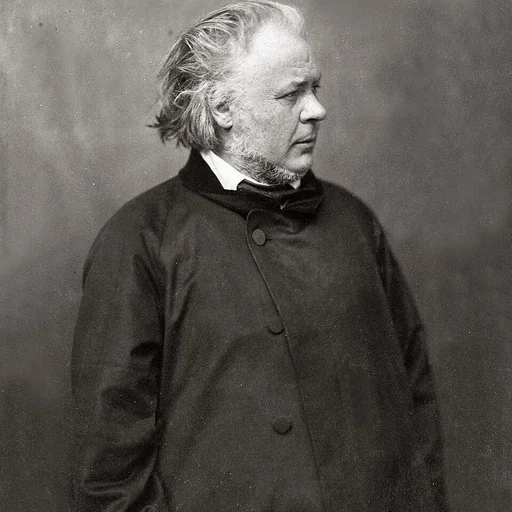
Artist
Honoré-Victorin Daumier was a French painter, sculptor, and printmaker, whose many works offer commentary on the social and political life in France, from the Revolution of 1830 to the fall of the Second French Empire in 1870.