Artwork
Une Maitresse a l'Opéra
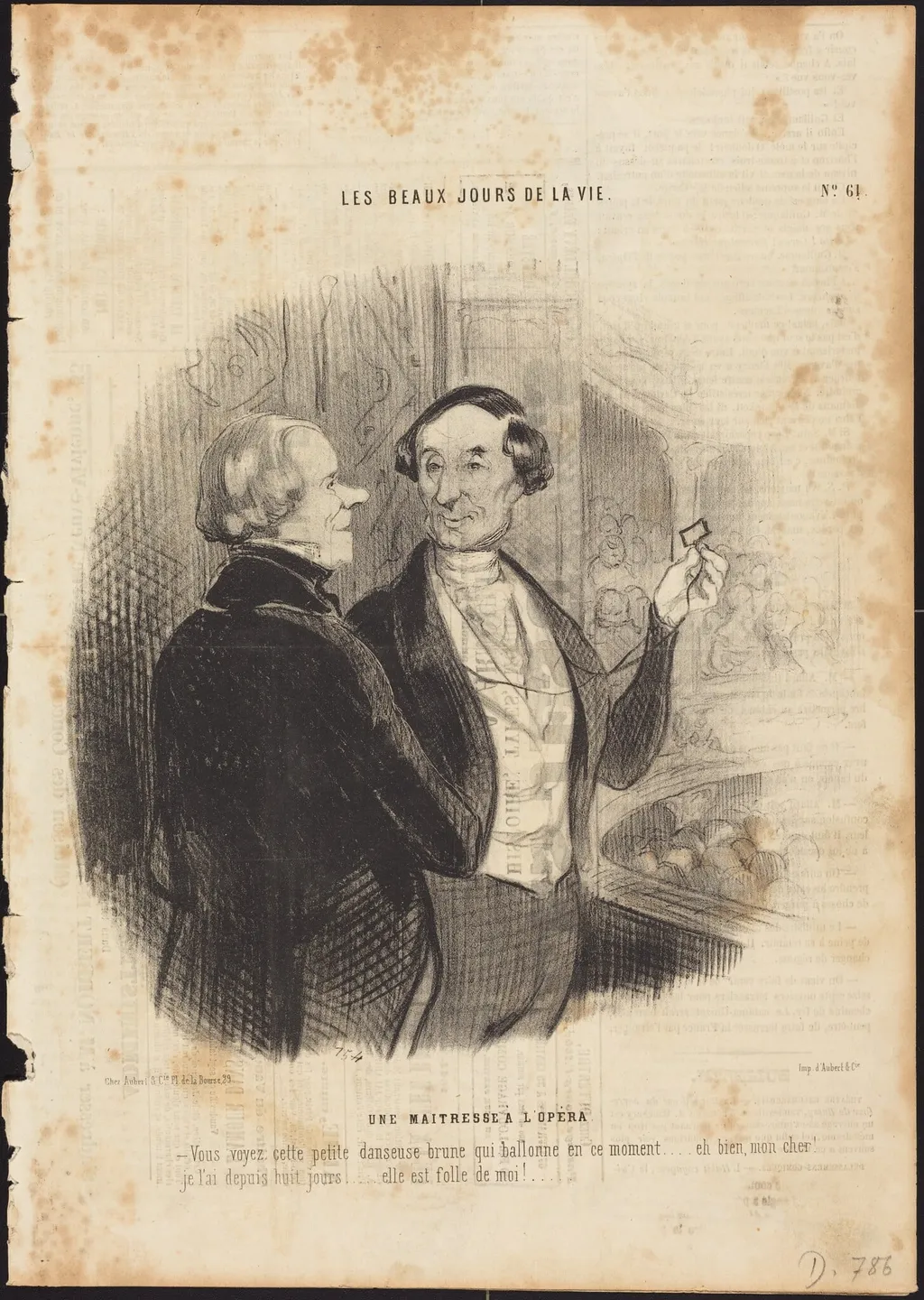
Une Maitresse a l'Opéra is an ink print by the Romanticist artist Honoré Daumier. It dates from 1845 and is held in the collection of the National Gallery of Art.
About this work
Overview
Working swiftly in lithography, he captured the manners and pretensions of Parisian audiences with minimal yet precise lines.
Honoré Daumier created this 1845 lithograph as part of a series of social satires published in French periodicals. Working swiftly in lithography, he captured the manners and pretensions of Parisian audiences with minimal yet precise lines. The image belongs to a broader body of work that used humor to critique class behavior, reflecting Daumier’s role as a visual commentator on urban life during the July Monarchy.
Subject & Meaning
The scene depicts two well-dressed men in an opera box, fixated on a distant dancer. One gestures toward her with a fan, while the other leans in attentively. The accompanying caption mocks their distracted fascination, implying the dancer’s affection is directed at the gazing patron. Daumier highlights the absurdity of aristocratic leisure, where spectacle becomes a pretext for idle observation and social posturing.
Technique & Style
Daumier employed lithography to achieve rapid, expressive results. His lines are economical yet evocative: the figures are simplified, the background rendered in loose, smudged strokes that suggest the dim, crowded auditorium. The contrast between the sharply drawn men and the blurred stage emphasizes their detachment from the performance, reinforcing the satire through visual hierarchy rather than detail.
History & Provenance
The print was originally published in *Le Charivari*, a satirical journal where Daumier regularly contributed. It circulated widely among Parisian middle-class readers, who recognized its critique of elite behavior. Though not signed or dated on the plate, its attribution is well-documented through contemporary publications and Daumier’s known output during this period.
Context
Produced during a time of political tension under Louis-Philippe’s regime, Daumier’s prints often veiled criticism of authority beneath humor. The opera, a symbol of bourgeois refinement, became a stage for exposing moral emptiness. By focusing on audience behavior rather than performers, Daumier shifted attention to the social rituals of power and privilege.
Legacy
Daumier’s lithographs influenced later generations of illustrators and cartoonists by demonstrating how everyday scenes could carry sharp social critique. His ability to distill complex behaviors into a few lines helped establish print satire as a legitimate art form. This work remains a reference point in studies of 19th-century visual culture and the intersection of art and journalism.
Artist & collection
Artist
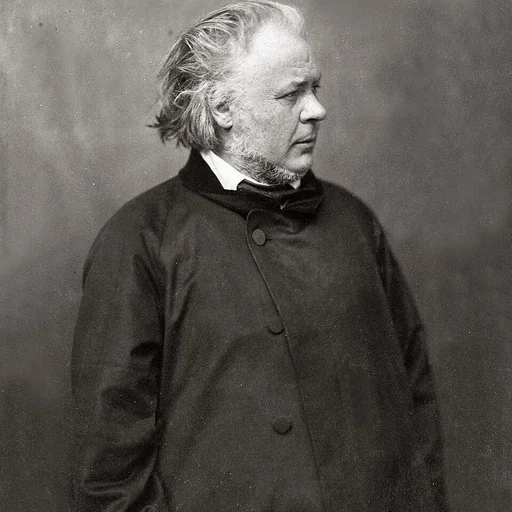
Honoré-Victorin Daumier was a French painter, sculptor, and printmaker, whose many works offer commentary on the social and political life in France, from the Revolution of 1830 to the fall of the Second French Empire in 1870.









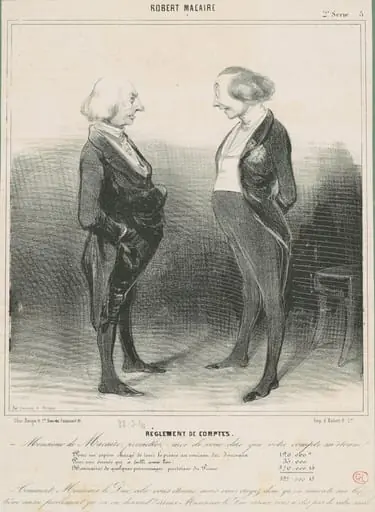 Réglement de comptes
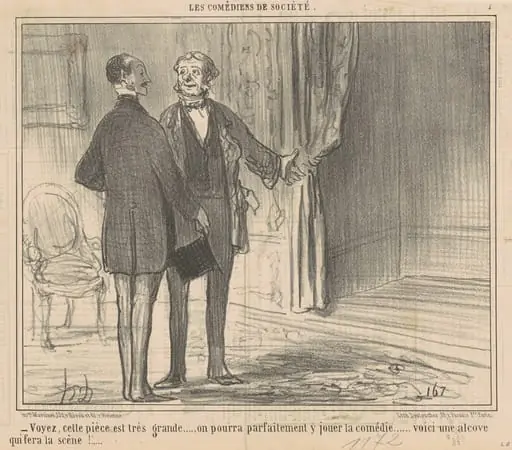 Voyez, cette pièce est très grande ...
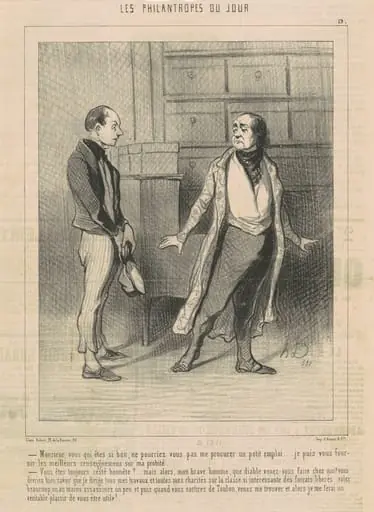 Monsieur vous qui êtes si bon ...
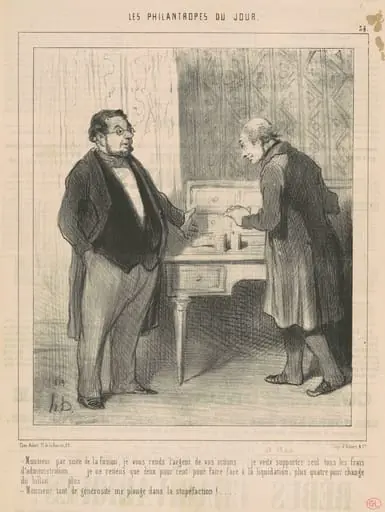 Monsieur par suite de la fusion
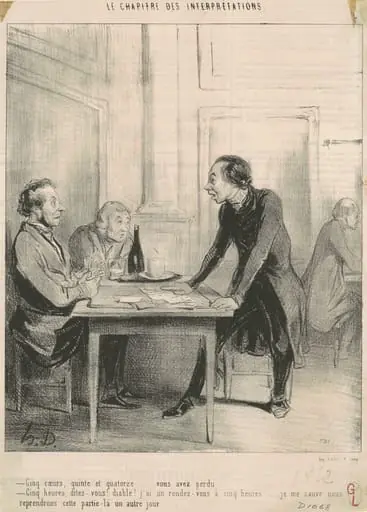 Cinq coeurs, quinte et quatorze ...
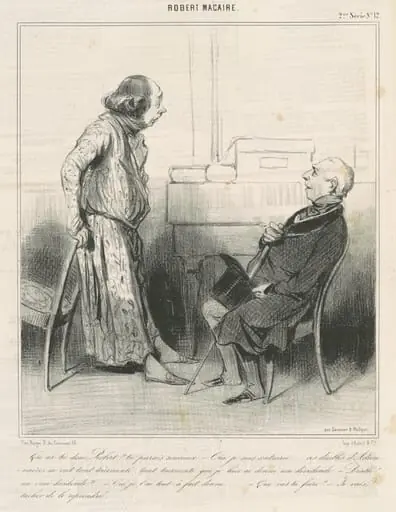 Qu'as-tu donc, Robert? ...
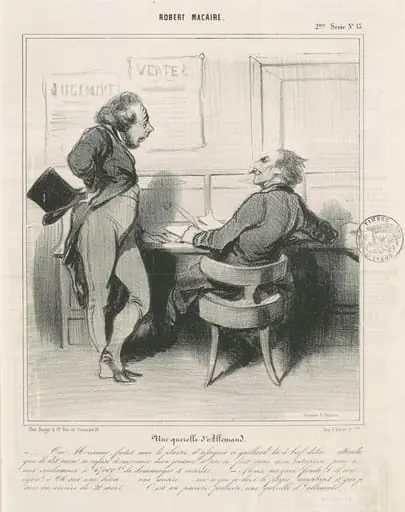 Une querelle d'allemand
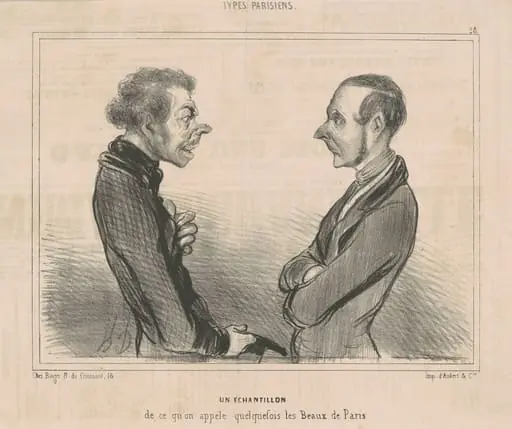 Un échantillon de ce qu'on appèll...les beaux de paris
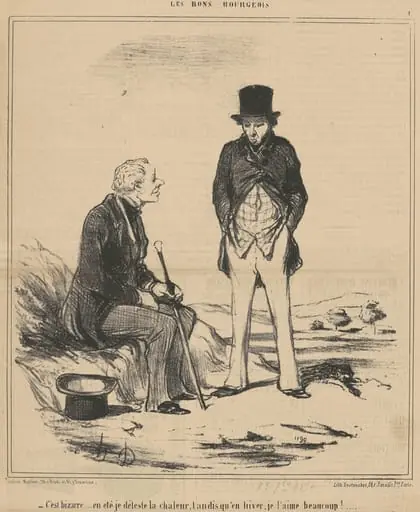 C'est bizarre ... été
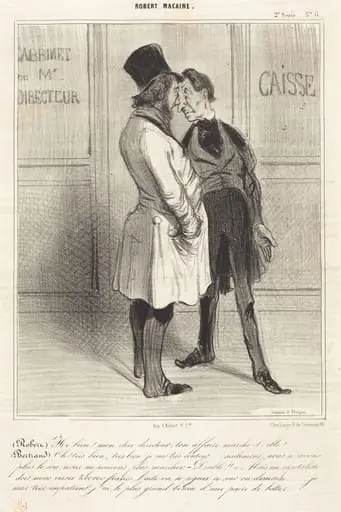 (Robert) Hé bien! mon cher directeur...
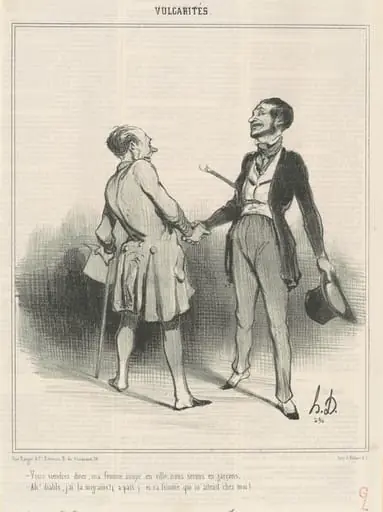 Vous viendrez diner, ma femme soupe en ville ...
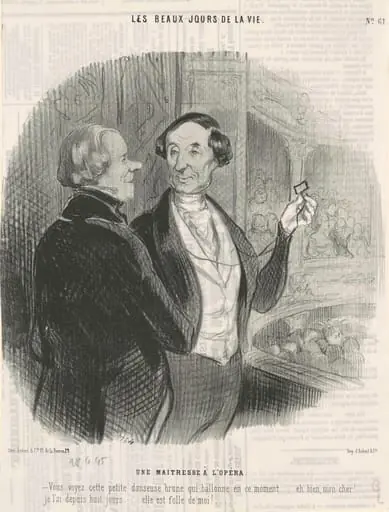 Une maitresse a l'opera