Artwork
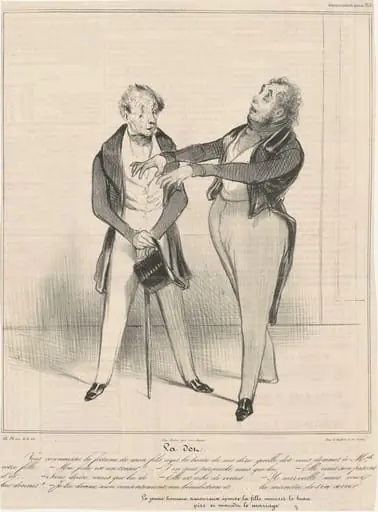
Vous viendrez diner, ma femme soupe en ville ...
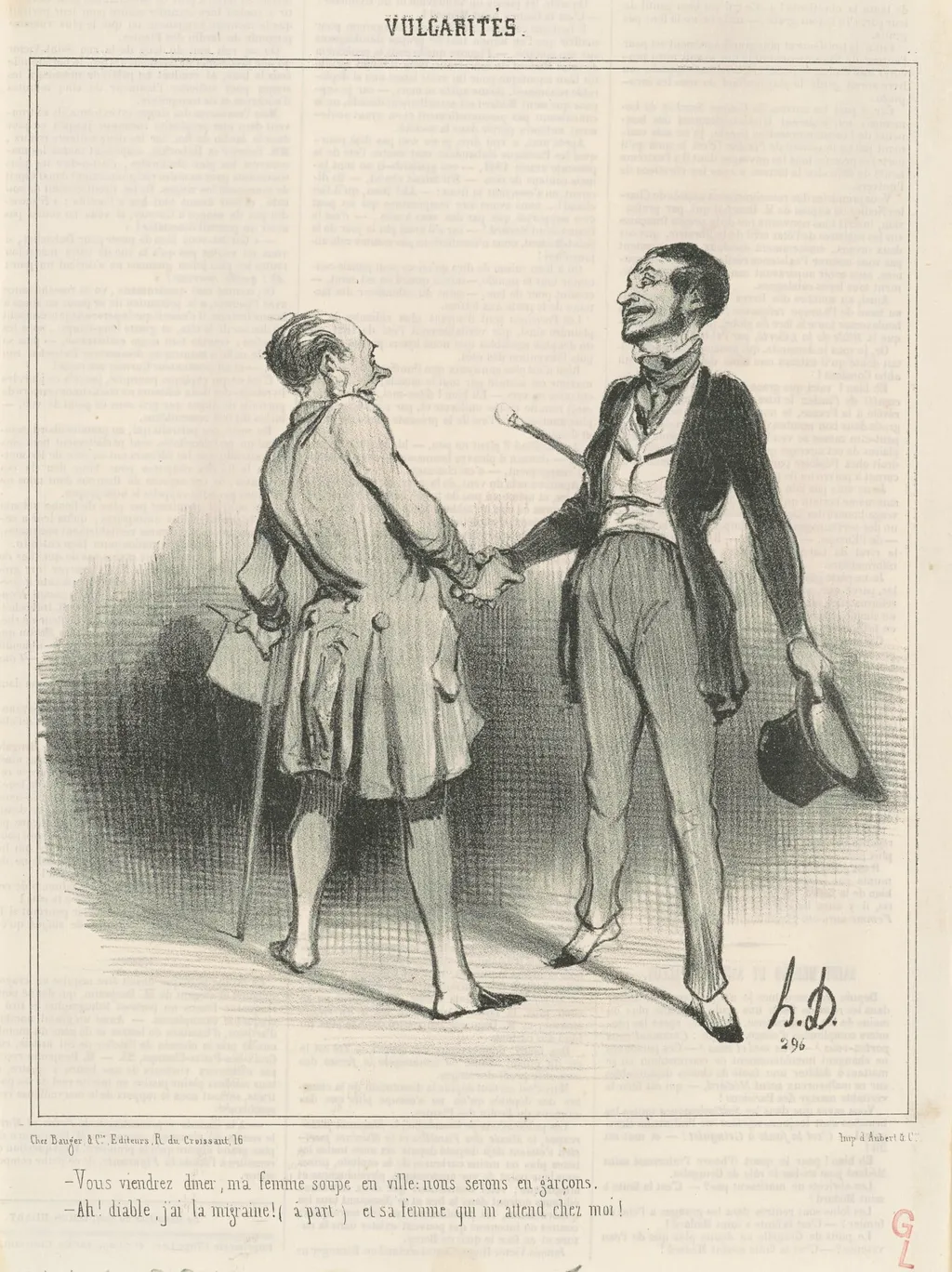
Vous viendrez diner, ma femme soupe en ville ... is an ink print by the Romanticist artist Honoré Daumier. It dates from 1841 and is held in the collection of the National Gallery of Art.
About this work
Overview
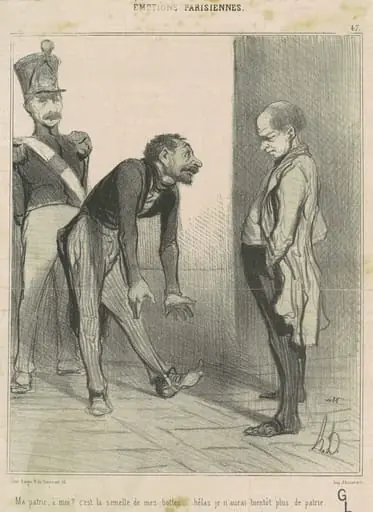
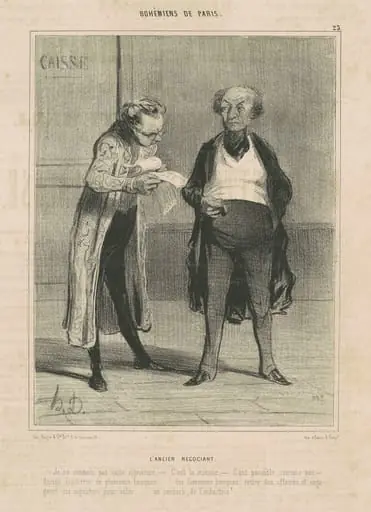
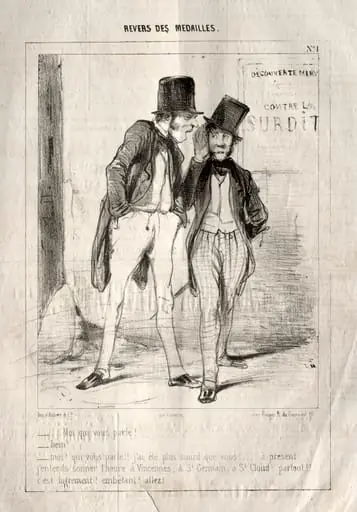
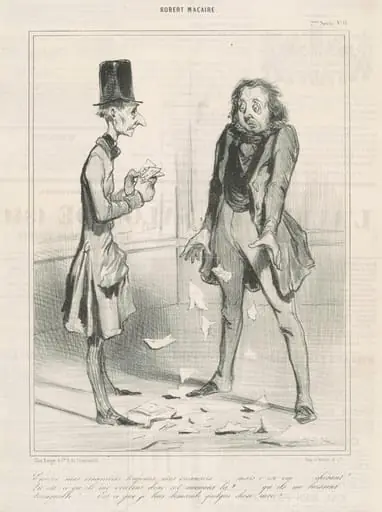
Honoré Daumier’s lithograph titled *Vous viendrez dîner, ma femme soupe en ville* presents a brief encounter between two formally dressed gentlemen. The scene is set in an unadorned interior where the men exchange a handshake, one holding a top hat, the other a walking cane. The composition isolates the figures, drawing attention to their posture and attire.
Subject & Meaning
The work depicts a customary greeting ritual of mid‑nineteenth‑century France, where a handshake accompanied by the exchange of personal items signified respect and social acknowledgement. By focusing on the gestures rather than background details, Daumier underscores the importance of etiquette and the subtle power dynamics inherent in such public interactions.
Technique & Style
Created through lithography, Daumier sketched directly onto a smooth limestone slab, which was then treated, inked, and pressed onto paper. This process yields a slightly uneven line quality, lending the image a spontaneous, expressive texture that contrasts with the precise tailoring of the subjects’ clothing.
Context
During the 1800s, urban French society placed great emphasis on formal dress and public decorum, especially among the emerging middle class. Daumée’s choice to portray a simple, everyday exchange reflects his broader interest in the social habits of his time, offering a visual commentary on contemporary manners.
Legacy
While the print is modest in scale, it exemplifies Daumier’s ability to capture fleeting social moments with humor and insight. The lithograph remains a valuable reference for scholars studying 19th‑century French customs and the development of printmaking as a medium for social observation.
Artist & collection
Artist
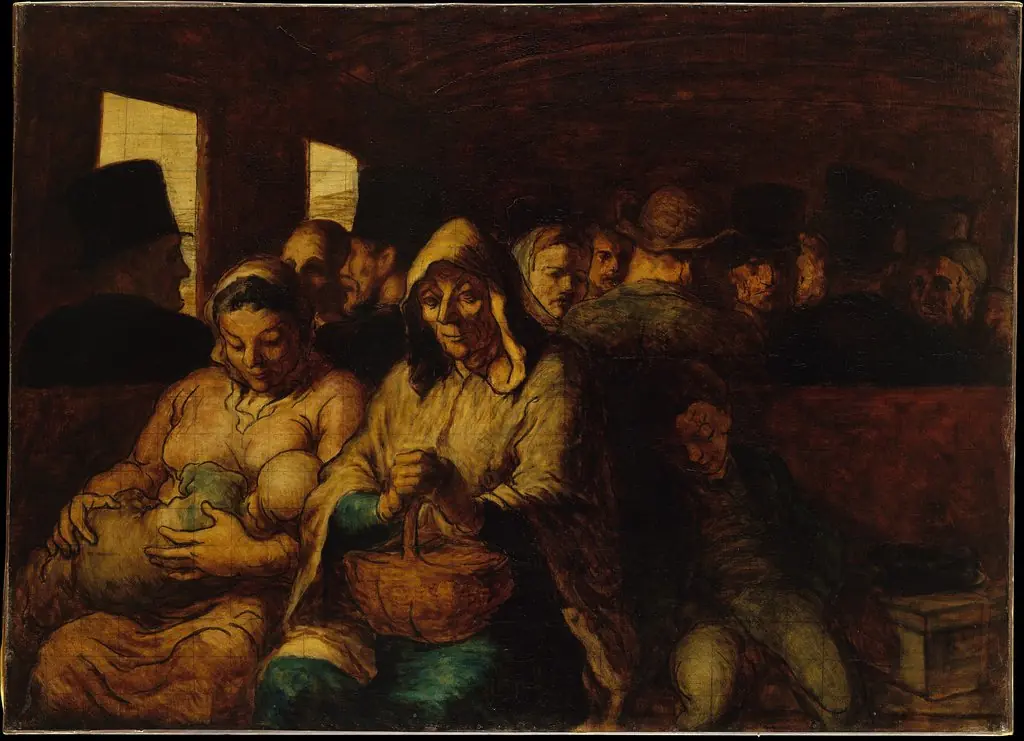
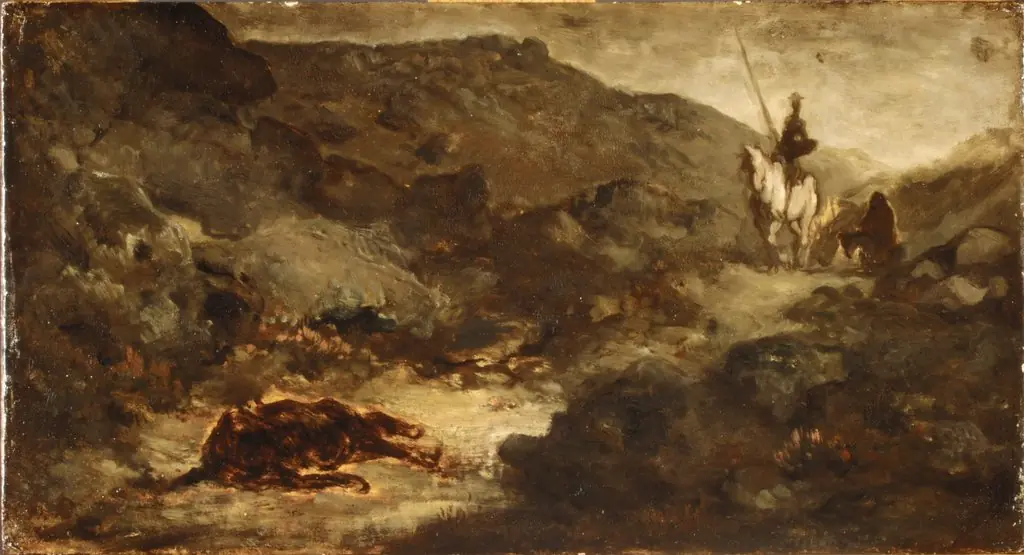
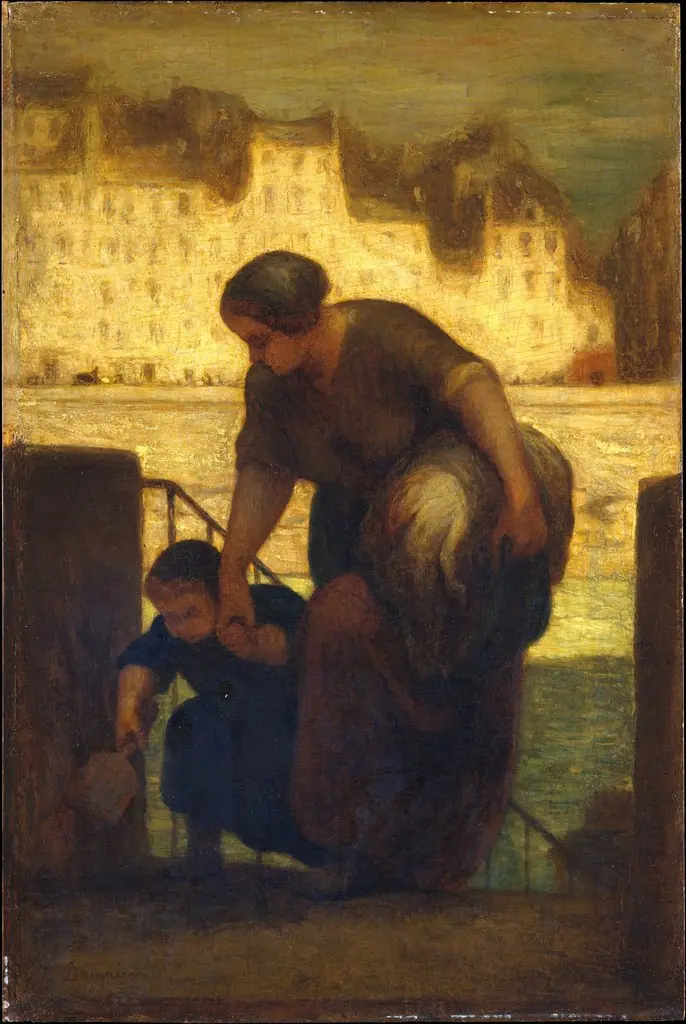
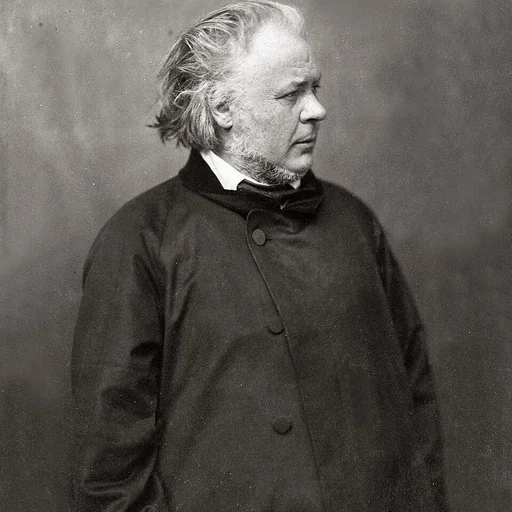
Honoré-Victorin Daumier was a French painter, sculptor, and printmaker, whose many works offer commentary on the social and political life in France, from the Revolution of 1830 to the fall of the Second French Empire in 1870.