Artwork
Une promenade d'argrément aux Champs-Elysées
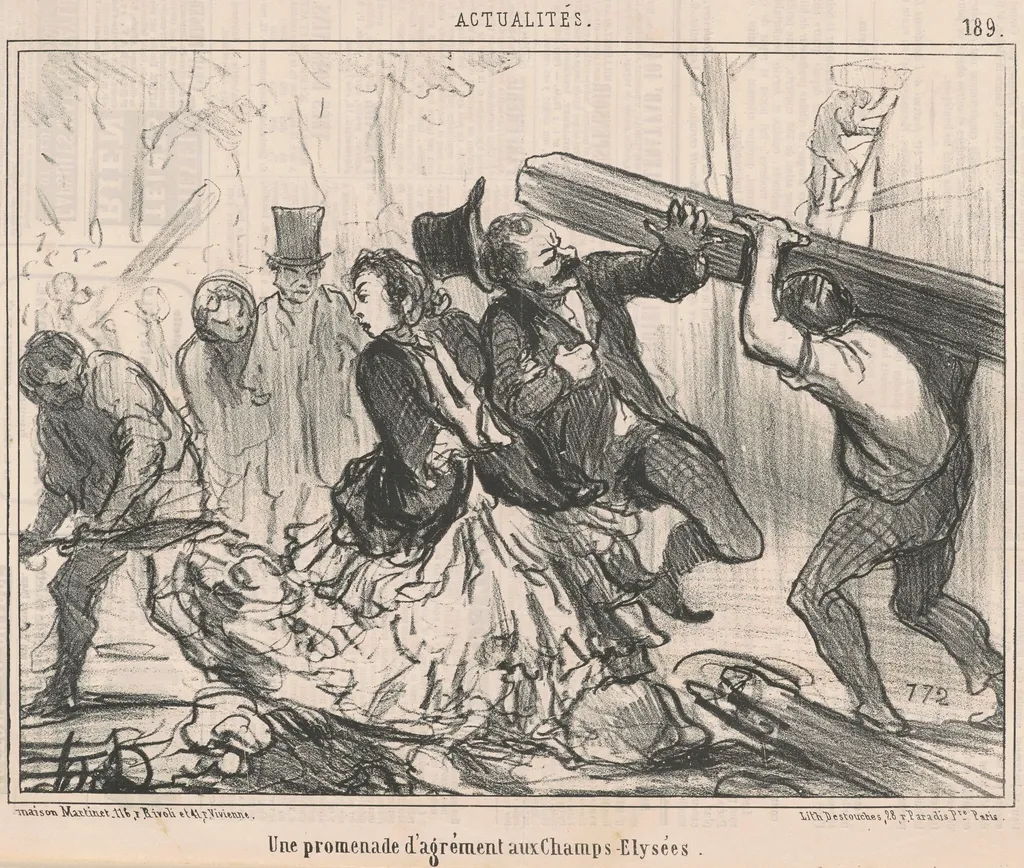
Une promenade d'argrément aux Champs-Elysées is an ink print by the Impressionist artist Honoré Daumier. It dates from 1855 and is held in the collection of the National Gallery of Art.
About this work
You see a busy Paris street scene packed with tiny figures. Daumier’s sharp lithograph style makes the crowd feel alive. His bold lines turn stiff poses into quick, funny moments.
This print shows daily life in 1855 Paris. Daumier was famous for mocking the rich and powerful. His work feels urgent, like a snapshot with a punch.
If you like his style, check out Daumier, Honoré.
Overview
Created in 1855, this lithograph by Honoré Daumier captures a weekday stroll along the Champs-Élysées in Paris. As a print made for mass circulation, it reflects the artist’s interest in urban life and social observation. The composition is dense with figures, each rendered with minimal detail yet distinct in posture and gesture, conveying the rhythm of public space in mid-19th-century France.
Subject & Meaning
The scene portrays ordinary Parisians—bourgeois, workers, and idlers—moving through the avenue with varied expressions and postures. Daumier does not idealize the crowd; instead, he highlights their awkwardness, vanity, and routine. The work subtly critiques social pretensions, a recurring theme in his oeuvre, turning public leisure into a stage for quiet satire without overt caricature.
Technique & Style
Daumier employed lithography to achieve rapid, fluid lines that suggest movement rather than define form. His use of dense ink and sharp contrasts gives the crowd a sense of urgency and spontaneity. Figures are simplified into essential shapes, their gestures exaggerated just enough to imply character. The technique mirrors the fleeting nature of street life, prioritizing energy over precision.
History & Provenance
Produced during a period of political repression under Napoleon III, the print likely circulated in periodicals or as a standalone sheet, reaching a broad audience. Though not signed or dated on the plate, its style and subject align with Daumier’s work for publications like Le Charivari. Its survival in museum collections reflects its status as a document of everyday Parisian life in the 1850s.
Context
The Champs-Élysées, recently redesigned under Haussmann’s urban reforms, had become a symbol of modern Parisian society. Daumier’s depiction contrasts official narratives of progress with the messy reality of its users. His work stands apart from romanticized views of the city, offering instead an unvarnished record of how different classes inhabited shared public space.
Legacy
This print exemplifies Daumier’s influence on later realist and modernist artists who sought to capture urban experience with honesty. His ability to distill complex social dynamics into a single image paved the way for visual journalism and graphic storytelling. Though not widely exhibited in his lifetime, such works are now recognized as foundational to the depiction of modern life in art.
Artist & collection
Artist
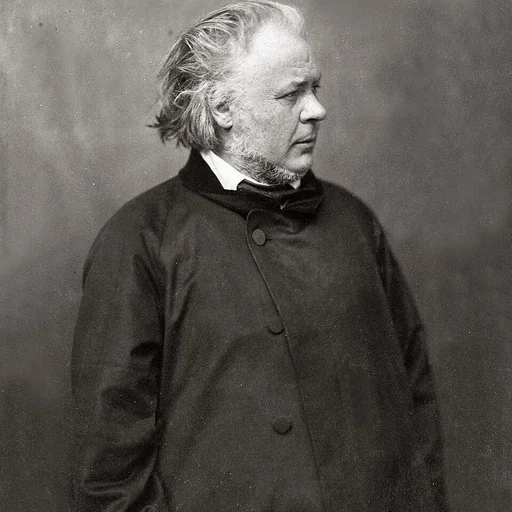
Honoré-Victorin Daumier was a French painter, sculptor, and printmaker, whose many works offer commentary on the social and political life in France, from the Revolution of 1830 to the fall of the Second French Empire in 1870.

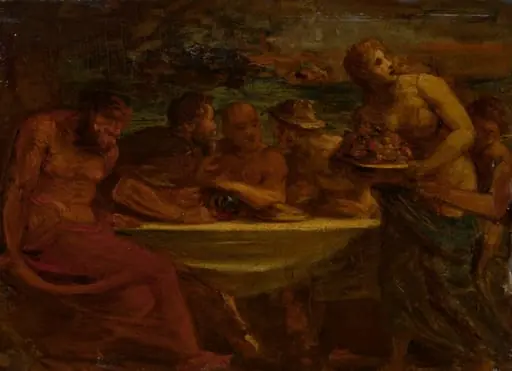
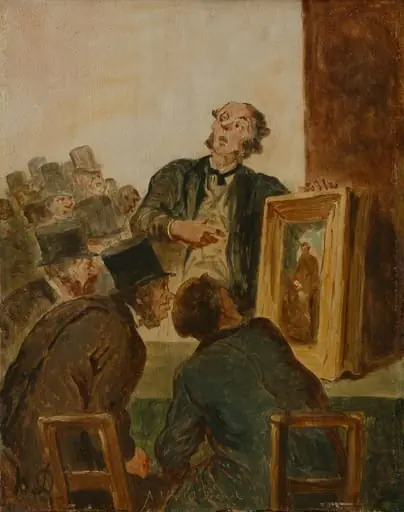
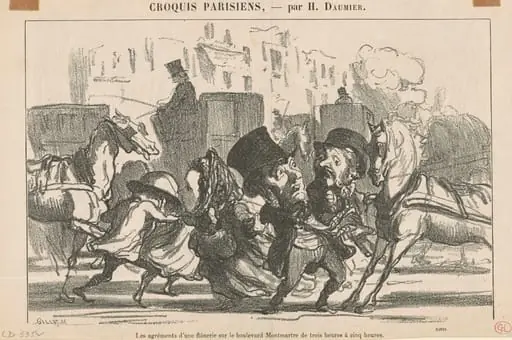 Les agréments d'une flanerie ...
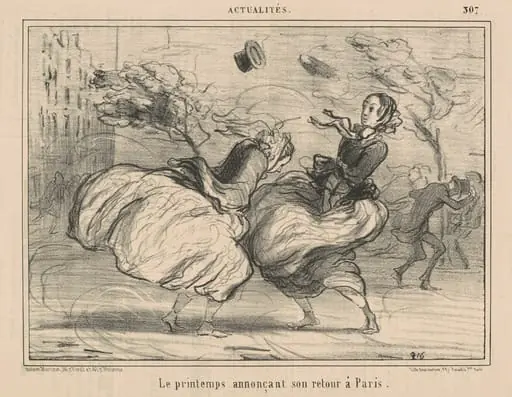 Le printemps annonçant son retour à Paris
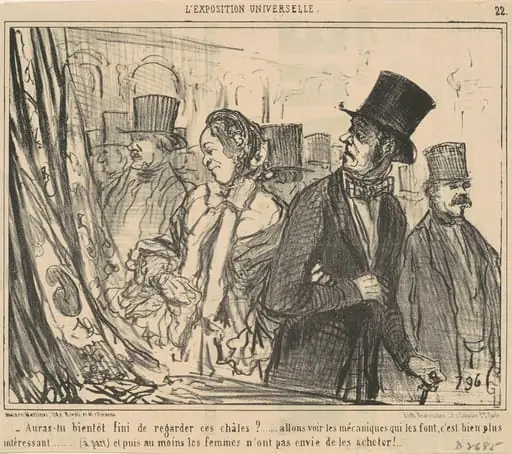 Auras-tu bientot fini de regarder ces chales?
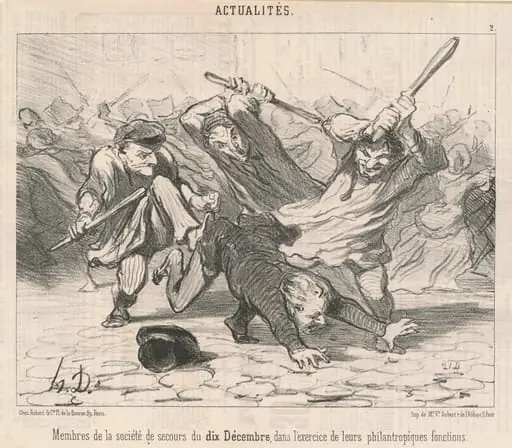 Membres de la société de secours du Dix-Décembre ...
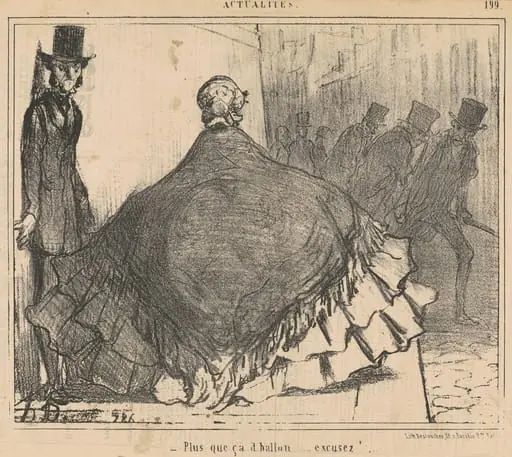 Plus que ca d'ballon ... Excusez! ...
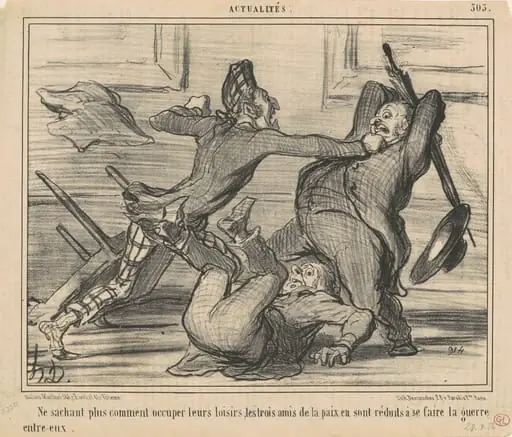 Ne sachant plus comment utiliser leurs loisirs ...
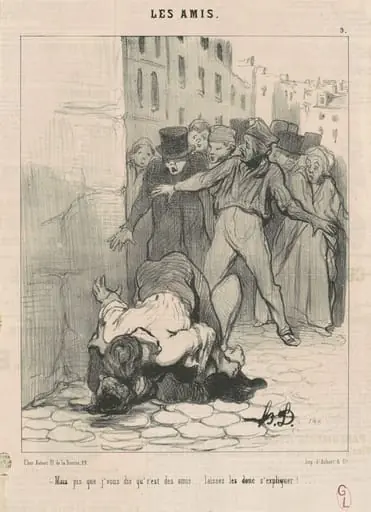 Mais pis que j'vous dis qu'c'est des amis ...
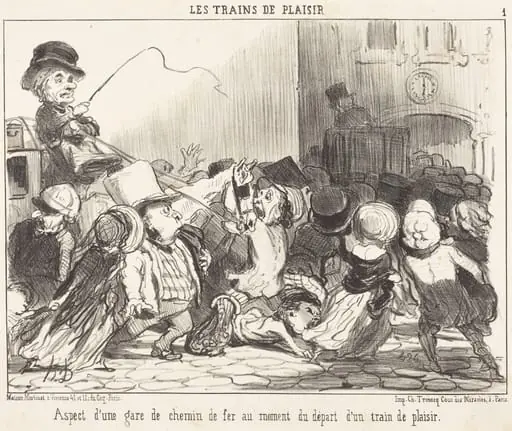 Aspect d'une gare de chemin de fer...
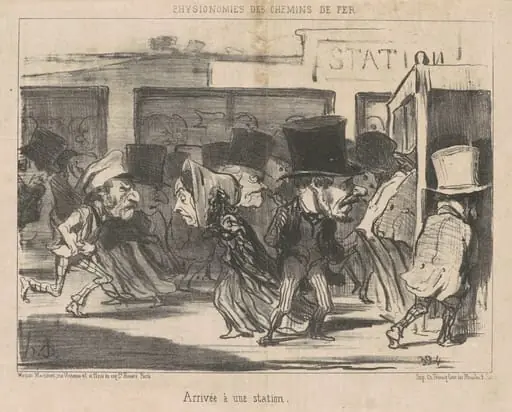 Arrivée a une station