Artwork
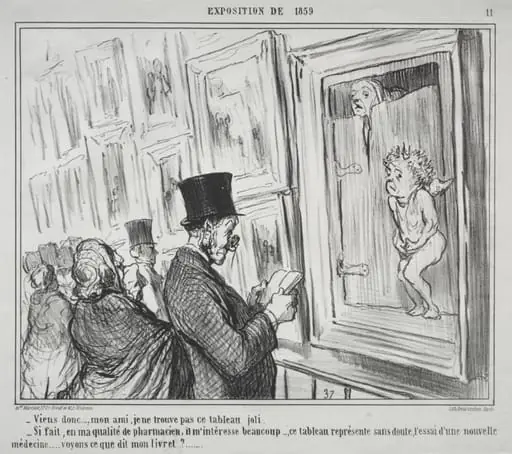
Viens donc ..., mon ami, je ne trouve pas ...
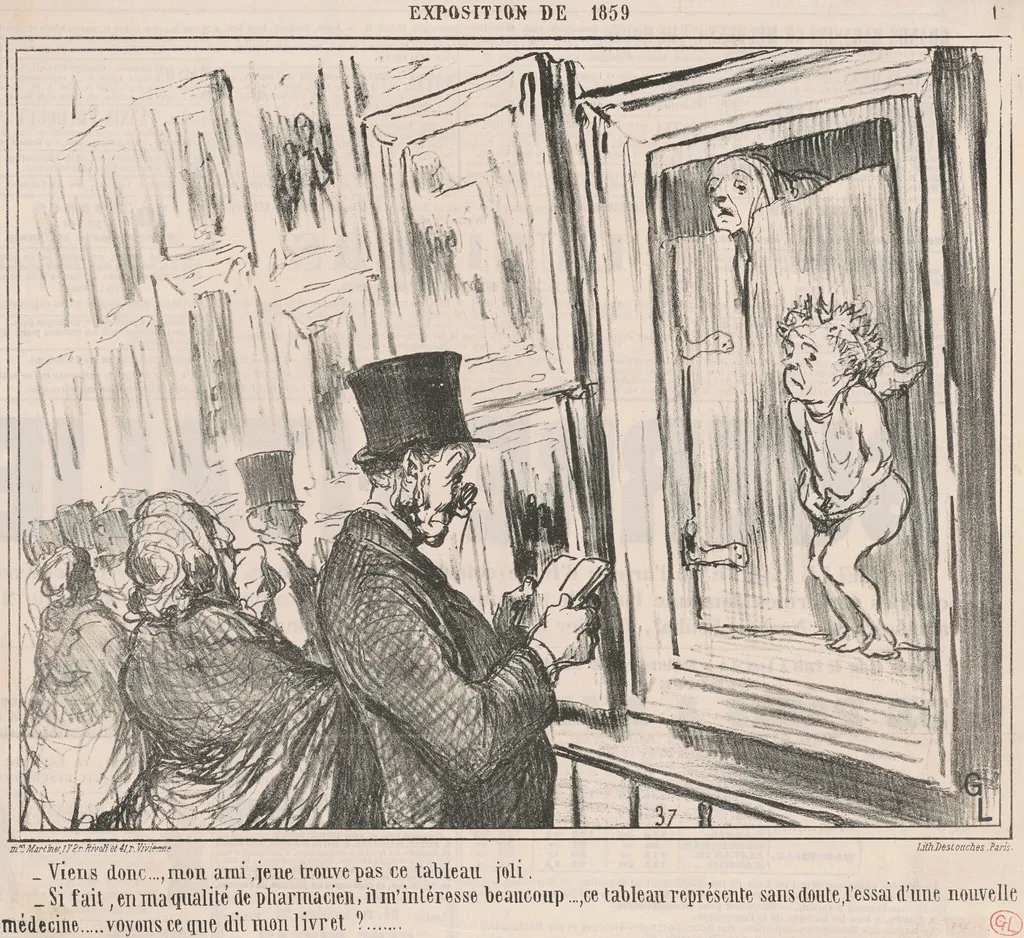
Viens donc ..., mon ami, je ne trouve pas ... is an ink print by the Impressionist artist Honoré Daumier. It dates from 1859 and is held in the collection of the National Gallery of Art.
About this work
Overview
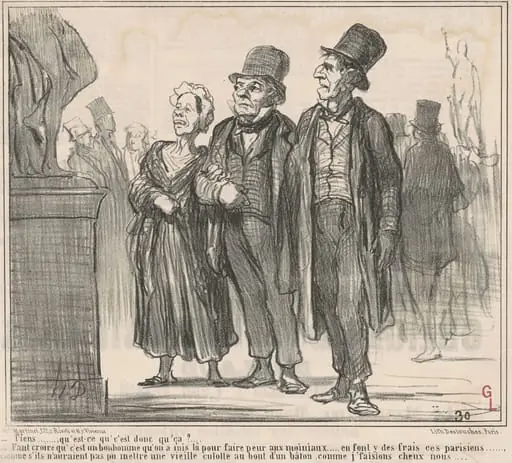
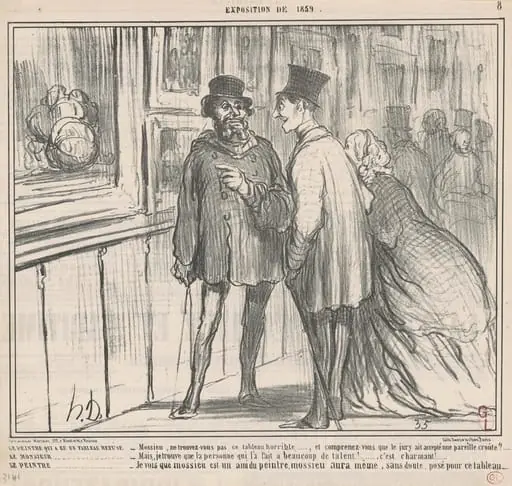
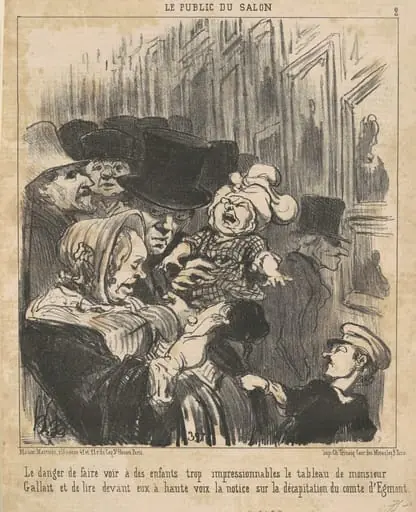
Created in 1859, this lithograph by Honoré Daumier depicts a crowded art exhibition, capturing a fleeting moment of social interaction among attendees. Rendered in ink on paper, the work belongs to a series of prints that observe public life in mid-nineteenth-century Paris. Daumier’s focus is not on the artworks displayed, but on the behavior of those who come to view them.
Subject & Meaning
Daumier highlights how social status and pretense shape the experience of viewing art, turning galleries into stages for self-presentation.
The scene centers on a group of well-dressed spectators, including a woman wrapped in a dark shawl and several men in top hats, engaged in quiet, intense conversation. Their gestures and glances suggest skepticism or amusement, revealing the performative nature of art criticism. Daumier highlights how social status and pretense shape the experience of viewing art, turning galleries into stages for self-presentation.
Technique & Style
Daumier employed lithography to achieve rapid, expressive lines that convey movement and texture with minimal detail. Figures are suggested through bold contours and tonal contrasts rather than precise rendering, emphasizing posture and gesture over individual identity. The composition is densely packed, mirroring the claustrophobia of the exhibition space and reinforcing the sense of crowded, unfiltered observation.
History & Provenance
The print was produced during a period when Daumier regularly contributed to satirical journals, using lithography to comment on contemporary society. Though originally published in a periodical, this image was later collected as part of his broader critique of bourgeois culture. Its survival in museum collections reflects its enduring value as a document of social observation.
Context
In 1859, Paris hosted frequent public exhibitions where art was both admired and ridiculed by a growing middle class. Daumier, long familiar with the art world’s pretensions, used his position as a cartoonist to expose the gap between public display and private judgment. His work resonated with audiences who recognized the absurdities of cultural performance in an increasingly commercialized society.
Legacy
This lithograph remains a key example of Daumier’s ability to transform everyday scenes into incisive social commentary. It influenced later artists interested in the psychology of crowds and the rituals of public life. Rather than celebrating art, it reveals the human theater surrounding it — a perspective that continues to inform observational art and documentary practice.
Artist & collection
Artist
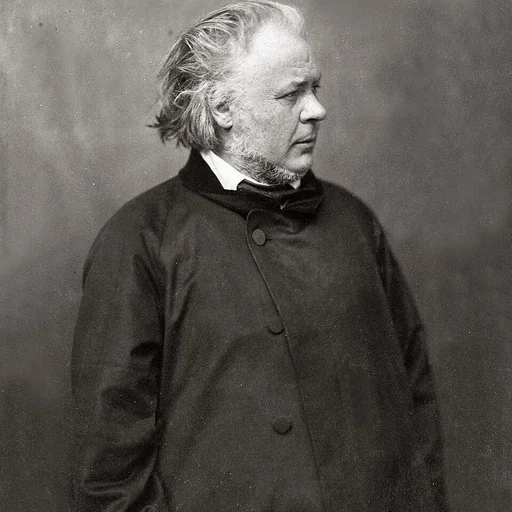
Honoré-Victorin Daumier was a French painter, sculptor, and printmaker, whose many works offer commentary on the social and political life in France, from the Revolution of 1830 to the fall of the Second French Empire in 1870.