Artwork
Villageois économes se contentant ... (recto); A la campagne, pas de grèves de cochers ... (verso)
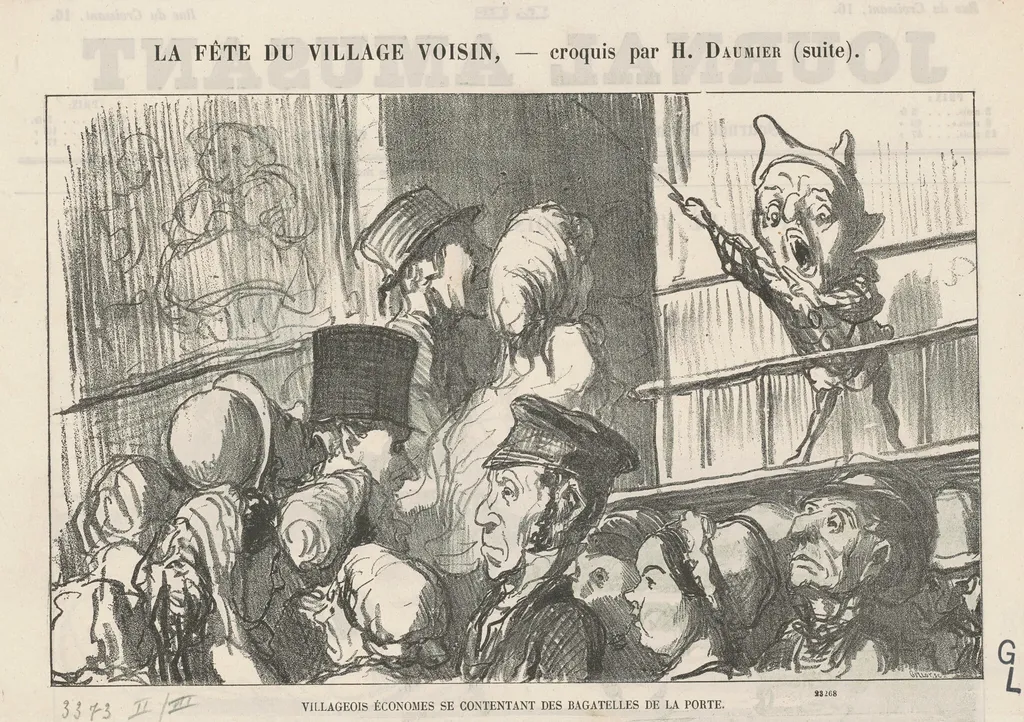
Villageois économes se contentant ... (recto); A la campagne, pas de grèves de cochers ... (verso) is an ink print by the Impressionist artist Honoré Daumier. It dates from 1865 and is held in the collection of the National Gallery of Art.
About this work
You see a crowded theater balcony in this 1865 lithograph. The audience wears old-fashioned clothes. A puppet with big features sits on the right. Its face looks silly, but the stage behind it is fancy.
Daumier made this for a funny magazine. He used sharp lines to show rich and poor together. The puppet reminds me of street shows he liked.
Check out more lithographs by Daumier, Honoré.
Overview
This 1865 lithograph by Honoré Daumier presents a dual composition. The recto, 'Villageois économes se contentant ...', and the verso, 'A la campagne, pas de grèves de cochers ...', collectively depict a theatrical scene in a crowded theater balcony.
Subject & Meaning
The primary subject is a lively stage performance observed by a diverse audience in period dress. A comical puppet with exaggerated facial features dominates the right side, introducing a layer of satire or social commentary, characteristic of Daumier's work.
Technique & Style
Daumier employed sharp, defined lines to render the detailed backdrop and the contrast between the puppet's simplicity and the audience's intricately drawn, old-fashioned attire, highlighting his mastery of lithographic techniques to convey social contrast.
History & Provenance
Created in 1865 for publication in a humorous magazine, this lithograph reflects Daumier's penchant for observing and critiquing societal norms through accessible, witty visuals.
Context
The work is reminiscent of street theater, a form Daumier often depicted, suggesting a commentary on the intersection of entertainment and social class in mid-19th-century France.
Artist & collection
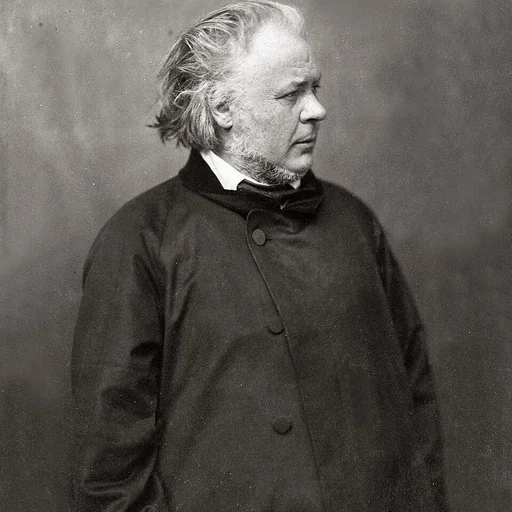
Artist
Honoré-Victorin Daumier was a French painter, sculptor, and printmaker, whose many works offer commentary on the social and political life in France, from the Revolution of 1830 to the fall of the Second French Empire in 1870.









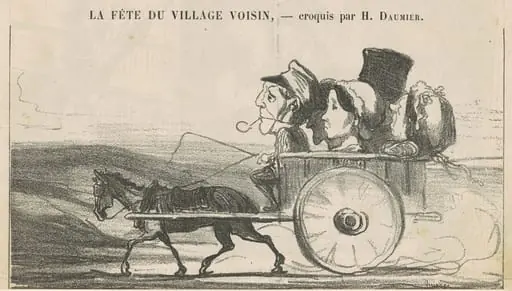 A la campagne, pas de grèves de cochers ... (recto); Villageois économes se contentant ... (verso)
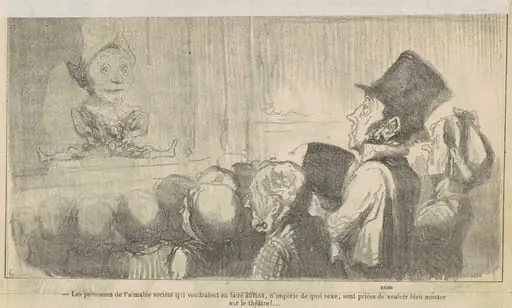 Les personnes de l'aimable société qui ...
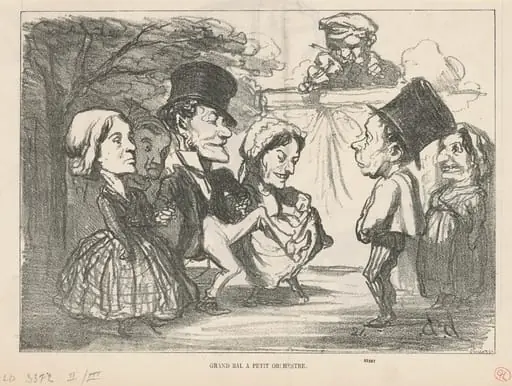 Grand bal a petit orchestre... (recto); Une société en nom collectif (verso)
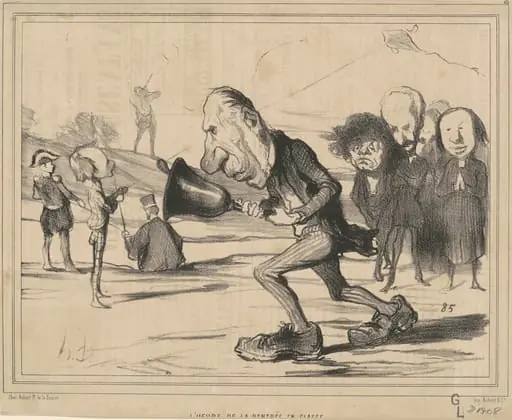 L'heure de la rentrée en classe
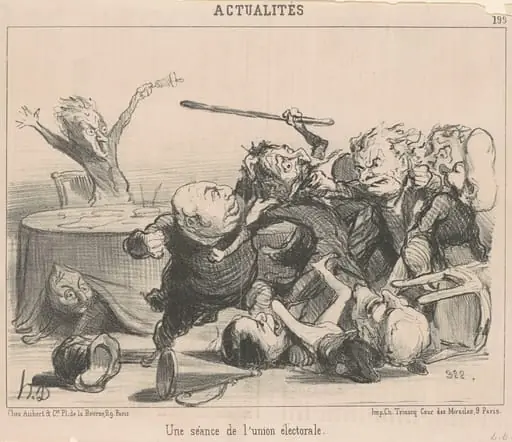 Une séance de l'union électorale
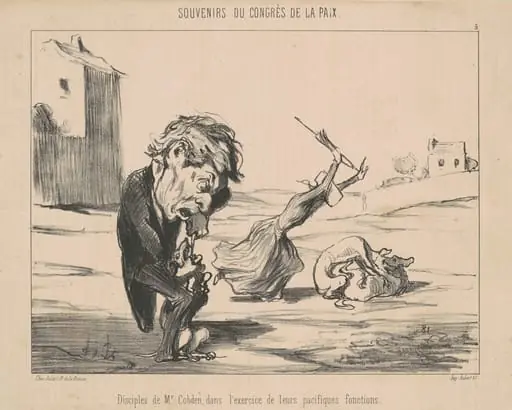 Disciples de M. Cobden