Artwork
A la campagne, pas de grèves de cochers ... (recto); Villageois économes se contentant ... (verso)
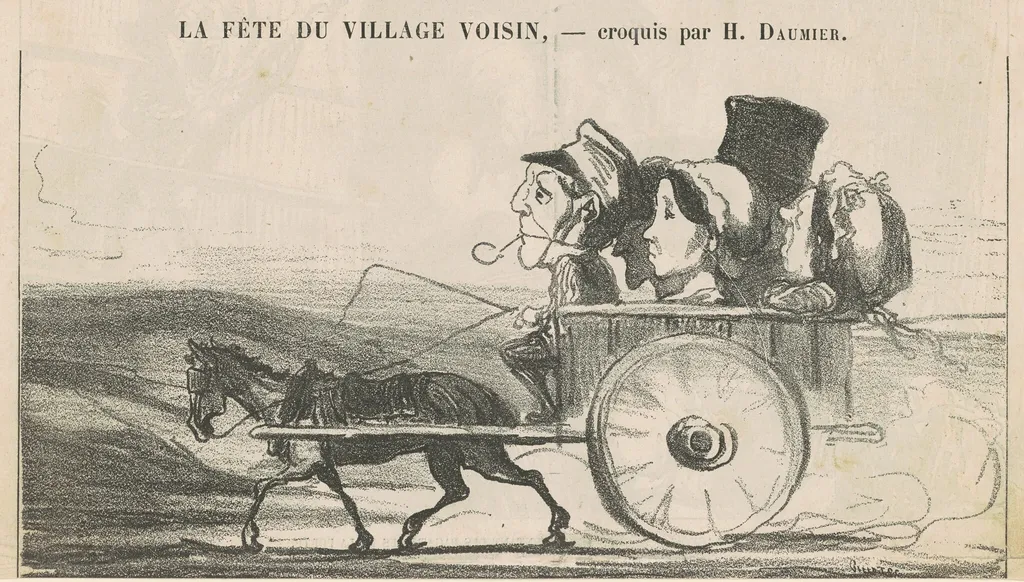
A la campagne, pas de grèves de cochers ... (recto); Villageois économes se contentant ... (verso) is an ink print by the Impressionist artist Honoré Daumier. It dates from 1865 and is held in the collection of the National Gallery of Art.
About this work
Overview
This lithograph by Honoré Daumier presents a rural scene featuring a horse-drawn cart with four passengers, rendered in spare, expressive lines. The composition centers on the animal and its burden, with minimal landscape details grounding the moment. Daumier captures an ordinary rural transit, avoiding romanticism in favor of quiet social observation.
Subject & Meaning
The title’s ironic reference to absent strikes underscores the quiet endurance of rural labor, contrasting urban labor unrest with rural resignation.
The four figures on the cart suggest a cross-section of village life—perhaps a landowner, a laborer, a woman, and a child—each seated with distinct posture and attire. Their coexistence in a single vehicle hints at economic necessity rather than social harmony. The title’s ironic reference to absent strikes underscores the quiet endurance of rural labor, contrasting urban labor unrest with rural resignation.
Technique & Style
Daumier employed lithography to achieve rapid, fluid line work that conveys movement and texture with economy. His use of tonal contrast and simplified forms emphasizes the weight of the horse and the precarious balance of its riders. The rough, sketch-like quality reflects his journalistic approach, prioritizing immediacy over polish.
History & Provenance
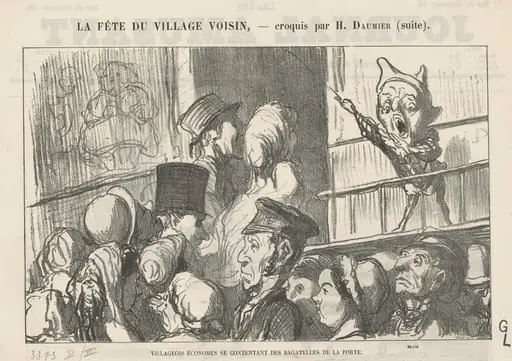
Created in the 1860s, this print likely appeared in a French periodical, as was common for Daumier’s social commentaries. It was produced during a period when he increasingly turned to rural subjects after facing censorship of his urban satires. The verso, depicting thrifty villagers, suggests a paired set, possibly intended for sequential viewing.
Context
In mid-19th century France, rural communities were undergoing slow transformation due to industrialization and shifting labor patterns. Daumier’s focus on village life reflected a broader cultural interest in the peasantry, though his treatment avoided sentimentality, instead highlighting the unspoken hierarchies and quiet resilience of rural existence.
Legacy
This work exemplifies Daumier’s enduring contribution to social realism in printmaking. His ability to distill complex class dynamics into a single, unadorned image influenced later generations of illustrators and cartoonists. Though less celebrated than his Parisian scenes, these rural lithographs remain vital for their unvarnished portrayal of everyday life.
Artist & collection
Artist
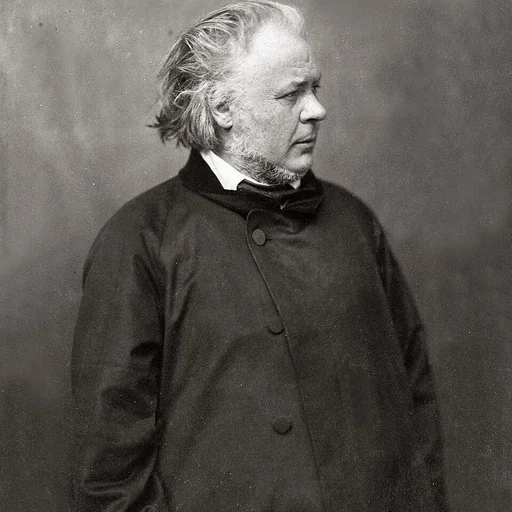
Honoré-Victorin Daumier was a French painter, sculptor, and printmaker, whose many works offer commentary on the social and political life in France, from the Revolution of 1830 to the fall of the Second French Empire in 1870.

 Villageois économes se contentant ... (recto); A la campagne, pas de grèves de cochers ... (verso)
 Précaution indispensable que prennent les Parisiens ...
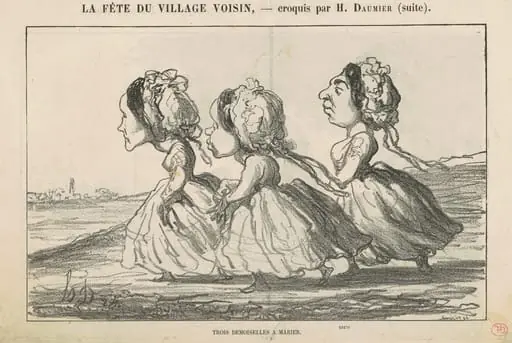 Trois demoiselles à marier (recto); Famille bourgeoise convaincue ... (verso)
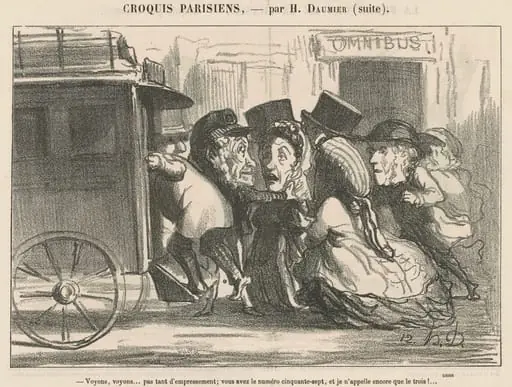 Voyons, voyons ... pas tant d'empressement ...
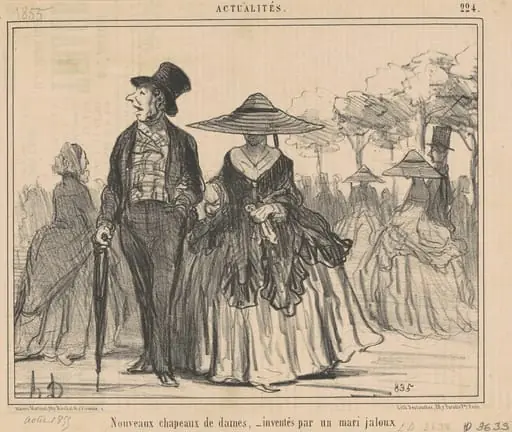 Nouveaux chapeaux de dames ...
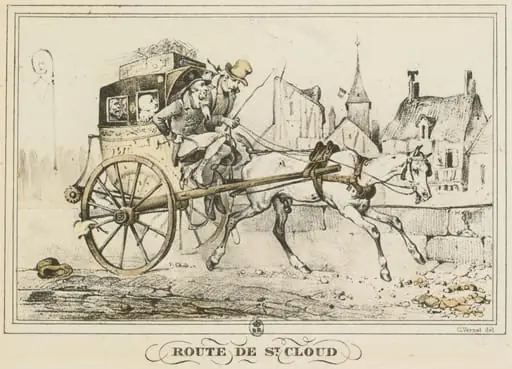 Scenes of Daily Life, Roads and Paths: Road to Saint-Cloud (Scènes de la vie quotidienne, Route et Chemins: Route de Saint-Cloud)
 Le groom public