Artwork
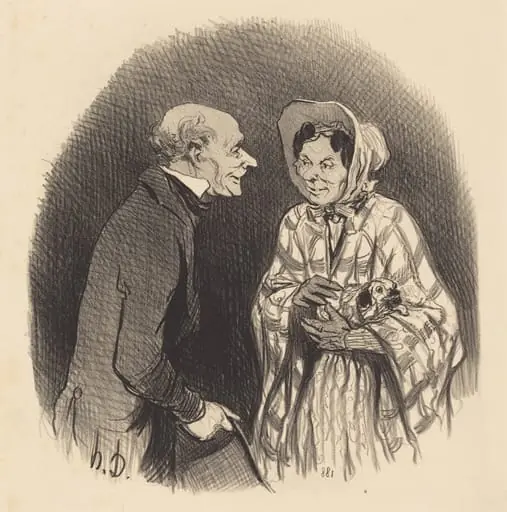
Vous êtes jolie...
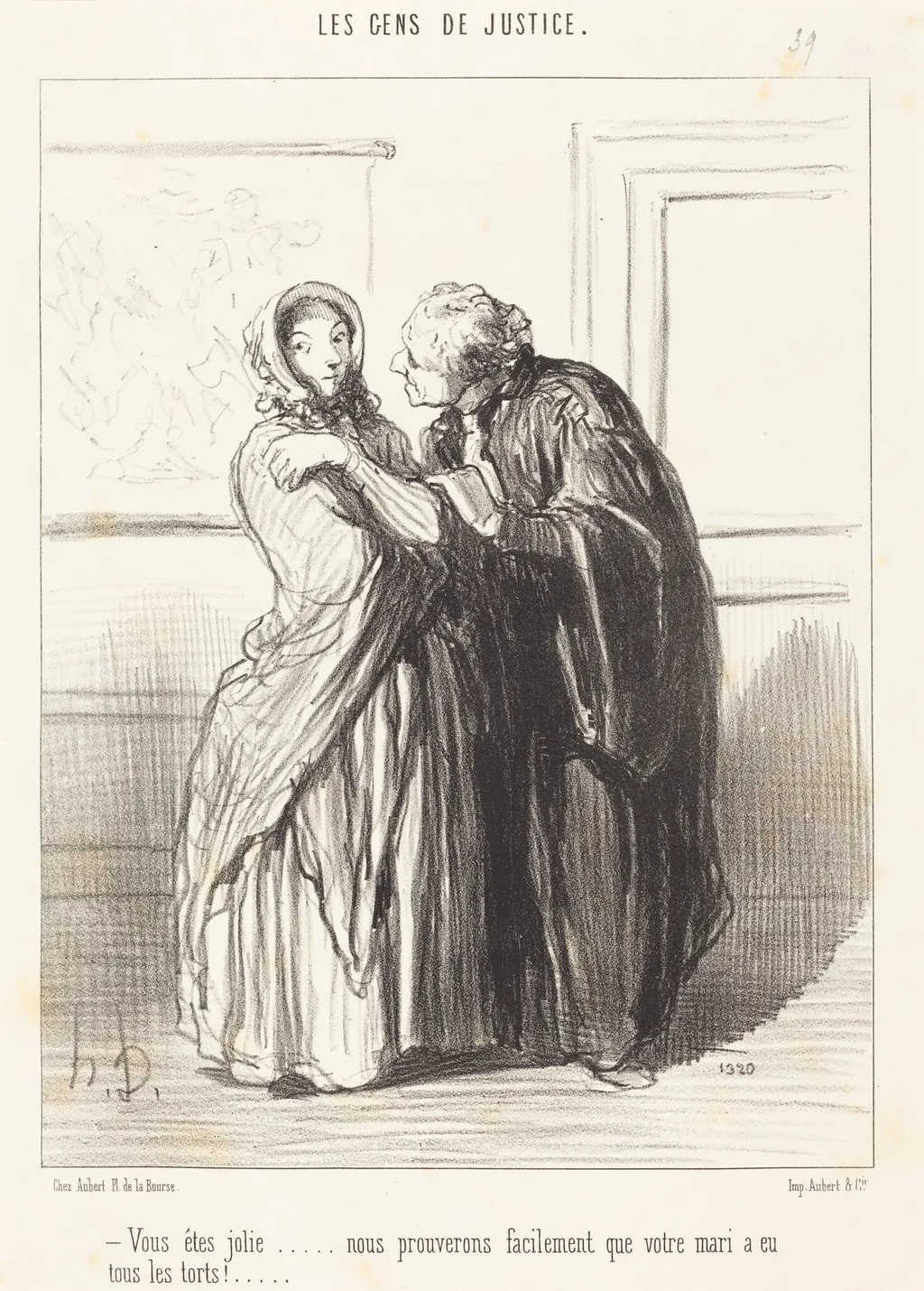
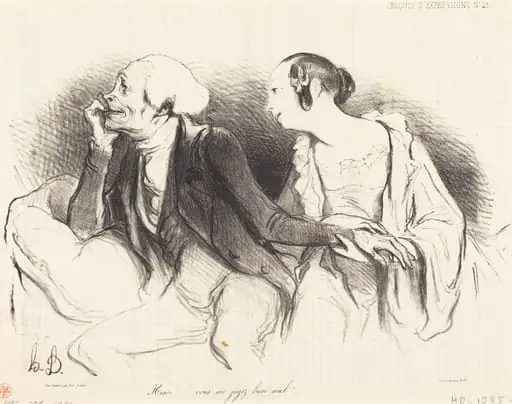
Vous êtes jolie... is an ink print by the Romanticist artist Honoré Daumier. It dates from 1848 and is held in the collection of the National Gallery of Art.
About this work
Overview
Honoré Daumier created this 1848 lithograph as part of his prolific output for French satirical journals. Known for sharp social commentary, he used the accessibility of print media to reach a broad audience. The work belongs to a series targeting the pretensions of the French upper classes during a period of political upheaval following the 1830 Revolution and preceding the 1848 uprisings.
Subject & Meaning
', underscores the performative nature of compliment as a tool of social control, exposing the power dynamics beneath polite interaction.
The scene captures a moment of intimate address between a man and woman, likely a critique of courtly flattery or romantic manipulation. The man’s proximity and formal attire suggest authority or social privilege, while the woman’s subdued posture and headscarf hint at vulnerability or resignation. The title, 'Vous êtes jolie...', underscores the performative nature of compliment as a tool of social control, exposing the power dynamics beneath polite interaction.
Technique & Style
Daumier employed lithography to achieve expressive, fluid lines with minimal detail. His use of tonal contrast isolates the figures against a sparse interior, directing focus to their gestures and facial expressions. The roughness of the medium enhances the immediacy of the scene, avoiding idealization. His style prioritizes psychological insight over realism, distilling character through posture and composition rather than elaborate detail.
History & Provenance
The print was published in a periodical like *Le Charivari*, where Daumier regularly contributed political cartoons. It was not intended as a fine art object but as a disposable, widely circulated commentary. Original impressions were likely distributed among urban readership, then dispersed or discarded. Surviving examples are now held in museum collections, valued for their historical insight rather than their original commercial context.
Context
Created in the year of the February Revolution, the lithograph reflects rising tensions between the bourgeoisie, monarchy, and working class. Daumier’s work consistently mocked the hypocrisy of elites who maintained appearances while exploiting social inequalities. His imagery resonated with readers weary of censorship and political posturing, offering a visual counter-narrative to official propaganda.
Legacy
Daumier’s lithographs influenced later generations of social realists and cartoonists by demonstrating how print could convey complex critique with economy and emotional force. Though dismissed by academic circles in his time, his work gained recognition in the 20th century as a precursor to modern graphic storytelling and political illustration, valued for its unflinching observation of everyday power structures.
Artist & collection
Artist
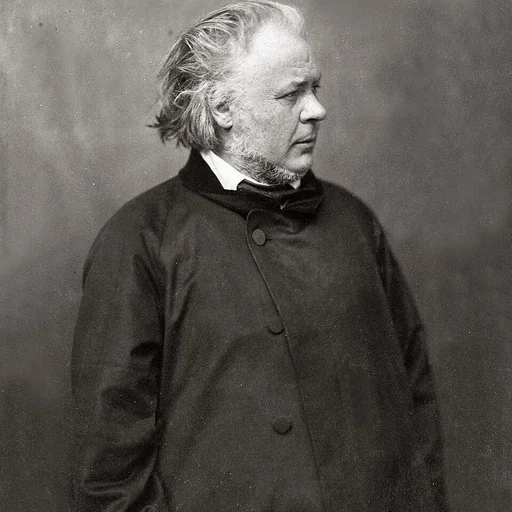
Honoré-Victorin Daumier was a French painter, sculptor, and printmaker, whose many works offer commentary on the social and political life in France, from the Revolution of 1830 to the fall of the Second French Empire in 1870.









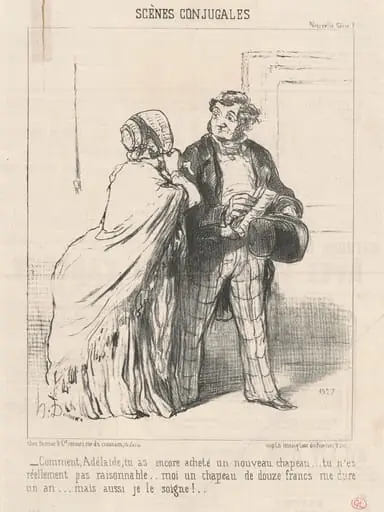 Comment ... tu as encore acheté un ... chapeau ...
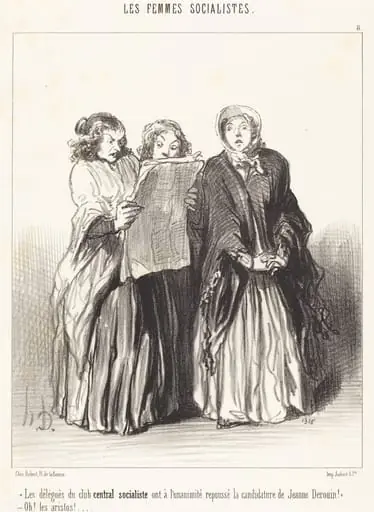 Les Délégués du club central socialiste ont repoussé...
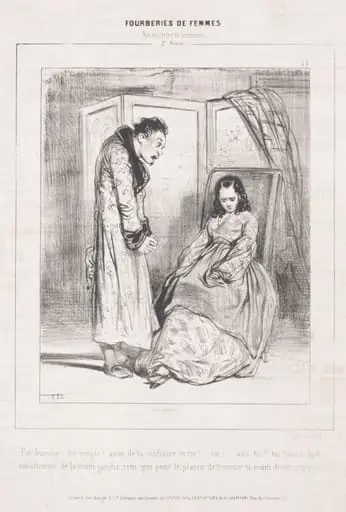 Fourberies de Femmes: En matière de sentiment
 Une Nouvelle connaissance
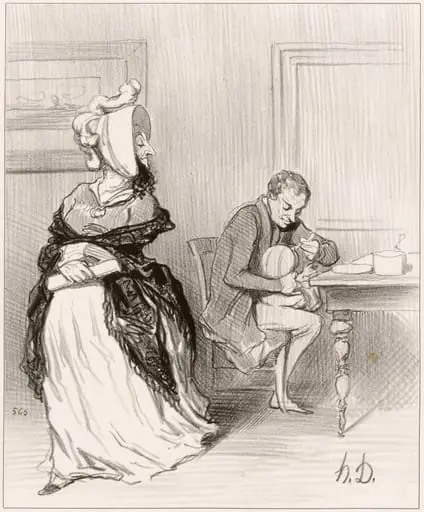 Adieu, mon cher, je vais chez mes éditeurs...
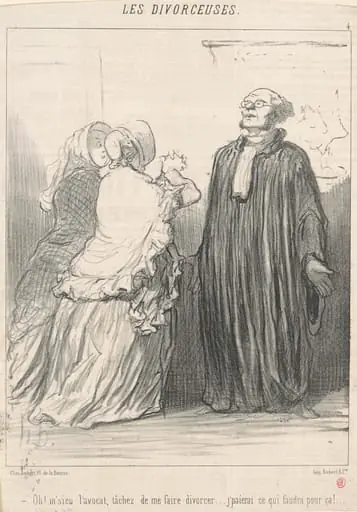 Oh! M'sieu l'avocat, tachez de ...
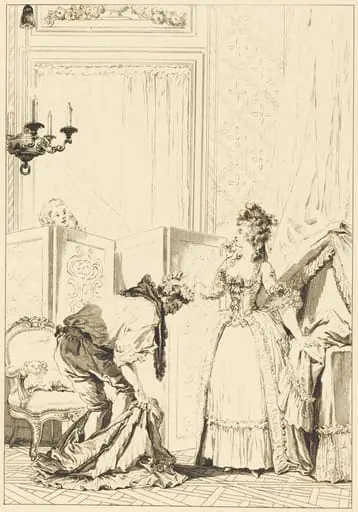 Le cocu battu et content
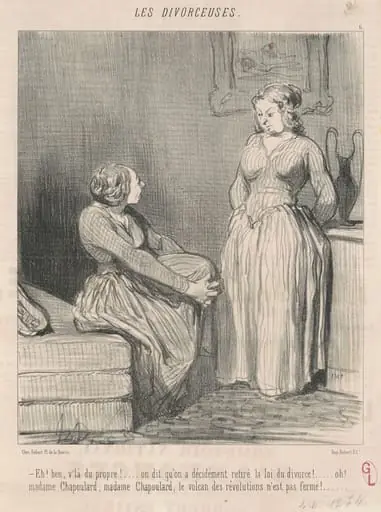 Eh! Ben, v'la du propre! ... on dit ...
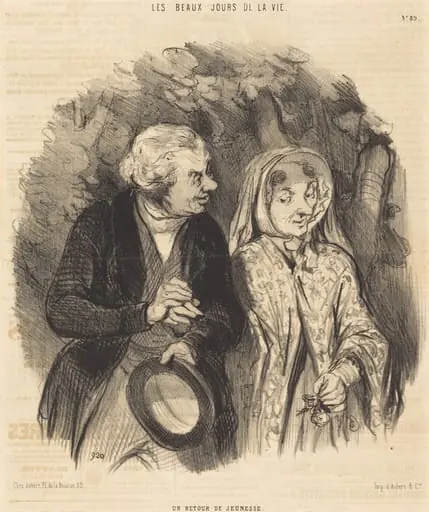 Un Retour de jeunesse
![Indian Summer [L'estate di San Martino], by Eleuterio Pagliano](https://artifactworldgallery.com/img/eleuterio-pagliano--indian-summer-l-estate-di-san-martino--c18fa1d8e52f5b86-w320.webp) Indian Summer [L'estate di San Martino]
Indian Summer [L'estate di San Martino]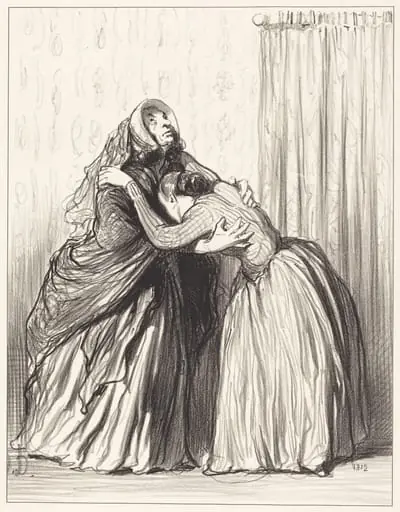 Oui, ma chère, mon mari a ravalé ma dignité...
 Henri!... vous me jugez bien mal!...