Artwork
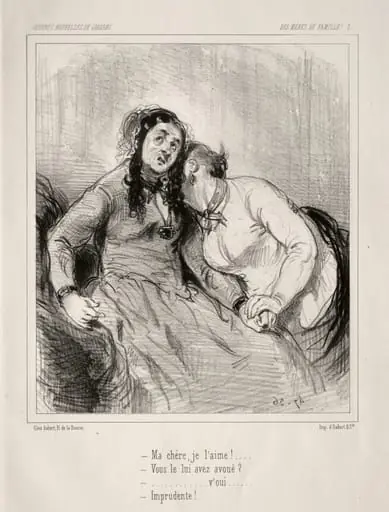
Oui, ma chère, mon mari a ravalé ma dignité...
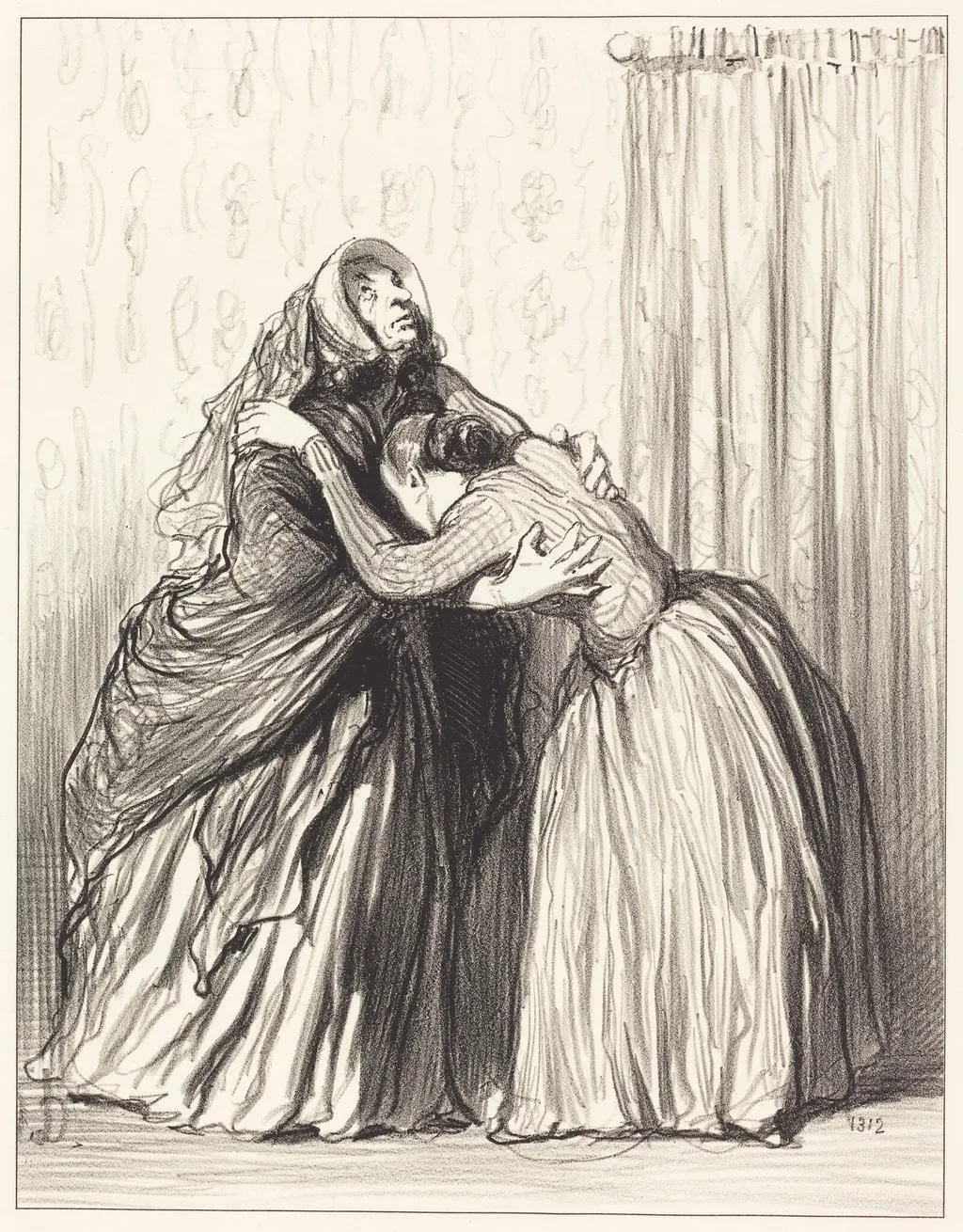
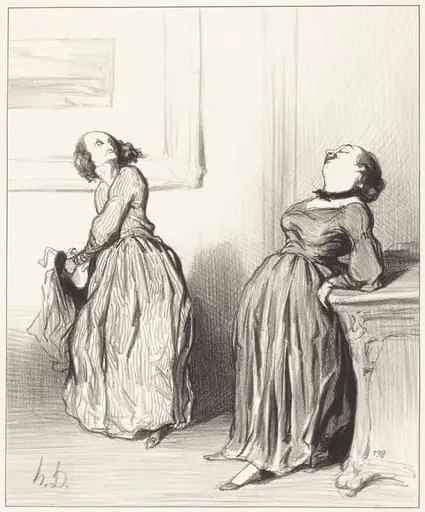
Oui, ma chère, mon mari a ravalé ma dignité... is an ink print by the Romanticist artist Honoré Daumier. It dates from 1849 and is held in the collection of the National Gallery of Art.
About this work
Overview
This 1849 lithograph by Honoré Daumier captures a moment of intense emotional tension between two women. Created as part of his broader series of social satires, the work uses the immediacy of printmaking to explore private humiliation and gendered power dynamics. Daumier’s focus on domestic scenes, often overlooked in grand historical art, reveals the quiet struggles beneath bourgeois propriety.
Subject & Meaning
The title implies a husband’s cruel diminishment of his wife’s dignity, yet the physical interaction centers the women’s emotional exchange.
The scene depicts one woman clinging to another, whose posture suggests reluctance or resistance. The title implies a husband’s cruel diminishment of his wife’s dignity, yet the physical interaction centers the women’s emotional exchange. Daumier shifts focus from the absent male figure to the female response, suggesting solidarity or shared suffering among women navigating patriarchal constraints.
Technique & Style
Daumier employed rapid, expressive lines characteristic of his lithographic technique, allowing the ink to convey movement and psychological weight. The background is deliberately sparse, eliminating distraction and intensifying focus on the figures’ gestures and facial expressions. The contrast between the elaborate gown and the simpler cloak underscores social distinctions, rendered with minimal but precise detail.
History & Provenance
Produced during the July Monarchy, the print likely appeared in a satirical journal such as *Le Charivari*, where Daumier regularly published critiques of French society. Though exact publication records are scarce, the work aligns with his broader output from the late 1840s, a period of heightened political tension and censorship. Its survival reflects its resonance within contemporary visual culture.
Context
In mid-19th century France, domestic life was tightly regulated by class and gender norms. Daumier’s prints exposed the hypocrisy beneath these structures, particularly how women’s emotional labor sustained social order. This image fits within a tradition of French caricature that used humor to critique authority, but here the satire turns inward, revealing vulnerability rather than ridicule.
Legacy
Daumier’s ability to distill complex social dynamics into a single, emotionally charged image influenced later realist and modernist artists. This lithograph, like many of his works, demonstrated that everyday moments could carry profound political weight. Its understated power lies in its refusal to moralize, instead inviting viewers to observe the quiet fractures in domestic life.
Artist & collection
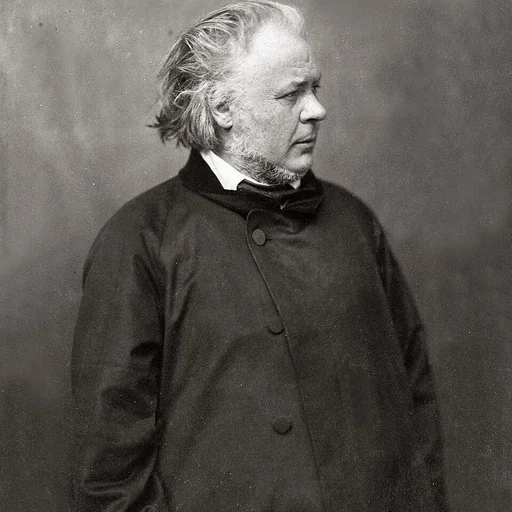
Artist
Honoré-Victorin Daumier was a French painter, sculptor, and printmaker, whose many works offer commentary on the social and political life in France, from the Revolution of 1830 to the fall of the Second French Empire in 1870.

 Vous êtes jolie...
 Ah vous trouvez que mon dernier roman n'est pas tout a fait...
 Des Mères de Famille!
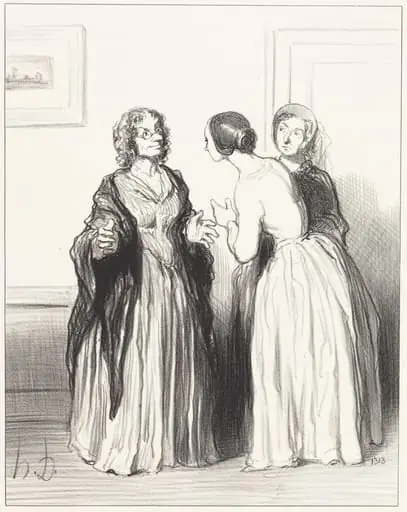 (1er Bas Bleu) - Profitons de l'occasion...
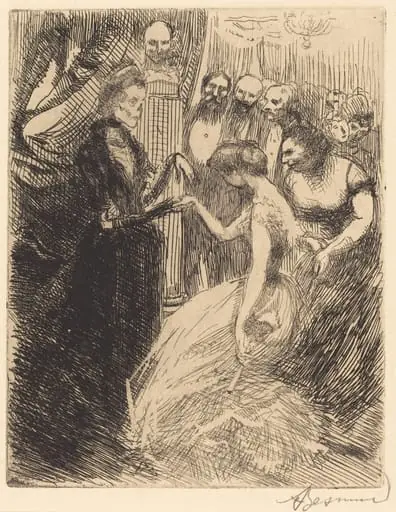 The Presentation (La présentation)
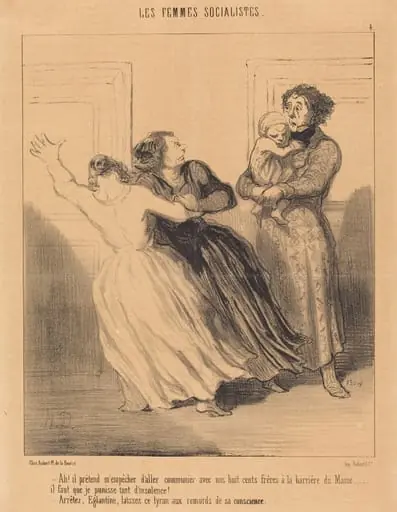 Ah! il prétend m'empêcher d'aller...
 At the Renaissance: Sarah Bernhardt in "Phedre" (A la Renaissance: Sarah Bernhardt dans "Phèdre")
 Le garde national Rifolard ...
 Le Beau sexe a l'école de natation
 O plaisir de l'opium que tu me ravis!...