Artwork
Untitled
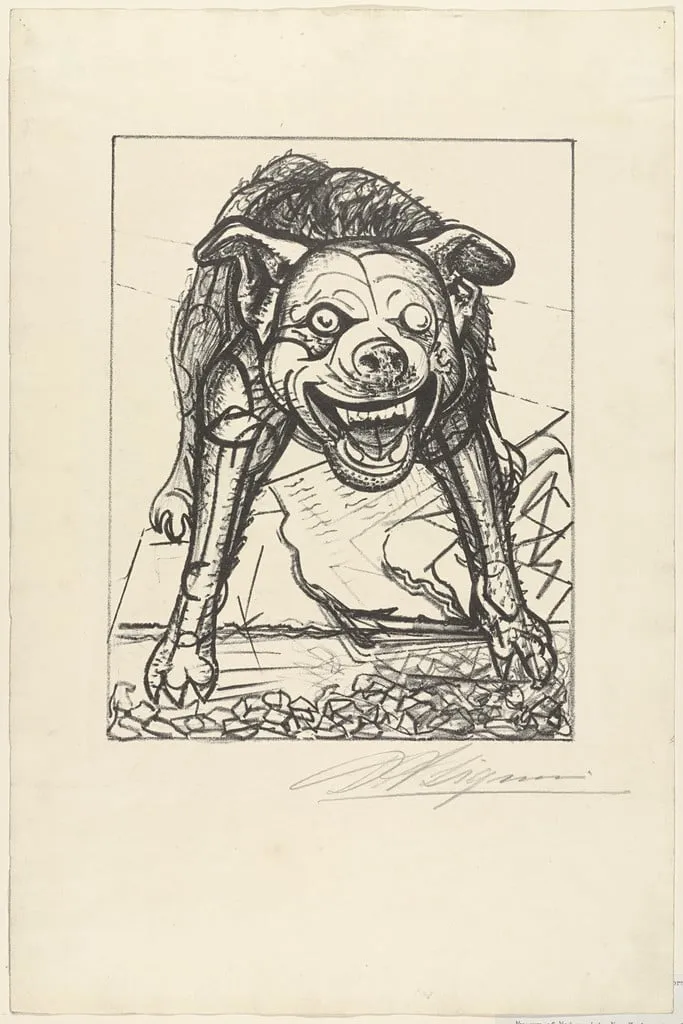
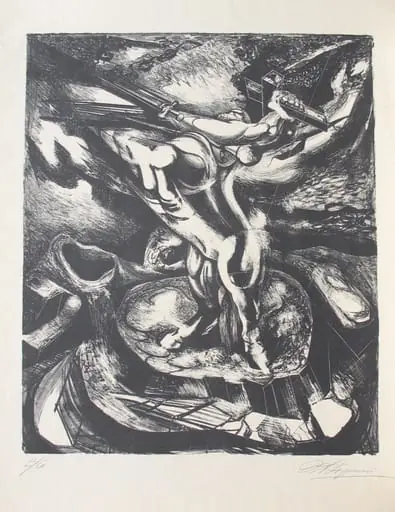
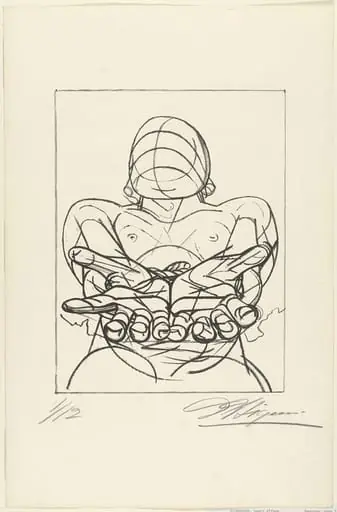
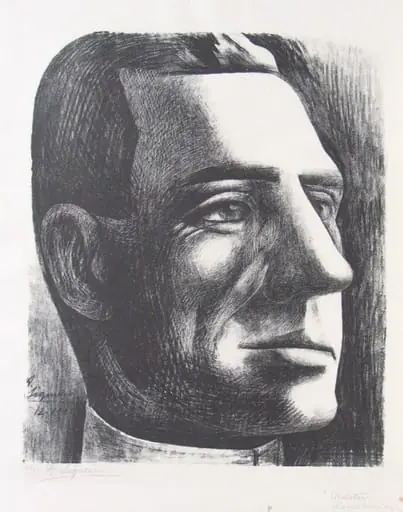
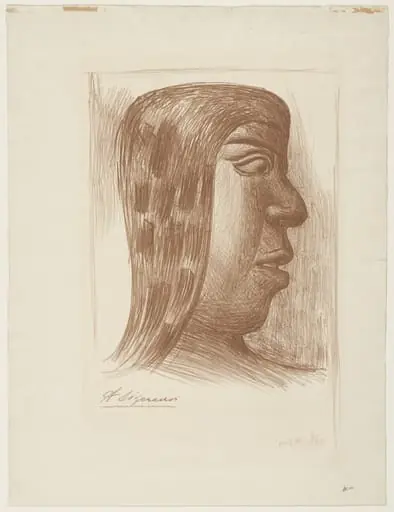
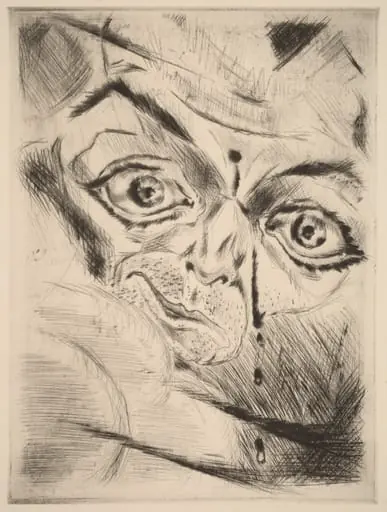
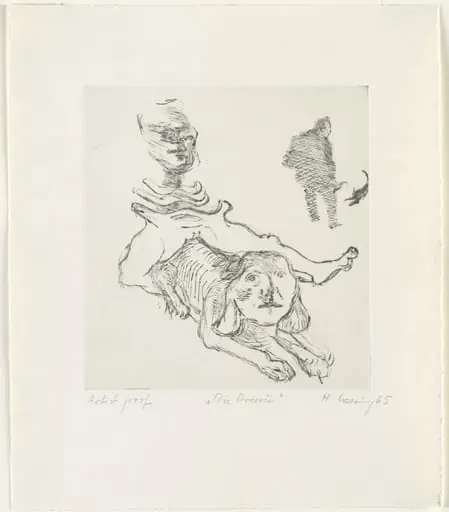
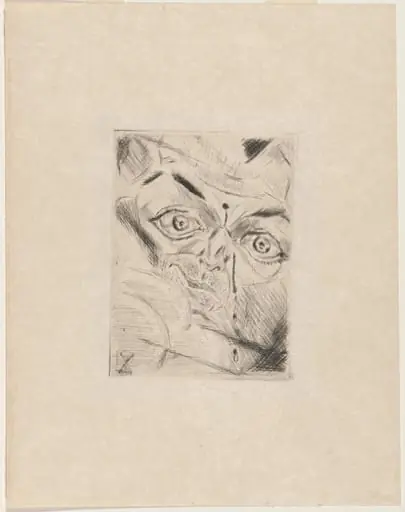
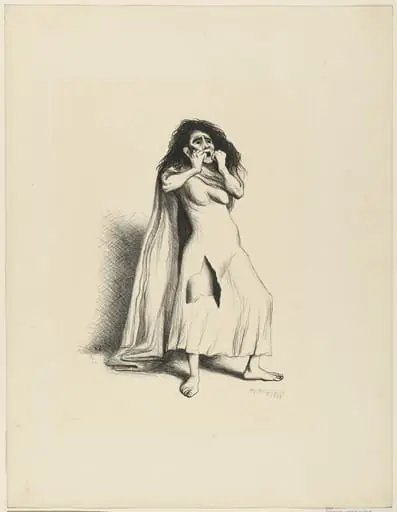
Untitled is an ink print by David Alfaro Siqueiros. It dates from 1945 and is held in the collection of the Museum of Modern Art.
About this work
Overview
It captures a moment of raw motion, using the lithographic process to translate rapid hand movements into a printed image.
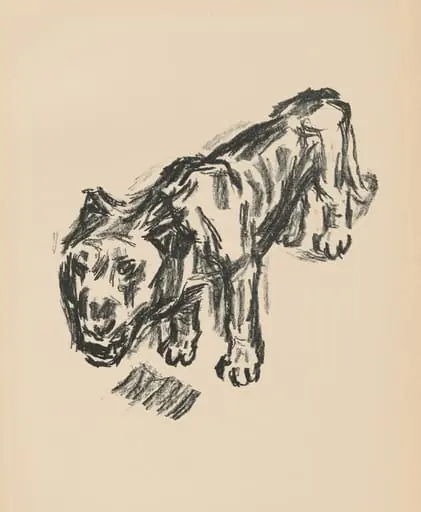
Created in 1945, this lithograph by David Alfaro Siqueiros is part of The Museum of Modern Art’s collection. Unlike his large-scale murals, this work is intimate and spontaneous, executed in a single sheet of paper. It captures a moment of raw motion, using the lithographic process to translate rapid hand movements into a printed image. The subject is a dog rendered with urgency, reflecting the artist’s interest in expressive form over polished detail.
Subject & Meaning
The figure is a large, unidealized dog, depicted mid-motion with an open mouth and outstretched paws. Its posture suggests either a bark or a laugh, blurring the line between aggression and playfulness. The animal’s lack of context—no owner, no setting—invites interpretation as a symbol of untamed energy or primal instinct. Siqueiros often infused his work with social commentary; here, the dog may stand as a metaphor for unrestrained force in a fractured world.
Technique & Style
Siqueiros employed lithography to achieve a gestural, almost sketch-like quality. The lines are thick, uneven, and hurried, mimicking the immediacy of a drawing. The fur is suggested through dense, overlapping strokes rather than detailed rendering, and the background is reduced to minimal, ambiguous marks. This approach prioritizes emotional impact over precision, leveraging the lithographic stone’s capacity to hold the artist’s direct hand movement.
History & Provenance
The work was produced in 1945, during a period when Siqueiros was experimenting with printmaking after years focused on monumental public murals. It entered The Museum of Modern Art’s collection shortly after its creation, likely acquired as part of the institution’s broader interest in Latin American modernism. Its small scale and informal nature distinguish it from his more politically charged public works, offering insight into his private artistic process.
Context
In the mid-1940s, Siqueiros was navigating political disillusionment and shifting artistic priorities. While still committed to social themes, he increasingly explored personal, expressive forms outside state-sponsored projects. This lithograph reflects a broader trend among Mexican artists of the era who turned to prints for accessibility and experimentation. The dog’s raw energy may echo the turbulence of postwar society, even without overt political symbols.
Legacy
Though less known than his murals, this lithograph exemplifies Siqueiros’s versatility and his commitment to expressive line. It influenced later printmakers interested in capturing motion and emotion through rapid, gestural techniques. Its presence in MoMA’s collection helped legitimize printmaking as a serious medium for political and personal expression in 20th-century Latin American art, expanding the scope of how his legacy is understood.
Artist & collection

Artist
David Alfaro Siqueiros was a Mexican social realist painter, best known for his large public murals using the latest in equipment, materials and technique.