Artwork
Peter with a Gunshot Wound in His Forehead
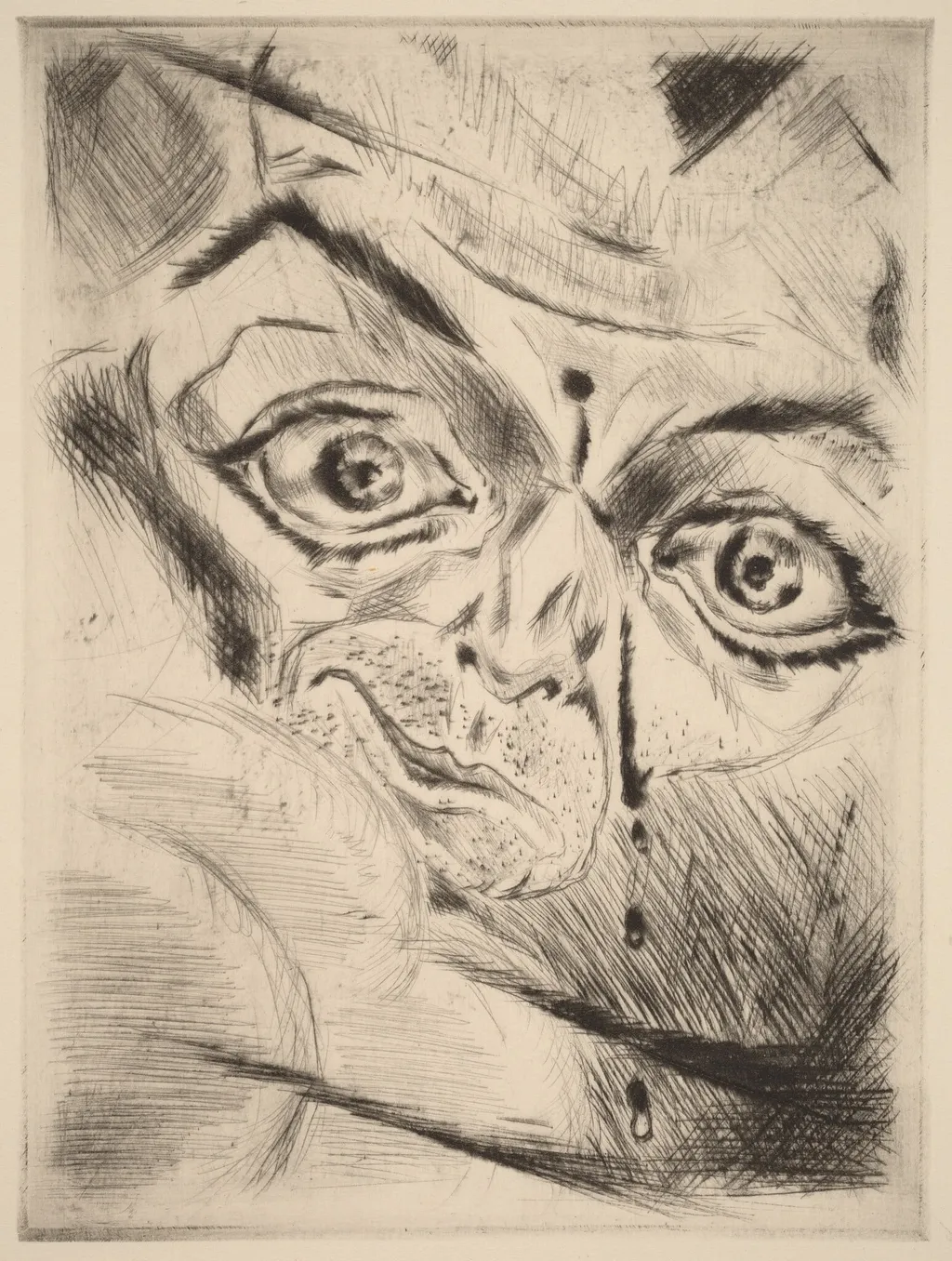
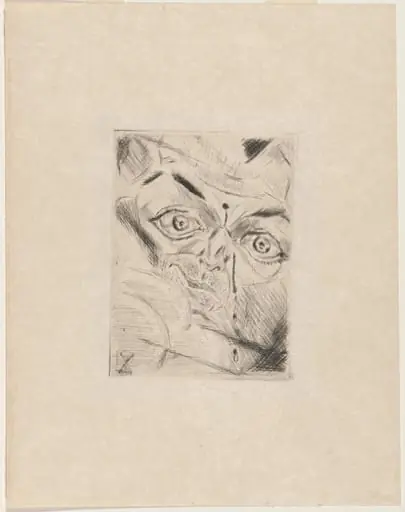
Peter with a Gunshot Wound in His Forehead is an ink print by Walter Gramatté. It dates from 1918 and is held in the collection of the National Gallery of Art.
About this work
Overview
The work belongs to a series of intimate, psychologically charged prints in which he translated personal and collective trauma into visual form.
Walter Gramatté produced this drypoint print in 1918, during the final year of the First World War. The work belongs to a series of intimate, psychologically charged prints in which he translated personal and collective trauma into visual form. Using the drypoint technique, he rendered a single figure with intense focus, emphasizing physical and emotional distress through fine, incised lines and tonal contrasts.
Subject & Meaning
The figure depicted is a man bearing a gunshot wound to the forehead, his face rendered with quiet realism. There is no overt narrative context—no weapon, no setting—only the head and shoulders, frozen in a moment between life and death. The wound becomes a symbol of indiscriminate violence, echoing Gramatté’s own wartime suffering and the broader disillusionment of his generation.
Technique & Style
Drypoint allowed Gramatté to achieve dense, velvety blacks and delicate gradations of gray through burr and fine scratching. The texture of skin, hair, and the wound’s edges are built up with layered, irregular lines, creating a tactile immediacy. The monochrome palette heightens the somber mood, while the close cropping isolates the figure, forcing attention on the vulnerability of the human face.
History & Provenance
Created in 1918, the print emerged from Gramatté’s time in Berlin and Hamburg, where he was recovering from illness and grappling with the war’s aftermath. It was likely produced in a small, private edition, common for expressionist printmakers. No public record of its early ownership exists, but it aligns with other works from this period that were circulated among avant-garde circles in Germany.
Context
Gramatté’s work in this period reflects the broader German Expressionist preoccupation with inner turmoil and bodily fragility. While contemporaries like Dix and Grosz depicted war’s brutality through satire or chaos, Gramatté favored stillness and introspection. His imagery, often influenced by mysticism and personal suffering, offered a quieter but no less potent commentary on the human cost of conflict.
Legacy
Though less widely known than some of his peers, Gramatté’s prints from this era are recognized for their emotional precision and technical subtlety. 'Peter with a Gunshot Wound in His Forehead' remains a key example of how printmaking could convey psychological depth in the face of societal collapse. It continues to be studied for its fusion of realism and symbolic resonance within early 20th-century German art.
Artist & collection

Artist
Walter Gramatté (8 January 1897 in Berlin – 9 February 1929 in Hamburg) was a German expressionist painter who specialized in magic realism.

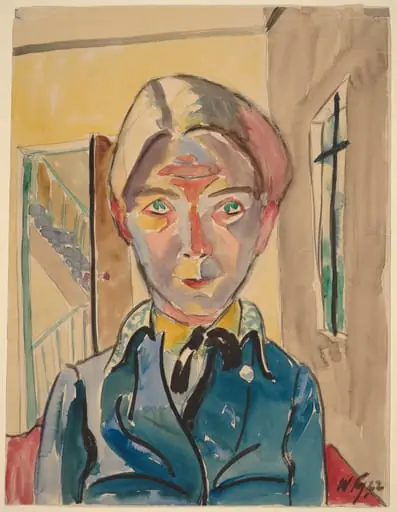 Self-Portrait in Front of Stairs (Selbst vor Treppe)
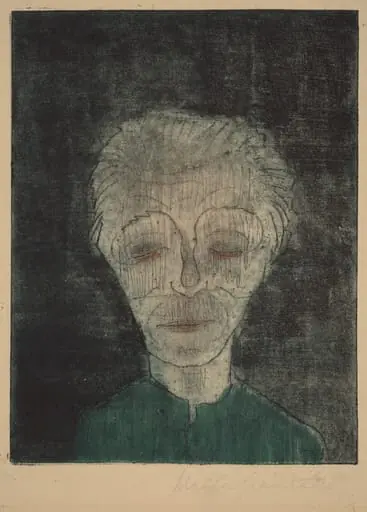 Tired Man (Self-Portrait)
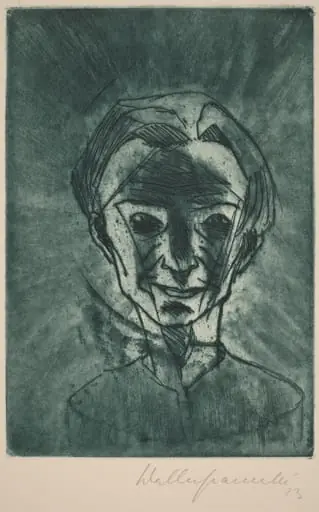 Smiling Head, Self-portrait (Lächelnder Kopf, Selbstporträt)
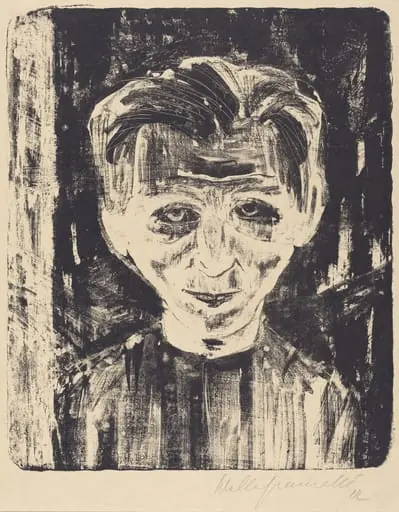 Self-Portrait
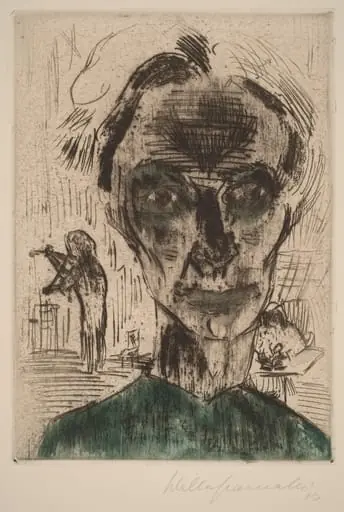 Man in a Room, Self-portrait
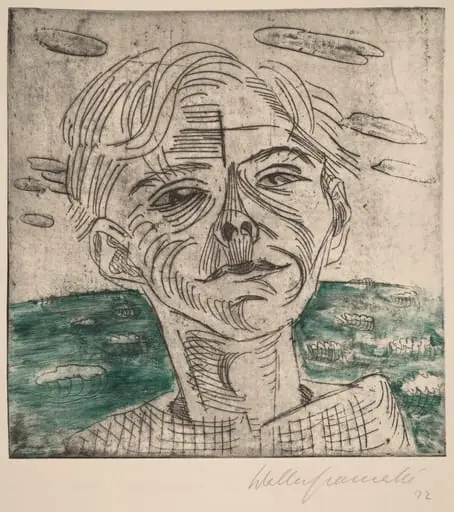 Man at the Sea, Self-portrait (Mann am Meer, Selbstporträt)
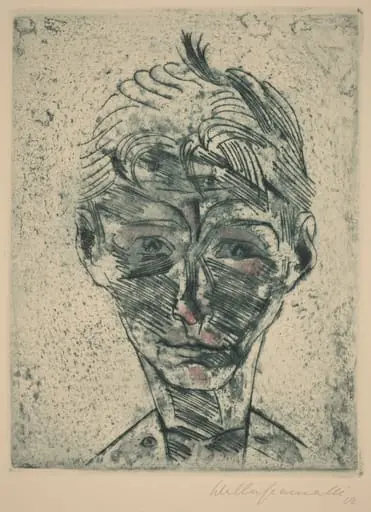 Bust of a Young Man, Self-portrait (Knabenkopf, Selbstporträt)
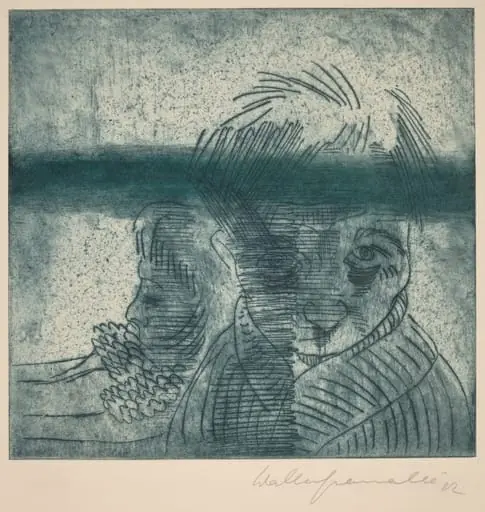 The Couple, Self-Portrait with Wife (Das Paar, Selbstporträt mit Frau)
![The Great Anxiety (Self-Portrait, in Three-Quarter Profile to the Right) (Die große Angst [Selbstportrat, Kopf im Halbprofil nach rechts]), by Walter Gramatté](https://artifactworldgallery.com/img/walter-gramatte--the-great-anxiety-self-portrait-in-three-quarter-profile-to--7cce5ee2cd482abe-w320.webp) The Great Anxiety (Self-Portrait, in Three-Quarter Profile to the Right) (Die große Angst [Selbstportrat, Kopf im Halbprofil nach rechts])
The Great Anxiety (Self-Portrait, in Three-Quarter Profile to the Right) (Die große Angst [Selbstportrat, Kopf im Halbprofil nach rechts])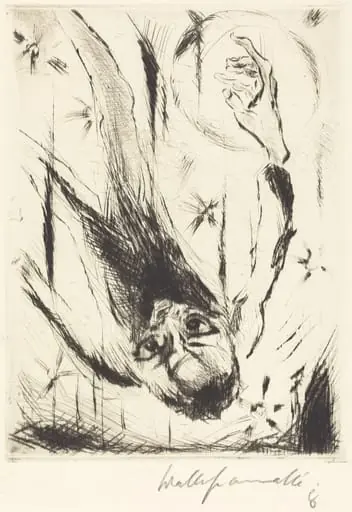 The Fall into Infinity
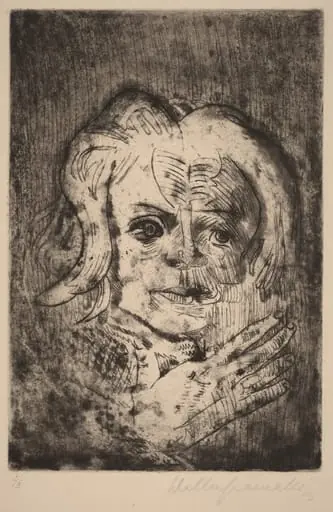 Girl with Hand
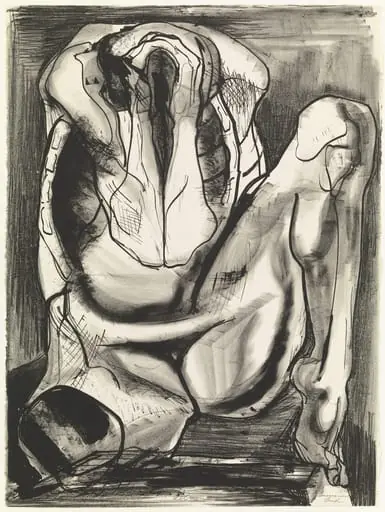 Untitled
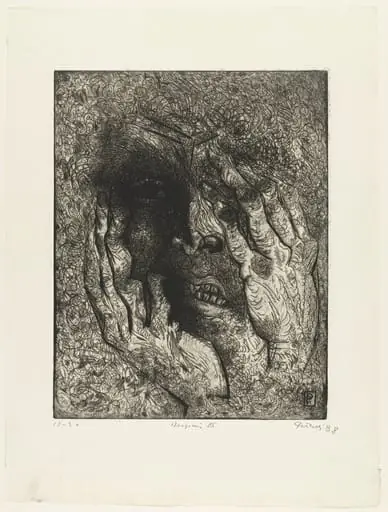 Untitled
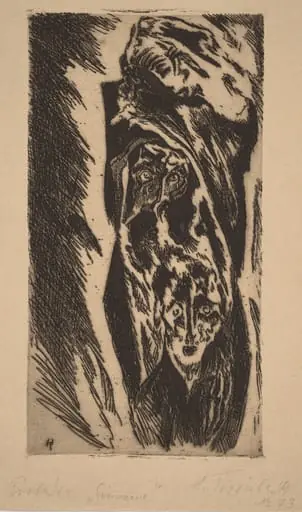 Einsame
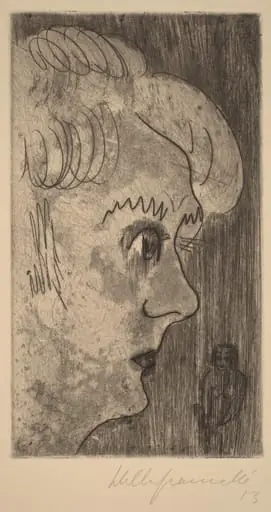 Head in Profile
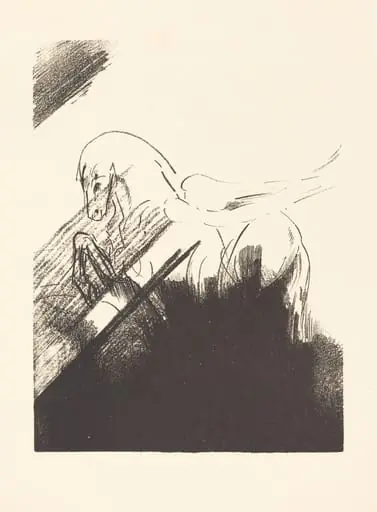 Cheval aile (Winged Horse)
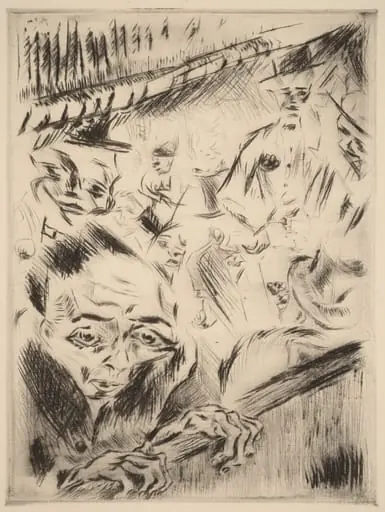 Robert in the Theater
![Newborn in a Bonnet (Le nouveau-né au bonnet], by Eugène Carrière](https://artifactworldgallery.com/img/eugene-carriere--newborn-in-a-bonnet-le-nouveau-ne-au-bonnet--230a39adbc28b475-w320.webp) Newborn in a Bonnet (Le nouveau-né au bonnet]
Newborn in a Bonnet (Le nouveau-né au bonnet]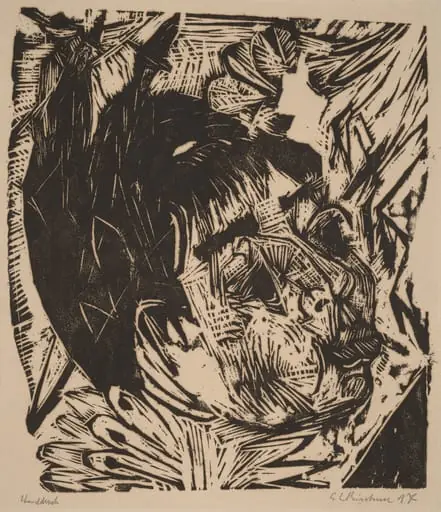 Wife of Professor Schaxel
 Peter with a Gunshot Wound in His Forehead