Artwork
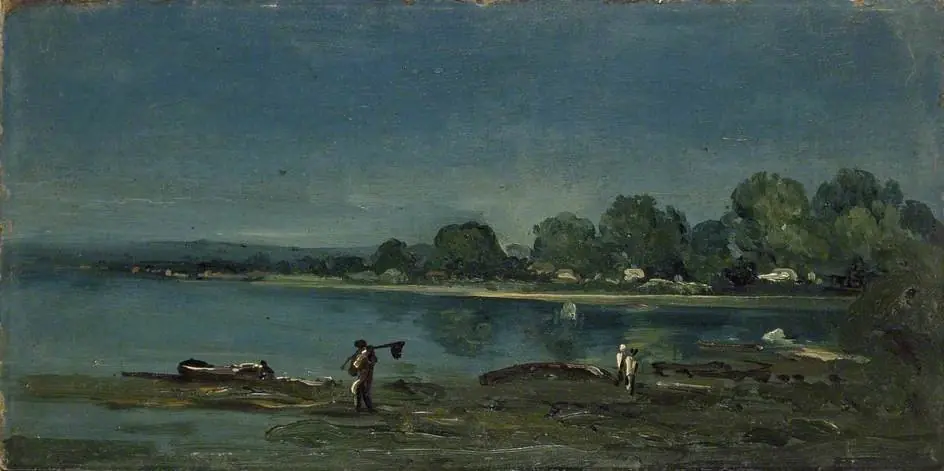
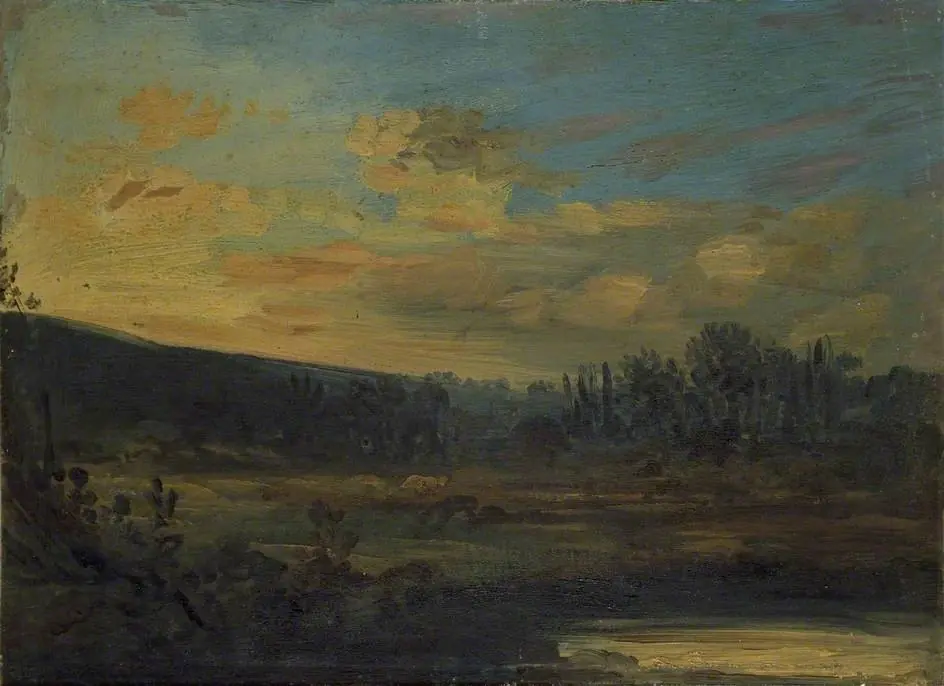
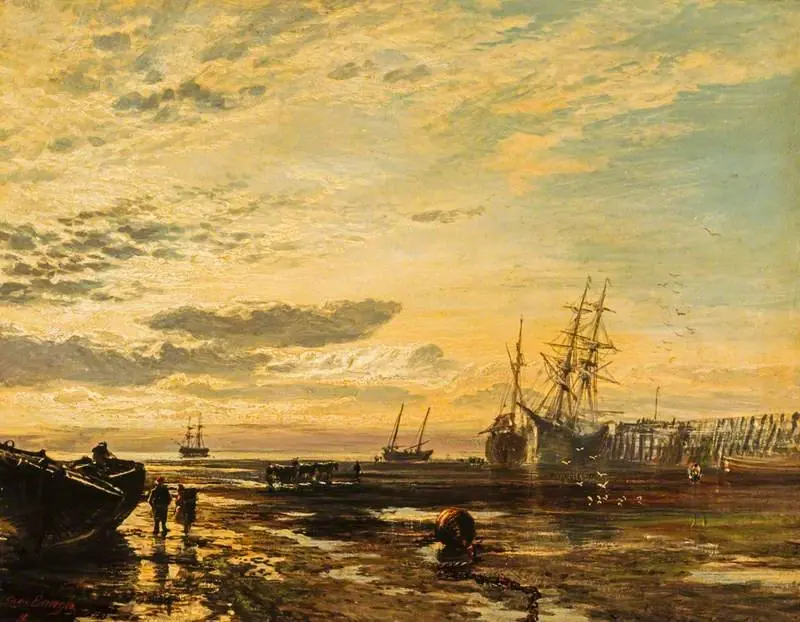
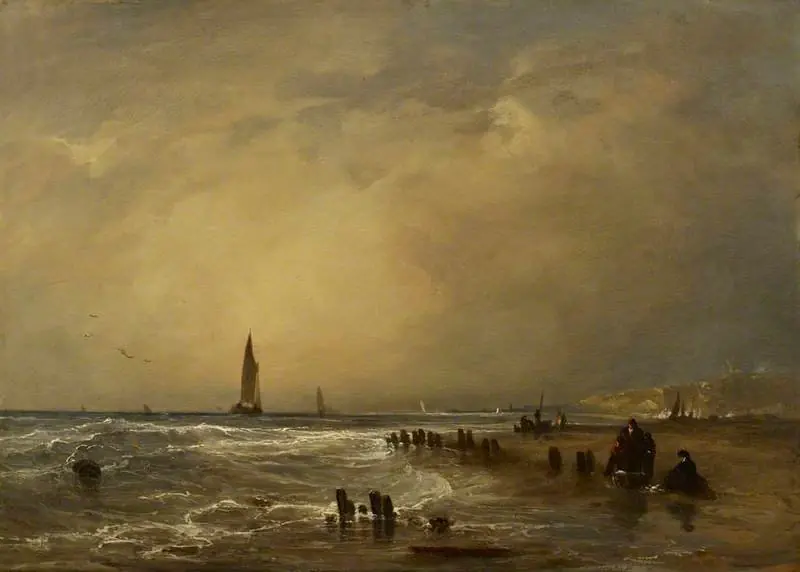
Southampton Estuary - Low Water showing the Effect of Mud, Evening
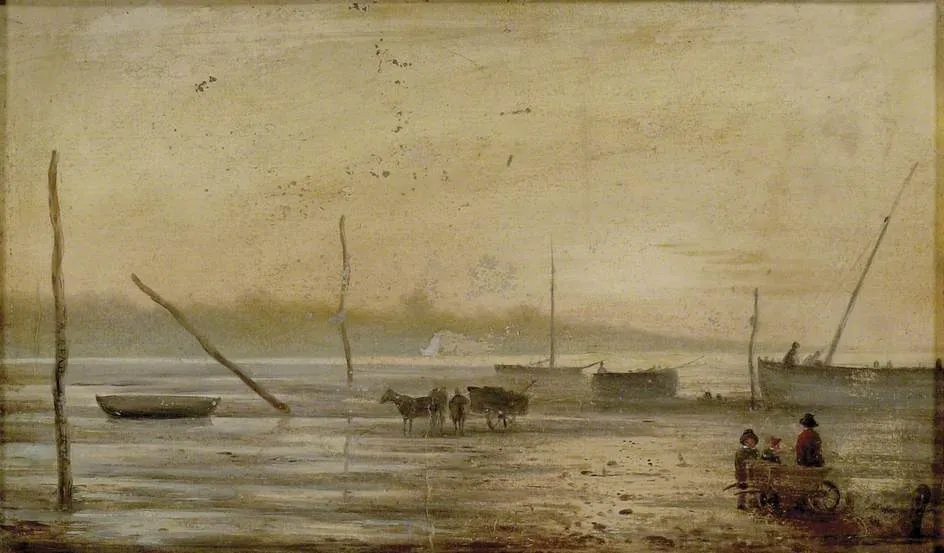
Southampton Estuary - Low Water showing the Effect of Mud, Evening is an unspecified painting by David Charles Read. It dates from 1830 and is held in the collection of the Ashmolean Museum.
About this work
Overview
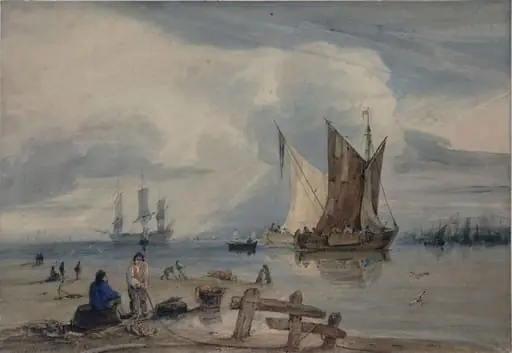
David Charles Read’s oil painting Southampton Estuary – Low Water showing the Effect of Mud, Evening, executed around 1830, depicts a quiet riverside at tide‑low. The work is part of the Ashmolean Museum’s collection and measures the subtle interaction of water, mudflats and evening sky in a restrained palette.
Subject & Meaning
The composition presents an exposed estuarine mudflat under a muted twilight, where a few figures linger at the water’s edge and a distant boat drifts on the still water. The scene conveys a contemplative atmosphere, emphasizing the transitory nature of the tide and the quiet labor of those who inhabit the shoreline.
Technique & Style
Read employs a limited range of greys, browns and soft blues, allowing the delicate gradations of light to model the surface of the water and the wet mud. Broad, smooth brushwork creates a sense of calm, while fine detailing in the figures and the distant vessel adds depth without disrupting the overall serenity.
History & Provenance
Created circa 1830, the painting entered the Ashmolean Museum’s holdings as part of its 19th‑century British landscape collection. Its acquisition reflects the museum’s interest in works that document regional geography and the everyday life of England’s coastal communities during the early industrial era.
Context
The work belongs to a period when British artists increasingly turned to naturalistic depictions of local scenery, often emphasizing atmospheric effects. Read’s focus on the estuary’s mudflats aligns with contemporary interests in the scientific observation of tides and the visual recording of England’s maritime environments.
Artist & collection