Artwork
View near Elmfield Lodge, Southampton
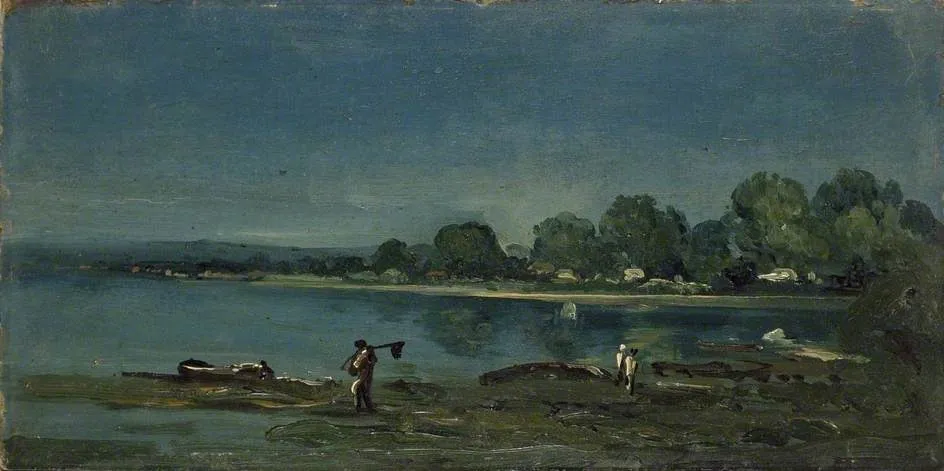
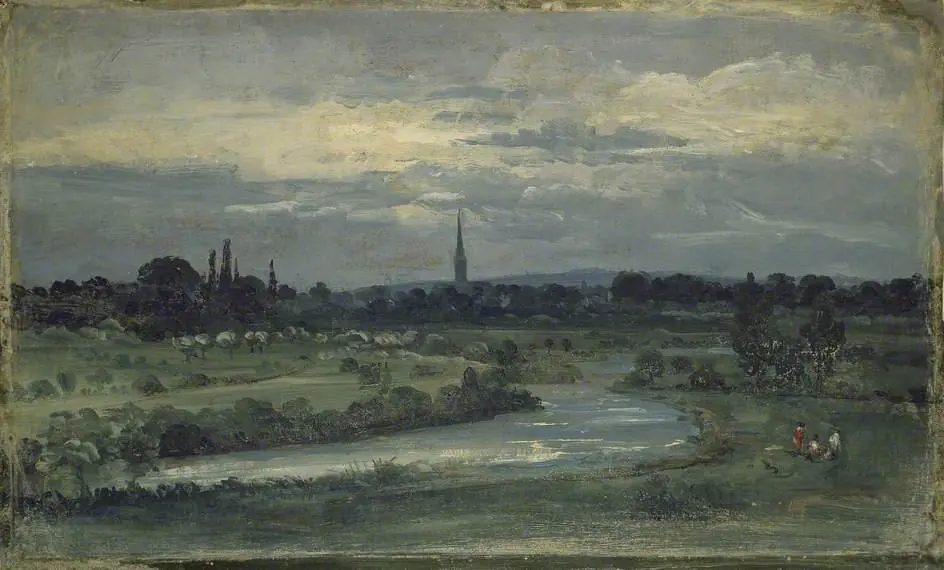
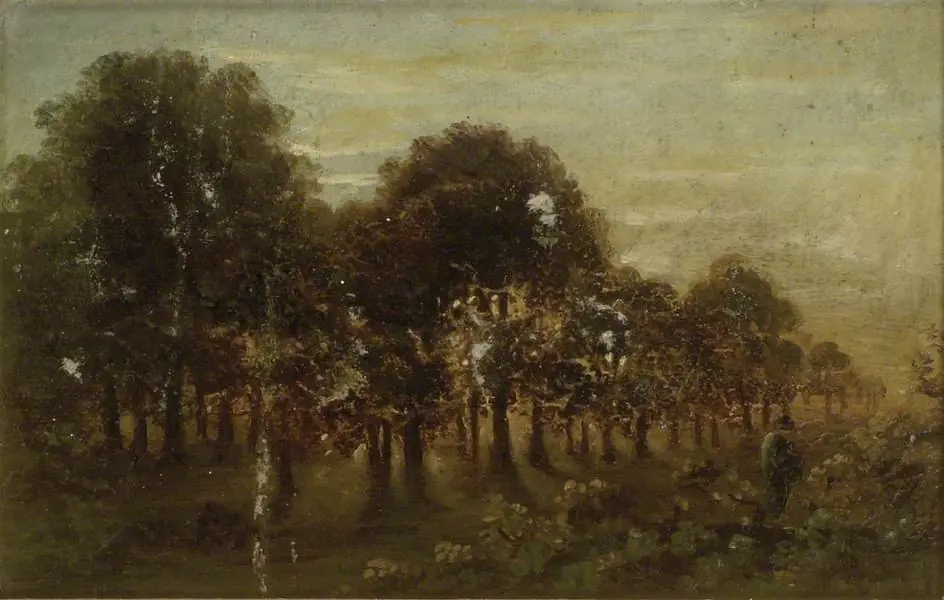
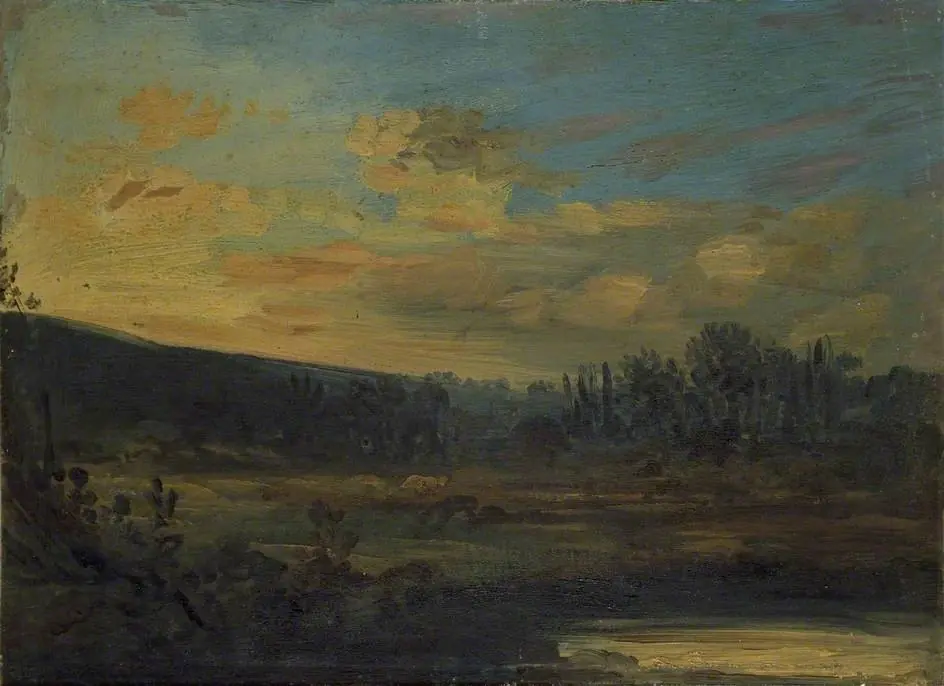
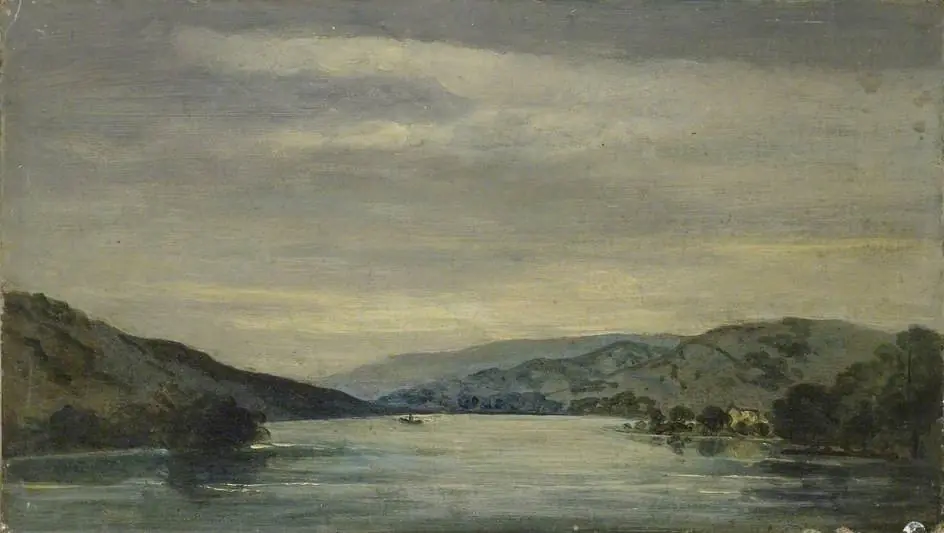
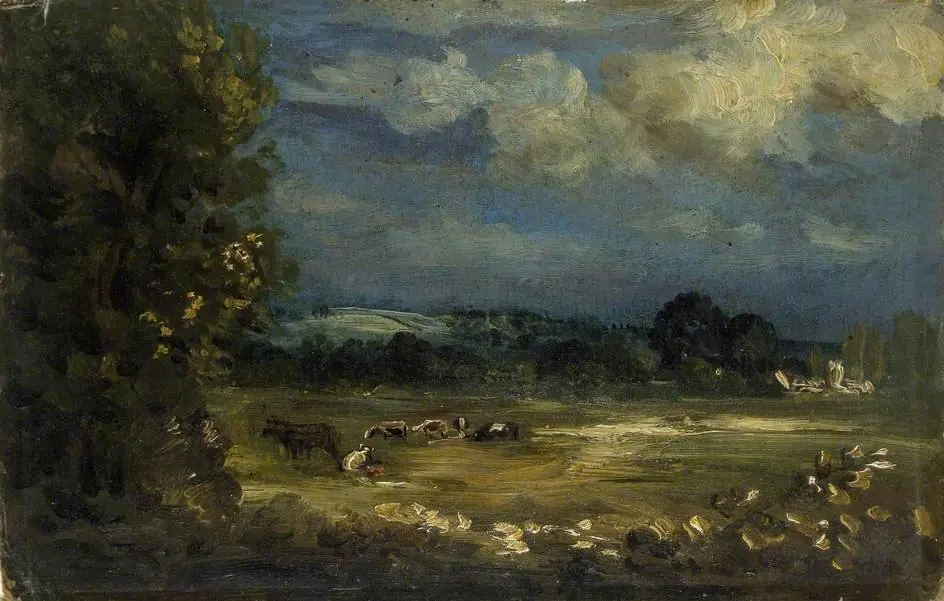
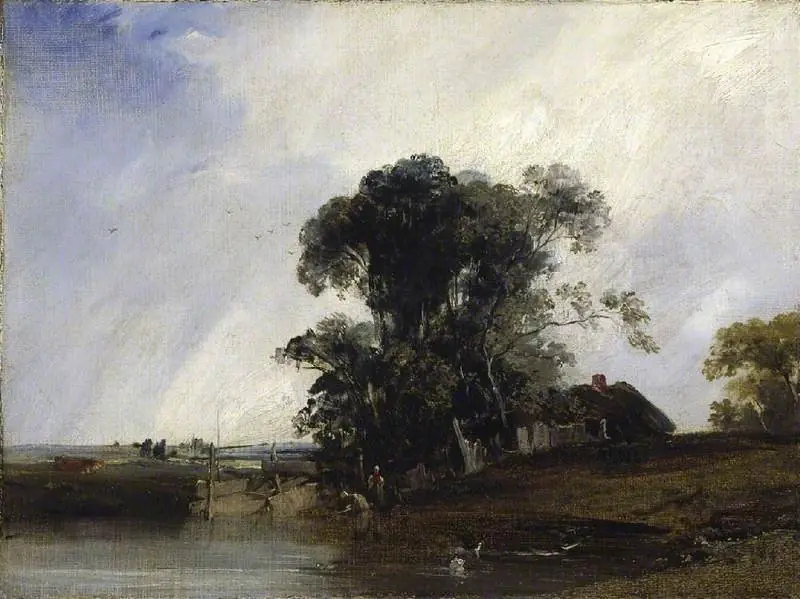
View near Elmfield Lodge, Southampton is an unspecified painting by the British Romanticist artist David Charles Read. It dates from 1835 and is held in the collection of the Ashmolean Museum.
About this work
Overview
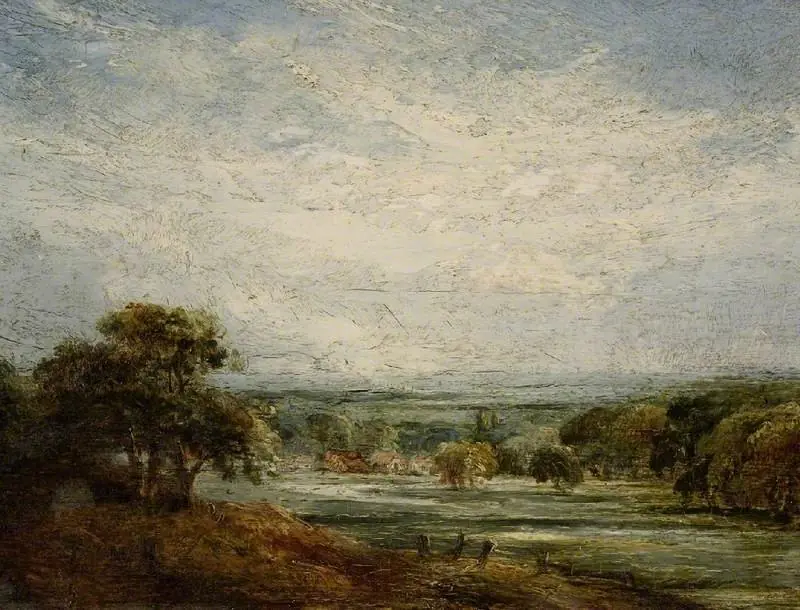
Painted in 1835 by David Charles Read, this landscape depicts a quiet stretch of countryside near Elmfield Lodge in Southampton.
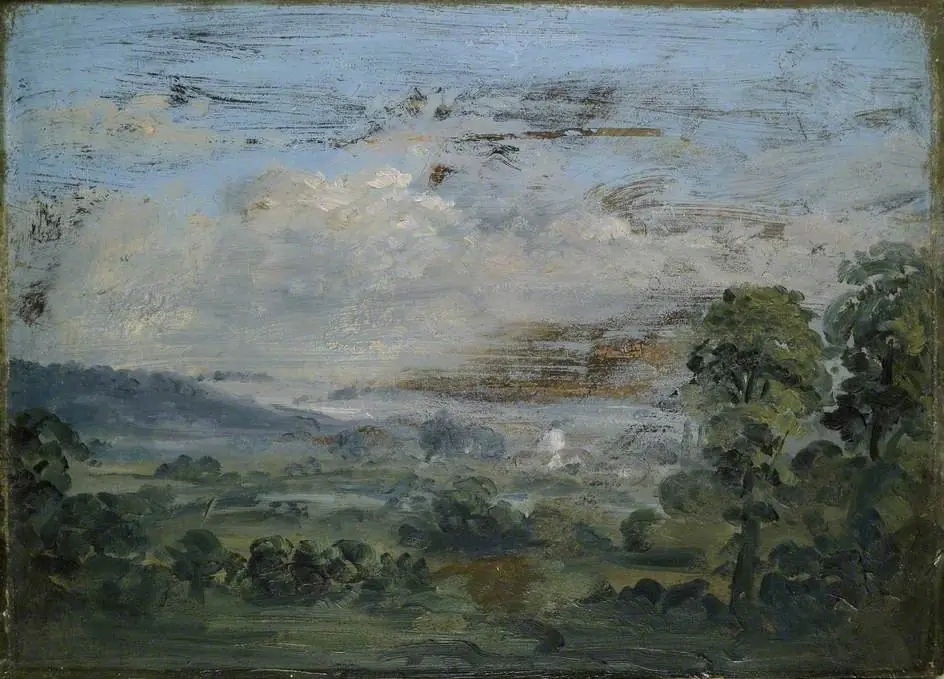
Painted in 1835 by David Charles Read, this landscape depicts a quiet stretch of countryside near Elmfield Lodge in Southampton. The composition centers on a calm body of water reflecting the sky and surrounding vegetation, with modest structures and scattered figures suggesting human presence without intrusion. The atmosphere is tranquil, emphasizing stillness and natural harmony over dramatic action.
Subject & Meaning
The scene captures a routine, unremarkable corner of the English countryside, avoiding grandeur or narrative. The presence of figures—small and unobtrusive—hints at daily life, while the architecture suggests modest domesticity. The painting’s quietude reflects a 19th-century appreciation for the ordinary, valuing contemplation over spectacle in landscape representation.
Technique & Style
Read employs subtle gradations of color and soft transitions between light and shadow to suggest depth and texture. The water’s surface is rendered with delicate brushwork, capturing the diffused reflection of sky and trees. Atmospheric perspective is achieved through muted tones in the distance, while the foreground retains slightly richer hues, guiding the viewer’s eye naturally through the space.
History & Provenance
The painting has been held by the Ashmolean Museum since its acquisition, though specific details of its early ownership are not documented. It was likely created during Read’s active period in southern England, where he focused on local scenery. Its preservation in a public collection indicates early recognition of its quiet observational value within regional art circles.
Context
Created during a time when British landscape painting was increasingly focused on intimate, local views rather than grand vistas, this work aligns with the trend of topographical realism. Read’s approach echoes contemporaries like John Constable in its attention to everyday nature, though without the same emotional intensity, reflecting a more restrained, observational aesthetic of the period.
Legacy
Though not widely known outside regional collections, the painting contributes to the understanding of 19th-century English landscape practice beyond the major names. Its preservation in the Ashmolean underscores its role as a representative example of modest, skilled observation, offering insight into how ordinary places were valued in art during the early Victorian era.
Artist & collection