Artwork
Bolton Abbey
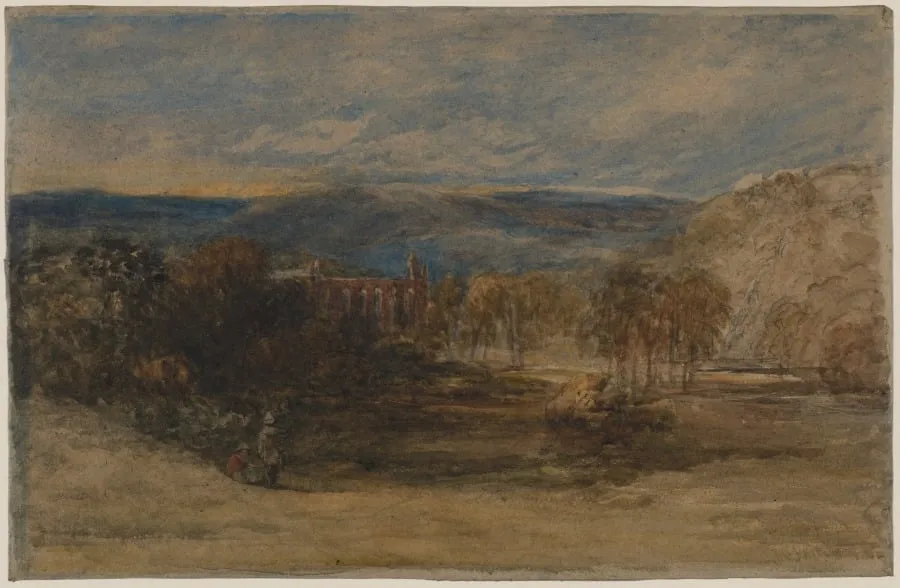
Bolton Abbey is a drawing by the Romanticist artist David Cox. It dates from 1844 and is held in the collection of the Cleveland Museum of Art.
About this work
Cox painted this late in life, using quick, loose brushstrokes that make the scene feel alive.
You see a ruined abbey half-hidden by trees, its stones glowing faintly in the twilight. The sky is a soft wash of gray and blue, with a thin strip of yellow light at the horizon.
Cox painted this late in life, using quick, loose brushstrokes that make the scene feel alive. The paper’s rough texture shows through, adding to the mood. He cared more about light and atmosphere than perfect details.
If you like this, look up *England, 19th century* for more quiet landscapes like it.
Overview
Bolton Abbey is a watercolor drawing on rough, brown paper, characteristic of David Cox's later work.
Subject & Meaning
The drawing depicts a ruined 12th-century priory, partially obscured by trees, set against a soft, twilight sky. The abbey's stones glow faintly, while the surrounding landscape is dominated by muted grays, greens, and blues.
Technique & Style
Cox employed loose, expressive brushstrokes and allowed the paper's texture to remain visible, creating a sense of atmosphere and mood. The watercolor washes are applied in a way that captures the fleeting effects of light.
Context
This drawing is representative of Cox's late style, prioritizing the capture of light and atmosphere over precise detail.
Artist & collection
Artist
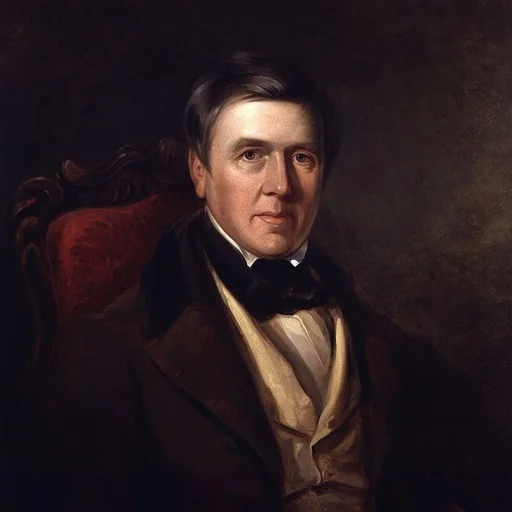
David Cox (29 April 1783 – 7 June 1859) was an English landscape painter, one of the most important members of the Birmingham School of landscape artists and an early precursor of Impressionism.

![Trees [verso], by David Cox](https://artifactworldgallery.com/img/david-cox--trees-verso--2f59ba73e183df09-w320.webp)
![Chatsworth [recto], by David Cox](https://artifactworldgallery.com/img/david-cox--chatsworth-recto--3f4d97adb21a8333-w320.webp)
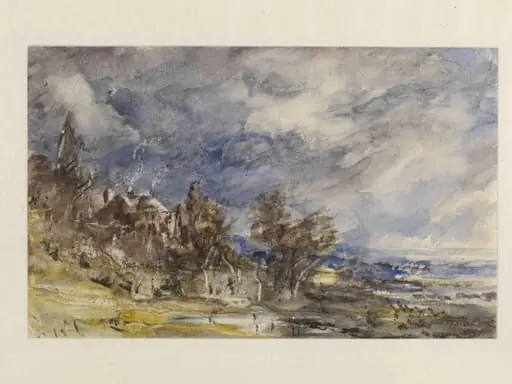 Hampstead Heath, from near Well Walk
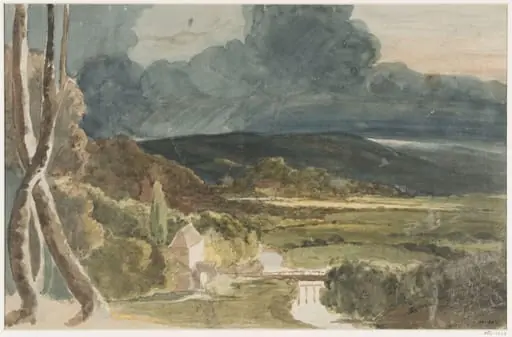 Landscape with river and mountains
 Mountain Landscape with two Figures at the Right
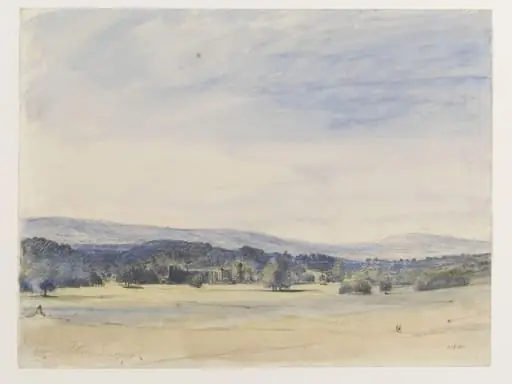 The ruins of a Cowdray House
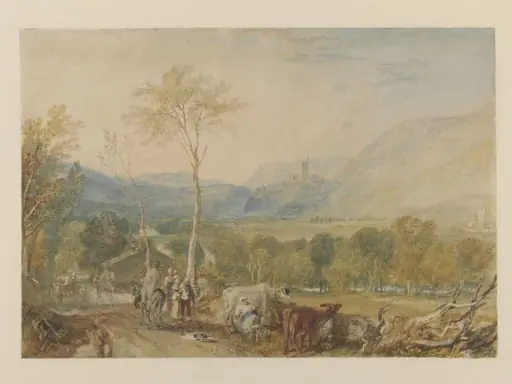 Hornby Castle, Lancashire, from Tatham Church
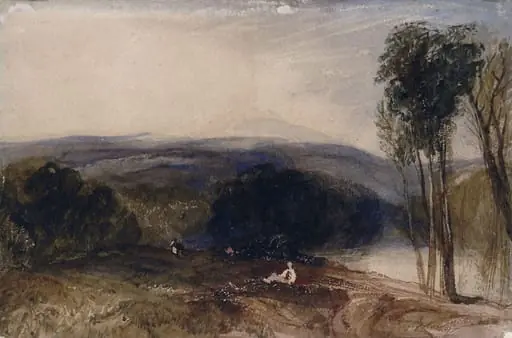 Landscape with river and mountain
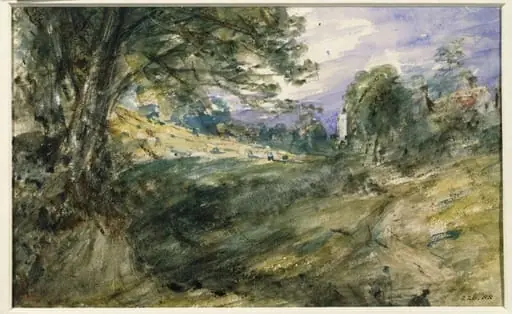 Cottages on high ground.
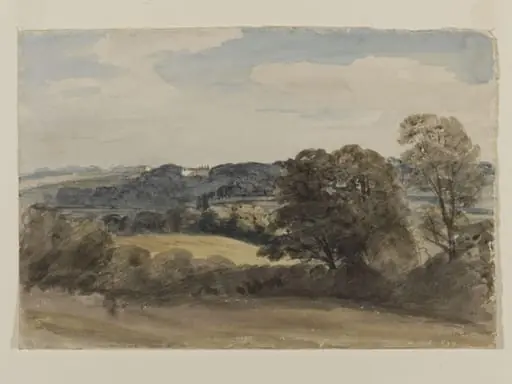 Landscape with buildings in the distance
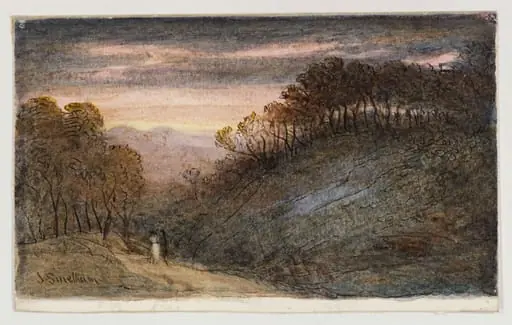 Landscape
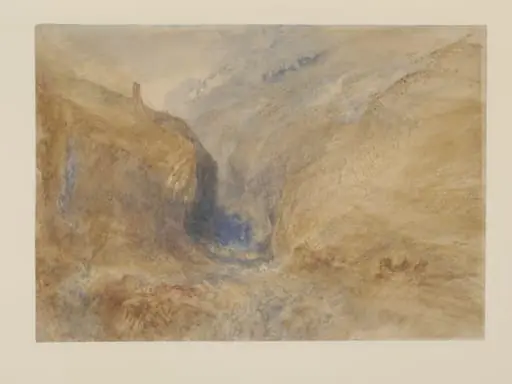 A Swiss Pass
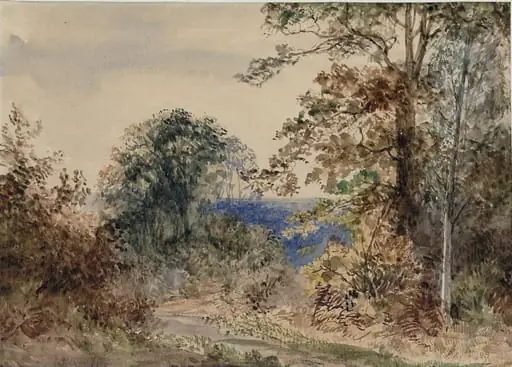 Study from Nature
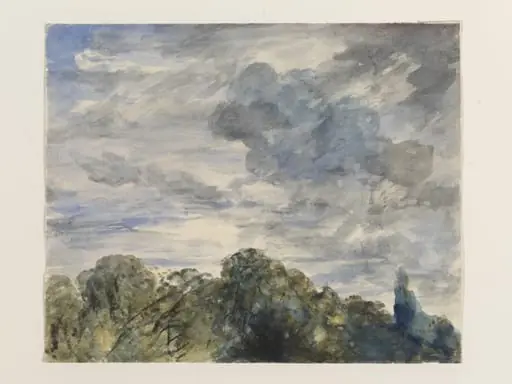 Study of sky effect