Artwork
A Swiss Pass
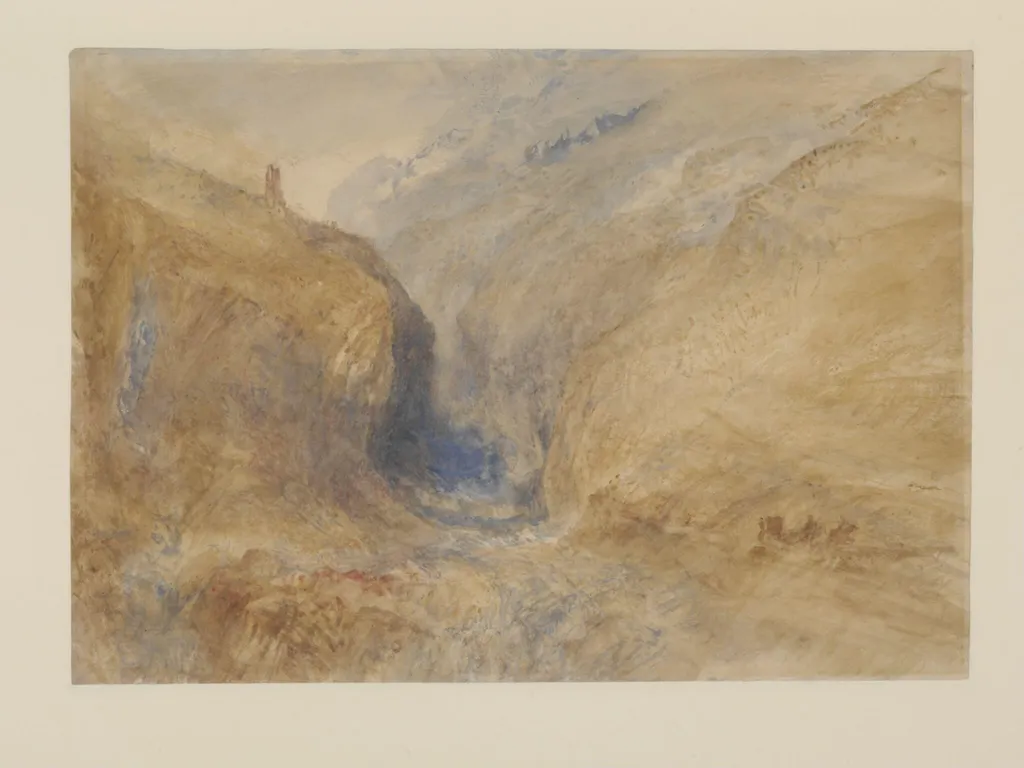
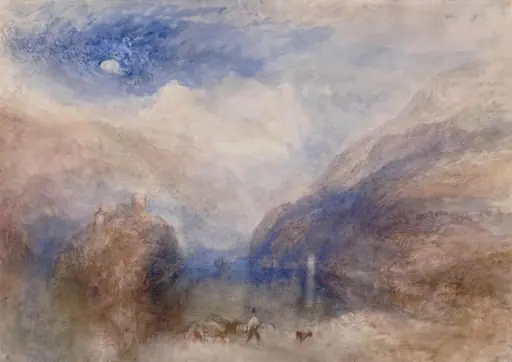
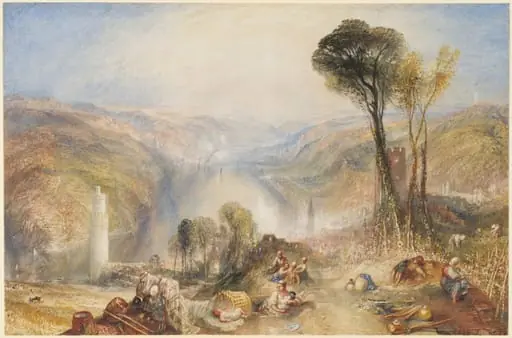
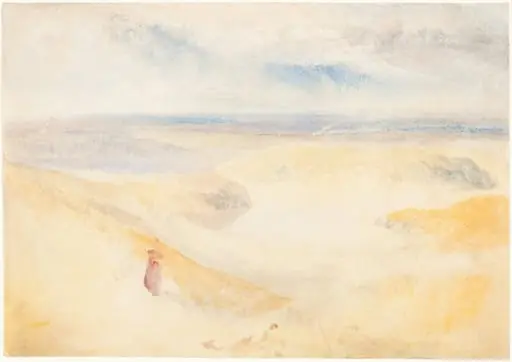
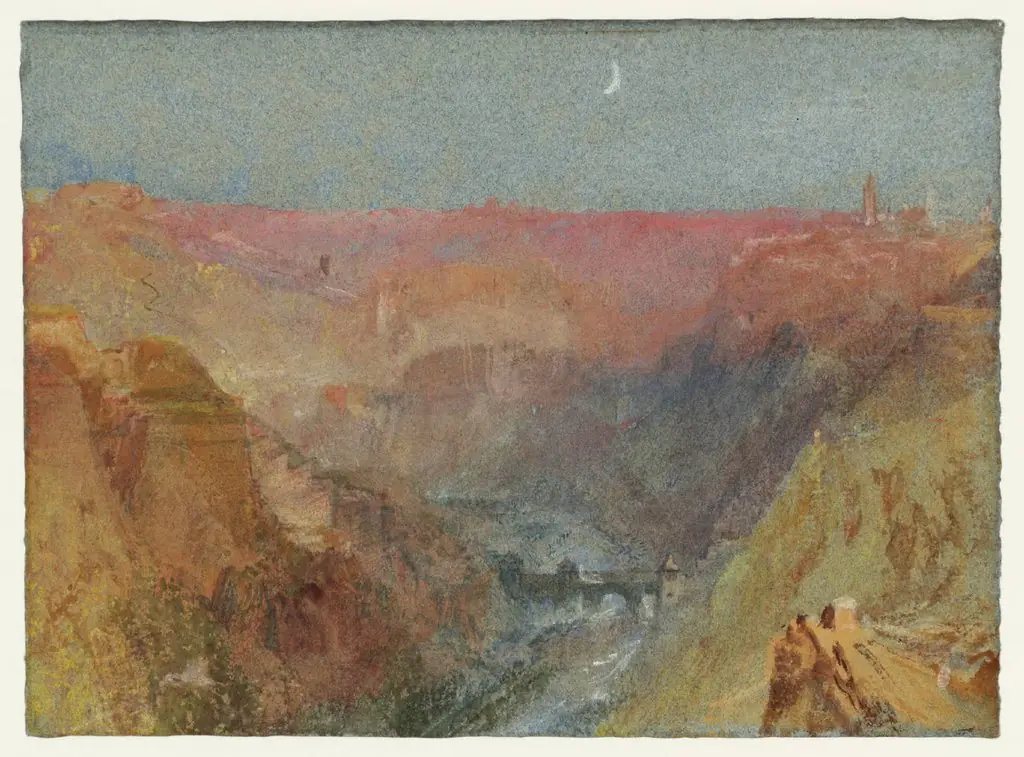
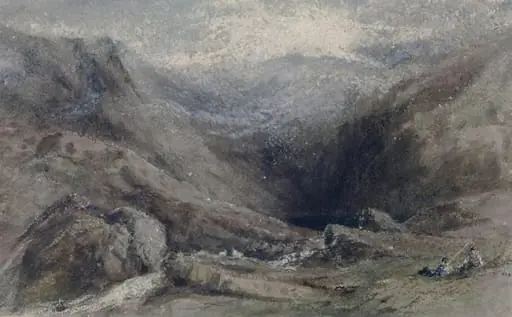
A Swiss Pass is a watercolor work on paper by the Romanticist artist Joseph Mallord William Turner. It dates from 1849 and is held in the collection of the Victoria and Albert Museum.
About this work
Overview
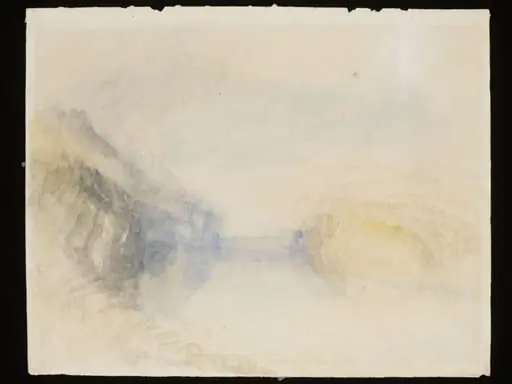
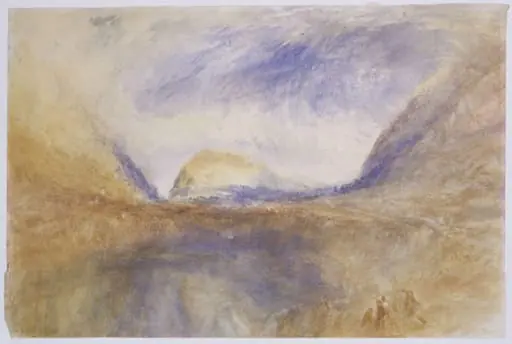
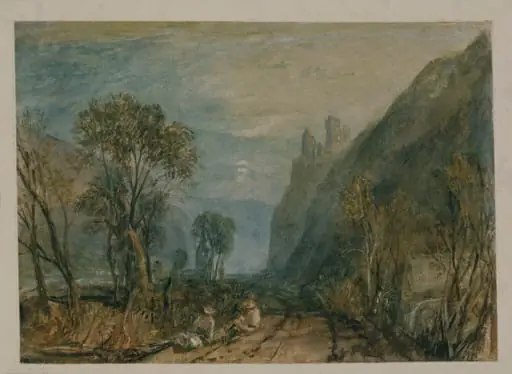
It depicts a mountainous terrain in Switzerland, rendered with loose, fluid brushwork and a restrained palette of browns and grays.
A Swiss Pass is a watercolor work by J.M.W. Turner, dated around 1849. It depicts a mountainous terrain in Switzerland, rendered with loose, fluid brushwork and a restrained palette of browns and grays. The piece is part of the Victoria and Albert Museum’s collection and exemplifies Turner’s late style, where atmospheric effects and emotional resonance take precedence over topographical precision.
Subject & Meaning
The painting portrays a narrow path winding through a rugged alpine pass, surrounded by towering cliffs and sparse vegetation. Distant peaks vanish into mist, suggesting the sublime power of nature and human insignificance within it. The absence of figures amplifies the sense of solitude and awe, aligning with Romantic ideals that valued nature’s emotional impact over literal representation.
Technique & Style
Turner employed transparent watercolor washes to build layered tones, allowing the paper’s white to suggest light and snow. His brushwork is rapid and gestural, creating texture through smudges and dry-brush strokes rather than detail. The composition directs the eye along the path into the hazy distance, emphasizing depth and atmosphere over defined form.
History & Provenance
Created near the end of Turner’s life, the work likely stems from his earlier travels through the Swiss Alps, revisited through memory and sketches. It entered the Victoria and Albert Museum’s collection after his death, as part of his bequest of unfinished works and studies, which were preserved for their artistic insight rather than polished finish.
Context
In the 1840s, Turner increasingly favored abstracted landscapes that conveyed mood over accuracy. A Swiss Pass reflects his engagement with Romanticism’s focus on nature’s grandeur and transience, while also anticipating later movements that prioritized expressive brushwork and emotional tone over realism.
Legacy
The painting stands as a testament to Turner’s evolving approach to watercolor, where suggestion replaced description. Its influence can be seen in later artists who embraced atmospheric abstraction, reinforcing his role in expanding the expressive potential of the medium beyond traditional landscape conventions.
Artist & collection
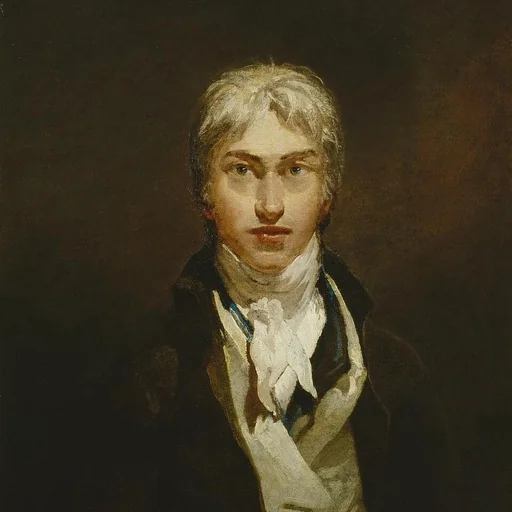
Artist
Joseph Mallord William Turner was born in 1775 at Maiden Lane, Covent Garden, where his father kept a barber and wig-making shop.