Artwork
The Garden Terrace at Haddon Hall
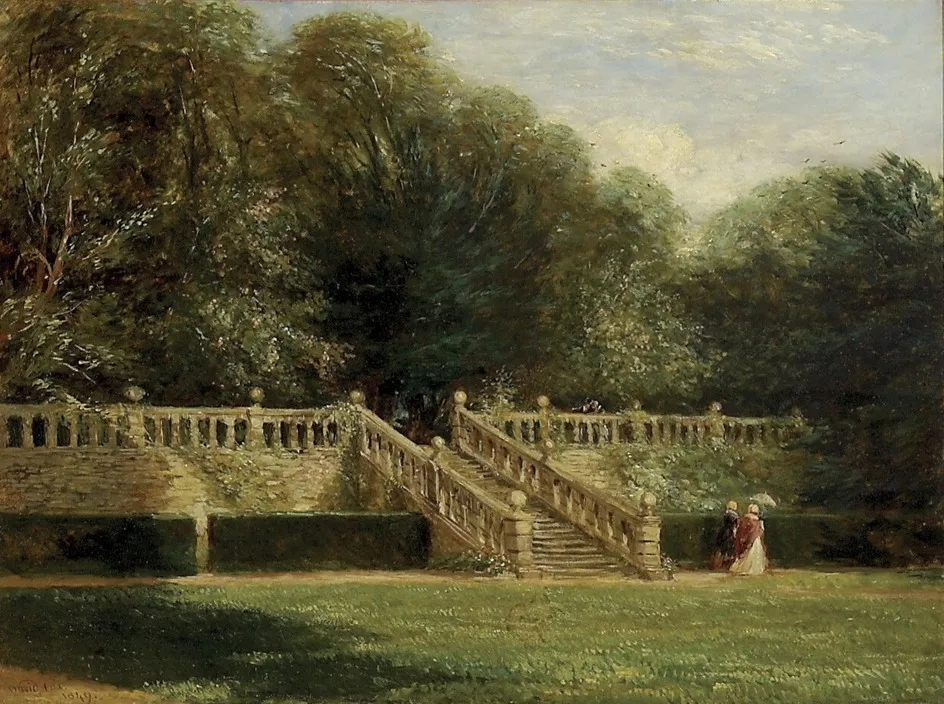
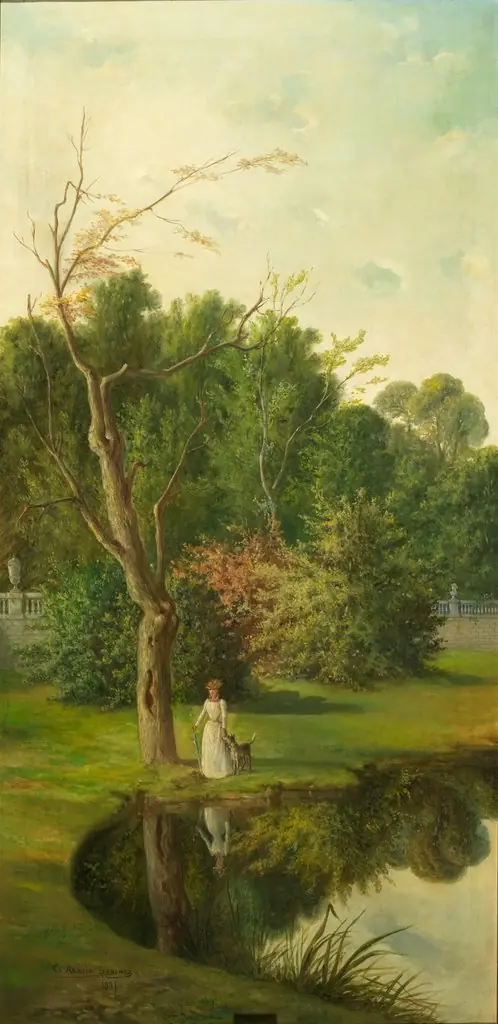
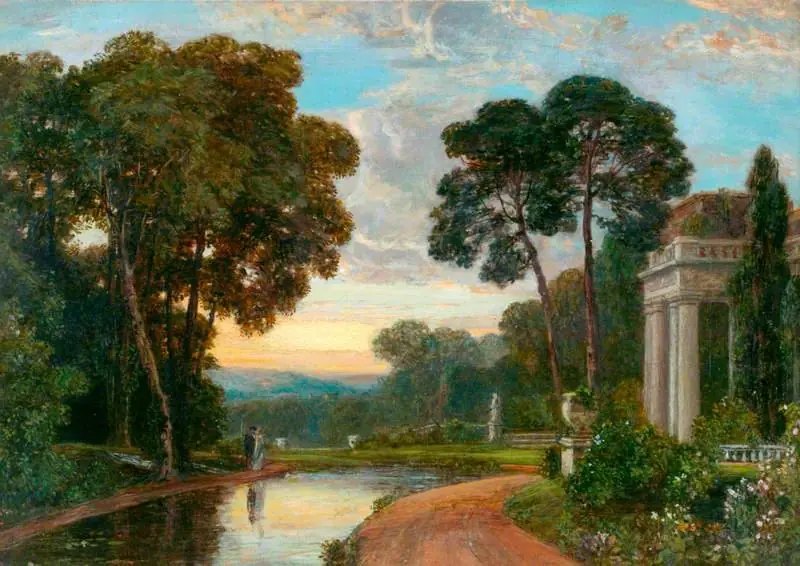
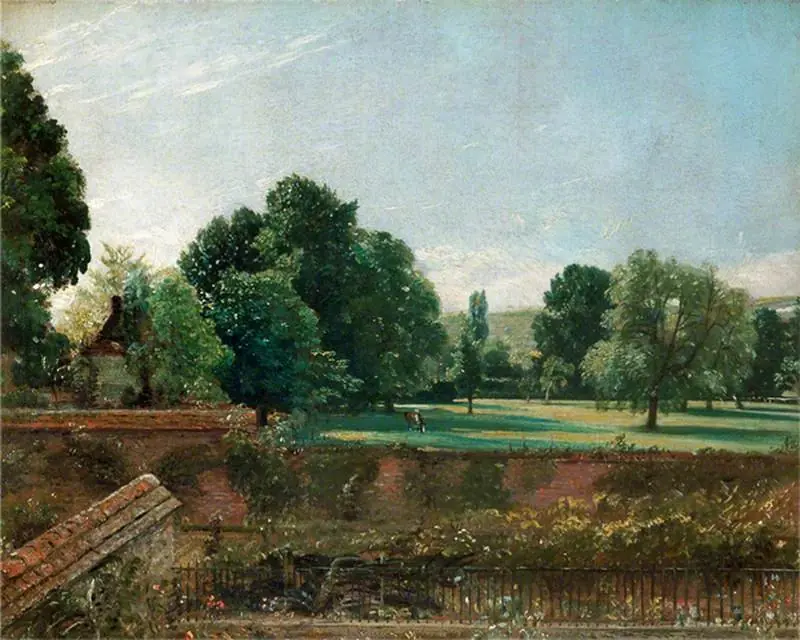
The Garden Terrace at Haddon Hall is an oil painting by David Cox. It dates from 1849 and is held in the collection of the Ashmolean Museum.
About this work
Overview
Though Cox was primarily known for his watercolors, this piece belongs to a lesser-known series of over 300 oil paintings he produced after the 1840s.
Painted in 1849, *The Garden Terrace at Haddon Hall* is an oil work by English artist David Cox, created late in his career. Though Cox was primarily known for his watercolors, this piece belongs to a lesser-known series of over 300 oil paintings he produced after the 1840s. The scene captures a quiet moment in a historic English garden, rendered with subtle light and restrained detail, reflecting Cox’s evolving approach to landscape beyond his earlier, more dramatic style.
Subject & Meaning
The painting depicts a stone terrace and staircase at Haddon Hall, a medieval manor in Derbyshire, surrounded by lush, overgrown vegetation. Two small figures stand near the stairs, their presence incidental rather than narrative. The focus lies in the interplay of architecture and nature—ordered stone giving way to wild greenery—suggesting a contemplative harmony between human design and the natural world, typical of Cox’s later interest in atmospheric tranquility.
Technique & Style
Cox employed oil paint with a loose, textured brushwork that softens edges and diffuses light, creating a warm, sunlit atmosphere. Unlike his vibrant watercolors, this work uses muted tones and layered glazes to suggest depth without sharp definition. The composition avoids dramatic focal points, instead guiding the eye through gentle gradients of green and stone, reflecting a quiet, observational approach that anticipates later plein air practices.
History & Provenance
The painting was completed during Cox’s final decade, a period when he increasingly turned to oil after decades of watercolor success. It likely originated from his visits to historic estates in the Midlands, including Haddon Hall, which he sketched and later developed into finished works. The painting remained in private collections until entering public institutional holdings, where it is now studied as part of his underappreciated oil oeuvre.
Context
In mid-19th century Britain, landscape painting was dominated by idealized or romantic visions. Cox’s work, including this piece, diverged by emphasizing quiet, unembellished scenes rooted in real locations. His focus on everyday naturalism, though not aligned with the Royal Academy’s preferences, resonated with regional artists of the Birmingham School and later influenced early Impressionist sensibilities through his attention to light and transient effects.
Legacy
Though overshadowed by his watercolor achievements, Cox’s oil paintings, including *The Garden Terrace at Haddon Hall*, are now recognized for their quiet innovation. Their subdued palette and emphasis on atmosphere prefigure developments in British and French landscape painting. Scholars increasingly view these works as a bridge between Romantic tradition and modern observational practice, offering a nuanced alternative to the more theatrical landscapes of his era.
Artist & collection
Artist
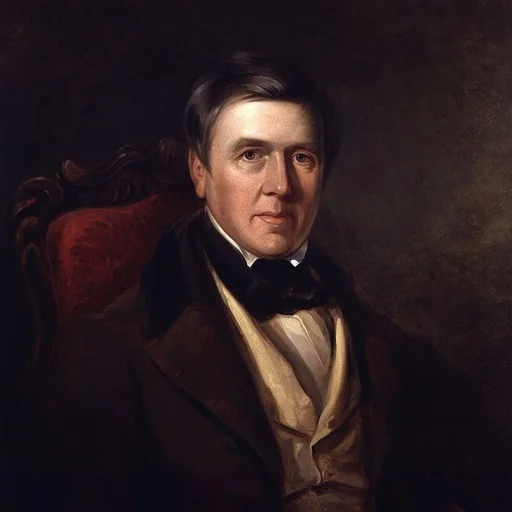
David Cox (29 April 1783 – 7 June 1859) was an English landscape painter, one of the most important members of the Birmingham School of landscape artists and an early precursor of Impressionism.

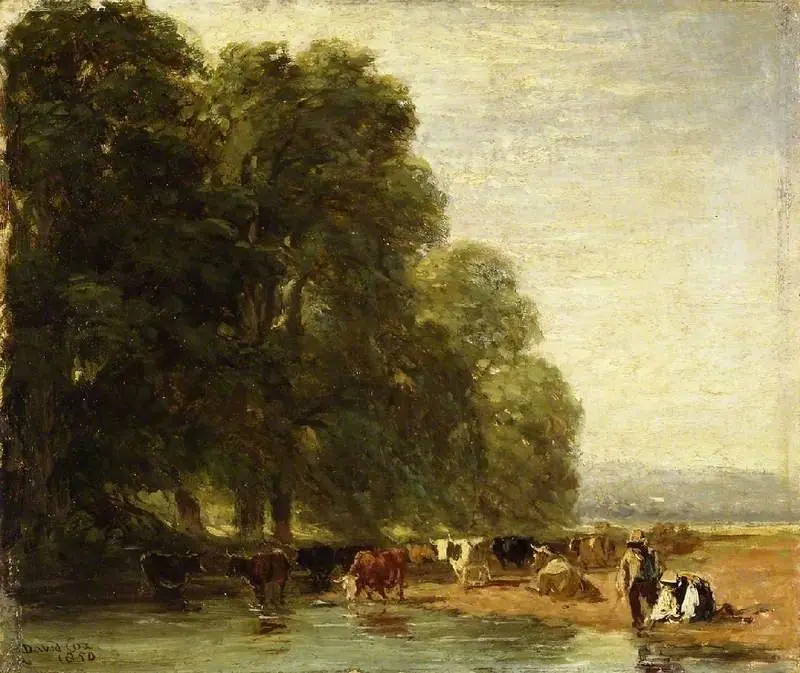
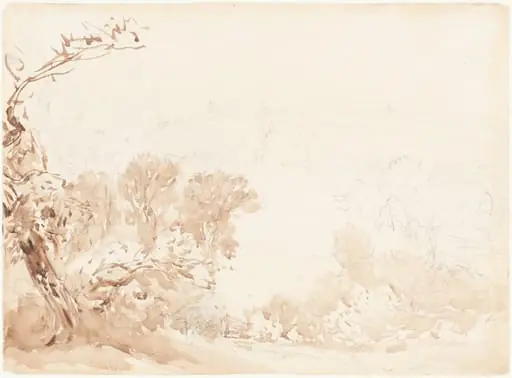
![Trees [verso], by David Cox](https://artifactworldgallery.com/img/david-cox--trees-verso--2f59ba73e183df09-w320.webp)
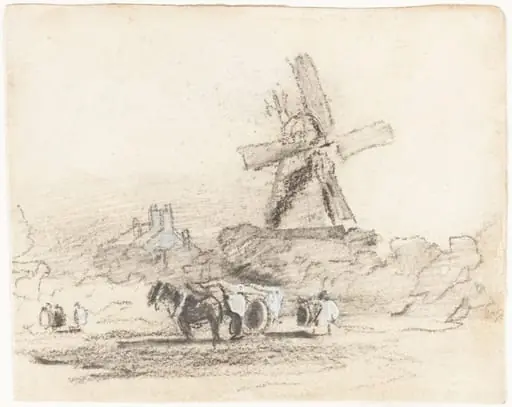
![Chatsworth [recto], by David Cox](https://artifactworldgallery.com/img/david-cox--chatsworth-recto--3f4d97adb21a8333-w320.webp)