Artwork
Paisaje con figuras junto a un lago
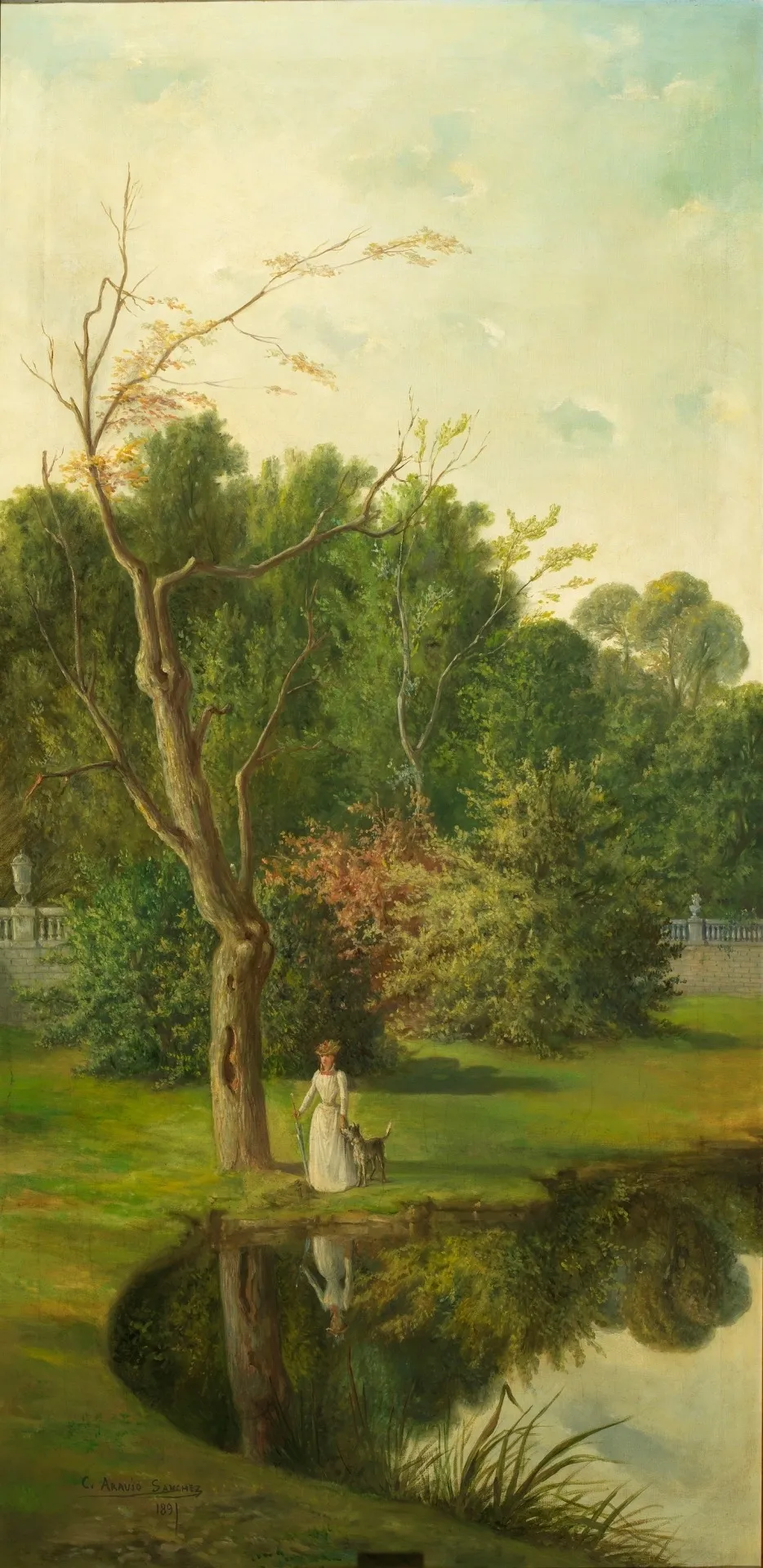
Paisaje con figuras junto a un lago is an oil painting by the Post-Impressionist artist Ceferino Araujo. It dates from 1896 and is held in the collection of the Museo del Prado.
About this work
Overview
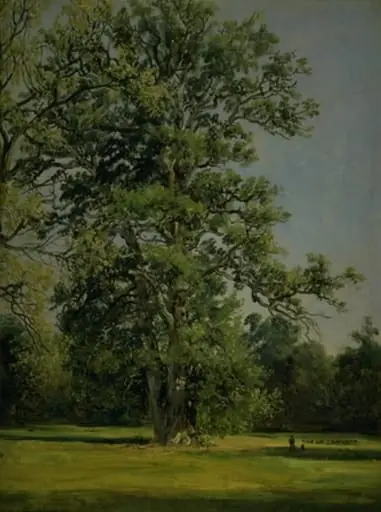
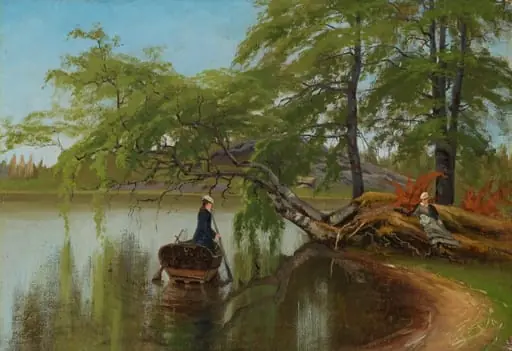
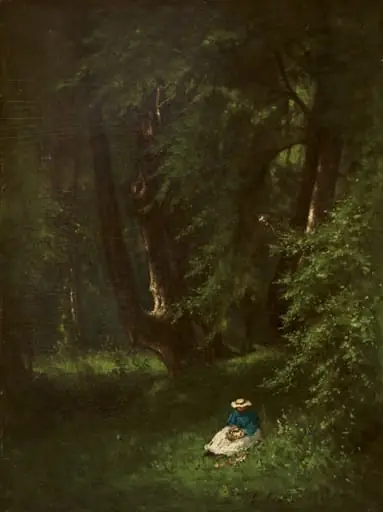
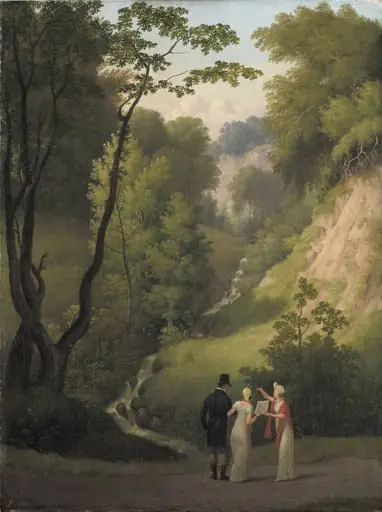
Painted in 1896 by Ceferino Araujo, this oil on canvas work presents a quiet rural landscape with human and animal figures. It resides in the Museo del Prado’s collection, reflecting late 19th-century Spanish tendencies toward intimate, naturalistic scenes. The composition avoids dramatic action, favoring stillness and subtle tonal shifts to evoke a mood of calm observation.
Subject & Meaning
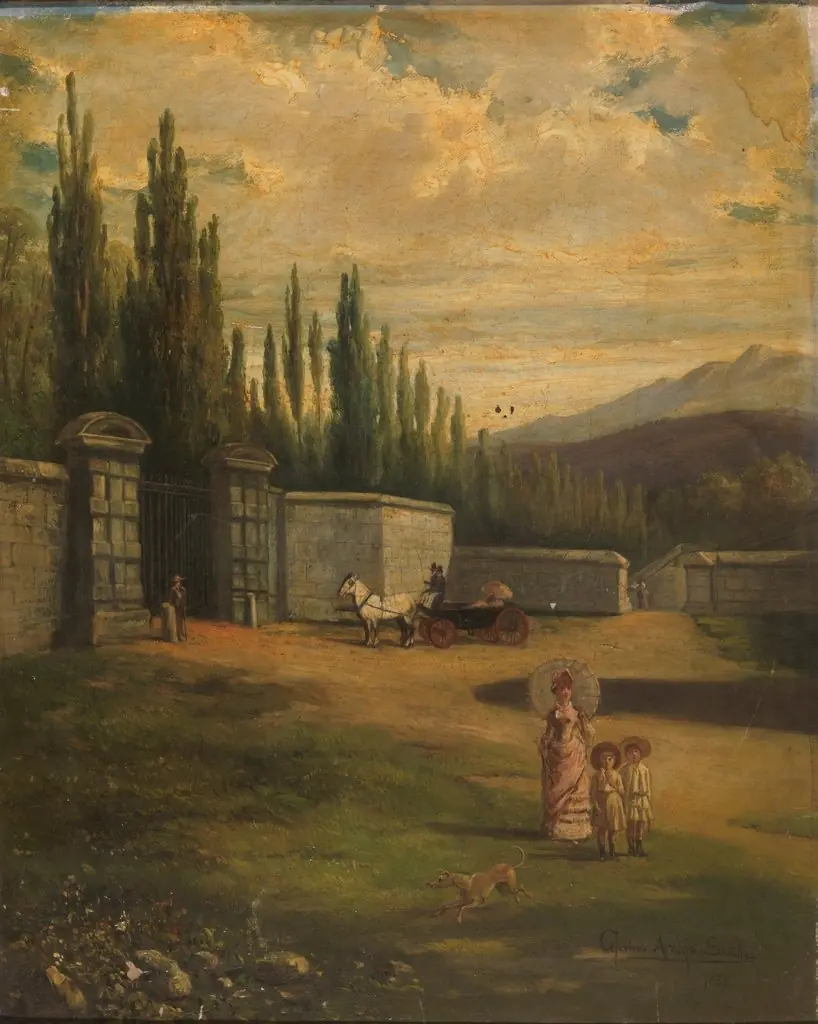
A woman in a white dress stands near a bare tree, accompanied by a dog, both positioned beside a still lake. The figures are not engaged in narrative activity but appear absorbed in their surroundings. The absence of overt symbolism suggests a focus on quiet solitude, perhaps reflecting contemporary ideals of domestic tranquility or the contemplative relationship between humans and nature.
Technique & Style
Araujo employs soft, muted tones and careful gradations of light to model forms, particularly in the woman’s dress and the tree’s trunk. Chiaroscuro is used subtly, not for theatrical effect but to enhance spatial depth and texture. Brushwork remains restrained, favoring smooth transitions over visible strokes, aligning with academic traditions of the period while avoiding overt romanticism.
History & Provenance
The painting entered the Museo del Prado’s holdings following its creation in 1896, likely acquired through state or institutional channels common for Spanish artists of the time. No record of public exhibition prior to its inclusion in the museum’s collection is documented, suggesting it was not widely circulated but preserved as part of a broader effort to archive national artistic output.
Context
Created during a period when Spanish painting increasingly turned from grand historical themes to everyday scenes, this work aligns with regional trends in Castilian and Andalusian art. While not part of a formal movement, it shares affinities with the quiet realism of contemporaries like Sorolla’s early landscapes, emphasizing atmosphere over spectacle in response to evolving aesthetic values.
Legacy
Though not widely reproduced or studied, the painting remains a representative example of late 19th-century Spanish domestic landscape painting. Its presence in the Prado underscores institutional recognition of modest, contemplative works alongside more prominent historical or avant-garde pieces, preserving a quieter strand of the nation’s artistic heritage.
Artist & collection