Artwork
Roman Buildings on a Hill
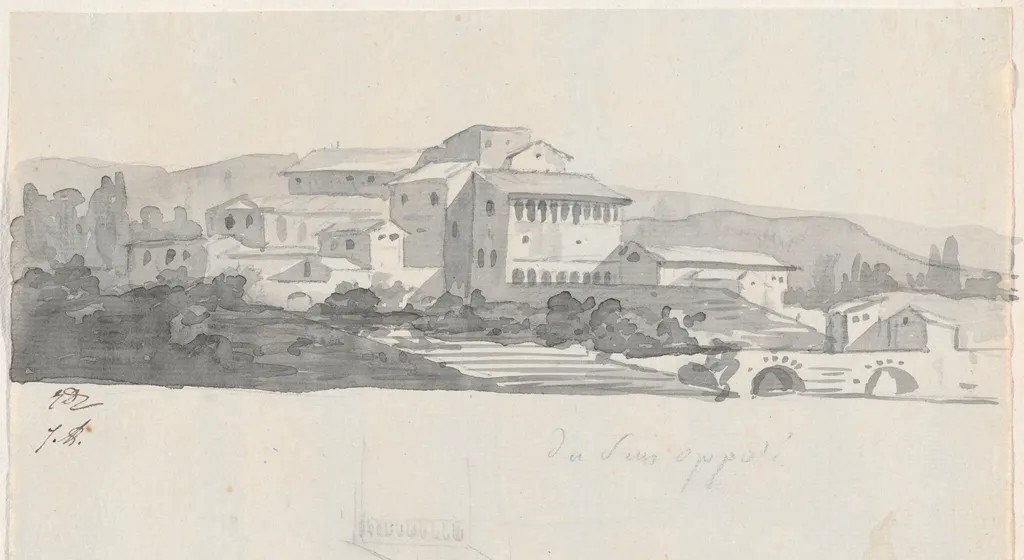
Roman Buildings on a Hill is a graphite drawing by the Neoclassicist artist Jacques-Louis David. It dates from 1778 and is held in the collection of the National Gallery of Art.
About this work
Overview
Executed in gray wash over graphite on green-gray paper, the work extends slightly beyond the central sheet onto adjacent album pages.
Created in 1778 by Jacques-Louis David, this drawing depicts a hillside populated by structures inspired by Roman architecture. Executed in gray wash over graphite on green-gray paper, the work extends slightly beyond the central sheet onto adjacent album pages. The medium’s restrained tonality and delicate line work reflect David’s early engagement with architectural study, prior to his shift toward grand historical painting.
Subject & Meaning
The scene presents an imagined Roman landscape, not a specific site, emphasizing architectural forms over human activity. The arrangement of buildings suggests a ruinous or abandoned settlement, evoking contemplation of antiquity’s endurance and decay. Trees and shrubs in the foreground frame the composition, reinforcing a mood of quiet solitude rather than narrative action.
Technique & Style
David employed gray wash to model volume and atmosphere, layered over precise graphite underdrawing to define structural details. The green-gray paper subtly influences the tonal harmony, enhancing the sense of aged stone and weathered surfaces. The technique prioritizes subtle gradations over bold contrasts, demonstrating his mastery of monochrome draftsmanship and spatial depth through atmospheric perspective.
History & Provenance
This drawing was made during David’s time in Rome as a recipient of the Prix de Rome, a period dedicated to studying classical ruins. It likely originated in a sketchbook used for architectural exercises, later bound into an album. Its survival reflects its role as a preparatory study rather than a finished work, preserved as part of the artist’s academic practice.
Context
In the late 1770s, David was immersed in the Neoclassical revival, seeking to ground his art in the formal language of antiquity. Unlike later Romantic depictions of ruins as emotionally charged symbols, this drawing approaches architecture with scholarly restraint, aligning with the academic emphasis on observation, proportion, and historical fidelity over expressive interpretation.
Legacy
Though not widely exhibited, this work exemplifies David’s foundational training and his disciplined approach to form. It influenced later generations of French artists who studied classical architecture through direct observation. Its quiet precision stands in contrast to his later political canvases, revealing the quiet rigor behind his public achievements.
Artist & collection

Artist
Jacques-Louis David was born in Paris on 30 August 1748 into a bourgeois family; his father died in a duel when the boy was nine, and a maternal uncle guided his education.

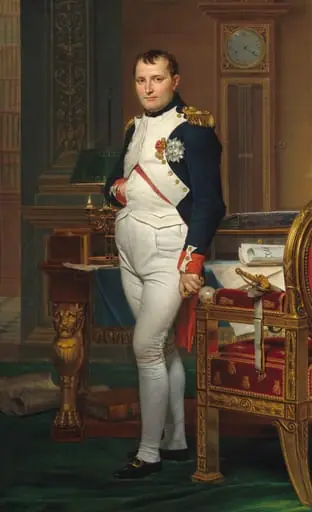 The Emperor Napoleon in His Study at the Tuileries
 Madame David
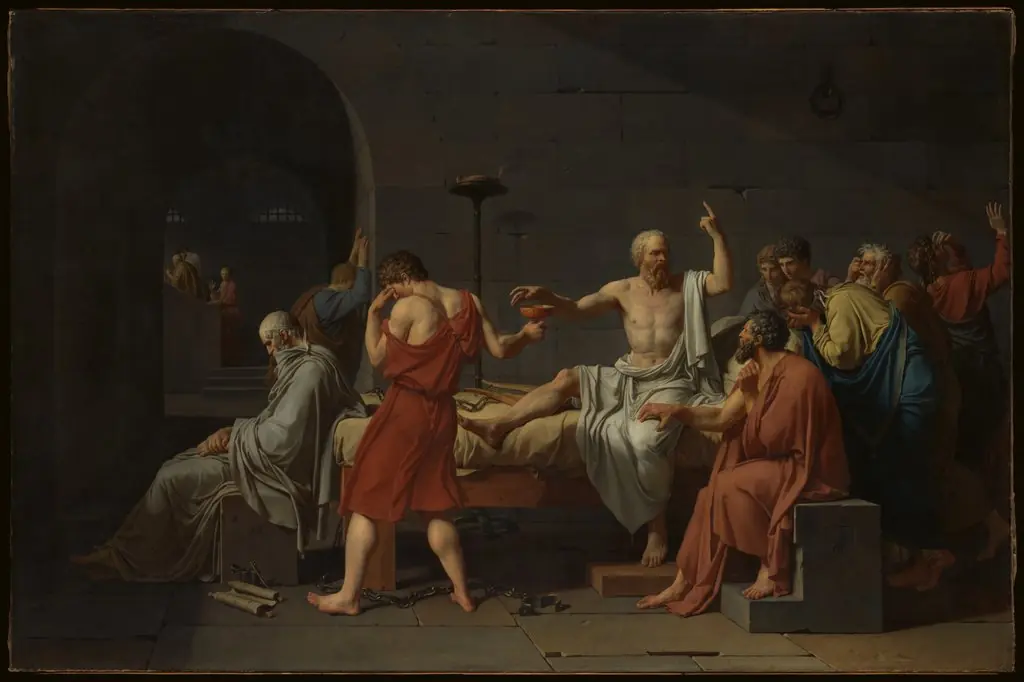 The Death of Socrates
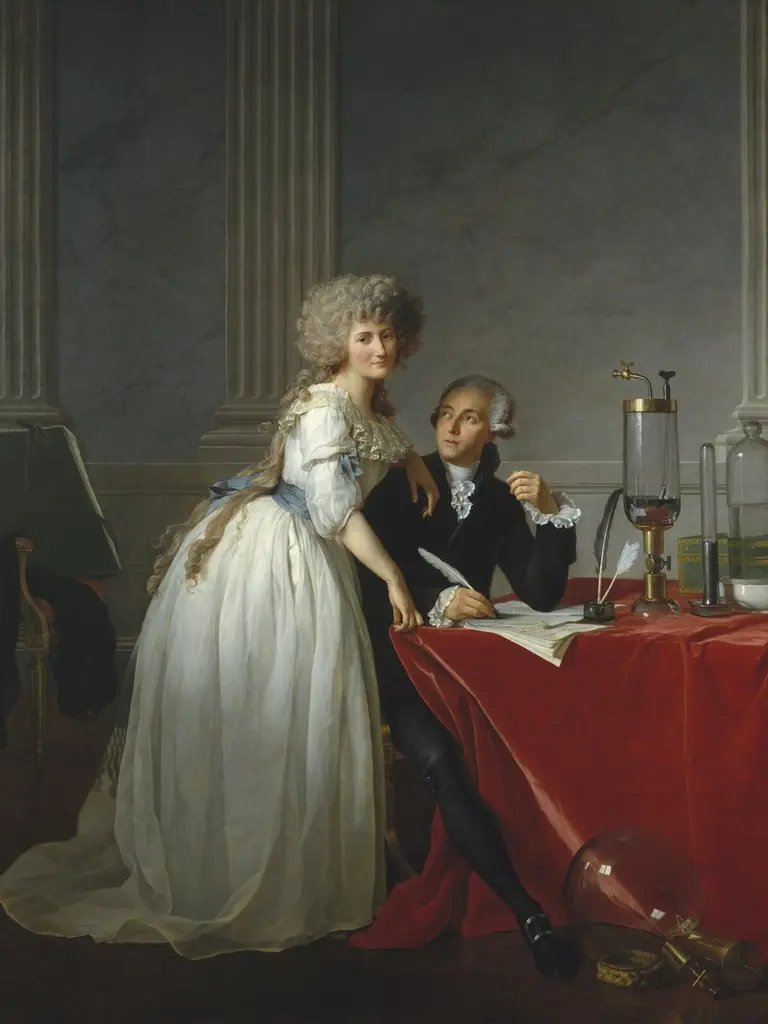 Portrait of Antoine-Laurent Lavoisier and his wife
 Cupid and Psyche
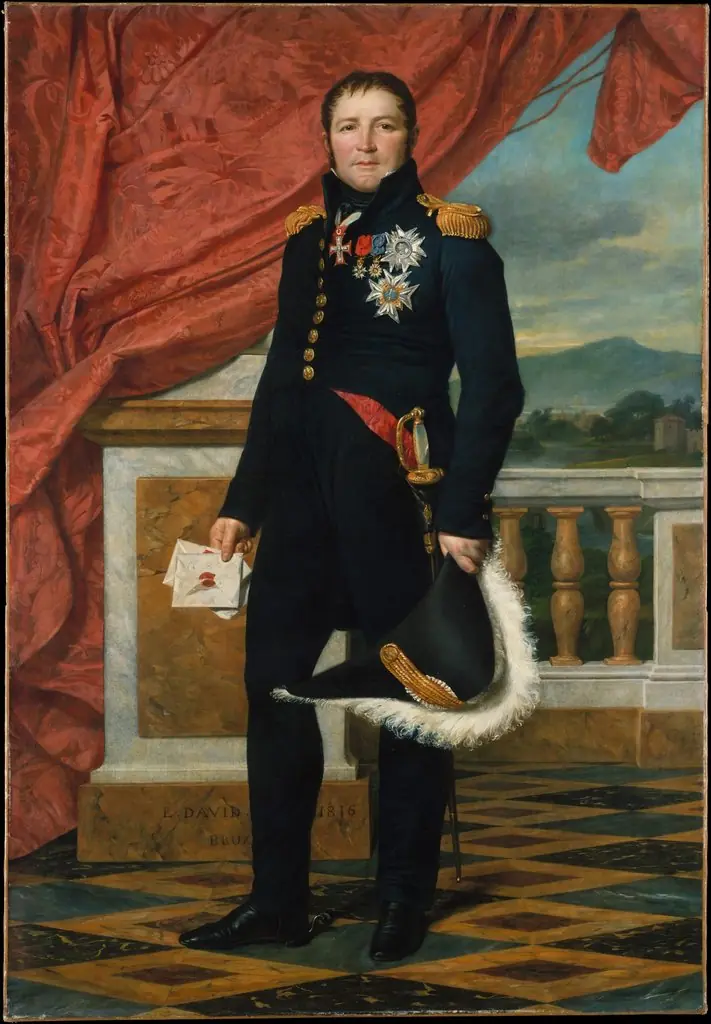 General Étienne-Maurice Gérard (1773–1852), Marshal of France
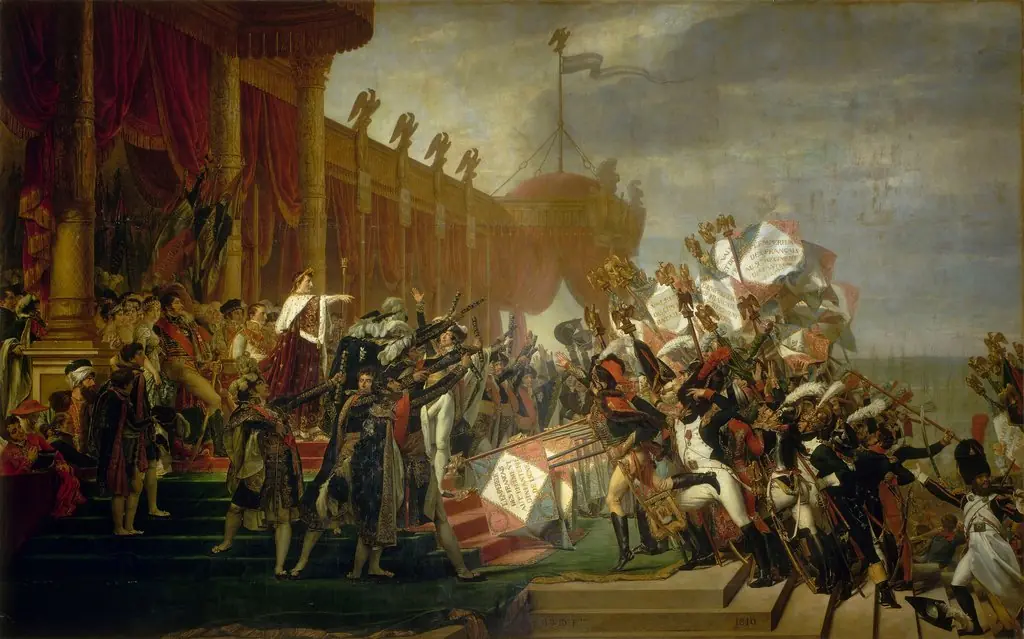 The Distribution of the Eagle Standards
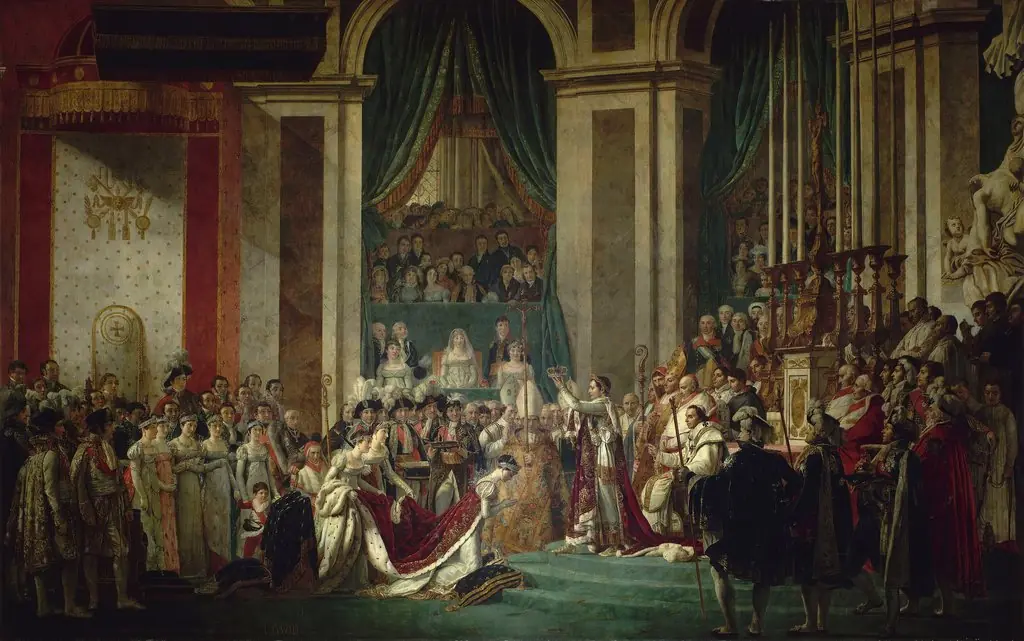 Coronation of Emperor Napoleon I and Coronation of the Empress Josephine
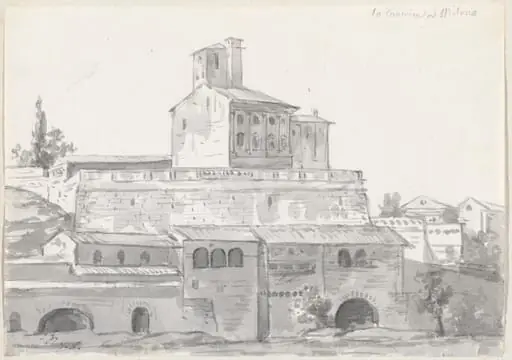 The Canonica of Sant'Ambrogio, Milan
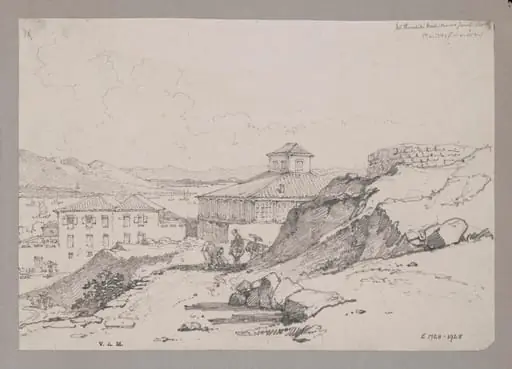 The Rev. Mr. Vatchell's house (formerly Mr. Thornhill's), Macao
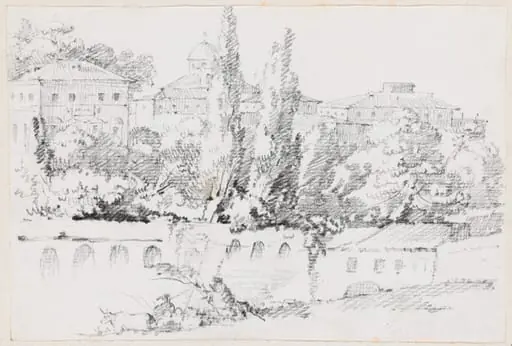 Walls of Rome with Santa Maria del Popolo in the Distance
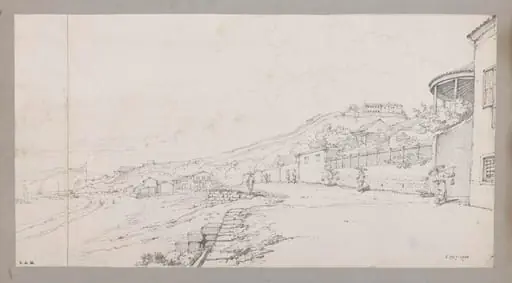 Part of Macao Bay, looking west
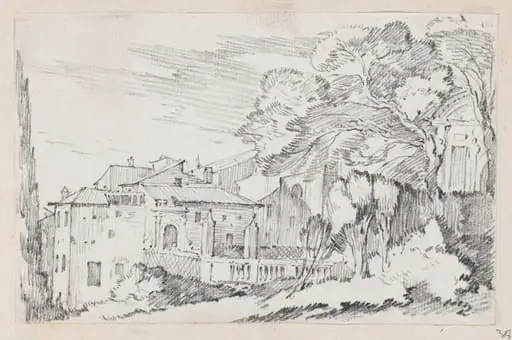 Houses and a Garden on a Hillside in Italy
 Chinqua's house, with entrance to China Street, Canton
 The Capitoline Hill
 Roman View