Artwork
The Capitoline Hill
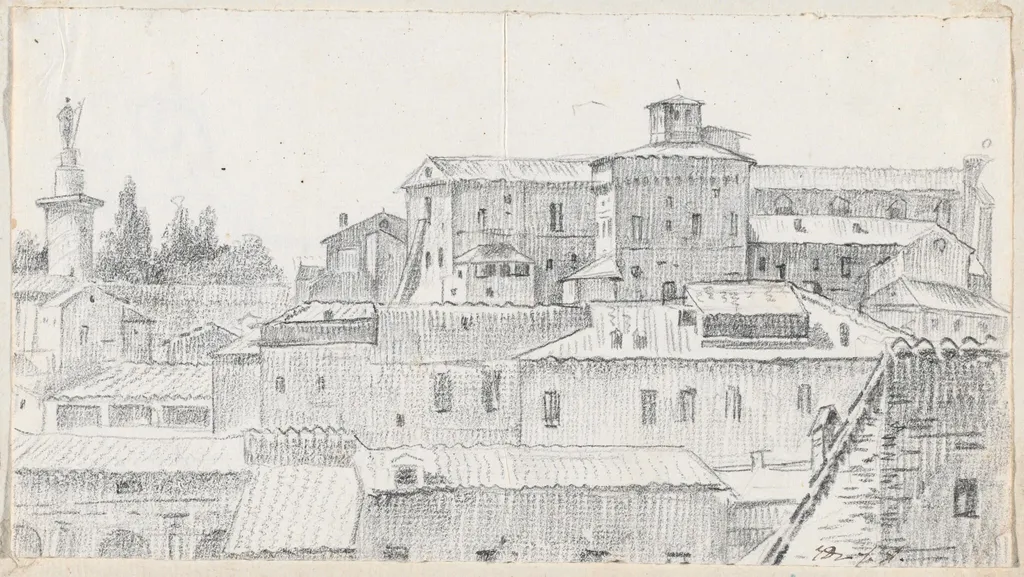
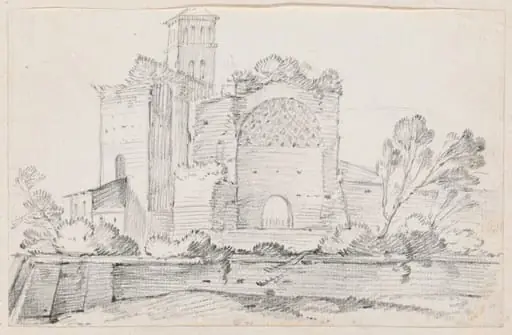
The Capitoline Hill is a chalk drawing by the Neoclassicist artist Jacques-Louis David. It dates from 1778 and is held in the collection of the National Gallery of Art.
About this work
Overview
The composition captures the hill’s dense cluster of historic structures, rendered in monochrome with subtle tonal variations.
Created in 1778, this drawing by Jacques-Louis David depicts the Capitoline Hill in Rome using black chalk on paper. The composition captures the hill’s dense cluster of historic structures, rendered in monochrome with subtle tonal variations. The medium’s soft, granular quality lends texture to the weathered rooftops and stone surfaces, emphasizing the hill’s layered architectural history without color or embellishment.
Subject & Meaning
The drawing presents the Capitoline Hill as a site of accumulated civic and religious heritage. Dominating the left side is a statue on a tall pedestal, likely representing Marcus Aurelius, a symbol of Roman imperial authority. The varied building forms suggest centuries of adaptation, reflecting the hill’s role as both a political center and a living urban fabric rather than a static monument.
Technique & Style
David employed black chalk with precision, using hatching and smudging to model light and shadow across irregular rooflines and facades. The absence of outline draws attention to mass and volume, while the uneven pressure of the chalk creates a sense of atmospheric depth. His approach is observational rather than idealized, aligning with the emerging interest in topographical accuracy during his Roman sojourn.
History & Provenance
Executed during David’s time in Rome as a pensioner of the French Academy, the drawing belongs to a series of studies made from direct observation of ancient and Renaissance architecture. It was likely a preparatory sketch for later compositions, though it stands as an independent record of his engagement with Rome’s physical landscape. The work remained in the artist’s possession until his death.
Context
In the late 1770s, French artists in Rome sought to ground their practice in classical antiquity through firsthand study. David’s focus on the Capitoline Hill—long a symbol of Roman civic identity—reflected a broader intellectual shift toward historical authenticity. Unlike idealized views, his drawing acknowledges the hill’s accumulated, sometimes chaotic, urban evolution.
Legacy
This drawing exemplifies David’s early commitment to empirical observation, a foundation for his later historical paintings. Though less known than his finished works, such sketches reveal his disciplined approach to form and space. They influenced subsequent generations of academic artists who valued direct study of architecture as essential to narrative composition.
Artist & collection

Artist
Jacques-Louis David was born in Paris on 30 August 1748 into a bourgeois family; his father died in a duel when the boy was nine, and a maternal uncle guided his education.

 The Emperor Napoleon in His Study at the Tuileries
 Madame David
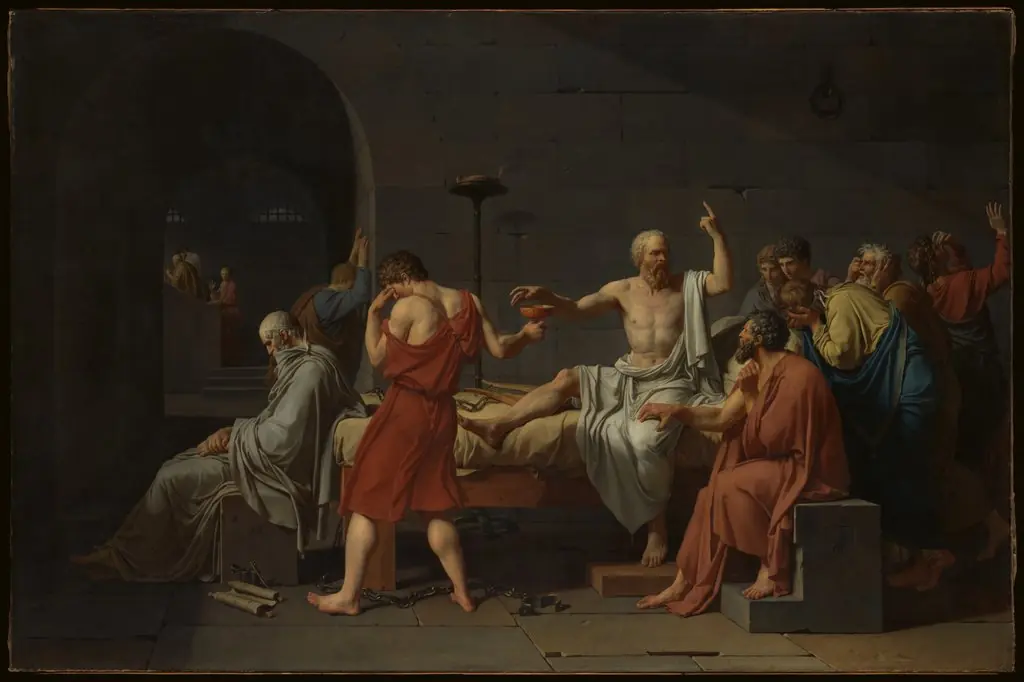 The Death of Socrates
 Portrait of Antoine-Laurent Lavoisier and his wife
 Cupid and Psyche
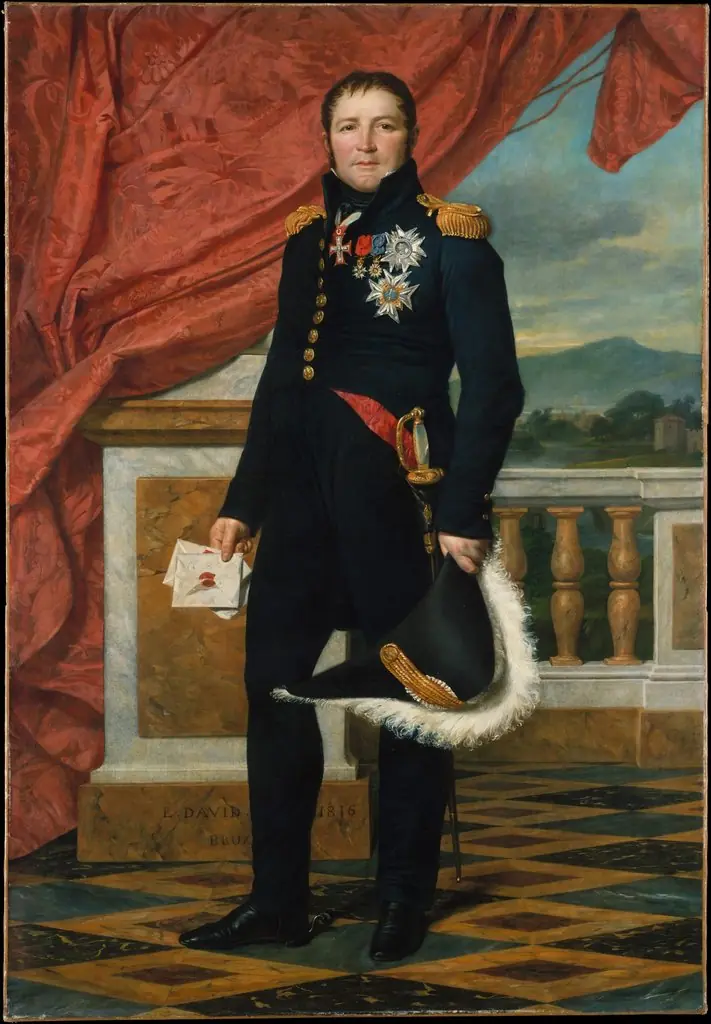 General Étienne-Maurice Gérard (1773–1852), Marshal of France
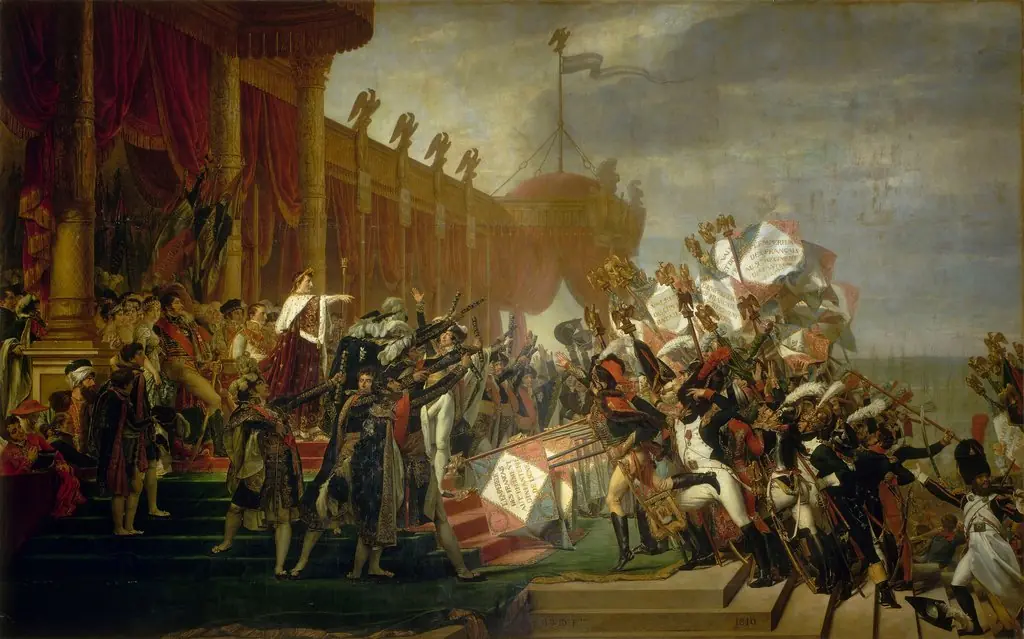 The Distribution of the Eagle Standards
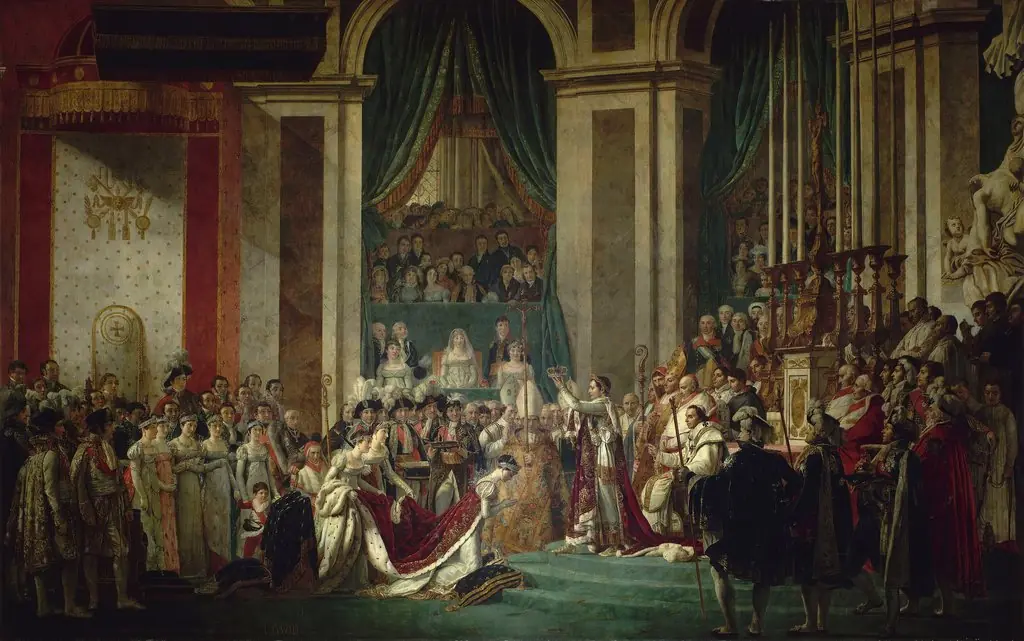 Coronation of Emperor Napoleon I and Coronation of the Empress Josephine
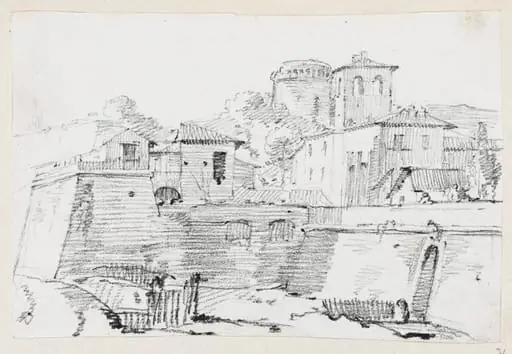 A Fortified Town in Italy
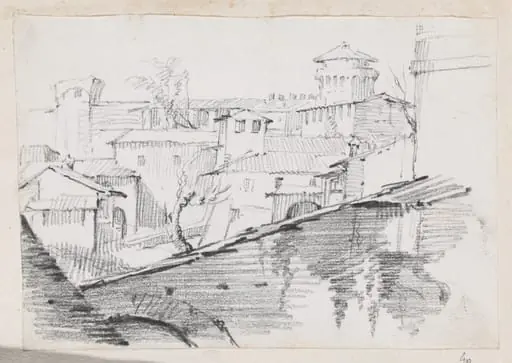 The Forno inside the Walls of the Vatican
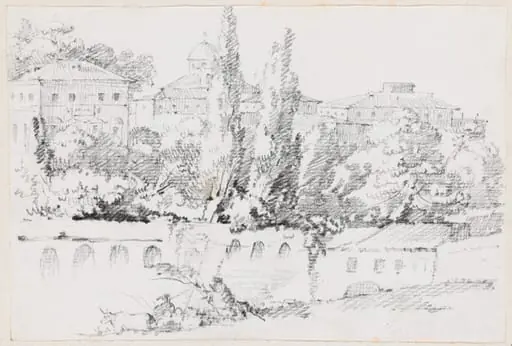 Walls of Rome with Santa Maria del Popolo in the Distance
 San Giovanni Laterano and a Baptistry
 The Canonica of Sant'Ambrogio, Milan
 Houses in Italy
 Roman Rooftops
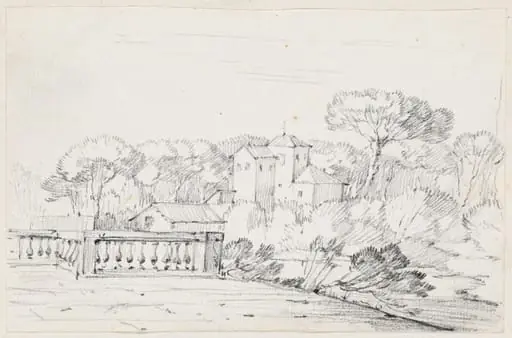 Terrace by a River with a Villa and Trees Beyond
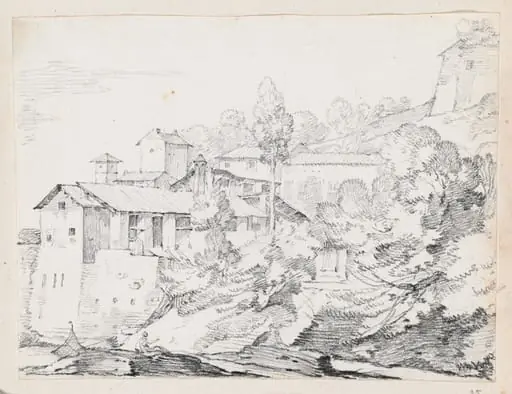 Italian Buildings on a Hillside
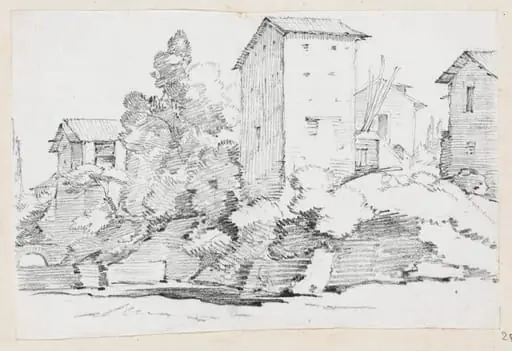 Italian Farm Buildings by a Stream
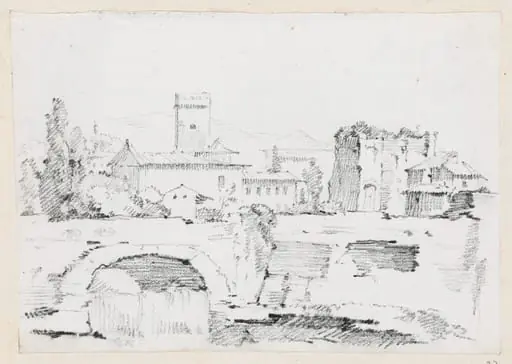 An Italian Town with a Stone Bridge and a Waterfall
 Ruins of the Temple of Venus and Rome in the Forum