Artwork
Roman View
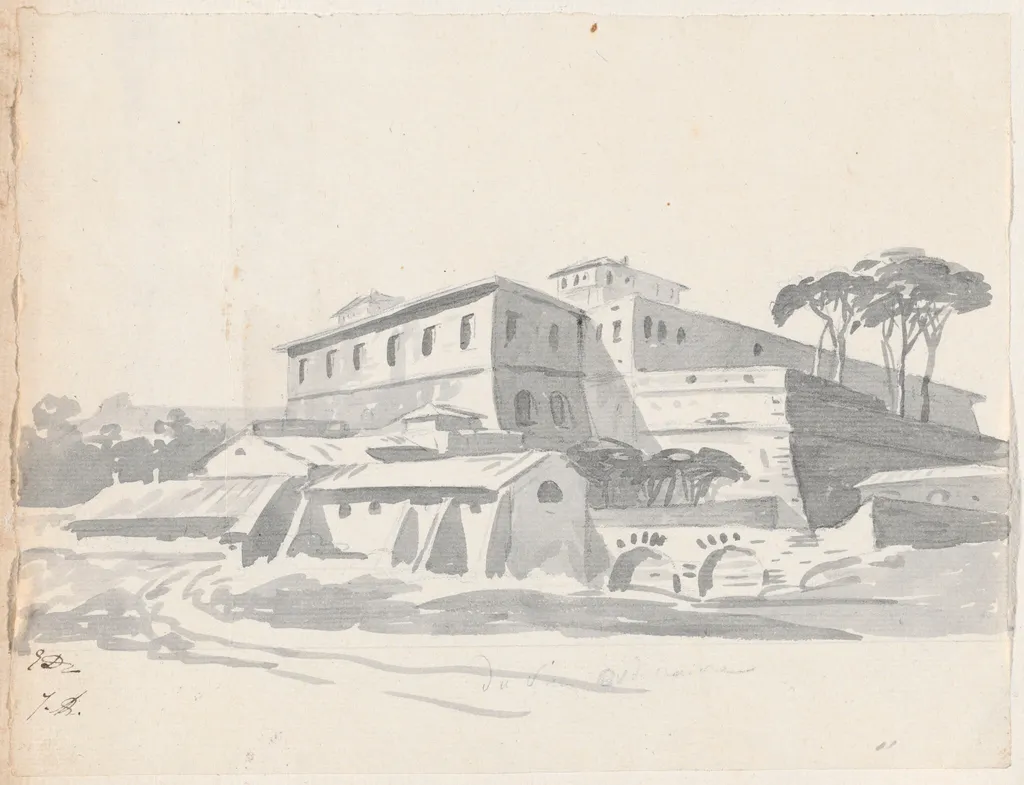
Roman View is a graphite drawing by the Neoclassicist artist Jacques-Louis David. It dates from 1778 and is held in the collection of the National Gallery of Art.
About this work
Overview
This work belongs to a series of studies David made during his time in Rome, capturing architectural landscapes with quiet precision.
Created in 1778, Roman View is a drawing by Jacques-Louis David executed in gray wash over graphite on laid paper. The wash subtly bleeds onto the adjacent album page, integrating the image with its binding. This work belongs to a series of studies David made during his time in Rome, capturing architectural landscapes with quiet precision. Its modest scale and restrained palette reflect its function as a preparatory sketch rather than a finished exhibition piece.
Subject & Meaning
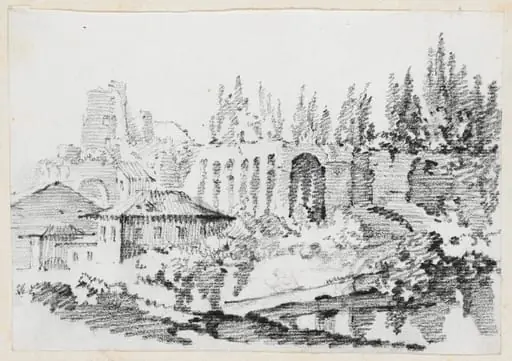
The drawing depicts a cluster of ancient Roman structures, dominated by a large building with a flat roof and evenly spaced windows, flanked by smaller edifices and scattered trees. A still body of water in the foreground mirrors the overcast sky, enhancing the calm, contemplative mood. The scene lacks human figures, emphasizing solitude and the enduring presence of ruins. It suggests an interest in classical form and the passage of time, rather than narrative or drama.
Technique & Style
David employed a delicate gray wash over precise graphite lines to model light and volume with subtle gradations. The wash’s soft diffusion creates atmospheric depth, while its slight extension beyond the drawn boundary introduces an organic, almost accidental texture. This technique balances control and spontaneity, characteristic of his early work before his shift toward neoclassical history painting. The medium’s limitations are embraced, lending the image a quiet intimacy.
History & Provenance
Made during David’s stay in Rome as a pensioner of the French Academy, this drawing was likely part of a personal album of studies. It remained in his possession until his death, later entering a private collection before being acquired by a public institution. Its inclusion in an album suggests it was valued as a reference or memento rather than a public work, offering insight into his formative observations of Roman architecture.
Context
In the late 1770s, David was immersed in the study of antiquity, a foundational phase for his later neoclassical style. Unlike the dramatic compositions he would later produce, this drawing reflects a quieter, observational mode common among artists training in Rome. The focus on ruins and landscape aligns with broader European trends of antiquarian interest, where architecture served as a vessel for historical reflection and aesthetic discipline.
Legacy
Roman View illustrates a transitional moment in David’s career, revealing his engagement with landscape and structure before he fully committed to monumental historical subjects. While not widely exhibited, it remains a key example of his early draftsmanship and the role of sketching in his artistic process. The work underscores how personal studies informed the precision and clarity that would define his mature style.
Artist & collection
Artist
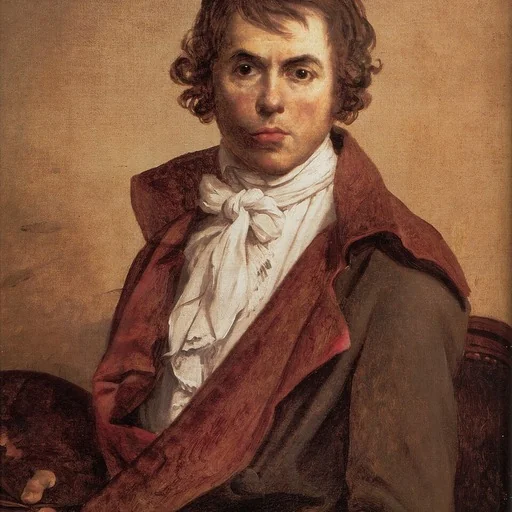
Jacques-Louis David was born in Paris on 30 August 1748 into a bourgeois family; his father died in a duel when the boy was nine, and a maternal uncle guided his education.

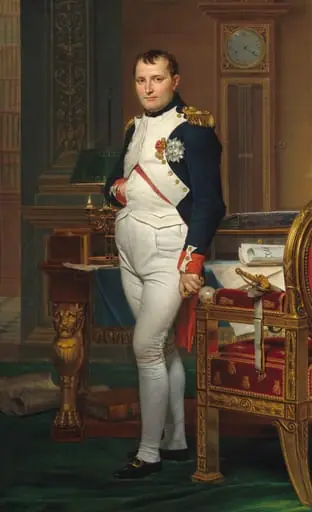 The Emperor Napoleon in His Study at the Tuileries
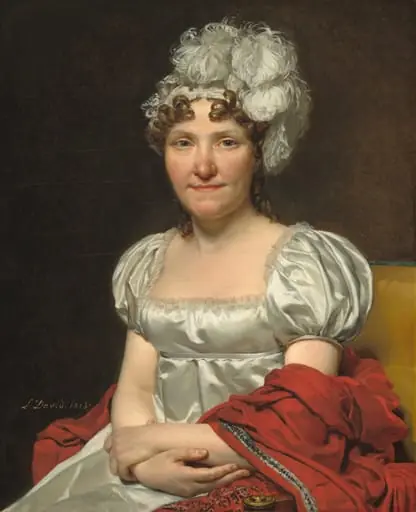 Madame David
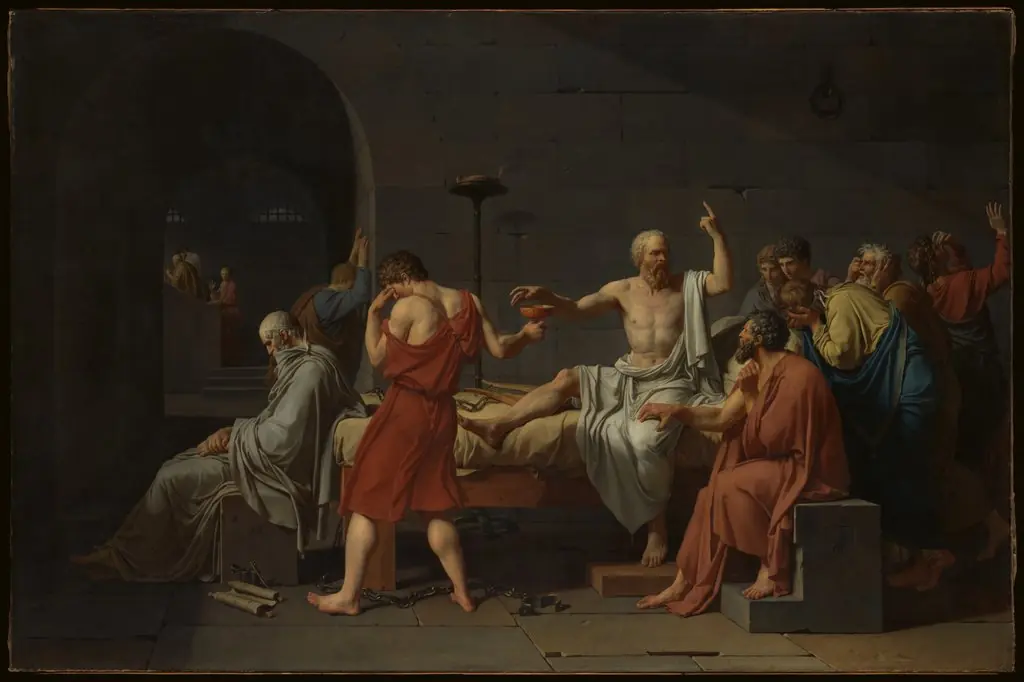 The Death of Socrates
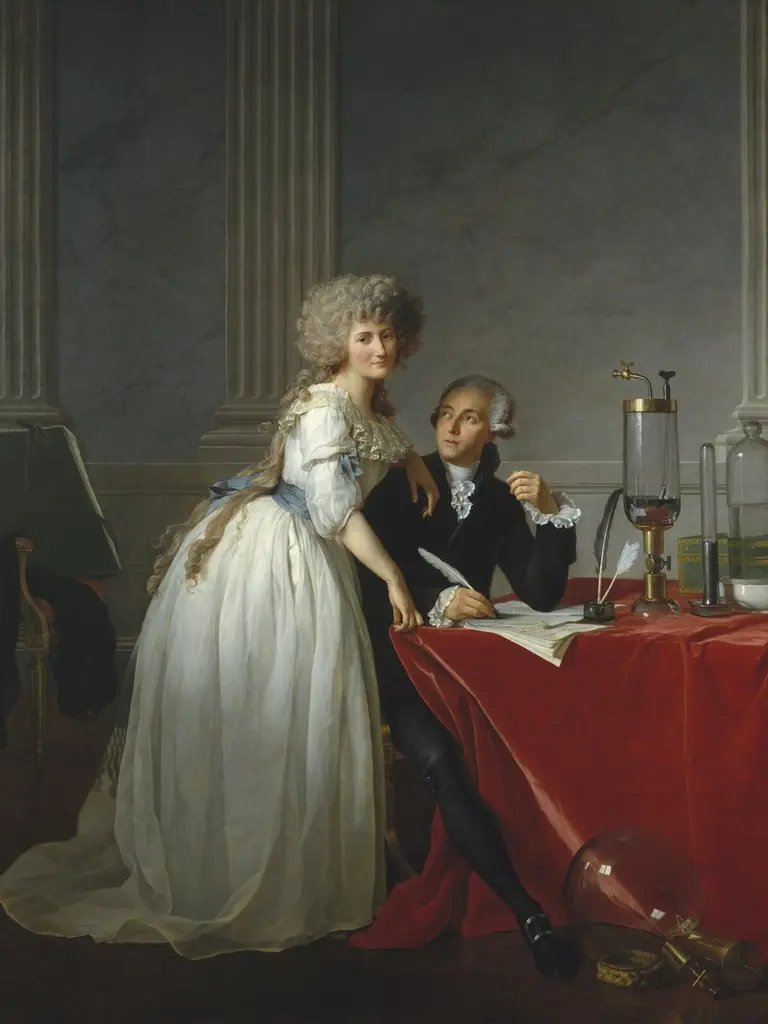 Portrait of Antoine-Laurent Lavoisier and his wife
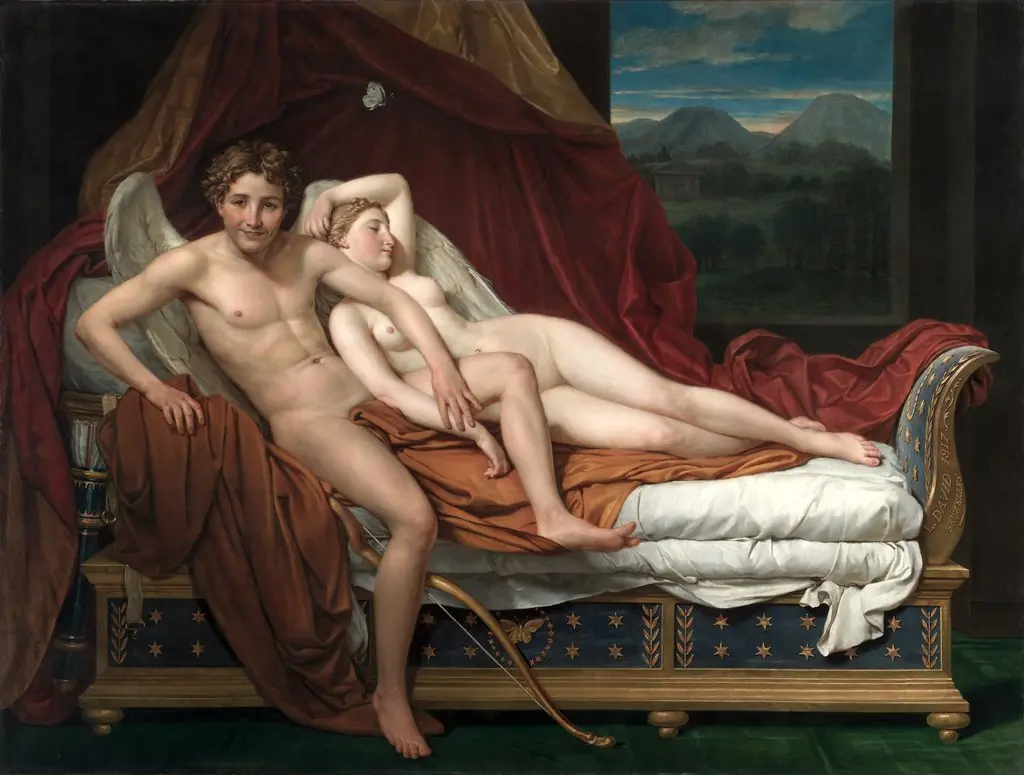 Cupid and Psyche
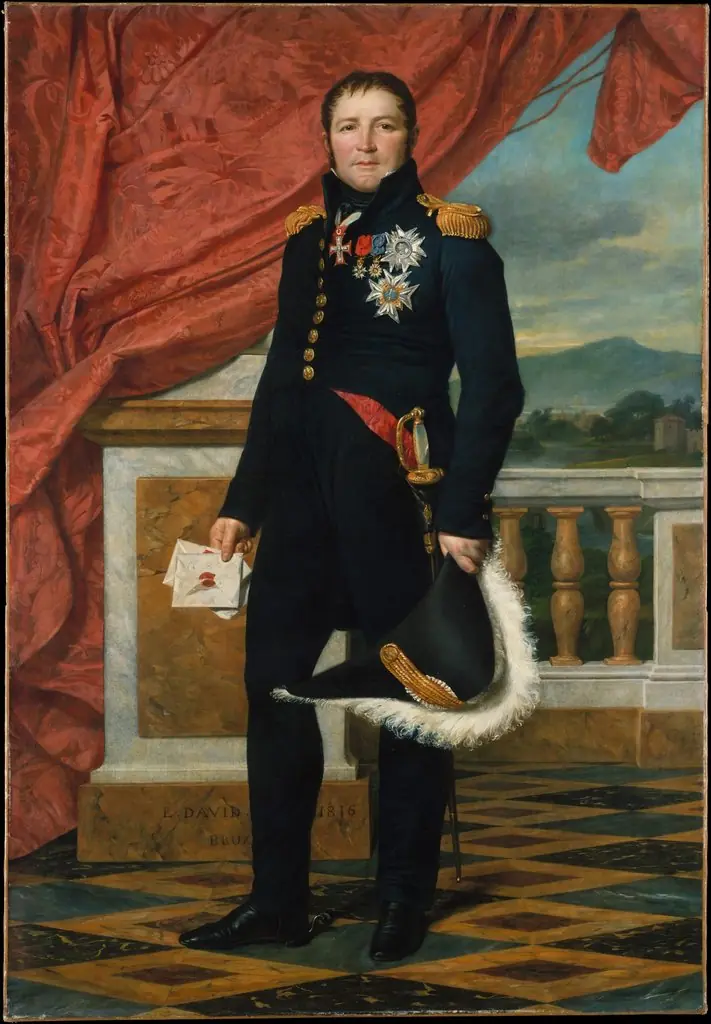 General Étienne-Maurice Gérard (1773–1852), Marshal of France
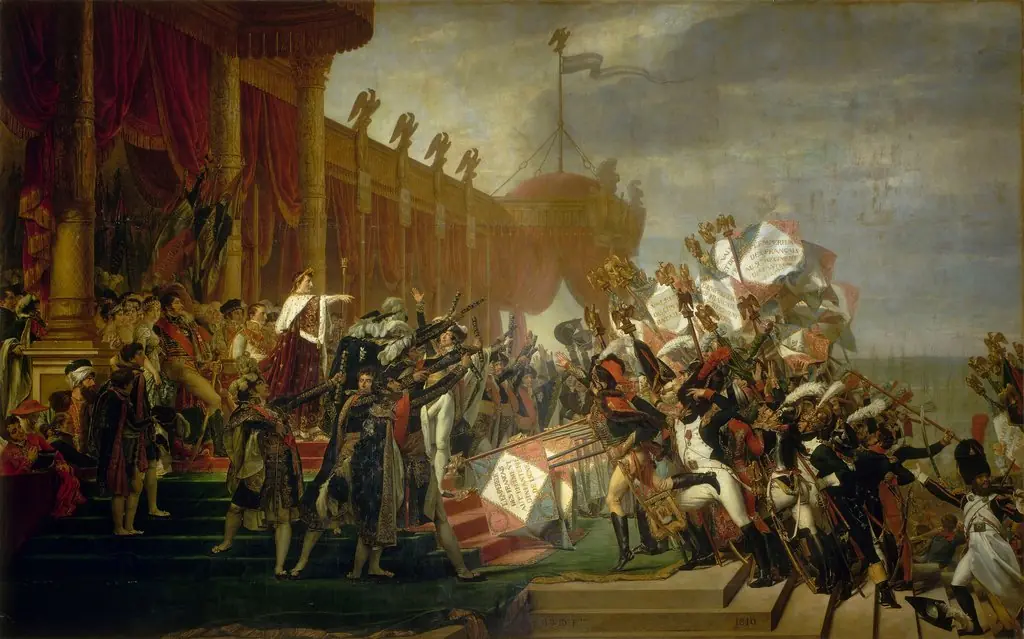 The Distribution of the Eagle Standards
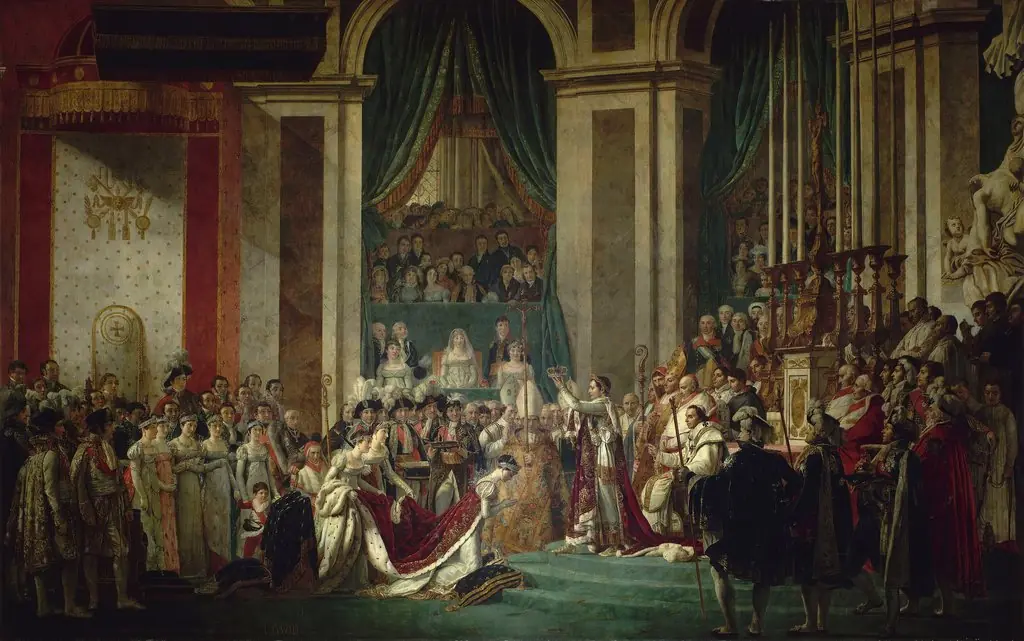 Coronation of Emperor Napoleon I and Coronation of the Empress Josephine
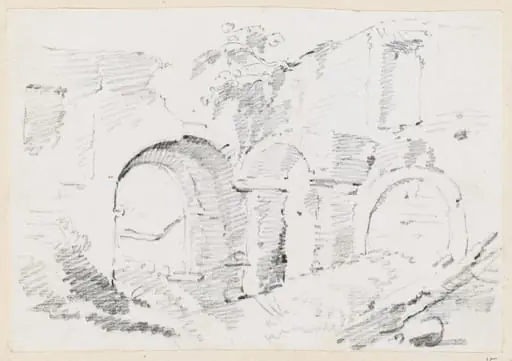 Roman Walls
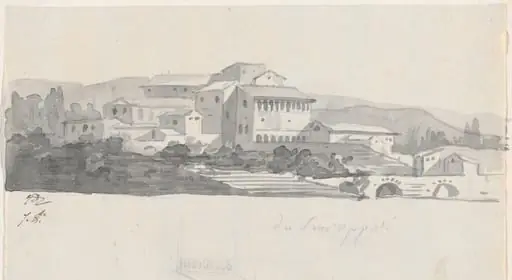 Roman Buildings on a Hill
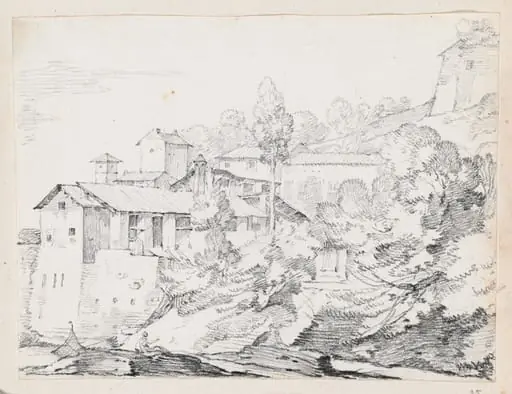 Italian Buildings on a Hillside
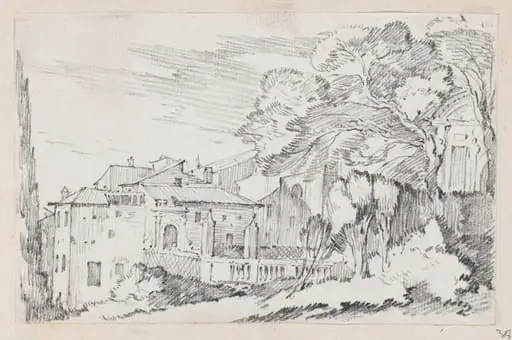 Houses and a Garden on a Hillside in Italy
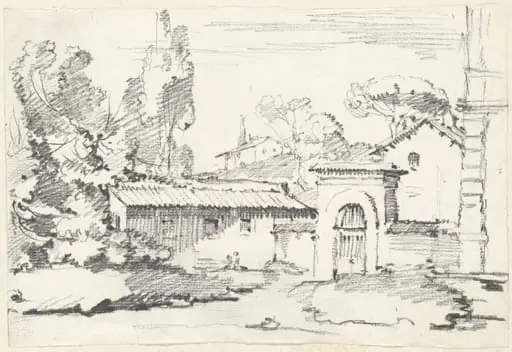 Entrance to the Gardens of the Villa Giulia
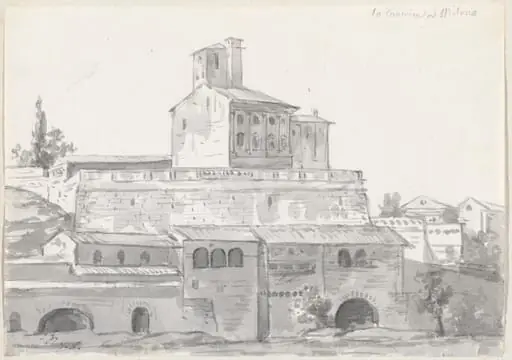 The Canonica of Sant'Ambrogio, Milan
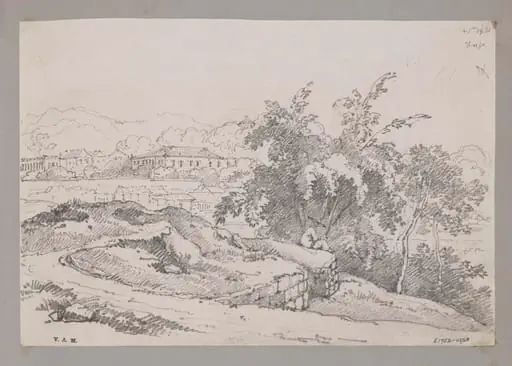 The Casa, Macao, in the gardens of which is Camoens' Cave (the residence of Lady Pereira), Macao
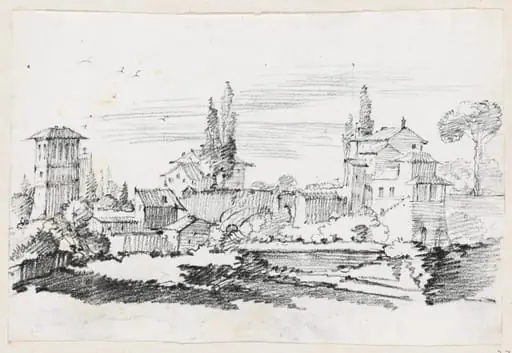 Houses in Italy
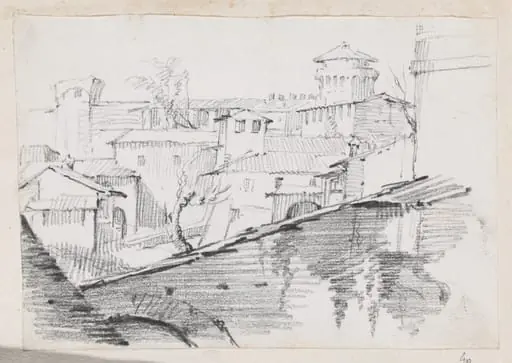 The Forno inside the Walls of the Vatican
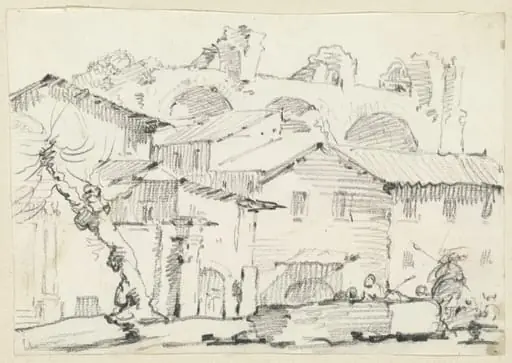 Houses on the North Side of the Forum with the Basilica of Maxentius Beyond
 Ruins of the Imperial Palaces on the Palatine Hill
 A Roman Church