Artwork
The Piazza del Popolo
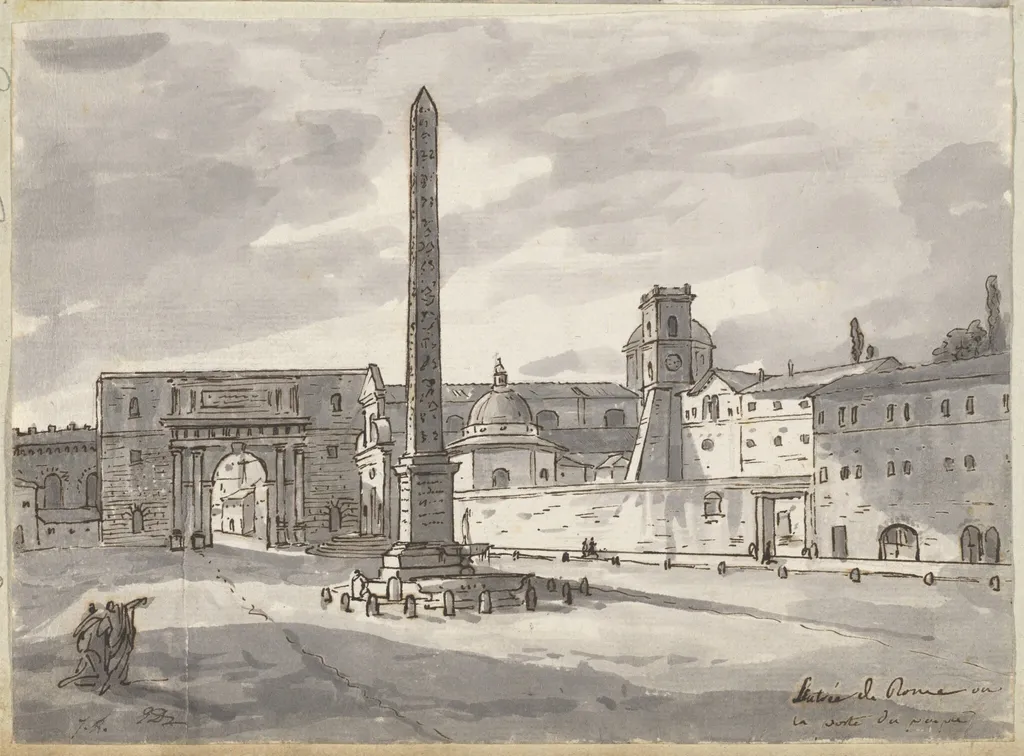
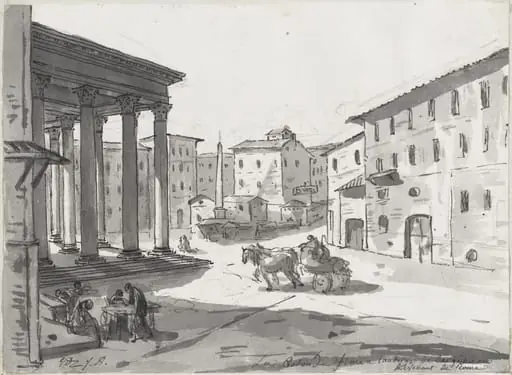
The Piazza del Popolo is an ink drawing by the Neoclassicist artist Jacques-Louis David. It dates from 1778 and is held in the collection of the National Gallery of Art.
About this work
Overview
The Piazza del Popolo is a drawing executed in 1778 by Jacques-Louis David, rendered in brown ink and gray wash over subtle graphite underdrawings on laid paper.
Subject & Meaning
The drawing depicts a serene scene of Rome's Piazza del Popolo, focusing on architectural details including a central obelisk, a prominent archway to the left, and surrounding multi-windowed, aged buildings.
Technique & Style
David's use of brown ink and gray wash achieves a soft, nuanced visual effect, with careful attention to textural and lighting details on the stone surfaces, contributing to an overall calm atmosphere.
History & Provenance
Created in 1778, specific provenance details are not provided in the available information.
Context
While David is more commonly associated with Neoclassicism, this work's emphasis on light and architectural detail might suggest a precursor to, or a parallel with, the emerging sensibilities of the Romantic movement in its attention to mood and setting.
Legacy
The drawing's legacy is not explicitly outlined in the provided sources, though it reflects David's skill in capturing urban landscapes during his formative period.
Artist & collection

Artist
Jacques-Louis David was born in Paris on 30 August 1748 into a bourgeois family; his father died in a duel when the boy was nine, and a maternal uncle guided his education.

 The Emperor Napoleon in His Study at the Tuileries
 Madame David
 The Death of Socrates
 Portrait of Antoine-Laurent Lavoisier and his wife
 Cupid and Psyche
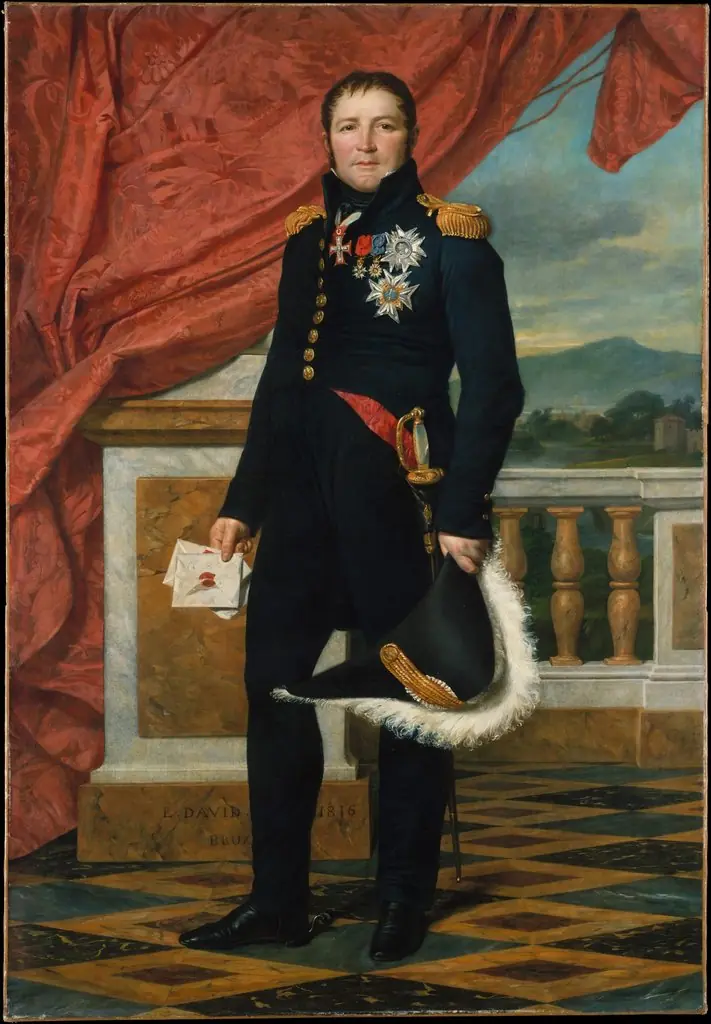 General Étienne-Maurice Gérard (1773–1852), Marshal of France
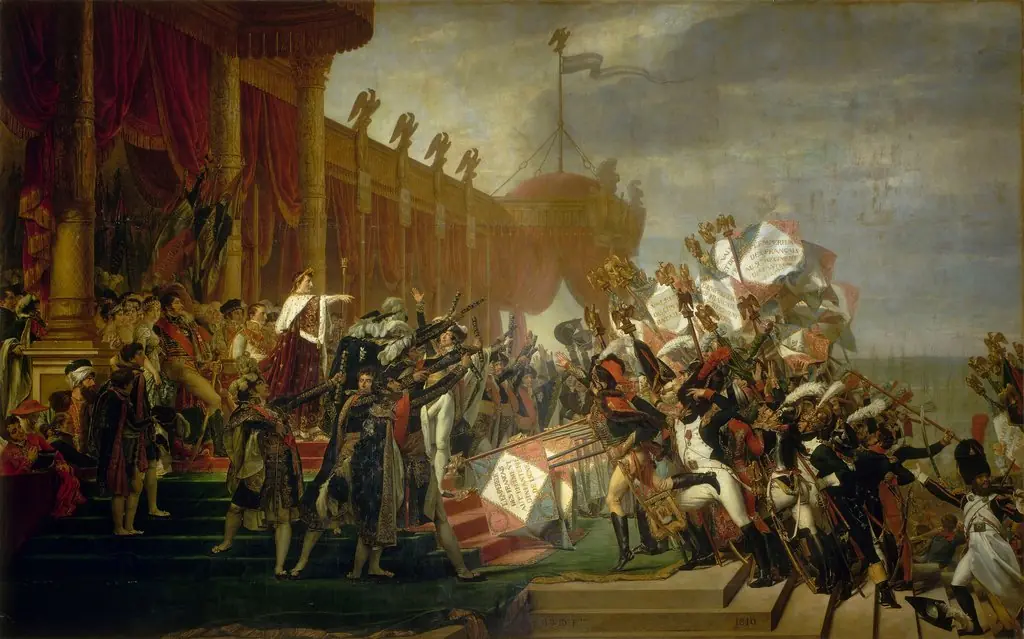 The Distribution of the Eagle Standards
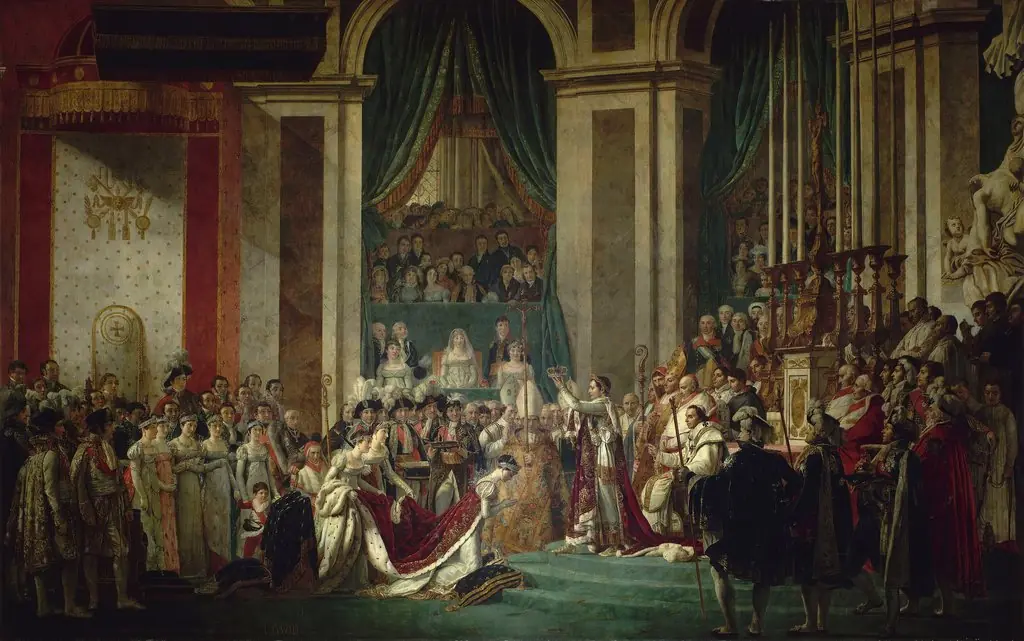 Coronation of Emperor Napoleon I and Coronation of the Empress Josephine