Artwork
Gate of Damascus, Jerusalem
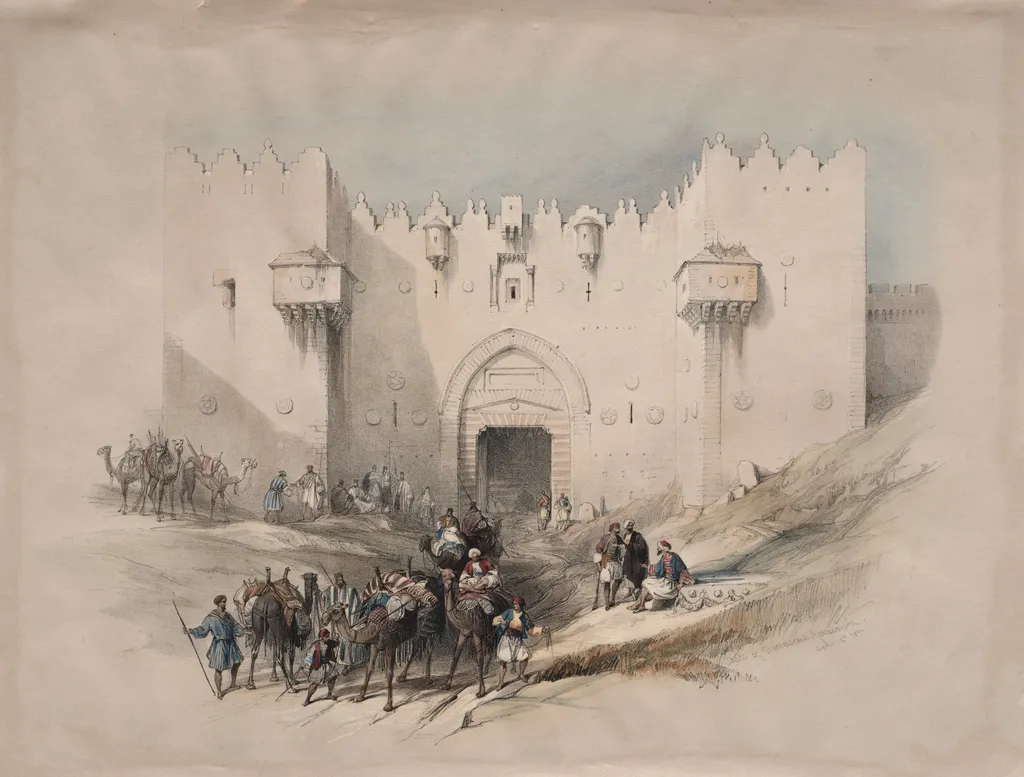
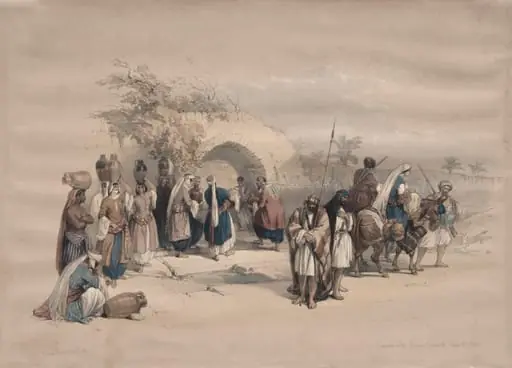
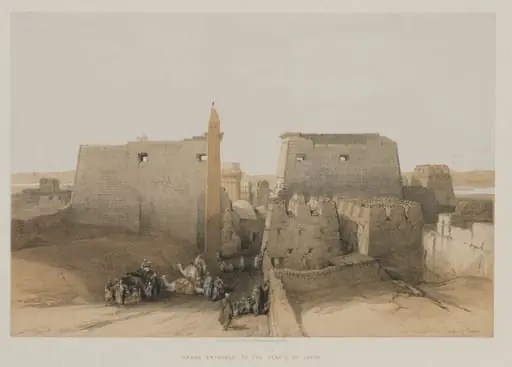
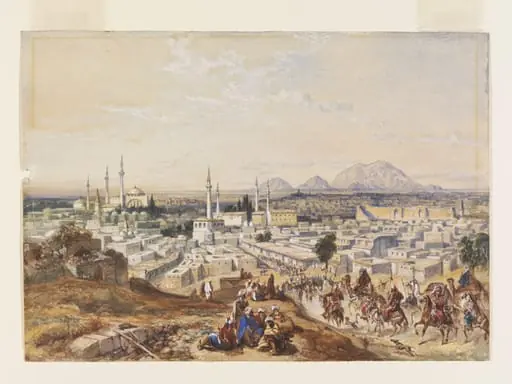
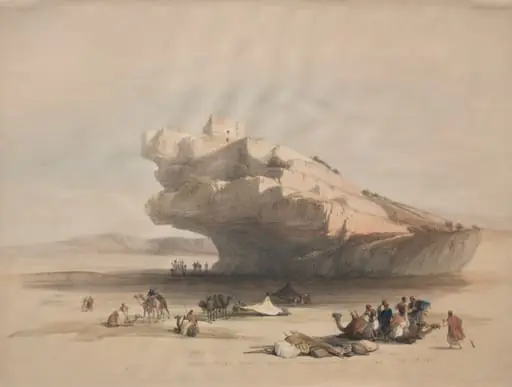
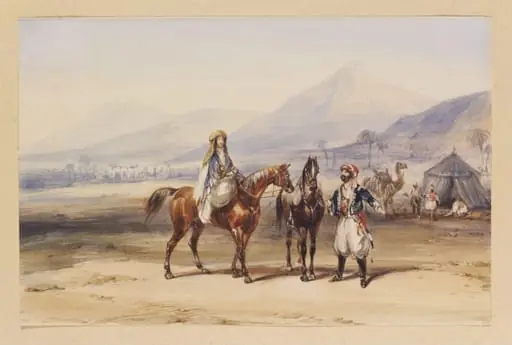
Gate of Damascus, Jerusalem is a print by the Romanticist artist David Roberts. It dates from 1839 and is held in the collection of the Cleveland Museum of Art.
About this work
Overview
It was among the earliest visual records of the region to reach a broad European audience, combining topographical precision with ethnographic observation.
David Roberts, a Scottish artist, produced *Gate of Damascus, Jerusalem* in 1839 as part of a larger project documenting the architecture and daily life of the Levant. Created during his travels between 1838 and 1840, the work is a lithograph derived from his on-site sketches. It was among the earliest visual records of the region to reach a broad European audience, combining topographical precision with ethnographic observation.
Subject & Meaning
The scene captures the Gate of Damascus, a historic entry point to Jerusalem, surrounded by travelers, merchants, and animals. Figures in traditional attire—long robes, headscarves—move with goods on camels, suggesting the gate’s role as a commercial and cultural threshold. The composition emphasizes the gate’s monumental presence amid active human movement, conveying its function as both a physical barrier and a nexus of exchange.
Technique & Style
Roberts rendered the gate with careful attention to architectural detail, using sharp lines to define stonework and arches. The figures are rendered with modest but discerning accuracy, avoiding caricature. The background’s hazy blue sky and soft atmospheric perspective suggest midday light, enhancing realism without romanticizing the scene. His lithographic technique allowed for fine gradations of tone, preserving the clarity of his original drawings.
History & Provenance
The print was produced following Roberts’ journey through Egypt and the Levant, funded by subscribers who received monthly folios of his lithographs. This particular impression is held by the Cleveland Museum of Art, part of a broader collection of his works acquired in the 19th and early 20th centuries. Its preservation reflects the enduring interest in his documentation of sites later altered by modernization and conflict.
Context
Roberts’ work emerged amid rising European fascination with the Orient, fueled by colonial expansion and archaeological interest. Unlike many contemporaries, he avoided overt exoticism, focusing instead on observed reality. His prints served as references for scholars, travelers, and artists, shaping Western perceptions of the Middle East during a period of limited direct access to the region.
Legacy
Roberts’ detailed records remain valuable as historical documents, particularly for sites whose appearance has changed significantly. His approach influenced later topographical artists and contributed to the development of archaeological illustration. While his work is now viewed within the framework of Orientalism, its fidelity to observed detail continues to inform studies of 19th-century urban life in the Levant.
Artist & collection
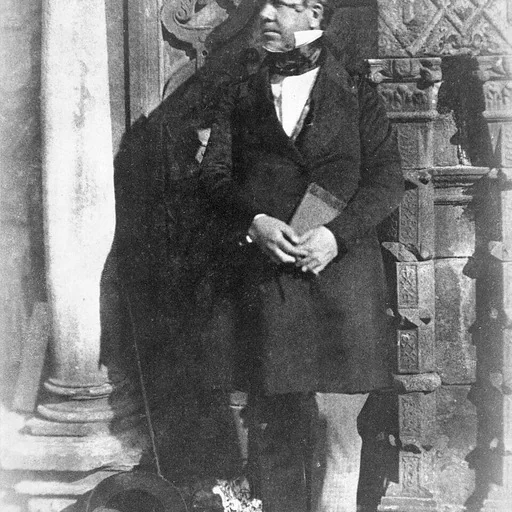
Artist
David Roberts (24 October 1796 – 25 November 1864) was a Scottish painter. He is especially known for The Holy Land, Syria, Idumea, Arabia, Egypt, and Nubia, a prolific series of detailed lithograph prints of Egypt and…