Artwork
Philadelphia
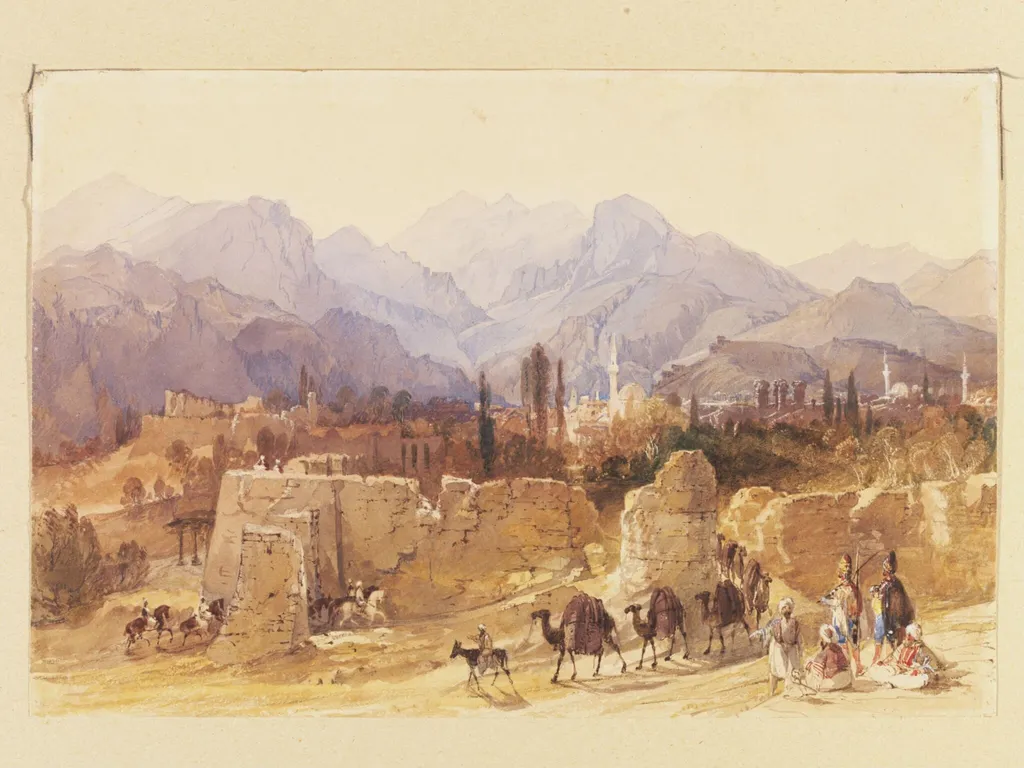
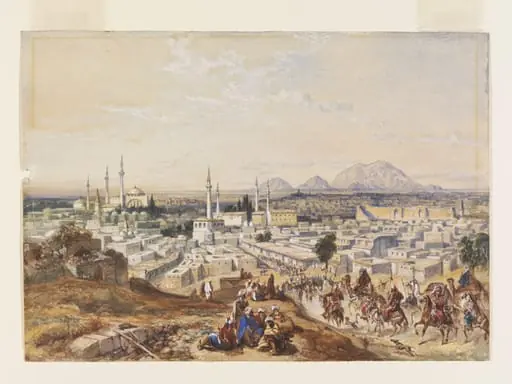
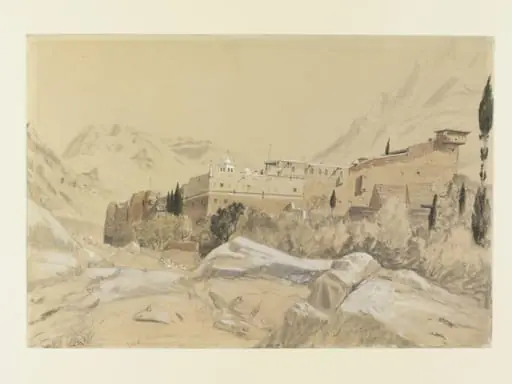
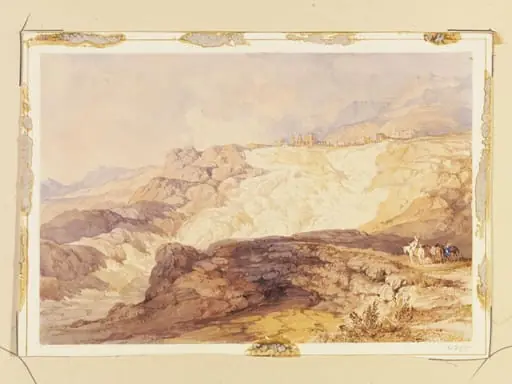
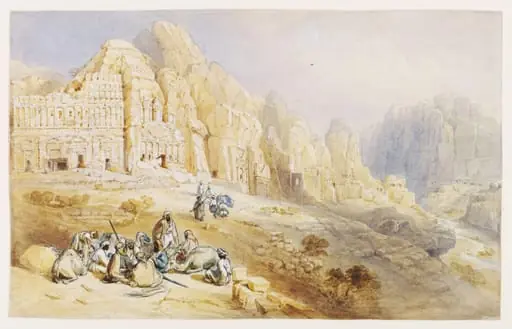
Philadelphia is a watercolor work on paper by the Romanticist artist Thomas Allom. It dates from 1838 and is held in the collection of the Victoria and Albert Museum.
About this work
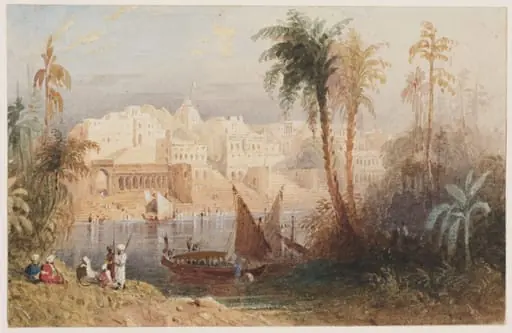
You see a watercolor of Philadelphia’s skyline from across the Delaware River—tiny boats, church spires, and wooden docks under a hazy sky.
You see a watercolor of Philadelphia’s skyline from across the Delaware River—tiny boats, church spires, and wooden docks under a hazy sky.
Allom painted this in 1838, just before the city’s first major fire. The soft washes of color make the scene feel quiet, almost like early morning. He didn’t live there; he sketched it on a quick trip through America.
If you like this, look up the Victoria and Albert Museum—they have more of his travel watercolors.
Overview
Thomas Allom created this watercolour in 1838 during a brief visit to Philadelphia, Pennsylvania. It captures the city’s riverside landscape with delicate washes of color, emphasizing quiet morning light and modest architecture. Though often confused with the ancient Asian city, this work depicts the American Philadelphia. Allom, a British artist and architect, produced it as part of a series documenting sites he encountered while traveling in the United States.
Subject & Meaning
The scene portrays Philadelphia’s early 19th-century waterfront: low wooden docks, clustered buildings, and slender church spires rising above the riverbank. A few small boats float on the water, suggesting daily commerce. The hazy atmosphere and soft focus convey a sense of stillness, reflecting the city’s pre-industrial character. Allom’s depiction avoids grandeur, instead offering a modest, observational record of urban life before the city’s first major fire.
Technique & Style
Allom employed transparent watercolour washes to build subtle tonal gradations, avoiding sharp outlines in favor of atmospheric blending. His brushwork is restrained, using light layers to suggest distance and soft light. The composition is balanced yet unstructured, typical of topographical sketches made on location. The technique prioritizes immediacy and mood over detail, aligning with 19th-century travel documentation practices rather than formal landscape painting.
History & Provenance
The watercolour was not published during Allom’s lifetime as a standalone piece but was later reproduced in illustrated travel volumes. An oil painting based on this scene was included in a series on the Seven Churches of Asia Minor, mistakenly conflating the American city with its ancient namesake. The original watercolour remains in private hands; its provenance is not fully documented, though it is known to have circulated among collectors of topographical art.
Context
Allom traveled through the United States in the late 1830s, sketching urban and rural scenes for British audiences unfamiliar with American geography. His work coincided with a surge in illustrated travel literature, where accuracy and aesthetic appeal were equally valued. Philadelphia, then a major port and cultural center, was often depicted in European publications, though rarely with the quiet intimacy seen in this watercolour.
Legacy
Allom’s American watercolours, including this one, are valued for their unembellished record of pre-Civil War urban life. Though overshadowed by his later architectural illustrations of the Ottoman Empire, these sketches reveal his skill in capturing transient moments with sensitivity. The piece remains a quiet testament to the city’s pre-fire character, preserved through the restrained language of watercolour rather than monumental form.
Artist & collection

Artist
Thomas Allom (13 March 1804 – 21 October 1872) was an English architect, artist, and topographical illustrator.