Artwork
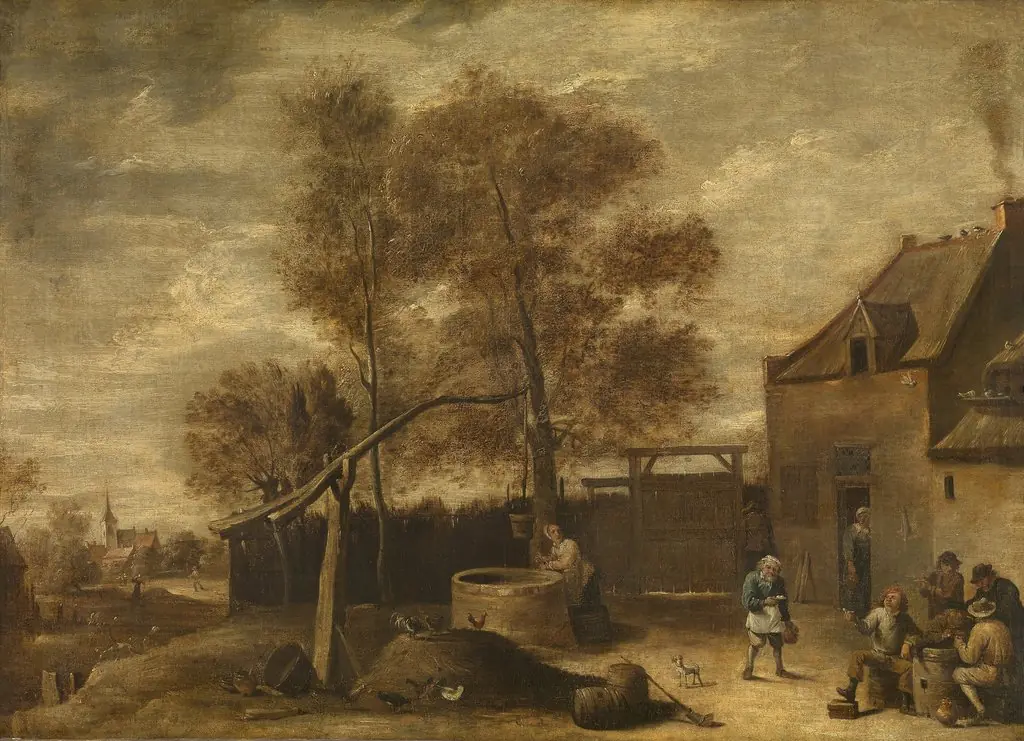
Landscape with a seller of pigs
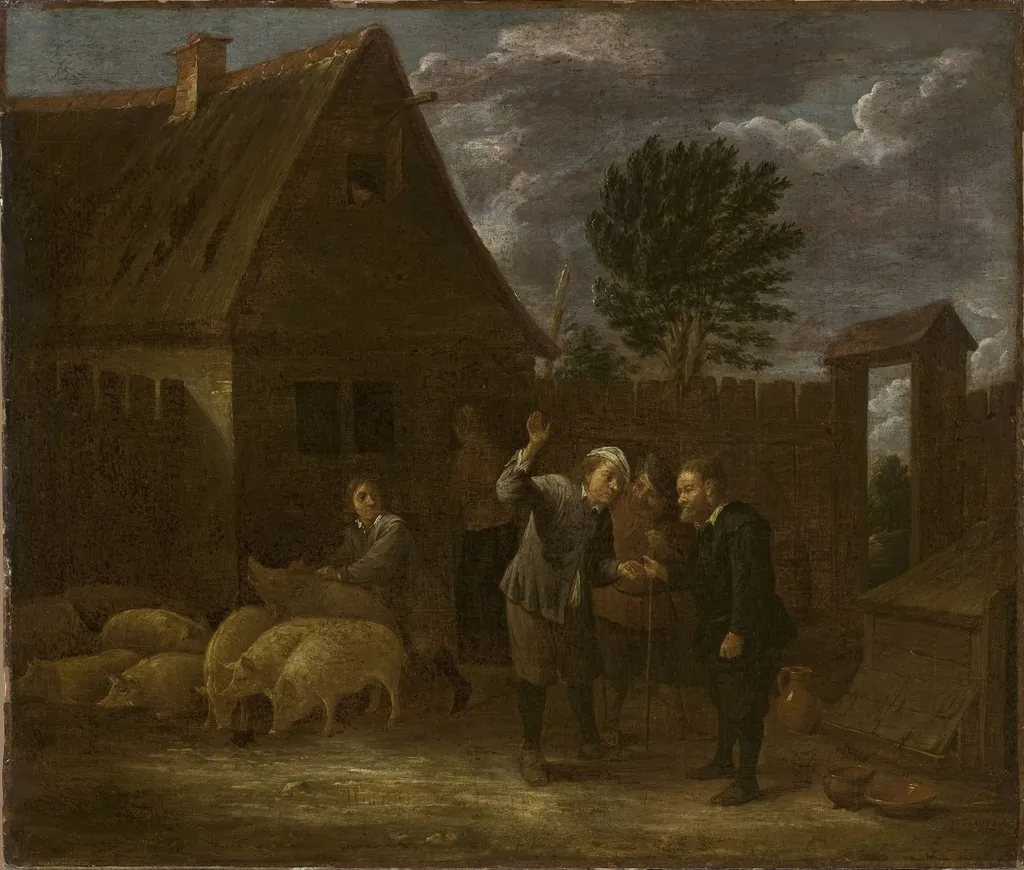
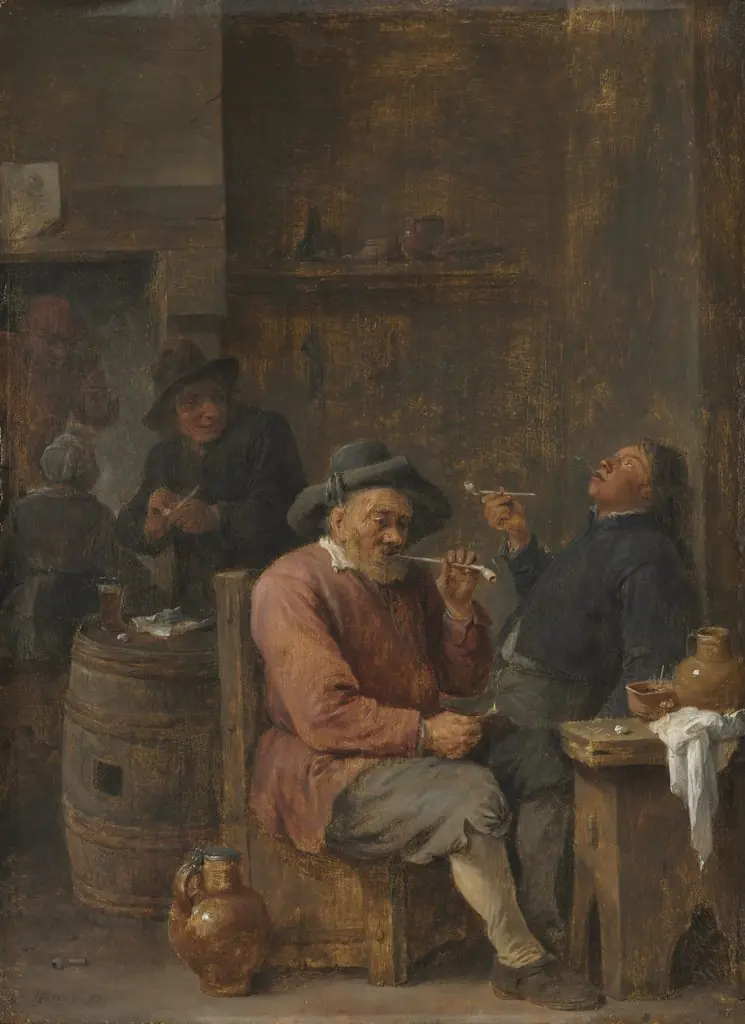
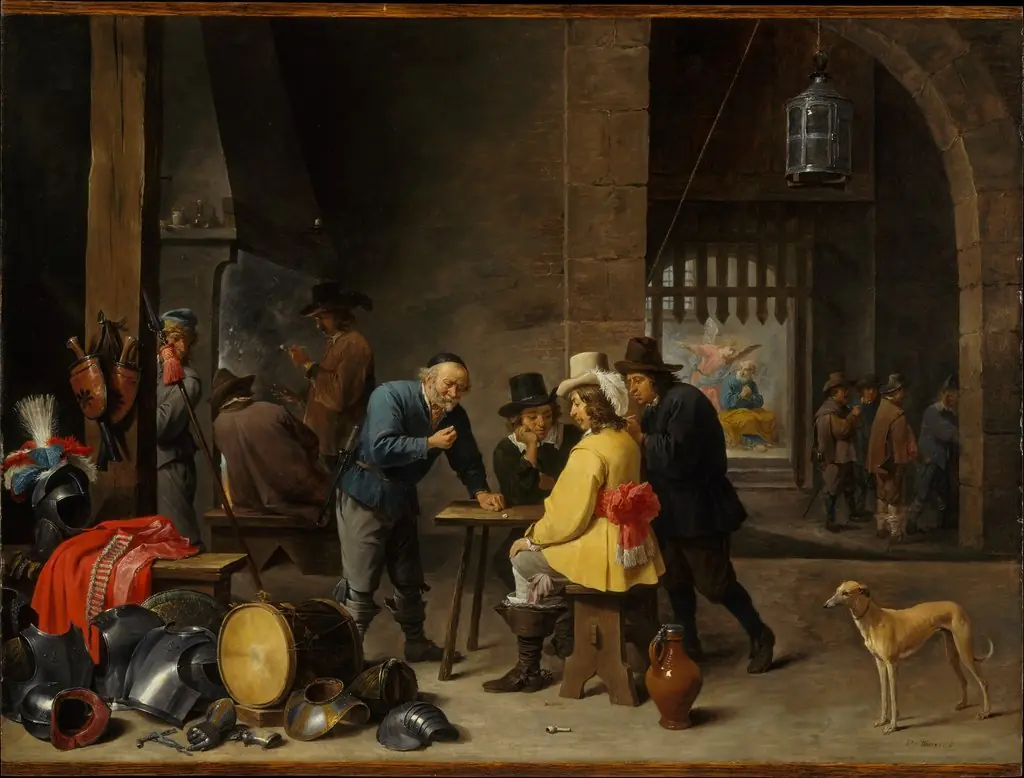
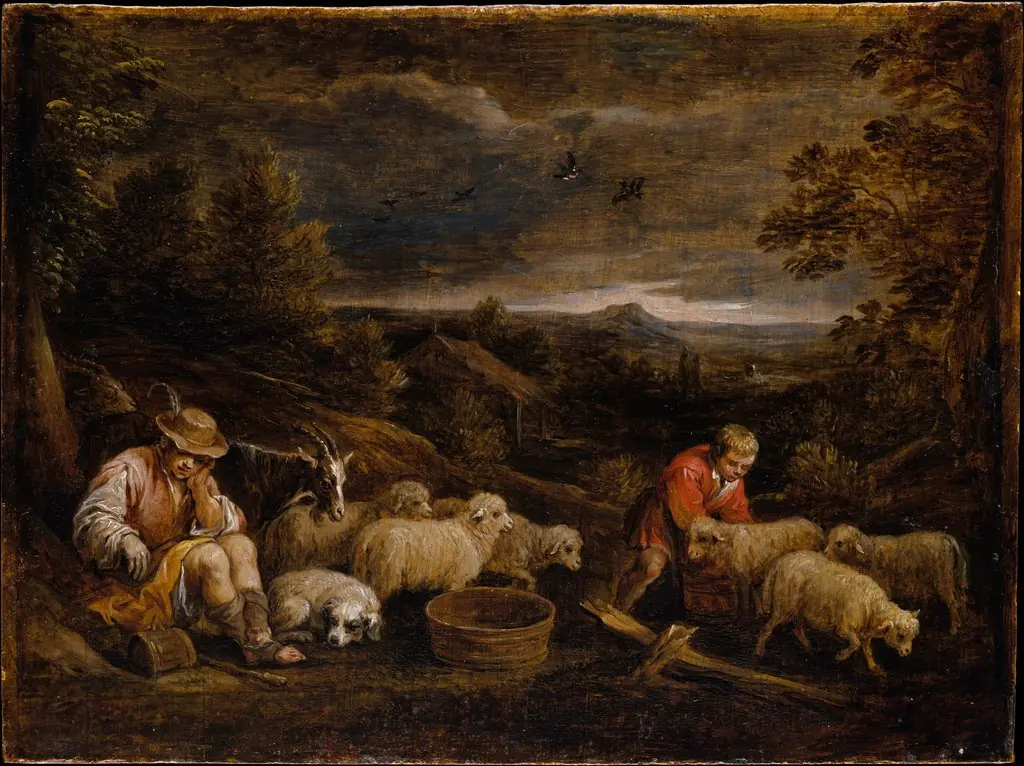
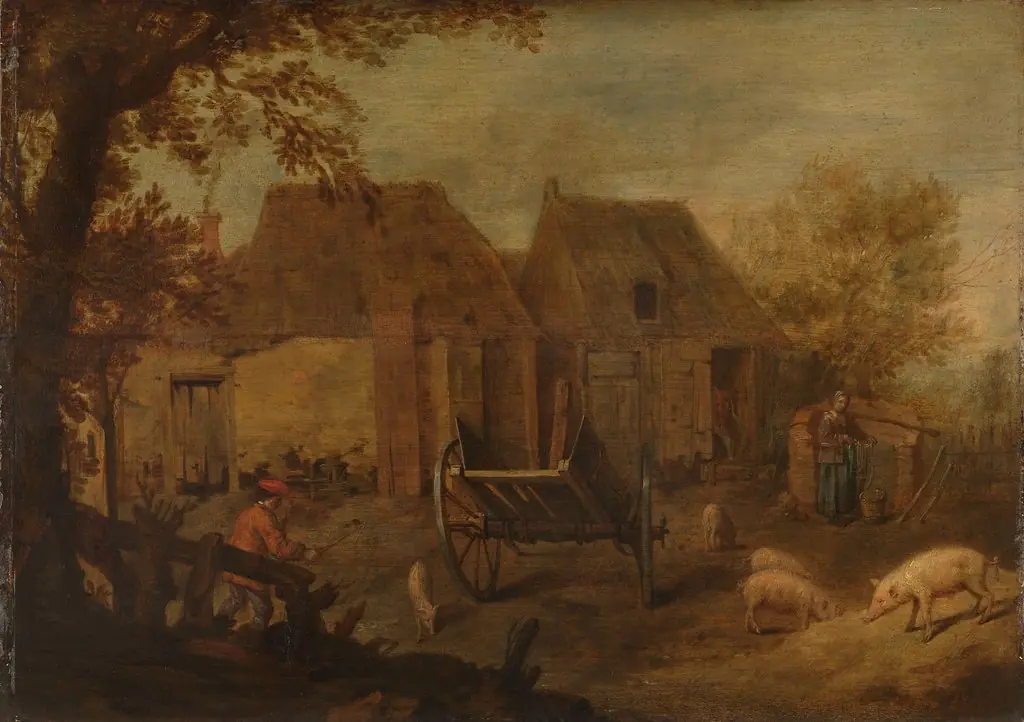
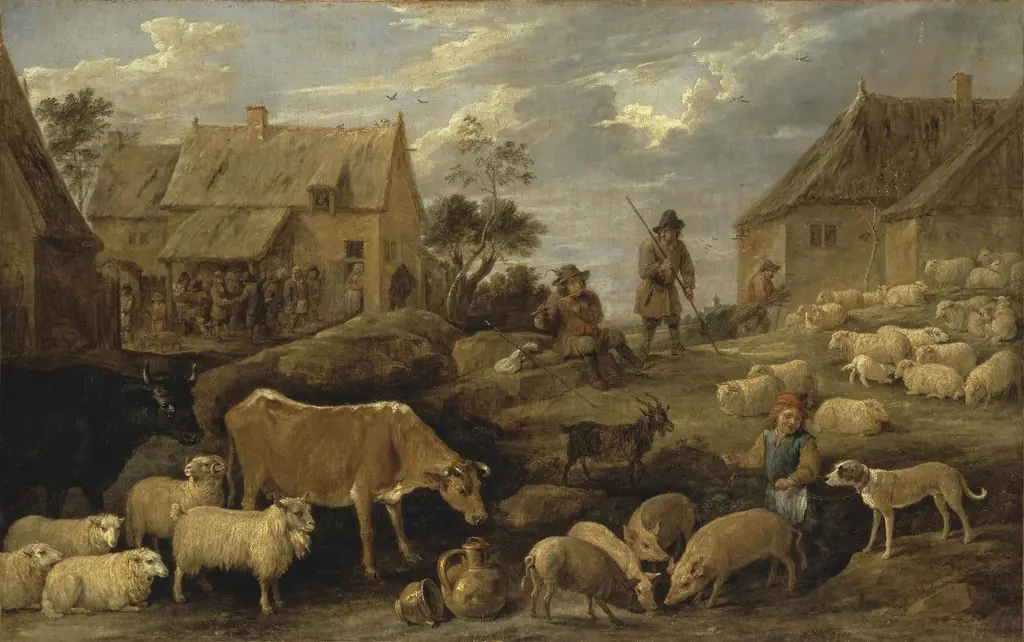
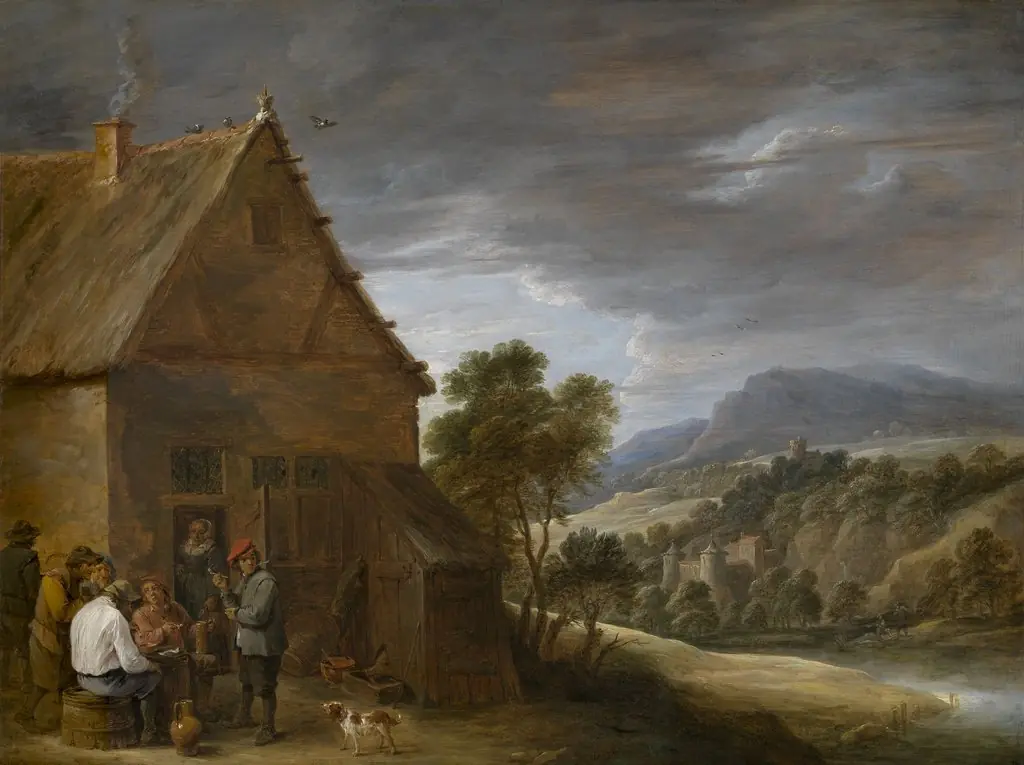
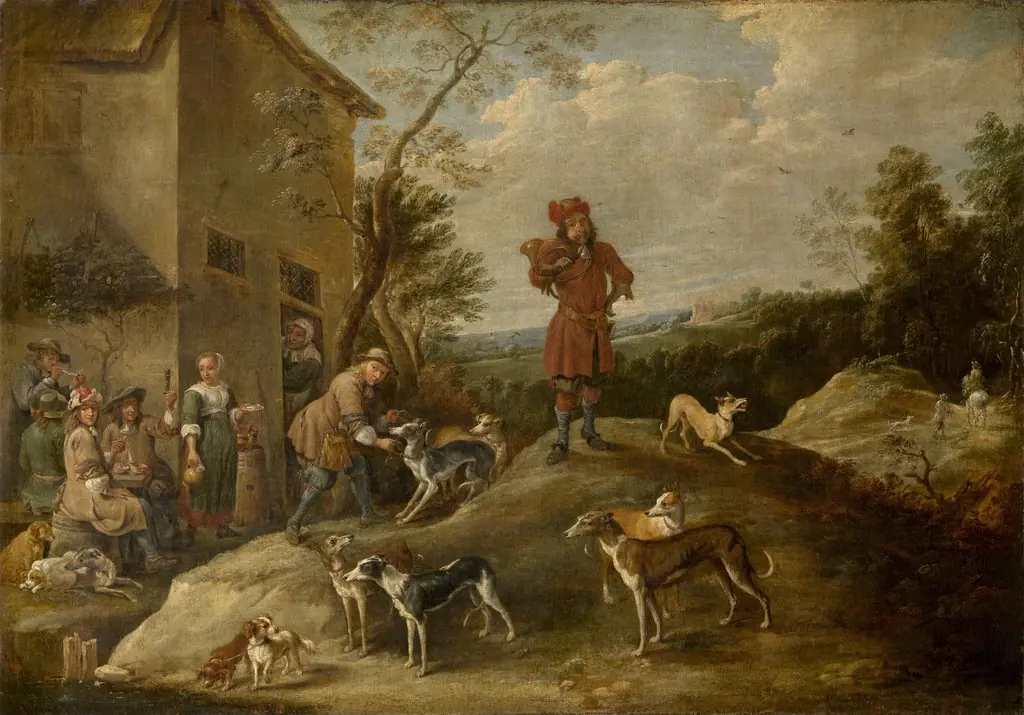
Landscape with a seller of pigs is an oil painting by the Flemish Baroque painting artist David Teniers the Younger. It is held in the collection of the National Museum in Warsaw.
About this work
Overview
Landscape with a seller of pigs is an oil painting attributed to David Teniers the Younger, dated to the early 17th century, not 1800 as sometimes misstated. It depicts a rural transaction scene set against a modest countryside backdrop. The work is part of the collection at the National Museum in Warsaw, where it is preserved as an example of Flemish genre painting from the Baroque period.
Subject & Meaning
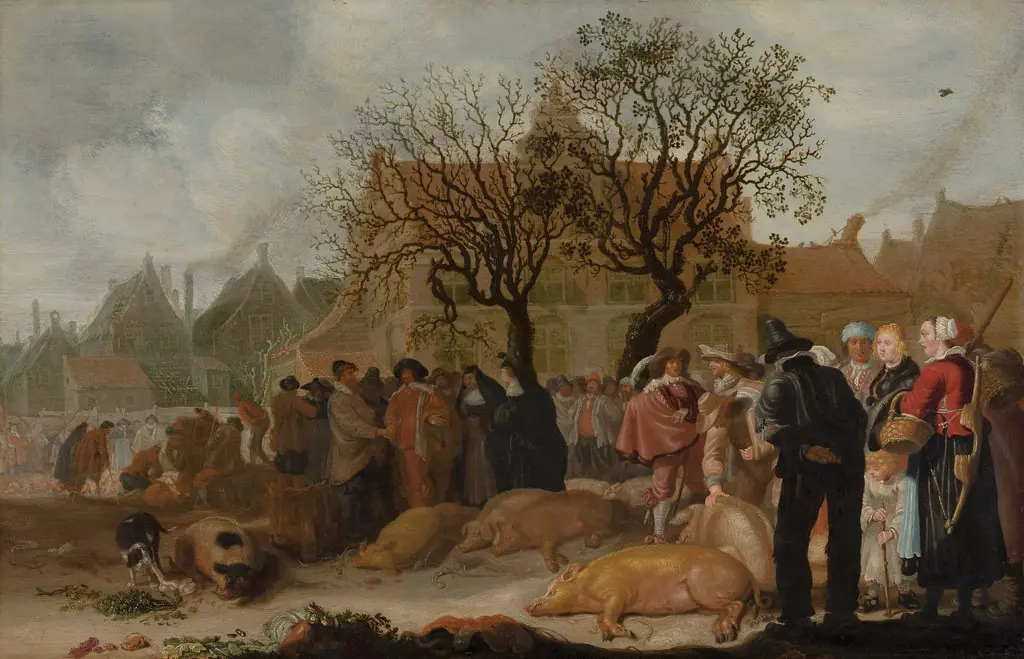
The pigs, central to the transaction, suggest agricultural livelihoods and local market culture.
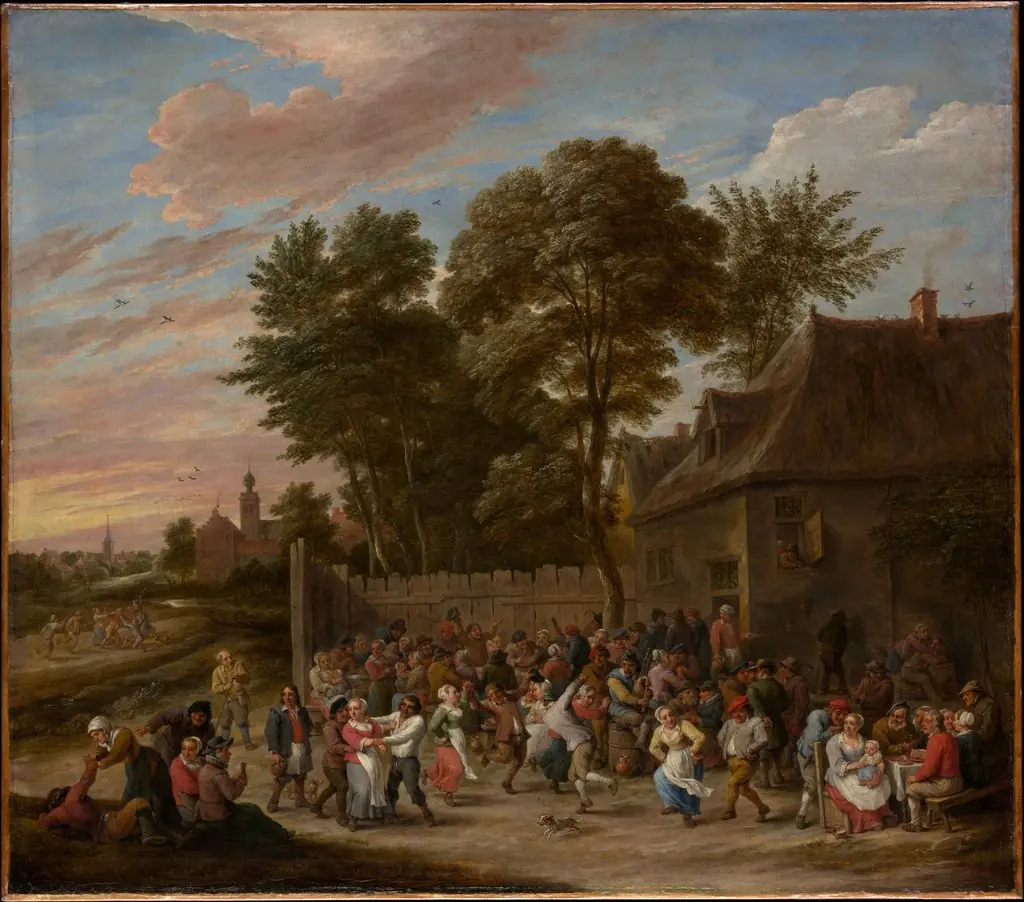
The painting captures a moment of everyday commerce: a vendor, identifiable by his white hat and blue shirt, engages a small group of onlookers near a farmhouse. The pigs, central to the transaction, suggest agricultural livelihoods and local market culture. Rather than idealizing rural life, the scene presents it with unembellished realism, reflecting the economic rhythms of peasant communities in the Southern Netherlands.
Technique & Style
Teniers employs fine brushwork to render textures—rough stone walls, woolly pigskin, and fabric folds—with quiet precision. The composition balances foreground figures with a receding landscape, using soft atmospheric perspective to suggest depth. Light falls naturally across the scene, enhancing the sense of a specific time of day. His palette is restrained, favoring earth tones with subtle accents of blue and white.
History & Provenance
The painting entered the National Museum in Warsaw’s collection in the 19th century, likely through acquisitions of European works during the period of Polish cultural reorganization. Its attribution to Teniers has been consistently supported by stylistic analysis, though its exact provenance prior to museum acquisition remains undocumented. It has been exhibited periodically since the early 1900s.
Context
Created during the height of Flemish genre painting, the work aligns with Teniers’s broader interest in rural labor and market scenes. Such subjects were popular among patrons seeking depictions of ordinary life, distinct from religious or mythological themes. The painting reflects the influence of Dutch realism and the growing market for secular imagery in the Low Countries during the 1630s–1650s.
Legacy
While not among Teniers’s most widely reproduced works, this painting contributes to the understanding of his role in documenting rural economies. It exemplifies how 17th-century artists elevated mundane transactions into subjects worthy of artistic attention. Its preservation in Warsaw underscores the broader European circulation of Flemish art beyond its place of origin.
Own this work as a print
Artist & collection
Artist
David Teniers the Younger or David Teniers II was a Flemish Baroque painter, printmaker, and artist.