Artwork
Wachtstube
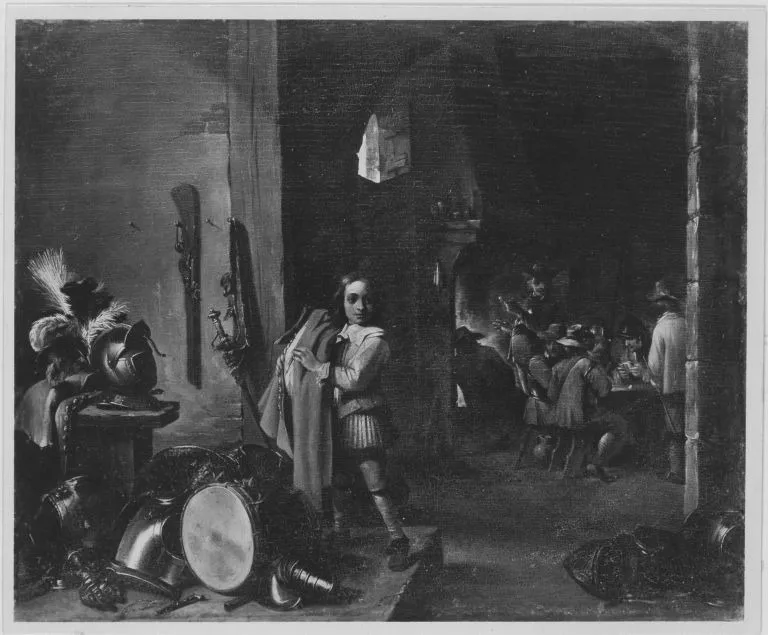
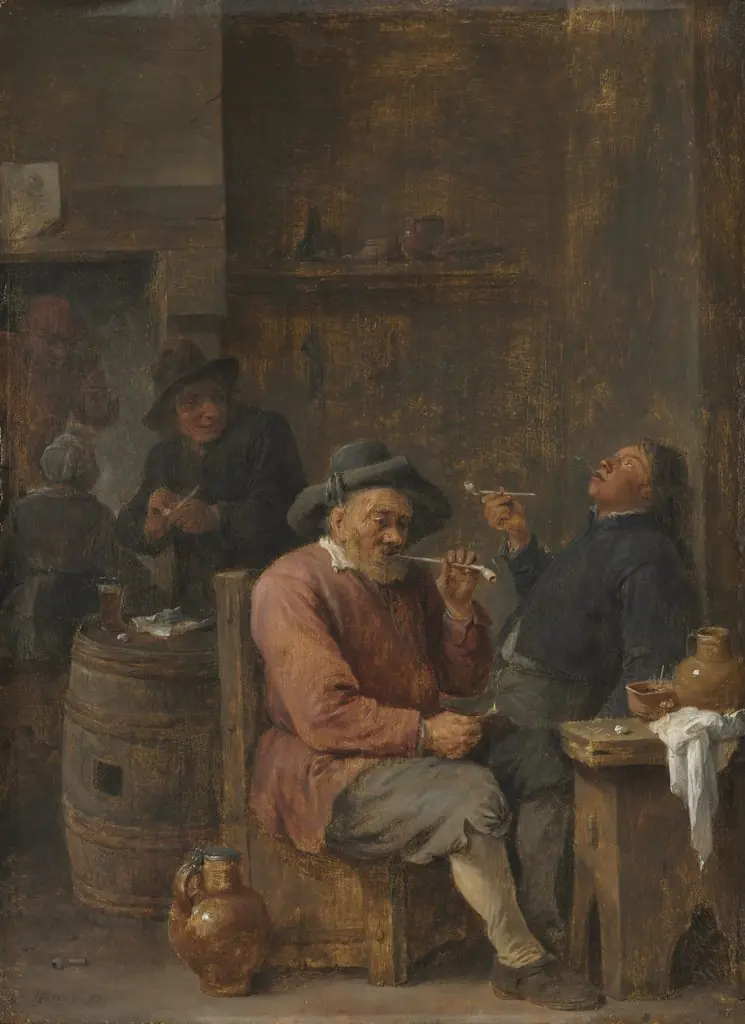
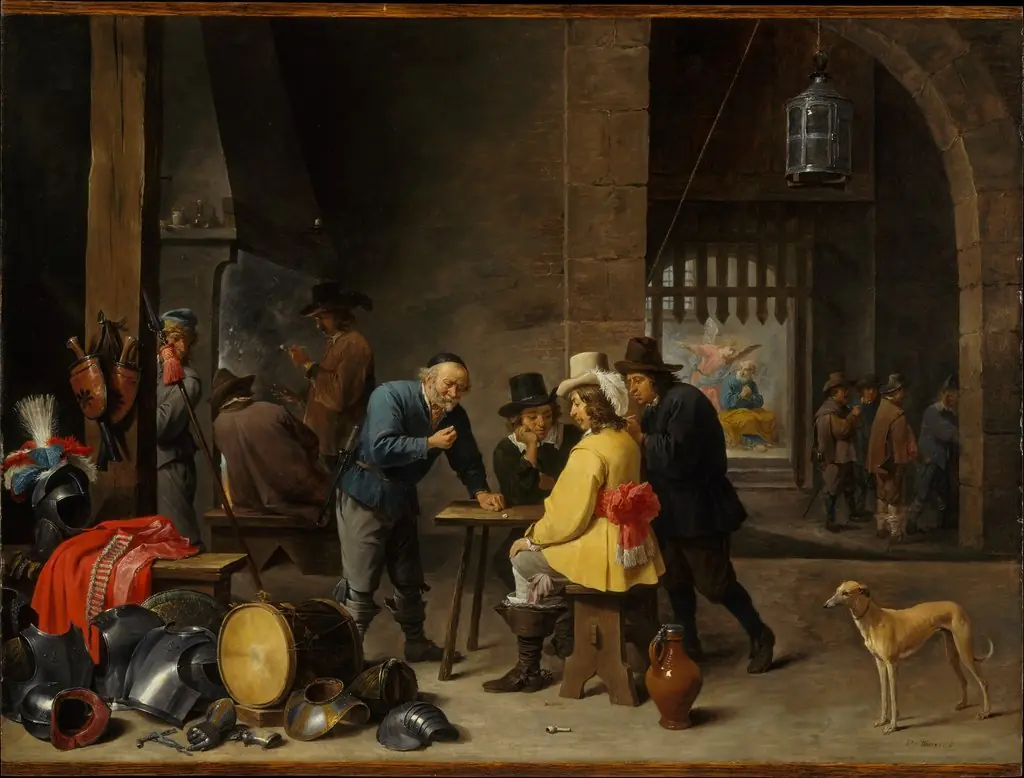
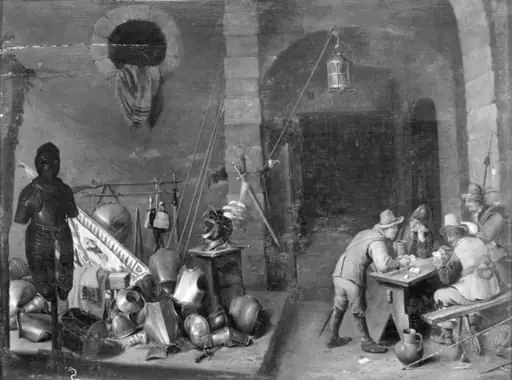
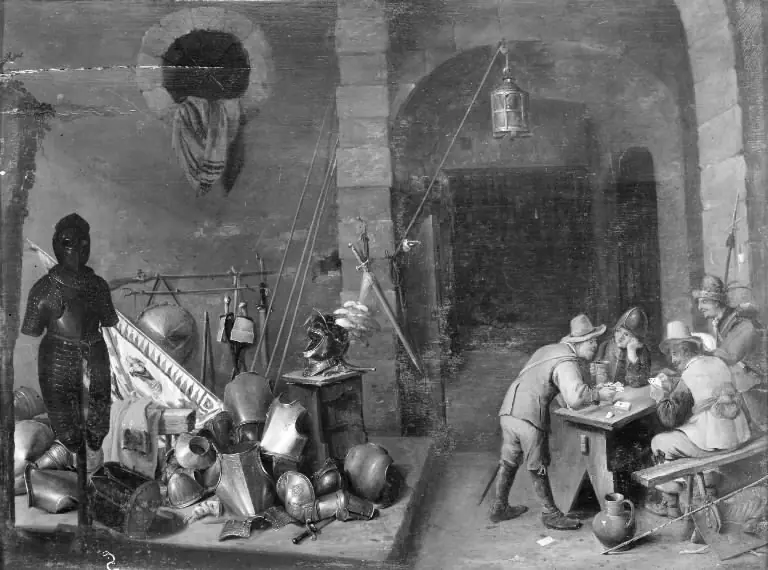
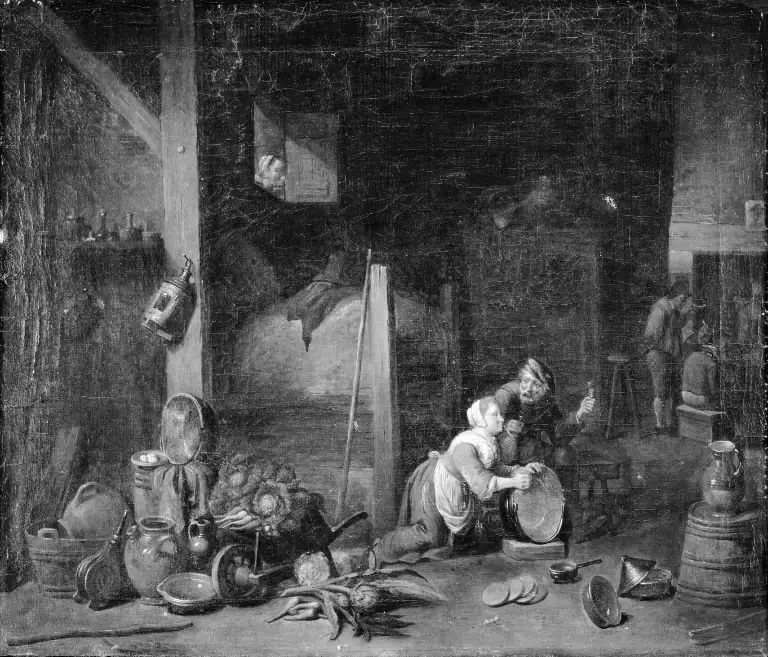
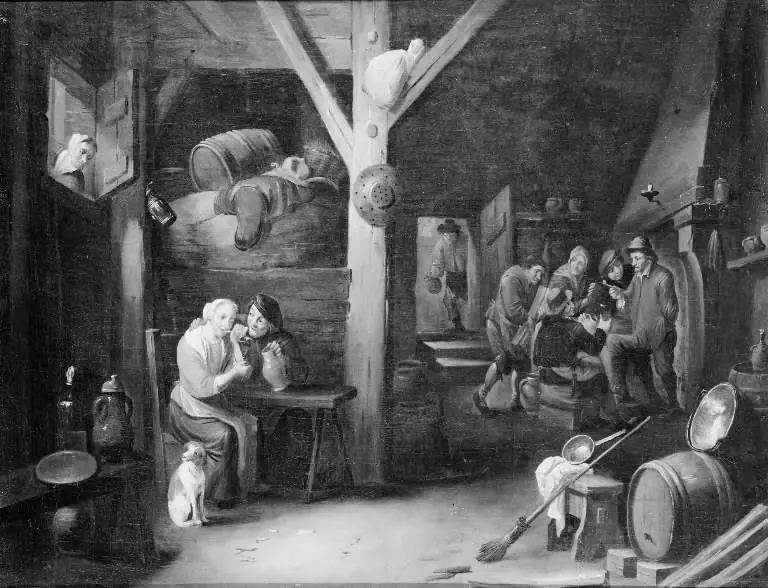
Wachtstube is an unspecified painting by the Flemish Baroque painting artist David Teniers the Younger. It dates from 1650 and is held in the collection of the Bavarian State Painting Collections.
About this work
Overview
Painted around 1650 by David Teniers the Younger, this work depicts an interior scene within a military quarters. The painting is part of the Alte Pinakothek’s collection and exemplifies the artist’s interest in everyday life within garrison settings. Its subdued lighting and careful arrangement of figures and objects convey a moment of stillness amid routine military surroundings.
Subject & Meaning
At the center stands a young boy in a simple white shirt and dark shorts, holding a length of fabric, possibly a banner or flag. His quiet demeanor contrasts with the activity in the background, where soldiers gather near a table. The scene suggests a pause in duty—perhaps during a change of guard—emphasizing the human element within institutional life rather than grand military spectacle.
Technique & Style
Teniers employs chiaroscuro to model forms and define space, with light falling sharply on the boy and key objects like the drum and helmet. The background remains shadowed, drawing focus to the foreground. Brushwork is precise yet unobtrusive, allowing textures of fabric, metal, and wood to emerge naturally. The composition avoids theatricality, favoring observational realism.
History & Provenance
The painting entered the Alte Pinakothek’s collection in the 19th century, likely through the Bavarian royal acquisitions of Flemish and Dutch art. Its attribution to Teniers has remained consistent since its cataloging, with no evidence of significant restoration or reworking. It has been exhibited periodically as an example of 17th-century genre painting from the Southern Netherlands.
Context
During the mid-17th century, Teniers frequently depicted soldiers and camp life, reflecting the prolonged military presence in the Spanish Netherlands.
During the mid-17th century, Teniers frequently depicted soldiers and camp life, reflecting the prolonged military presence in the Spanish Netherlands. These scenes were not propaganda but intimate studies of downtime—moments of waiting, repair, or quiet conversation. The inclusion of a child among military gear hints at the presence of families or camp followers, a common but rarely depicted reality.
Legacy
This painting contributes to a broader tradition of Flemish genre scenes that elevate ordinary moments over heroic narratives. While less known than Teniers’s tavern or peasant scenes, works like this reveal his sensitivity to atmosphere and quiet human behavior. It influenced later Dutch and Flemish painters who sought to capture the unremarkable with dignity and clarity.
Artist & collection
Artist
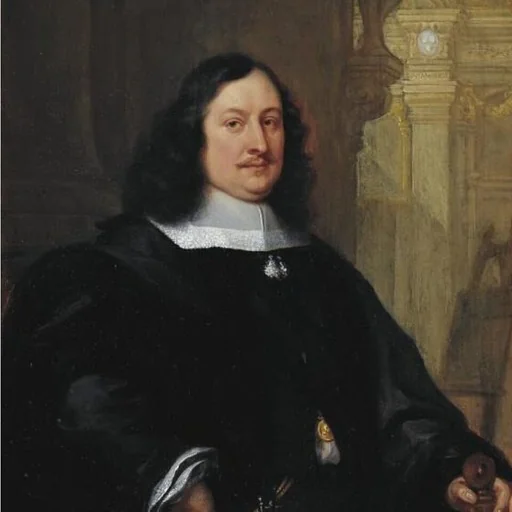
David Teniers the Younger or David Teniers II was a Flemish Baroque painter, printmaker, and artist.