Artwork
The peasant's misfortune
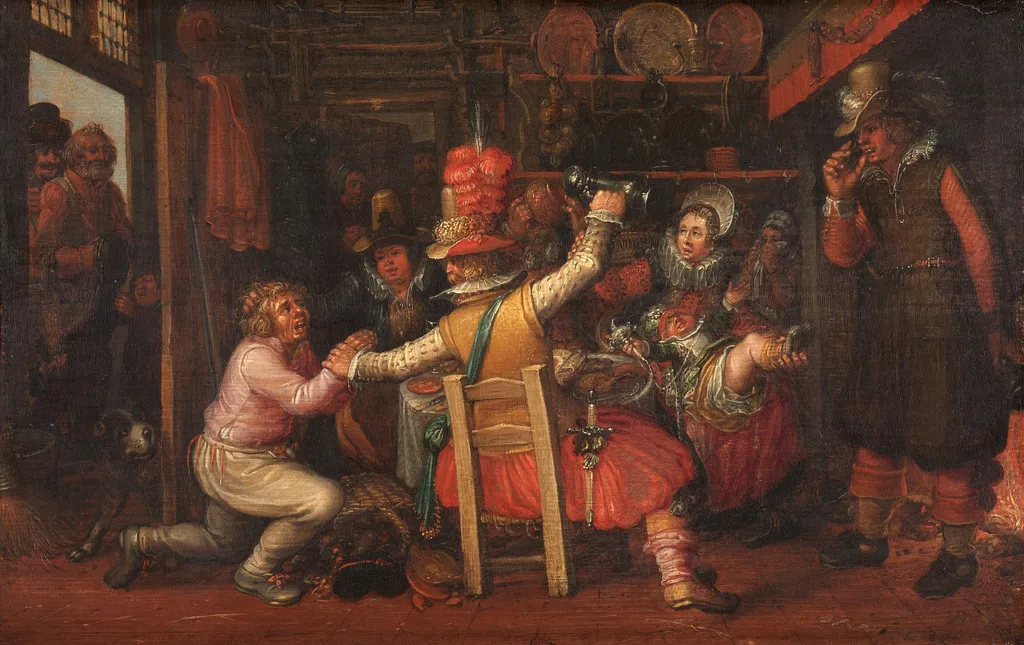
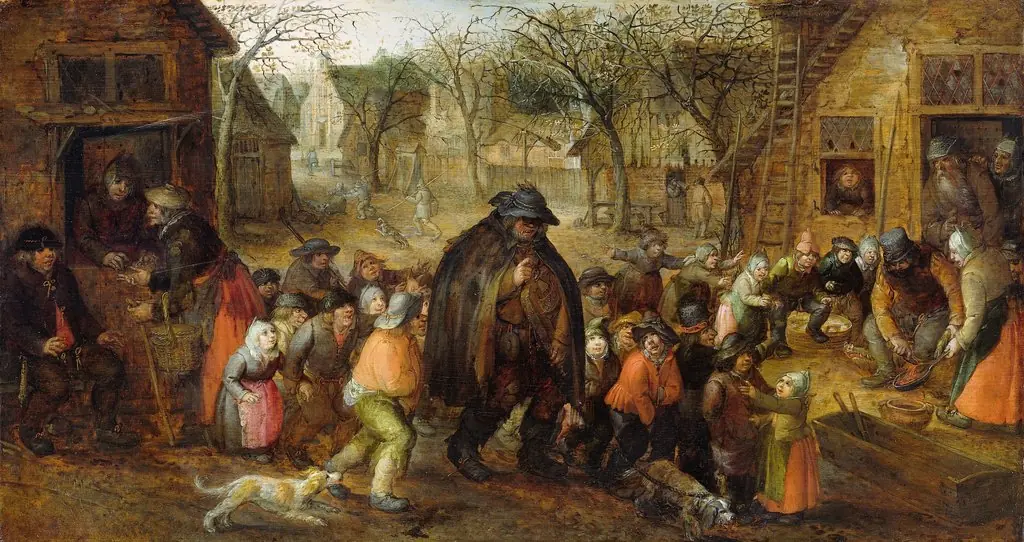
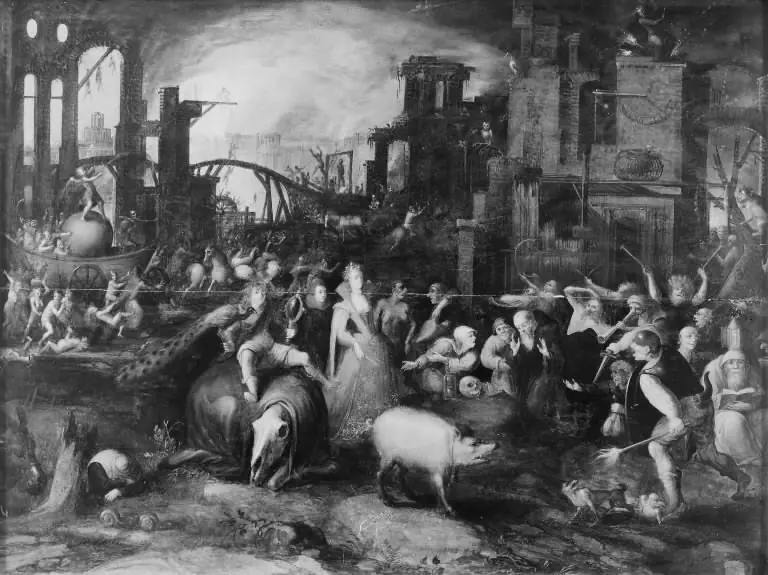
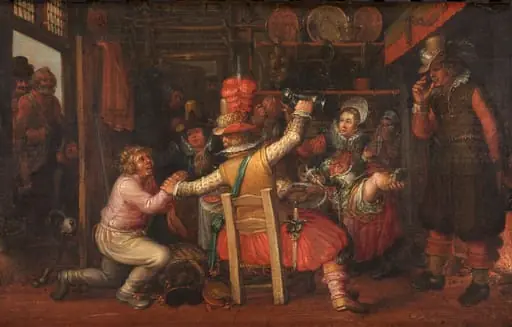
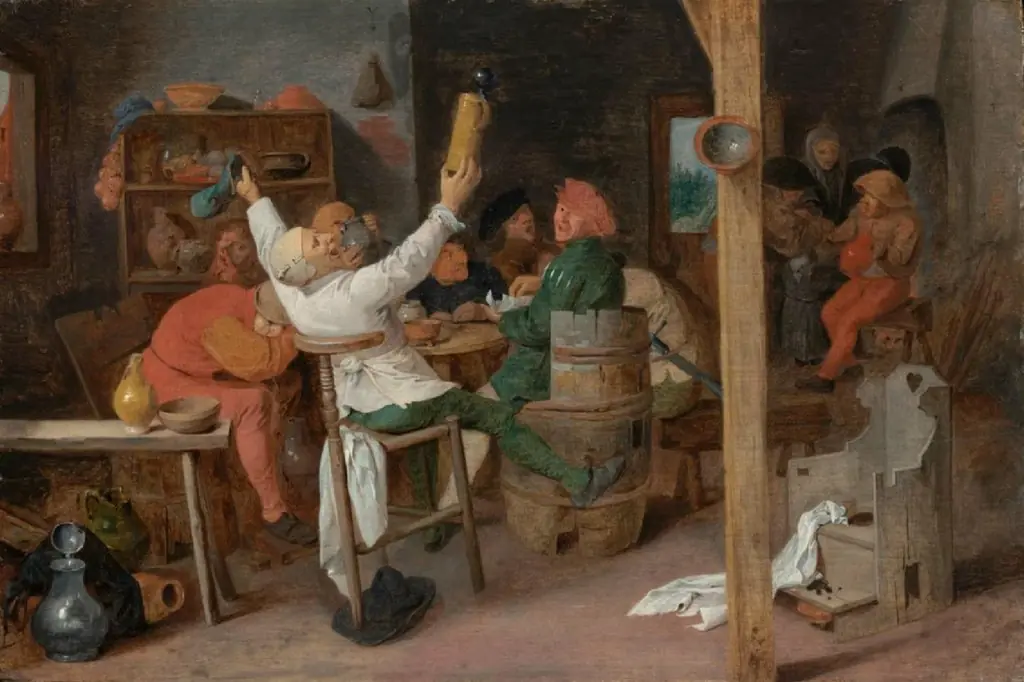
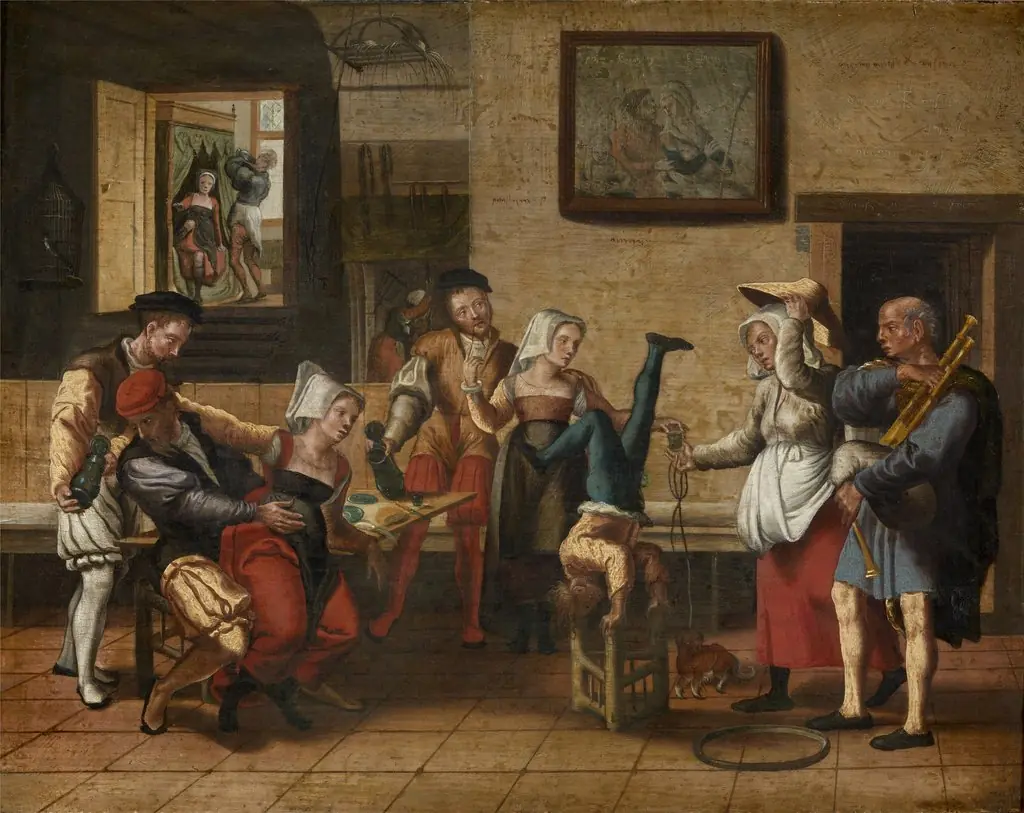
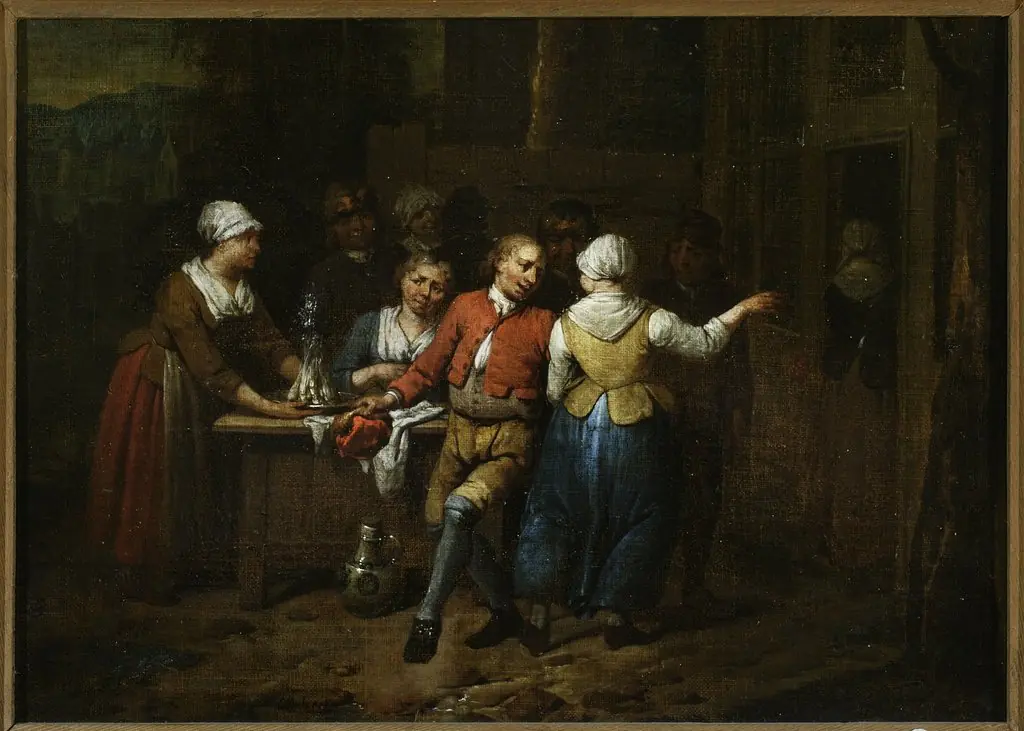
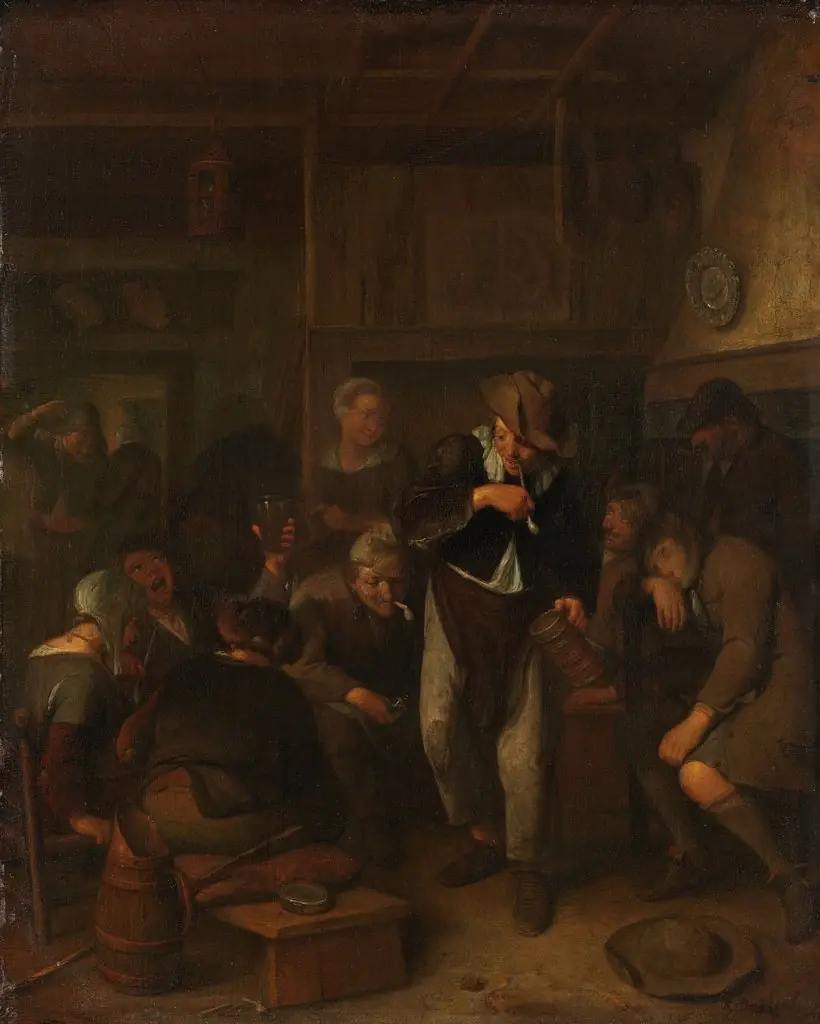
The peasant's misfortune is an oil painting by David Vinckboons. It dates from 1619 and is held in the collection of the Rijksmuseum.
About this work
Overview
The work captures a moment of social tension within a domestic interior, rendered with careful attention to costume, gesture, and atmosphere.
Painted in 1619 by David Vinckboons, *The Peasant's Misfortune* is an oil-on-panel genre scene from the Dutch Golden Age. Born in Mechelen in 1576, Vinckboons settled in the Dutch Republic, where he specialized in lively depictions of ordinary life. The work captures a moment of social tension within a domestic interior, rendered with careful attention to costume, gesture, and atmosphere. It remains part of the Rijksmuseum’s collection today.
Subject & Meaning
The scene portrays a confrontation between a well-dressed man—marked by a red hat and gold chain—and a kneeling peasant in tattered clothing. The man’s pointing gesture suggests accusation or authority, while the peasant’s posture conveys fear or submission. Surrounding figures watch silently, amplifying the sense of public judgment. The setting implies a domestic or civic space where class distinctions are enforced, possibly reflecting legal or social discipline of the time.
Technique & Style
Vinckboons employs chiaroscuro to isolate key figures against a dim interior, drawing focus to the central conflict. Warm light falls on the faces and garments of the main actors, enhancing emotional intensity. Details in fabric, headwear, and background objects—such as suspended armor and hats—reveal his precision in rendering texture and material. The composition is tightly packed, creating a sense of claustrophobia that mirrors the tension of the moment.
History & Provenance
The painting was completed in 1619 during Vinckboons’ active period in the Dutch Republic. It entered the Rijksmuseum’s collection in the 19th century, following the museum’s broader effort to preserve Dutch genre painting from the 17th century. Its provenance prior to institutional acquisition is not fully documented, but its survival suggests it was valued by private collectors in the centuries following its creation.
Context
Genre painting flourished in the early 17th-century Dutch Republic as a reflection of civic pride and middle-class values. Scenes of everyday life, including moments of social conflict, appealed to audiences seeking recognizable narratives. Vinckboons’ work aligns with contemporaries like Pieter Bruegel the Elder, though his style is more refined and less satirical, emphasizing psychological nuance over broad comedy.
Legacy
*The Peasant's Misfortune* exemplifies how Dutch artists used domestic interiors to explore social hierarchies and human vulnerability. While Vinckboons is less widely known than Rembrandt or Vermeer, his work contributes to the broader understanding of how class, power, and emotion were visualized in early modern Dutch society. The painting continues to inform scholarly discussions on representation and social dynamics in genre art.
Own this work as a print
Artist & collection
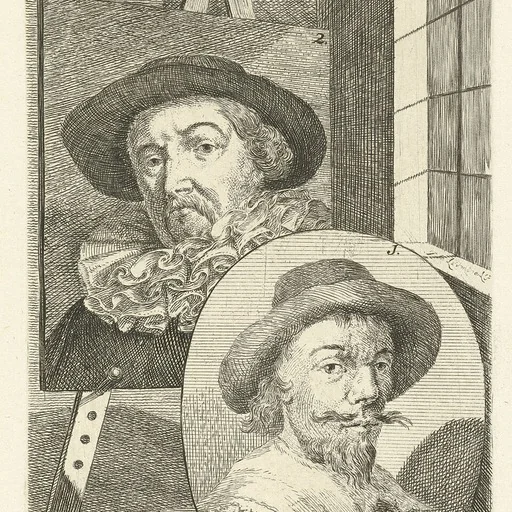
Artist
David Vinckboons (baptized 13 August 1576 – c. 1632) was a Dutch Golden Age painter born in Mechelen, Southern Netherlands. Vinckboons, whose name is often spelled as Vingboons, Vinghboons, Vinckebonis or Vinckboom, had…