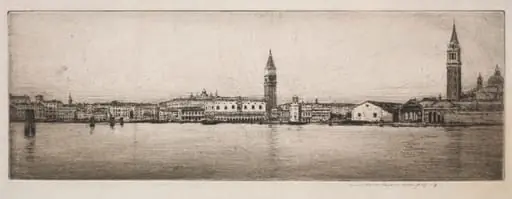
Artwork
Doge's Palace
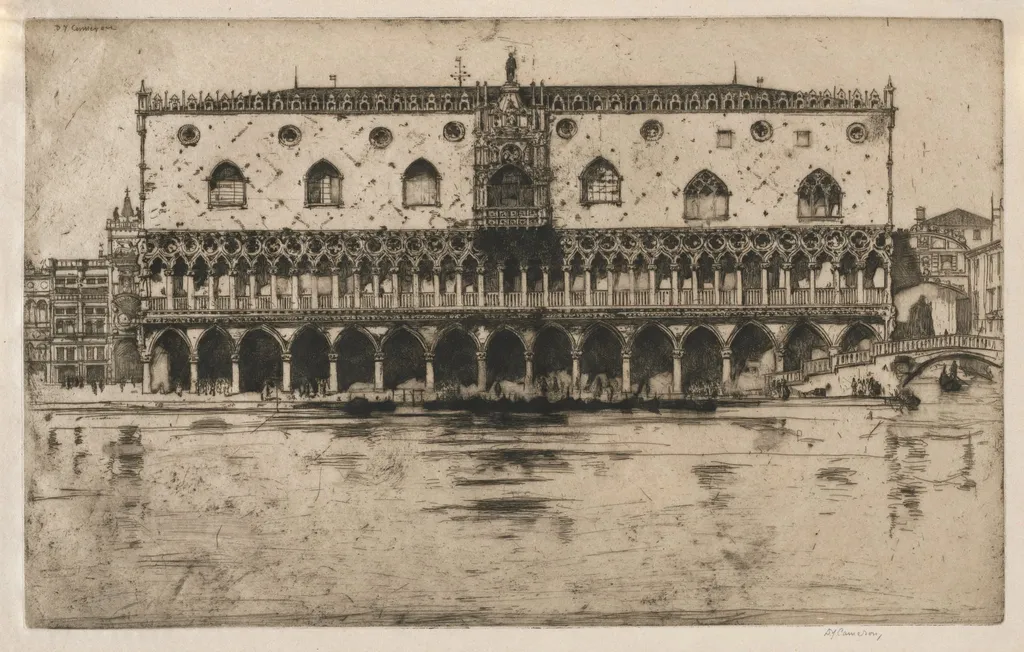
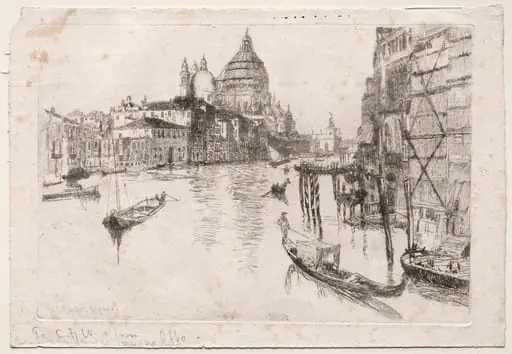
Doge's Palace is a print by David Young Cameron. It dates from 1902 and is held in the collection of the Cleveland Museum of Art.
About this work
Overview
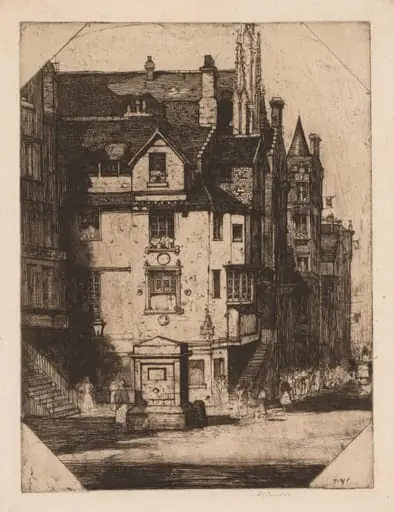
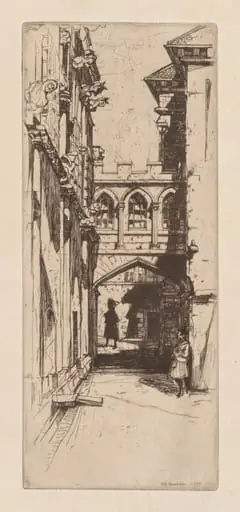
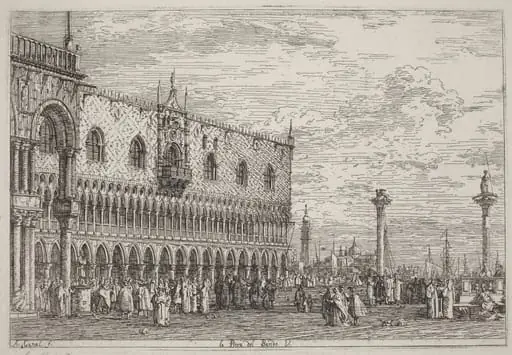
David Young Cameron, a Scottish artist active in the early twentieth century, produced the print *Doge’s Palace* in 1902. The work belongs to the etching medium, a technique that allows fine line work and tonal variation, and it depicts the renowned Palazzo Ducale in Venice with a focus on architectural detail and atmospheric presence.
Subject & Meaning
The image captures the imposing façade of Venice’s Doge’s Palace, highlighting its layered arches, rows of windows, and ornate decorative motifs. A curved bridge extends to the right, while the calm water below mirrors the structure, suggesting the interplay between civic grandeur and the city’s lagoon setting.
Technique & Style
Cameron employed etching to render the building’s texture, using precise lines and graduated shadows to convey depth and material quality. The tonal contrasts emphasize the Gothic elements of the palace, and the delicate rendering of water and distant figures demonstrates his skill in balancing detail with atmospheric effect.
History & Provenance
Created during the height of the Etching Revival, *Doge’s Palace* reflects Cameron’s reputation for urban and landscape subjects. The print has been held in several public collections, including the Cleveland Museum of Art, where it remains accessible for study and exhibition.
Context
At the turn of the twentieth century, European artists revisited historic architecture through printmaking, seeking to document and reinterpret iconic sites. Cameron’s work aligns with this trend, offering a measured, tonal study of a landmark that had long inspired painters, architects, and travelers.
Artist & collection
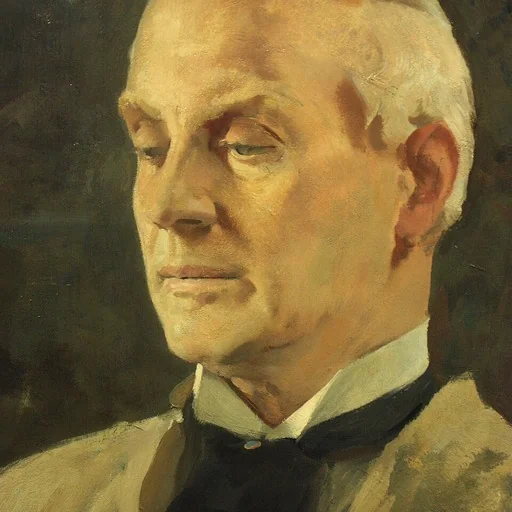
Artist
Sir David Young Cameron (28 June 1865 – 16 September 1945) was a Scottish painter and, with greater success, etcher, mostly of townscapes and landscapes in both cases. He was a leading figure in the final decades of the Etching Revival.