Artwork
John Knox's House
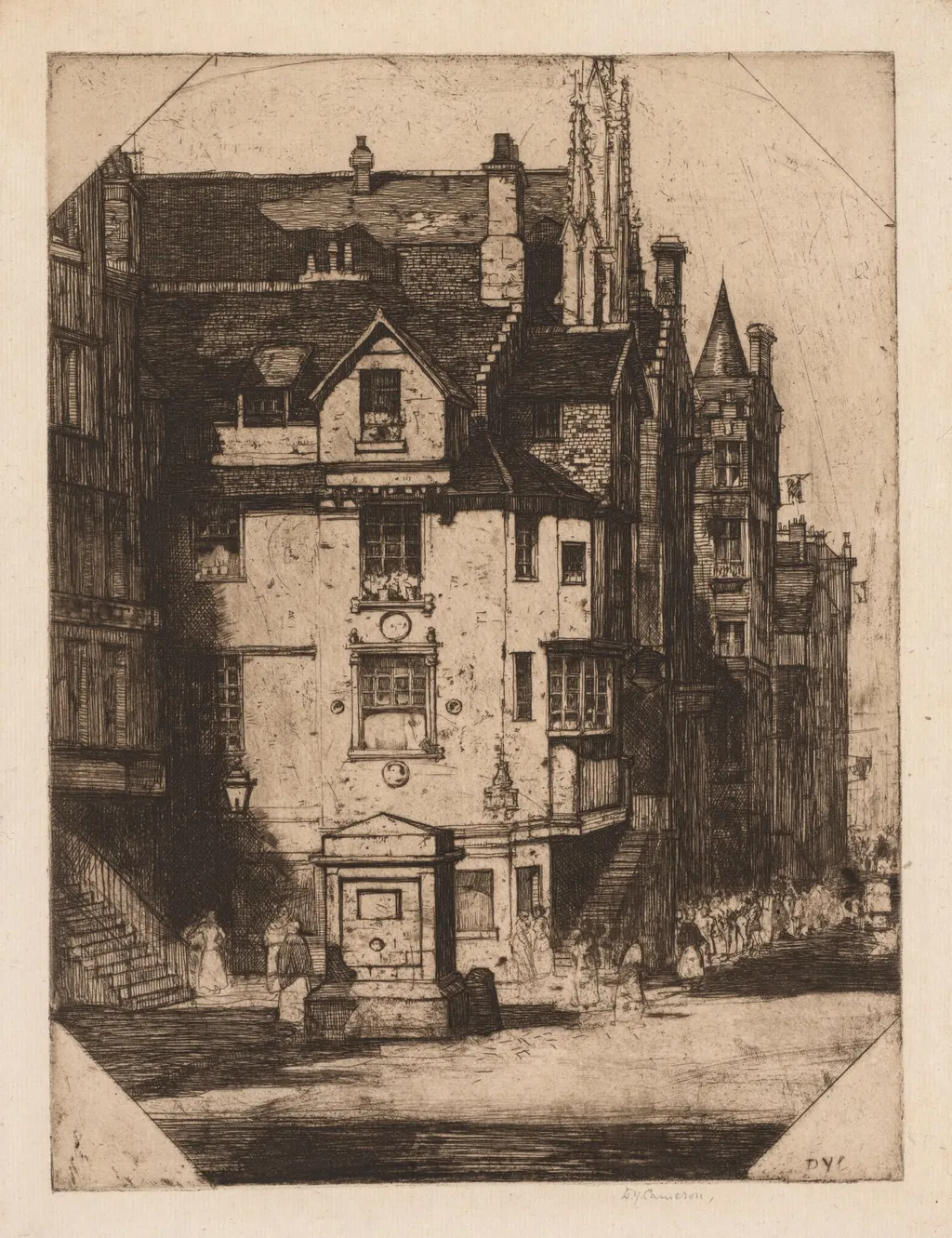
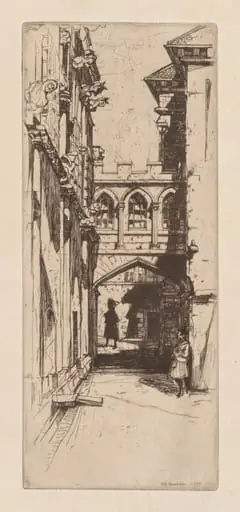
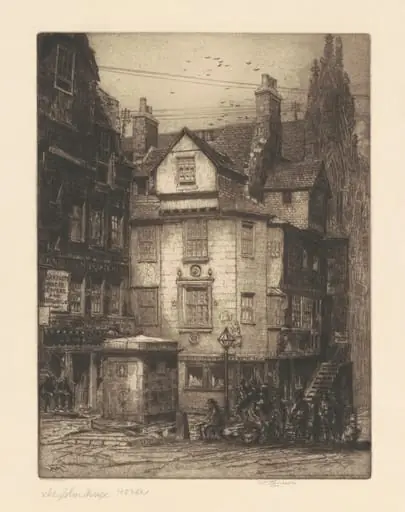
John Knox's House is a print by David Young Cameron. It dates from 1905 and is held in the collection of the Cleveland Museum of Art.
About this work
Overview
David Young Cameron produced the etching *John Knox's House* in 1905, capturing a historic building in Edinburgh associated with the Protestant Reformer.
David Young Cameron produced the etching *John Knox's House* in 1905, capturing a historic building in Edinburgh associated with the Protestant Reformer. As a prominent figure in the late Etching Revival, Cameron focused on architectural subjects with quiet precision. The print reflects his interest in urban environments and their layered histories, rendered through careful line work and tonal variation rather than dramatic effect.
Subject & Meaning
The subject is a modest stone structure in Edinburgh’s Old Town, traditionally linked to John Knox, the 16th-century religious leader. Cameron does not idealize the building but presents it as a weathered, enduring presence amid the city’s dense fabric. The image invites contemplation of Scotland’s religious past without overt symbolism, emphasizing the quiet persistence of historical architecture over narrative drama.
Technique & Style
Cameron employed drypoint and etching to achieve subtle gradations of light and shadow. His lines are deliberate and controlled, conveying texture in stone and the play of atmosphere around the building. The composition is restrained, with no figures or extraneous detail, focusing attention on form and surface. This approach aligns with the Etching Revival’s emphasis on craftsmanship and tonal nuance over bold expression.
History & Provenance
Created in 1905, the print entered the collection of The Cleveland Museum of Art at an early date, reflecting its recognition among American institutions interested in European printmaking. Cameron’s reputation as a printmaker helped secure its inclusion in major collections. The work has remained in the museum’s holdings since acquisition, preserved as an example of early 20th-century British etching.
Context
In the early 1900s, British artists revisited etching as a serious medium, moving away from mass reproduction toward artistic expression. Cameron’s work emerged within this movement, alongside a broader interest in Scotland’s architectural heritage. His depictions of Edinburgh’s Old Town contributed to a cultural reassessment of historic urban spaces during a period of rapid modernization.
Legacy
Cameron’s *John Knox's House* stands as a representative work of the Etching Revival’s mature phase, valued for its technical restraint and historical sensitivity. While not widely reproduced, it remains a touchstone in studies of early 20th-century British printmaking. The print continues to inform how architectural heritage is visually interpreted through intimate, non-dramatic means.
Artist & collection
Artist
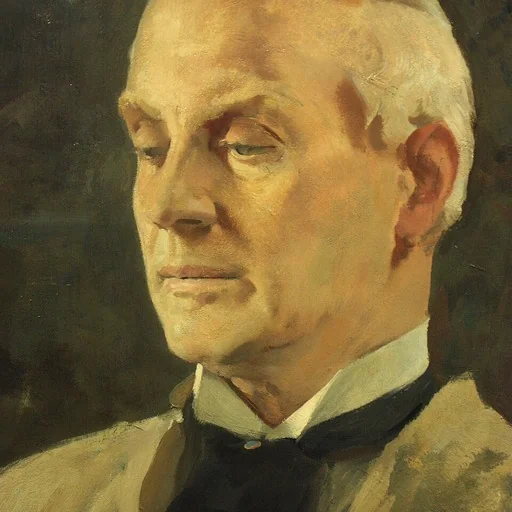
Sir David Young Cameron (28 June 1865 – 16 September 1945) was a Scottish painter and, with greater success, etcher, mostly of townscapes and landscapes in both cases. He was a leading figure in the final decades of the Etching Revival.


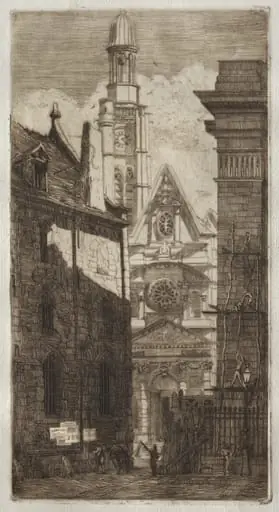 Saint-Etienne-du-Mont
 House
House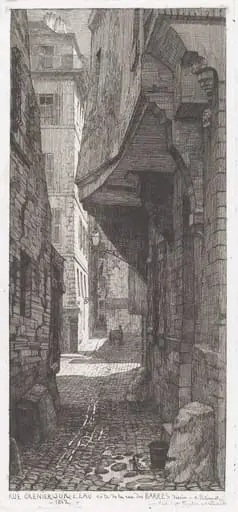 Rue Grenier sur l'eau, côté de la rue des Barres
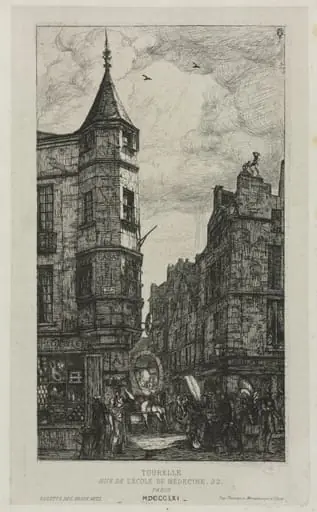 House with a Turret, No. 22, rue de L'Ecole de Médecine, Paris, (called the Turret of Marat)
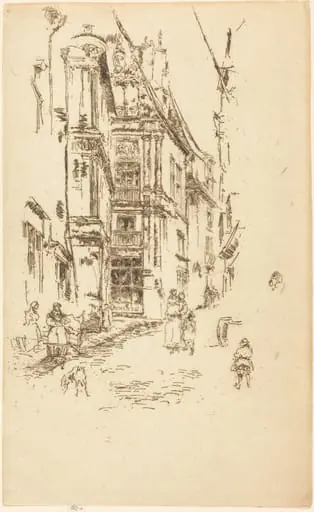 Chancellerie, Loches
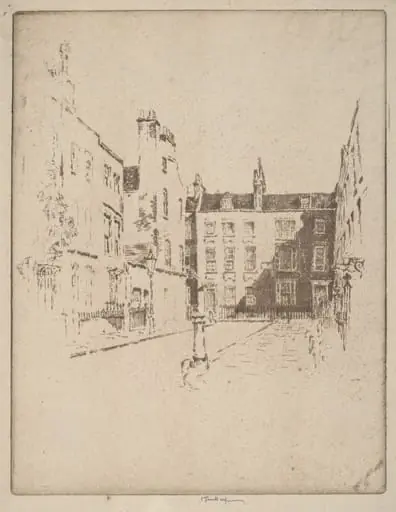 Cowley Street, Westminster
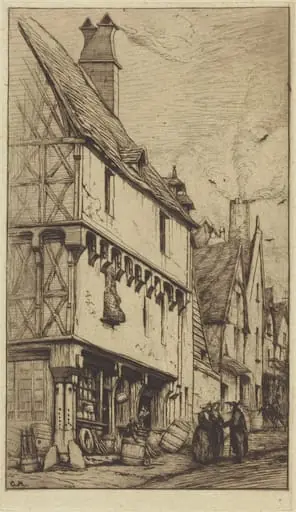 Ancienne habitation à Bourges, dite "La Maison du Musicien" (An Old House at Bourges, Sometimes Called the "Musician's House")
 Wych Street
 Tourelle, Rue de la Tixeranderie
 Topographical drawings
 Wych Street
 The John Knox House