Artwork
Mélancolie (Melancholy)
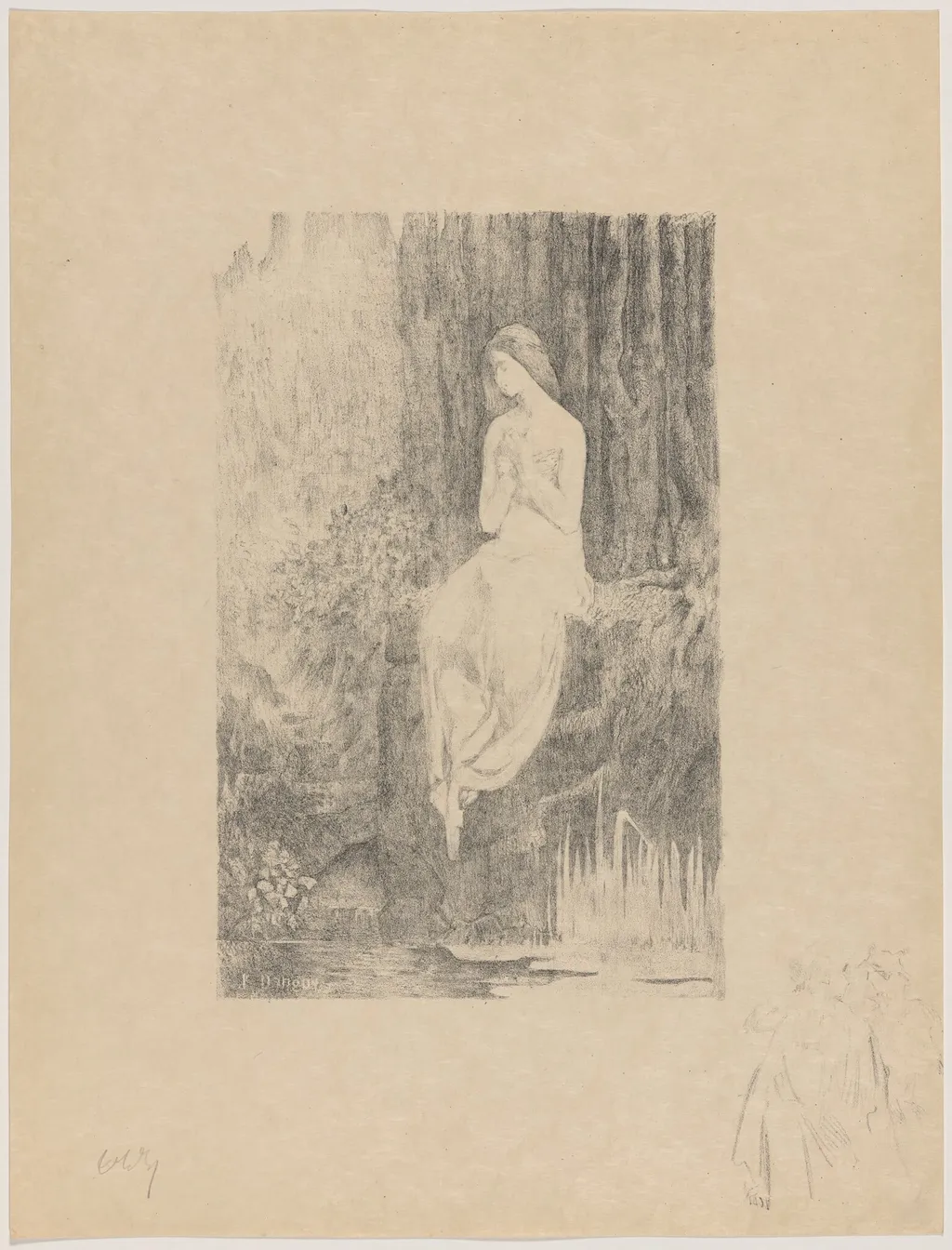
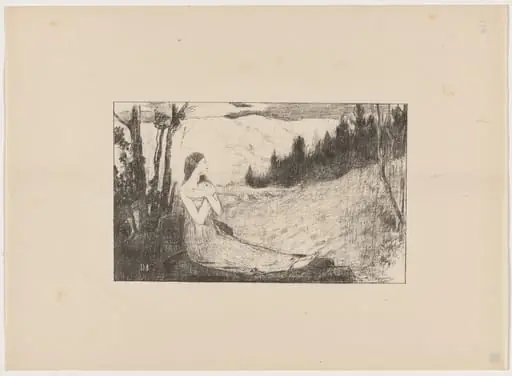
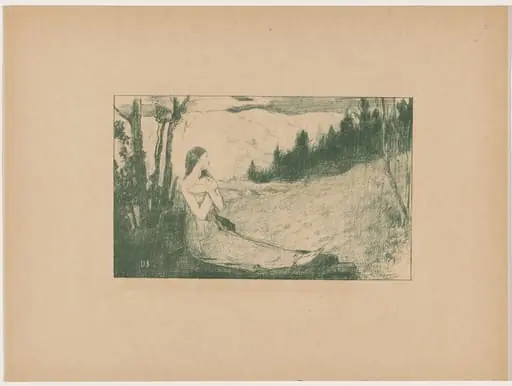
Mélancolie (Melancholy) is an ink print by the Impressionist artist Jean Danguy. It dates from 1894 and is held in the collection of the National Gallery of Art.
About this work
Overview
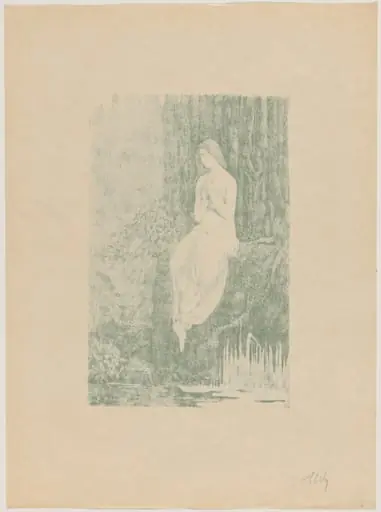
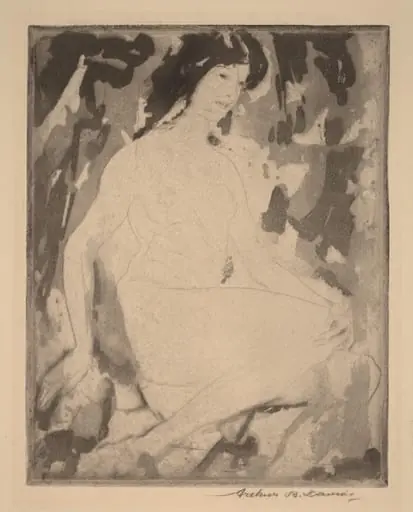
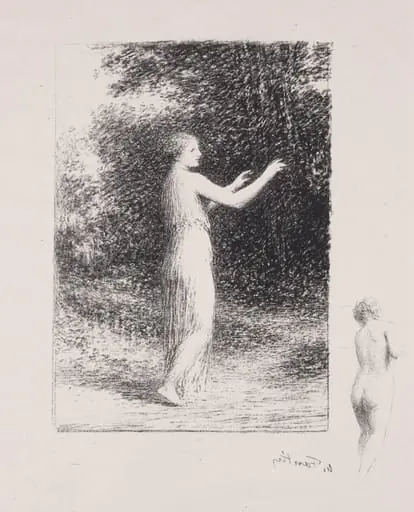
Jean Danguy’s 1894 lithograph Mélancolie presents a solitary female figure seated upon a stone amid a dense, shadowy woodland. Rendered in stark black on heavy Japan paper, the image balances a somber palette with a modest splash of colour from a cluster of flowers in the foreground, inviting the viewer into a quiet, introspective scene.
Subject & Meaning
The central woman, cloaked in a flowing white dress, bows her head and hides her face beneath a veil of hair, evoking a sense of concealed emotion. The surrounding forest, rendered in deep tonal values, reinforces an atmosphere of isolation and contemplation, suggesting themes of inner sorrow and the elusive nature of melancholy.
Technique & Style
Executed as a lithograph, Danguy exploits the medium’s capacity for bold line work and subtle tonal gradations. The heavy Japan paper absorbs ink, allowing fine shading that creates depth within the trees and rock. Textural contrasts between the smooth garment and the rough foliage enhance the work’s expressive, almost painterly quality.
History & Provenance
Created in 1894, Mélancolie is among Danguy’s later prints, produced during a period when French artists were exploring symbolic and emotional content through printmaking. The work has remained in private collections, with documented sales appearing in early 20th‑century auction records, reflecting its continued interest among collectors of Symbolist prints.
Artist & collection