Artwork
Nelson Dawson at Work
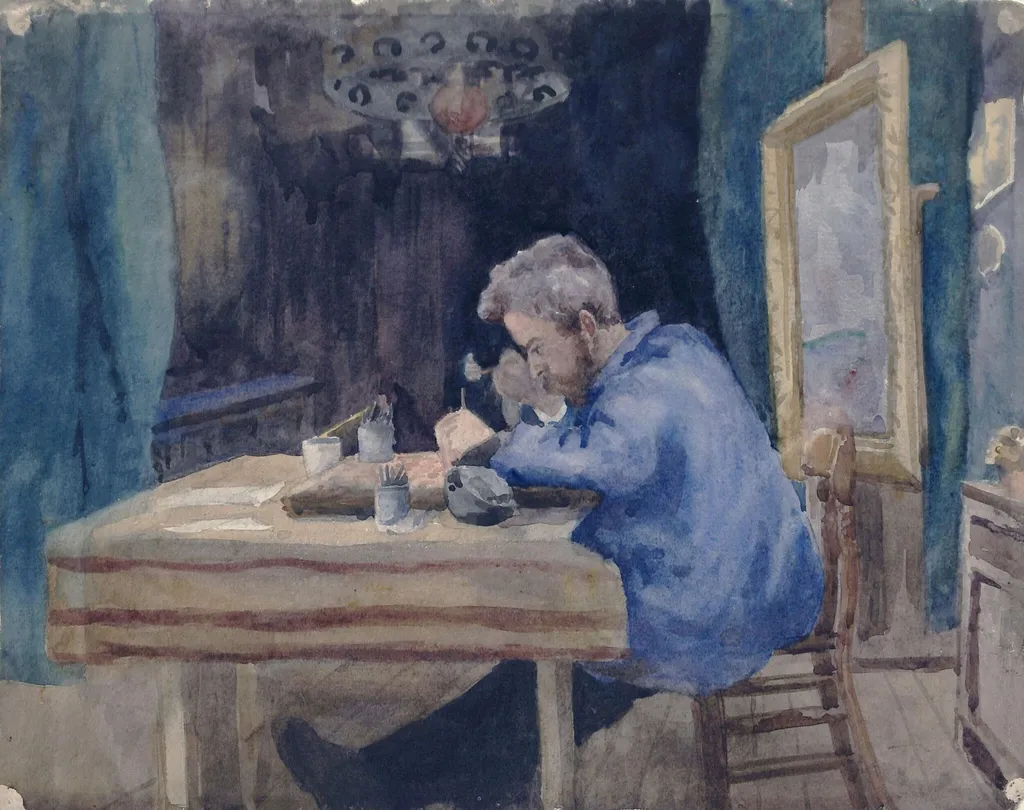
Nelson Dawson at Work is a watercolor work on paper by the Impressionist artist Edith Brearey Dawson. It dates from 1893 and is held in the collection of the Victoria and Albert Museum.
About this work
Overview
This watercolour by Edith Brearey Dawson captures her husband, Nelson Dawson, engaged in his artistic practice within his studio.
This watercolour by Edith Brearey Dawson captures her husband, Nelson Dawson, engaged in his artistic practice within his studio. Rendered in soft, muted tones, the scene presents a quiet, unidealized moment of creative labor. The composition centers on Nelson seated at a wooden table, absorbed in his work, with minimal but telling studio elements surrounding him: brushes, jars, and an easel holding another piece. The painting’s intimacy stems from its unembellished focus on routine artistic activity.
Subject & Meaning
The subject is Nelson Dawson, a noted artist and craftsman, depicted not as a celebrated figure but as a working artisan. His posture and concentration suggest deep engagement with a small object—possibly a metal plaque—under preparation. The scene carries no narrative drama; its significance lies in its documentation of daily artistic discipline. The inclusion of a mirror reflecting a dimly lit wall and a framed picture adds a layer of self-reflection, subtly reinforcing the artist’s introspective environment.
Technique & Style
Edith Brearey Dawson employs loose, fluid brushwork typical of late 19th-century watercolour practice. The palette is restrained, with pale blues, greys, and earth tones creating a subdued atmosphere. Washes are applied with economy, allowing paper texture to contribute to the sense of light and space. The quick, confident strokes convey immediacy, avoiding finish in favor of capturing a transient moment. This approach aligns with contemporary tendencies toward observational realism over idealized composition.
History & Provenance
The work was created within the Dawson household, likely during the 1890s, when both Edith and Nelson were active in the British art scene. The reverse side bears a partially erased watercolour of a rural lane, indicating reuse of paper—a common practice among artists of the period. Its survival as a personal artifact, rather than a public commission, suggests it was retained for private reasons, perhaps as a record of domestic artistic life.
Context
This piece emerges from a broader movement among British artists who valued everyday scenes over grand historical or mythological themes. The Dawson circle, connected to the Arts and Crafts movement, emphasized craftsmanship and authenticity in both production and representation. Depicting an artist at work, without embellishment, reflects a shared ethos: art’s value resided in honest labor and attention to detail, not spectacle.
Legacy
Though not widely exhibited, the work endures as a quiet testament to the domestic dimensions of artistic life in late Victorian England. It offers insight into the routines and environments of artists often overshadowed by their more public achievements. As a portrait of creative process rather than personality, it contributes to a growing archive of artworks that treat the studio not as a stage, but as a workspace.
Artist & collection

Artist
Edith Brearey Dawson was an English artist, jeweller and member of the Arts and Crafts movement.

 The Studio
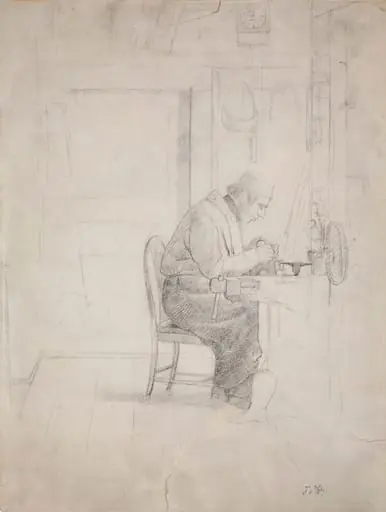 Wilhelm von Wright höyläpenkin ääressä, piirustus "Mariebergin verstas" -maalausta varten
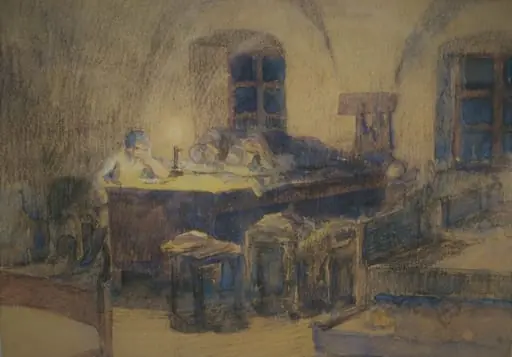 Internat
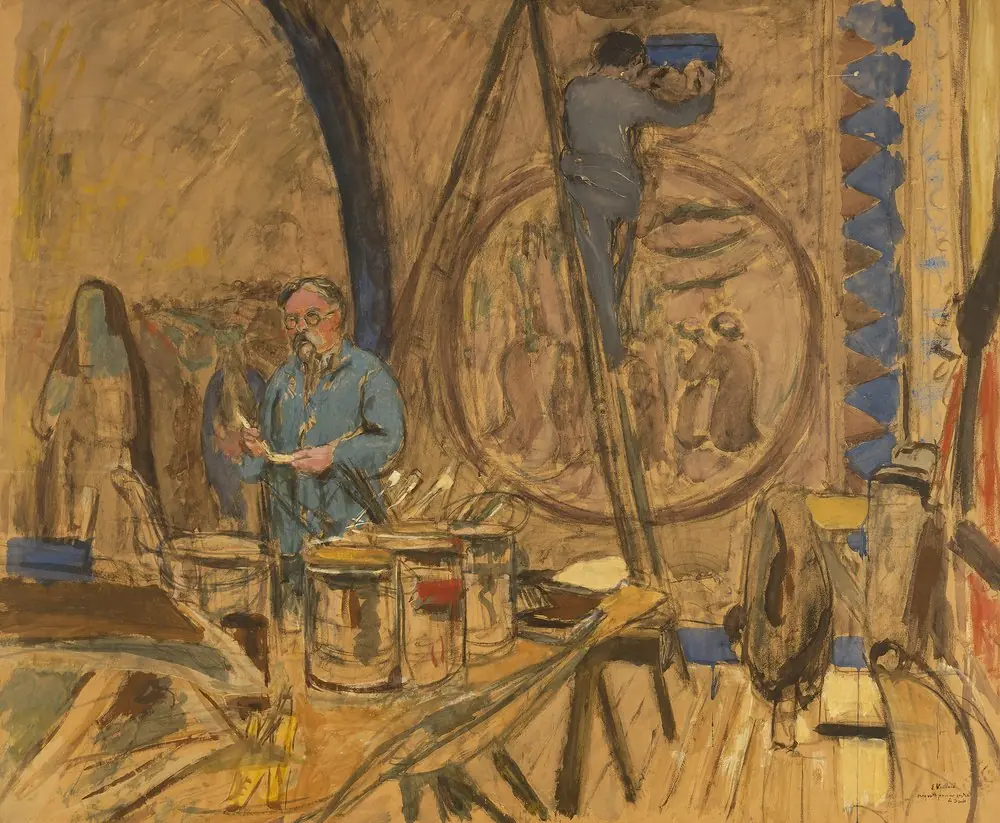 Maquette pour un portrait de Denis
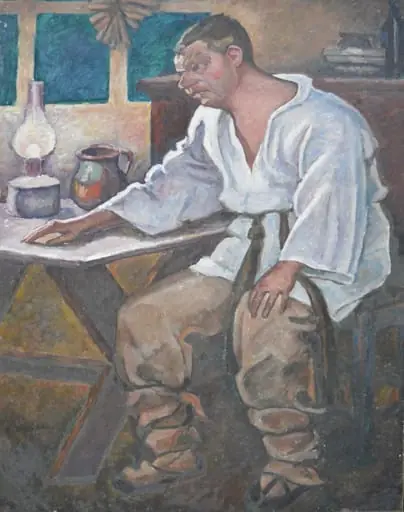 Iancu Brezeanu (actorul în rolul Ion din Năpasta, I.L. Caragiale)
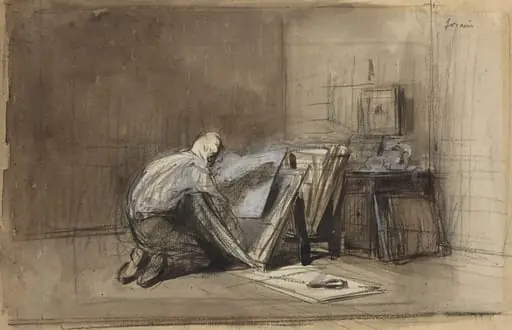 a) Print Connoisseur (recto); b) Sketch of Print Connoisseur (verso)
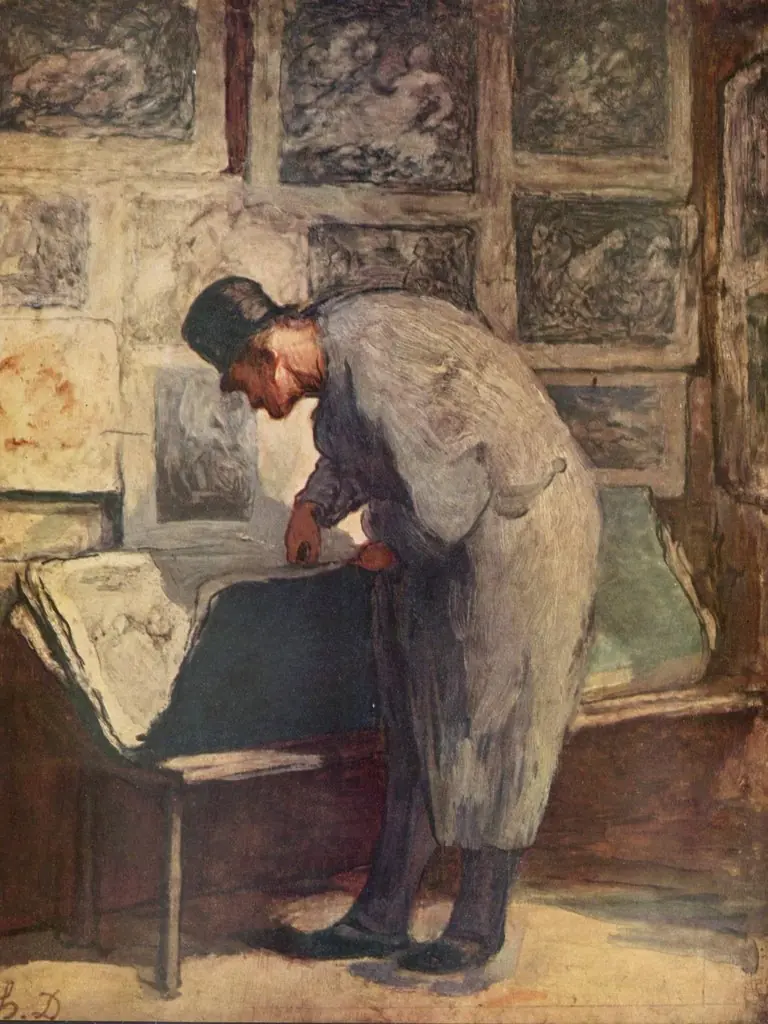 The Print Collector
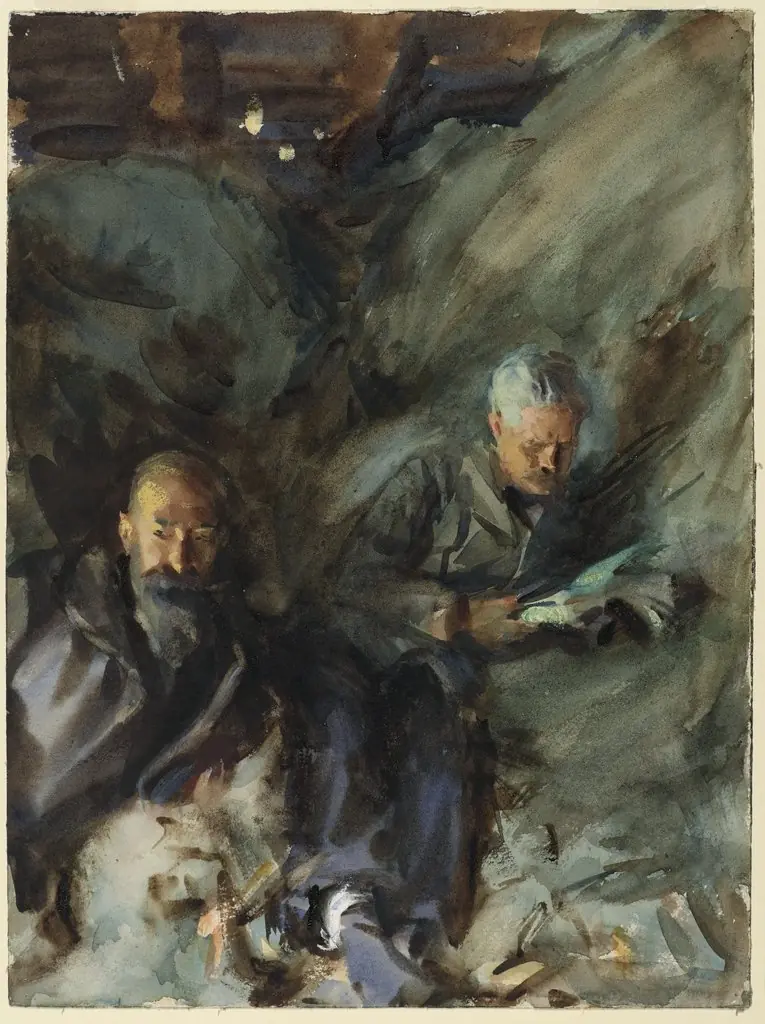 In a Hayloft
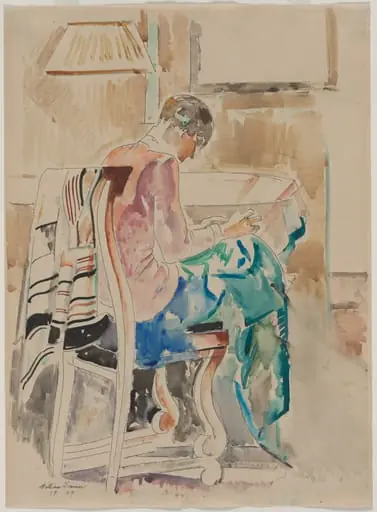 Girl Sewing
 Maisteri Carl Gustaf Swan työpöytänsä ääressä
 Gertrude Terry, sewing by lamplight
 Interior of a cottage, North Wales