Artwork
Bath
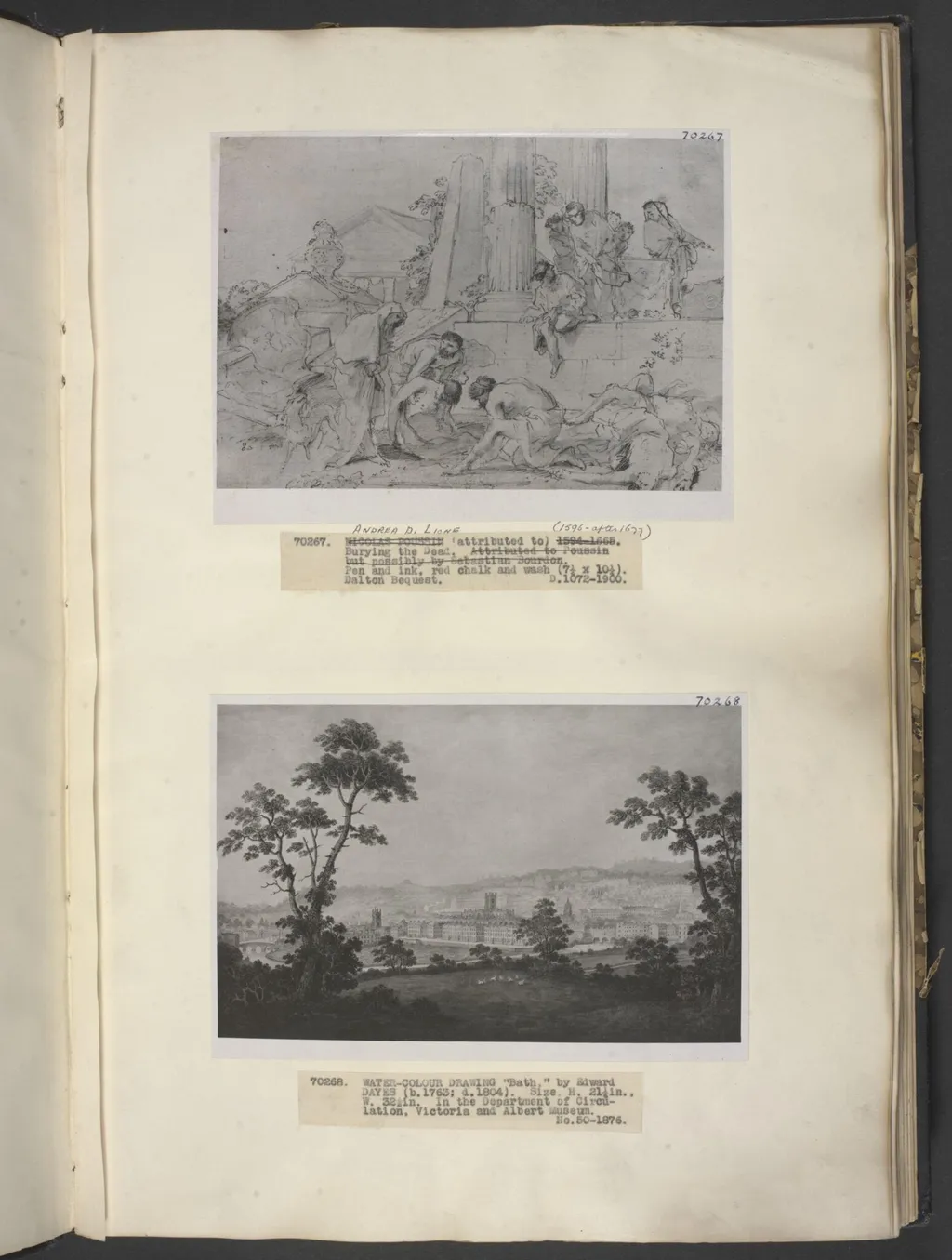
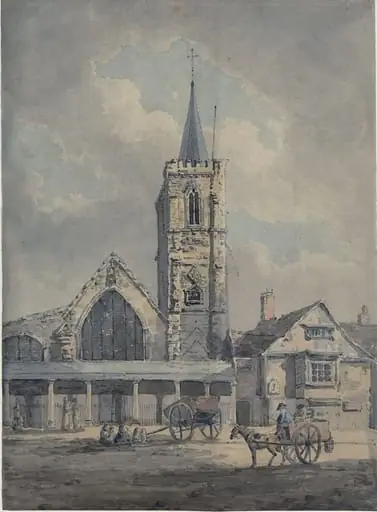
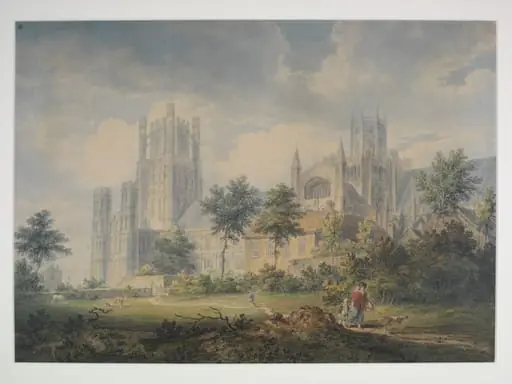
Bath is a watercolor work on paper by Edward Dayes. It is held in the collection of the Victoria and Albert Museum.
About this work
Overview
Bath is a watercolor drawing by the 18th-century artist Michael Angelo Dayes, currently held in the collection of the Victoria and Albert Museum.
Bath is a watercolor drawing by the 18th-century artist Michael Angelo Dayes, currently held in the collection of the Victoria and Albert Museum. The work presents a tranquil rural scene rendered in delicate washes, emphasizing quietude and atmospheric harmony rather than narrative drama. Its modest scale and gentle tonality reflect the aesthetic priorities of topographical watercolor in the period.
Subject & Meaning
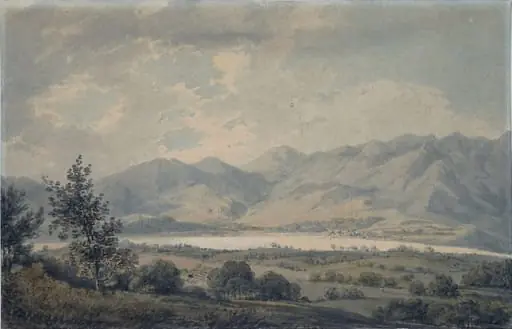
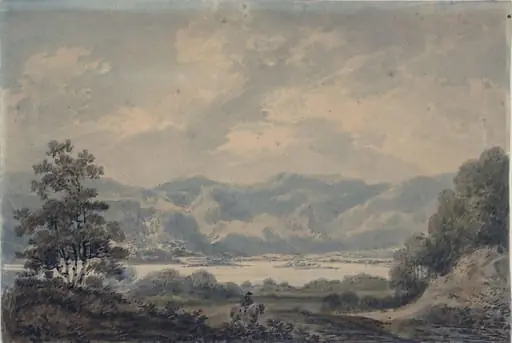
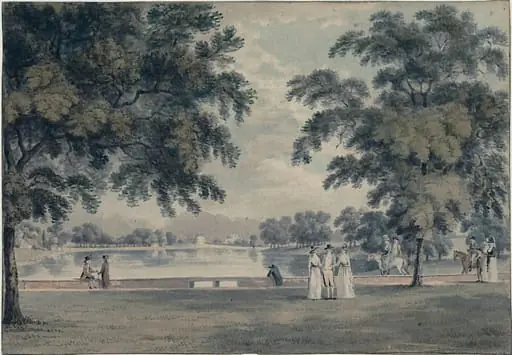
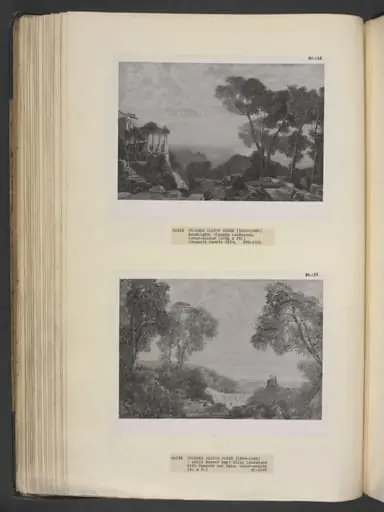
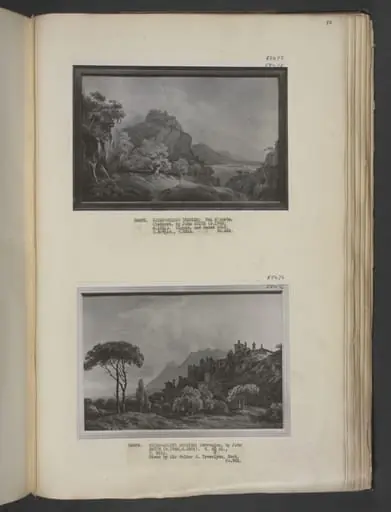
The scene depicts a secluded landscape with a distant building, possibly a manor or estate, flanked by trees and framed by a slow-moving body of water. The absence of human figures and the subdued lighting suggest a contemplative stillness, evoking an idealized vision of rural retreat. The composition invites quiet observation, aligning with 18th-century ideals of natural serenity and private reflection.
Technique & Style
Dayes employed transparent watercolor washes to build soft gradients of light and shadow, allowing the paper’s white surface to contribute to the luminosity of the sky and water. Fine brushwork defines the tree canopies and architectural forms without sharp outlines, creating a sense of atmospheric depth. The restrained palette—pale blues, greens, and ochres—enhances the calm, diffused quality of the light.
History & Provenance
The work entered the Victoria and Albert Museum’s collection as part of its broader acquisition of British watercolors from the 18th and early 19th centuries. While specific provenance details prior to museum acquisition are not widely documented, its preservation suggests it was valued within artistic circles for its technical refinement and compositional balance.
Context
Bath reflects the growing popularity of topographical watercolor in late 18th-century Britain, where artists documented landscapes with precision and poetic restraint. Such works often served as personal records or gifts, distinct from grand oil paintings. Dayes, though less known than contemporaries like Turner, contributed to this tradition with works that emphasized harmony and subtle observation.
Legacy
The drawing remains a quiet example of British watercolor practice before the medium’s romantic expansion. It illustrates how artists of the period used watercolor not for dramatic effect but to capture mood and place with restraint. Its presence in a major museum underscores its role in the historical development of British landscape art.
Artist & collection