Artwork
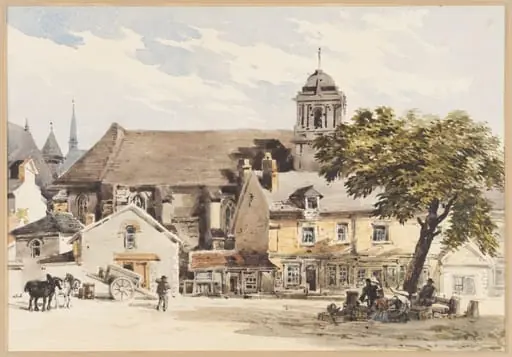
A Church in a Market Place
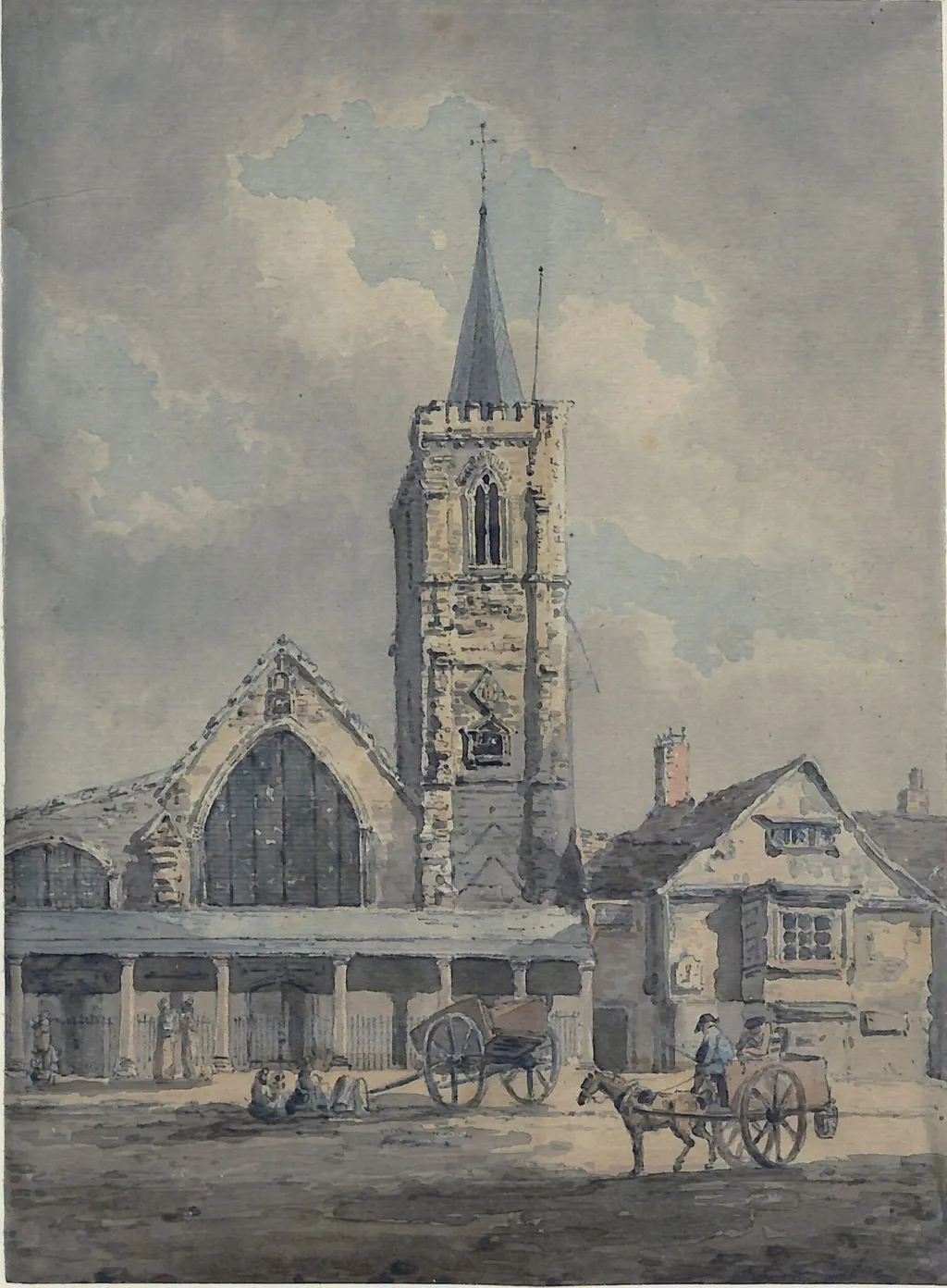
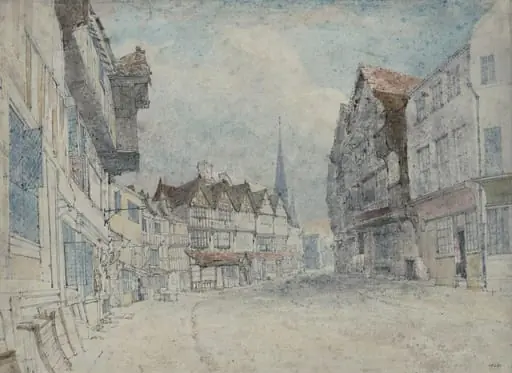
A Church in a Market Place is a watercolor work on paper by the Neoclassicist artist Edward Dayes. It dates from 1792 and is held in the collection of the Victoria and Albert Museum.
About this work
Overview
Edward Dayes created this watercolour in 1792, capturing a modest English church nestled within a working market square.
Edward Dayes created this watercolour in 1792, capturing a modest English church nestled within a working market square. The composition emphasizes the quiet integration of sacred architecture into everyday rural life. Executed in transparent washes, the piece conveys immediacy, as if observed during a brief walk through the village. The scene avoids grandeur, focusing instead on the ordinary rhythms of community space.
Subject & Meaning
The church, with its tall spire and arched entrance, anchors the scene as both spiritual and architectural landmark. Below, a horse-drawn cart moves along a dirt path, while a few figures and a resting dog suggest quiet activity. The presence of commerce and domestic life around the church implies a symbiotic relationship between religious institution and daily economy, reflecting the grounded role of the church in 18th-century village society.
Technique & Style
Dayes employed loose, fluid brushwork and diluted watercolour to suggest texture and atmosphere without detail. The church’s stone surfaces and arched windows are rendered with sharper definition, contrasting with the softly blurred buildings and sky. Light clouds and muted tones create a gentle, diffused daylight, reinforcing the sketch-like spontaneity of the work. The technique prioritizes mood over precision, aligning with topographical traditions of the period.
History & Provenance
Painted in 1792, the work belongs to a series of topographical watercolours Dayes produced during his travels across England. Though its early ownership is unrecorded, it entered public collections in the 20th century. Its survival reflects the growing interest in documenting vernacular architecture during a time of rapid urban and industrial change, preserving scenes that were increasingly vanishing from the landscape.
Context
In late 18th-century England, watercolour was gaining recognition as a medium for recording local scenes, not just fine art. Dayes was part of a generation of artists who documented provincial towns and churches before modernization altered their character. This work reflects a broader cultural impulse to preserve the visual identity of rural communities amid the encroachment of industrialization and reform.
Legacy
Dayes’s watercolours, including this one, contribute to a visual archive of pre-industrial English villages. While not widely celebrated in his lifetime, his works now serve as historical records of architectural forms and social spaces. This piece exemplifies how modest, unadorned scenes can offer insight into the lived environment of ordinary people, valued today for their documentary clarity rather than artistic flourish.
Artist & collection

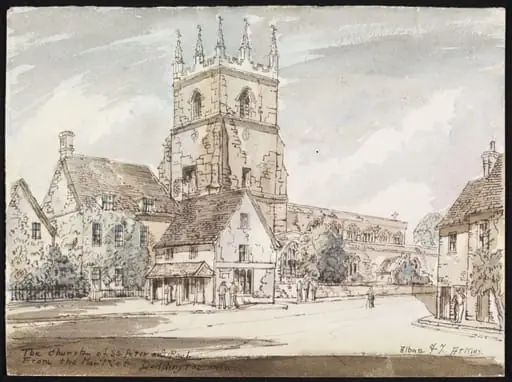 The Church of S.S.Peter and Paul, from the Market, Deddington
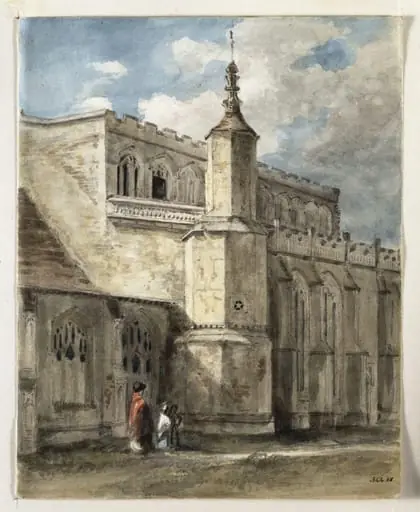 Part of the exterior of East Bergholt Church: the north side
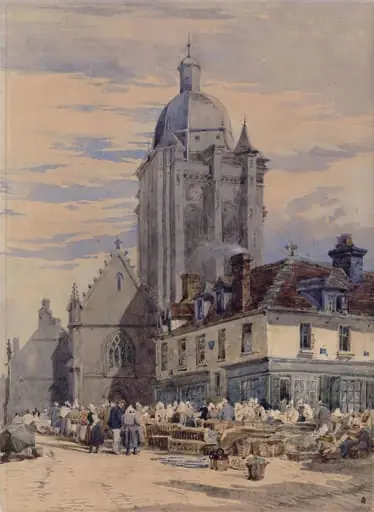 Street View, Mortagne, Normandy
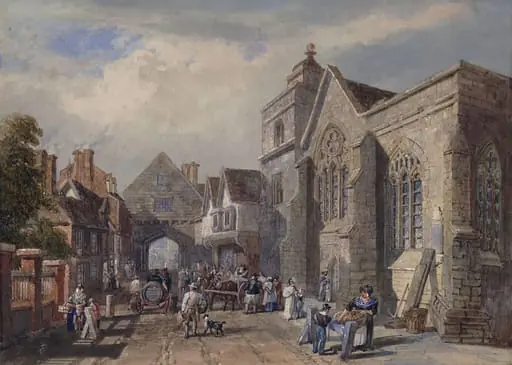 St. Nicholas Church and the College Gateway, Rochester
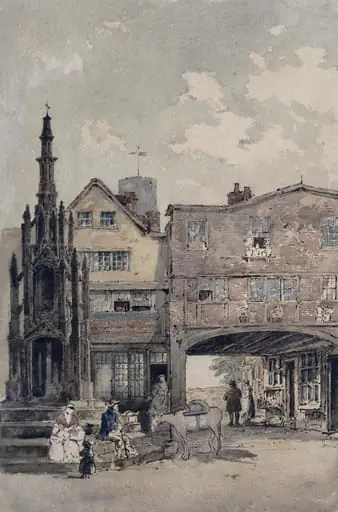 The Butter-Cross, Winchester
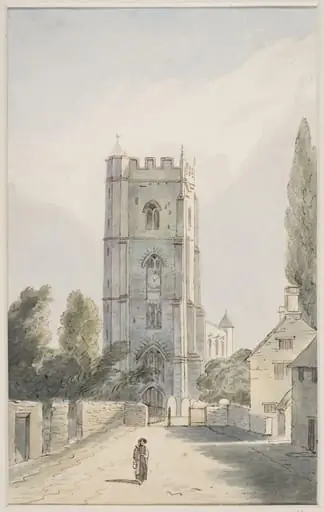 Queen Camel Church
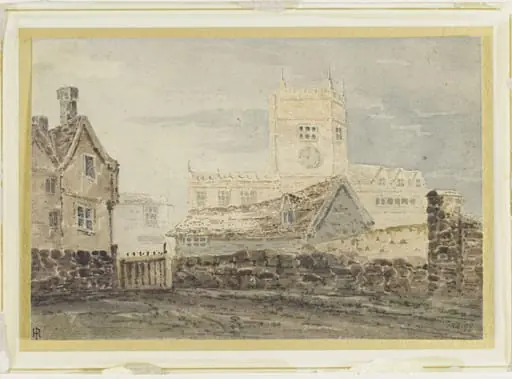 The school, Shrewsbury
 The Post House, Amboise
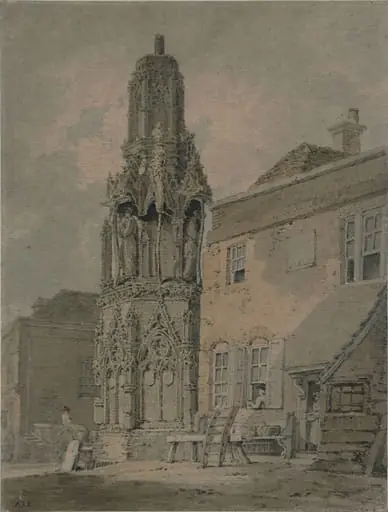 Waltham Cross in 1812
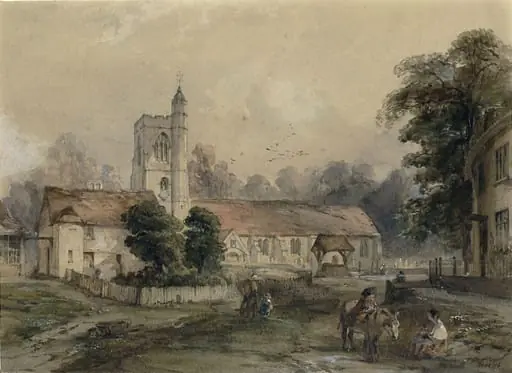 South Weald Church, Essex
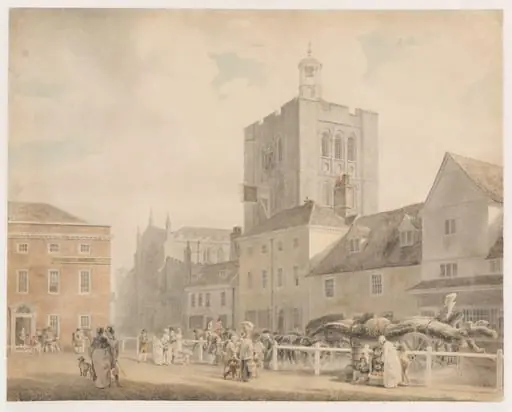 View of Bury St. Edmunds
 Street view in Hereford