Artwork
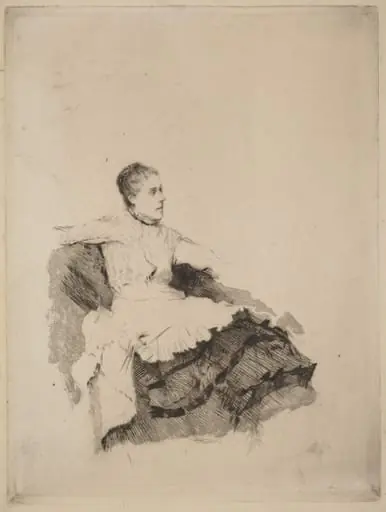
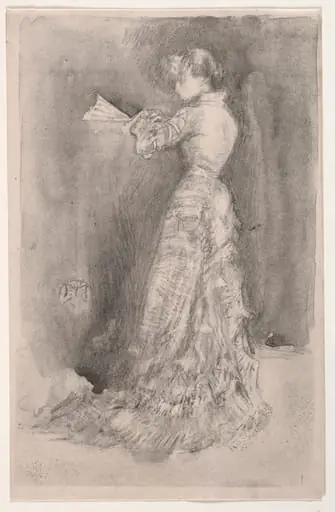
Elegant Young Woman Seen from Behind
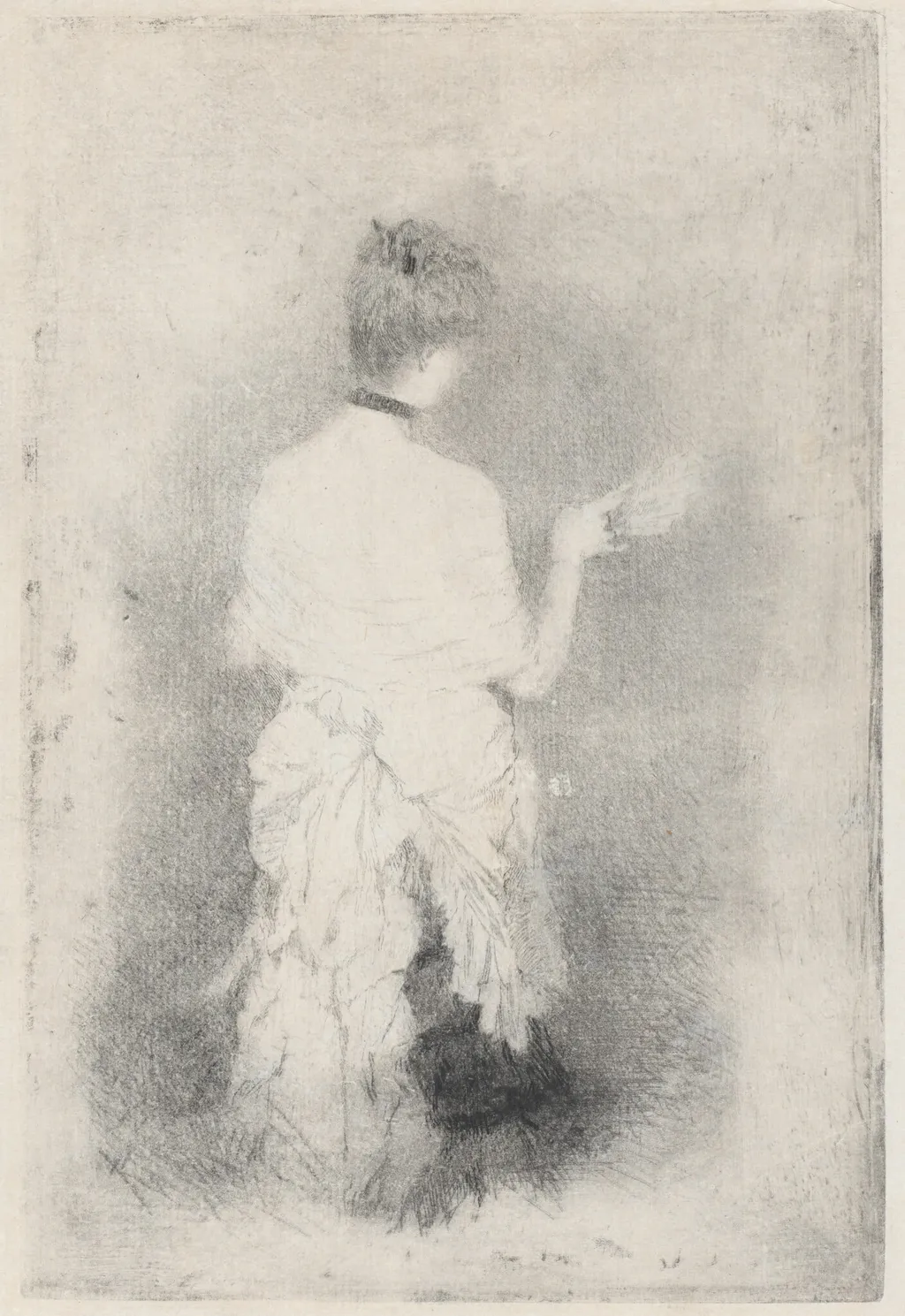
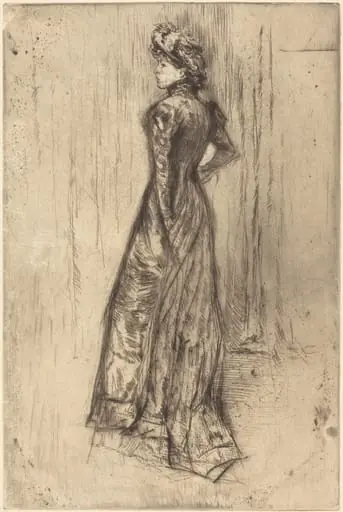
Elegant Young Woman Seen from Behind is an ink print by the Impressionist artist Giuseppe De Nittis. It dates from 1875 and is held in the collection of the National Gallery of Art.
About this work
Overview
Created around 1875, this print by Giuseppe De Nittis is an etching and drypoint on laid paper, identified as a proof.
Created around 1875, this print by Giuseppe De Nittis is an etching and drypoint on laid paper, identified as a proof. It captures a momentary pose of a woman viewed from behind, emphasizing texture and gesture over formal finish. The work reflects De Nittis’s interest in capturing fleeting urban life through intimate, observational means, bridging academic tradition with the spontaneity of emerging modern styles.
Subject & Meaning
The figure is a fashionable woman, her posture relaxed yet composed, one hand resting lightly on her hip. Her updo and flowing ankle-length dress suggest contemporary Parisian style, though the scene offers no narrative context. The anonymity of the subject invites contemplation of private moments in public life, aligning with 19th-century interests in the everyday rhythms of modern society.
Technique & Style
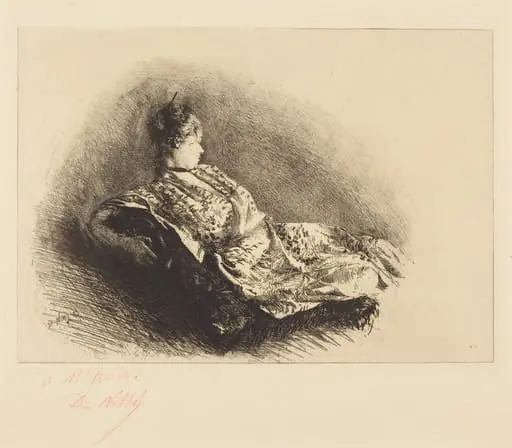
De Nittis employed etching for fine lines and drypoint for rich, scratchy textures, creating a tactile surface that mimics the softness of fabric and the subtlety of shadow. The paper’s laid texture enhances the sketchlike quality, while deliberate smudging and uneven ink distribution give the image an unfinished, atmospheric feel—more a study than a polished final print.
History & Provenance
As a proof, this impression likely predates any published edition, possibly used by the artist to test tonal effects or compositional adjustments. De Nittis, active in both Rome and Paris, produced numerous prints during the 1870s as part of his broader exploration of modern life. This work remains within the circle of his personal printmaking experiments, with no known early public exhibition record.
Context
In the 1870s, Italian artists like De Nittis were increasingly influenced by French Impressionism and the growing interest in printmaking as an independent art form. While his paintings often engaged with Salon aesthetics, his prints reveal a more intimate, experimental approach—echoing contemporaries like Degas in their focus on informal poses and quiet urban subjects.
Legacy
Though less known than his paintings, De Nittis’s prints contributed to the revival of etching in late 19th-century Italy. This work exemplifies how artists used printmaking not for mass reproduction, but as a direct medium for observation—valuing immediacy and material nuance over finish. It remains a quiet testament to his engagement with modern visual culture.
Artist & collection
Artist
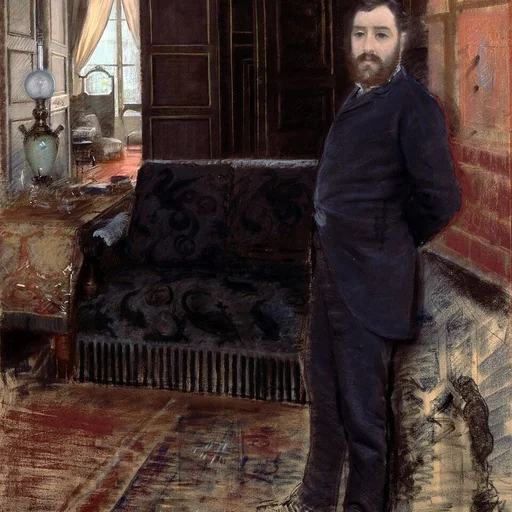
Giuseppe De Nittis (February 25, 1846 – August 21, 1884) was one of the most important Italian painters of the 19th century, whose work merges the styles of Salon art and Impressionism.