Artwork
Portrait of Madame de Nittis ("Attenzione")
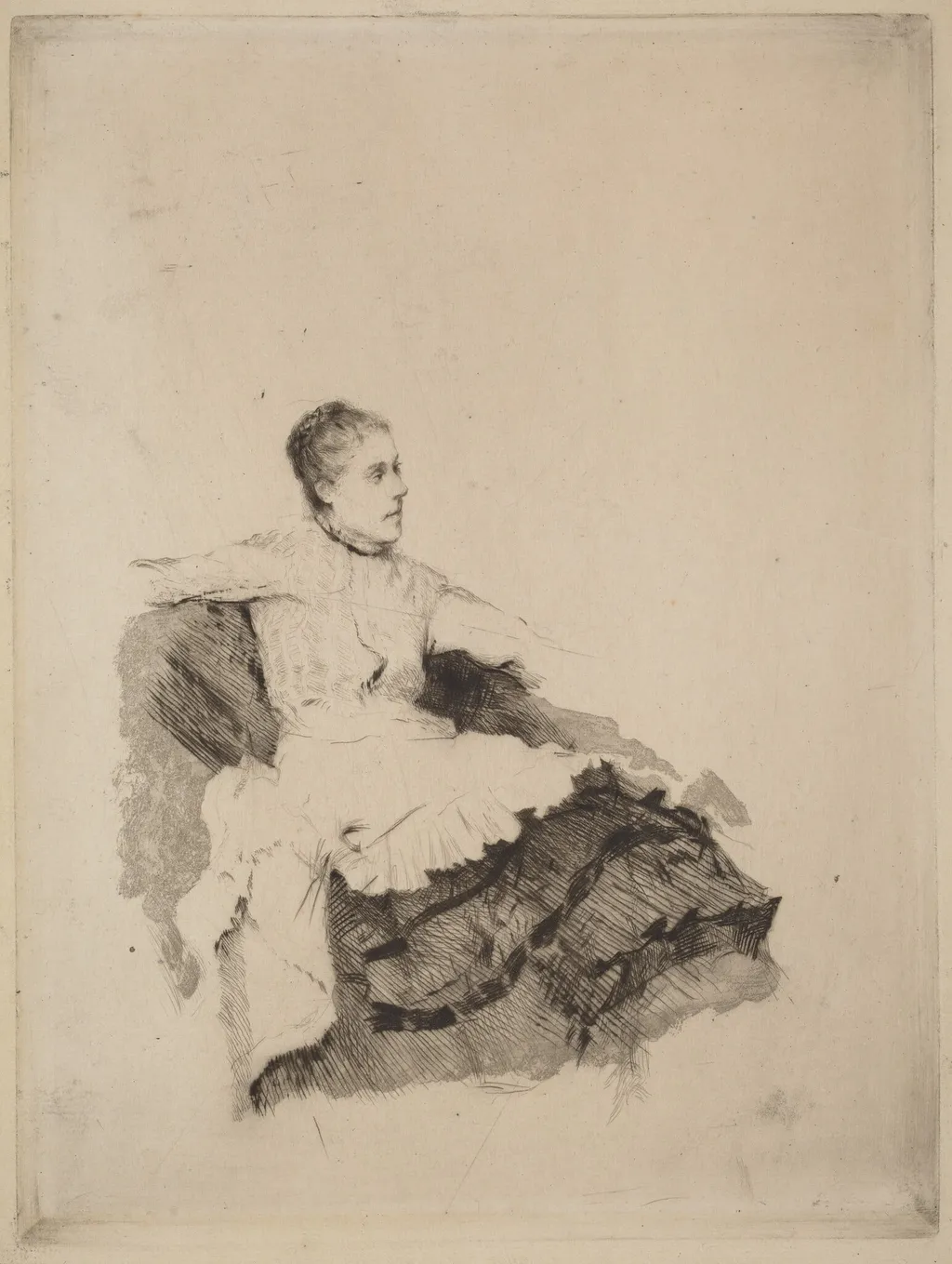
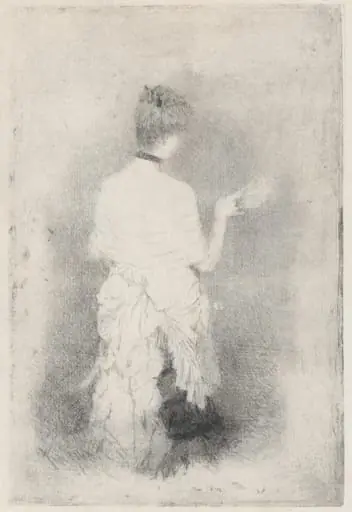
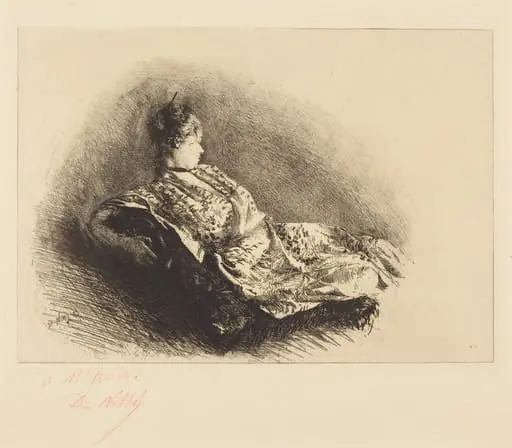
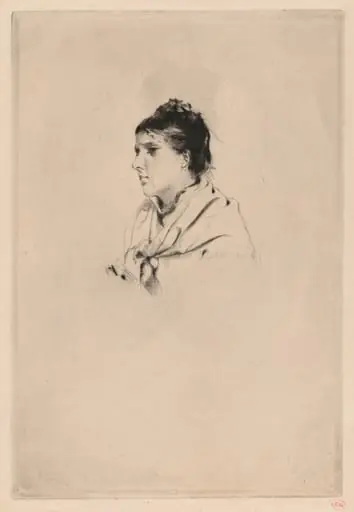
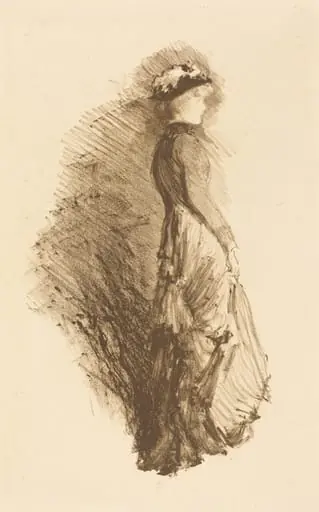
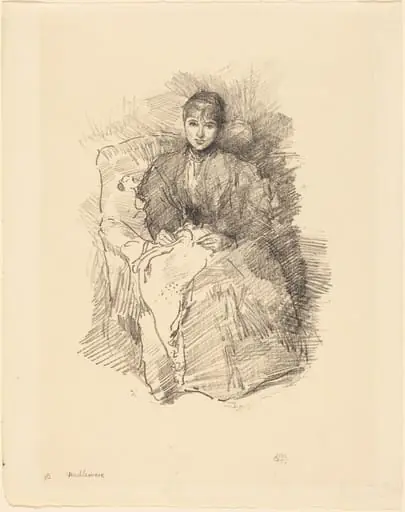
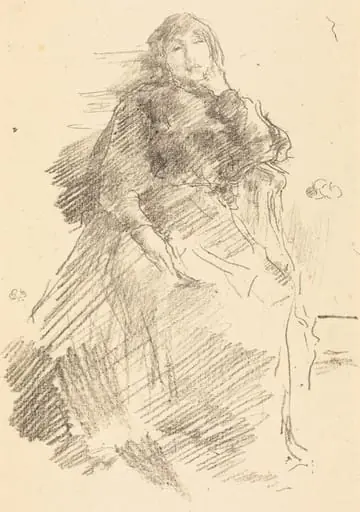
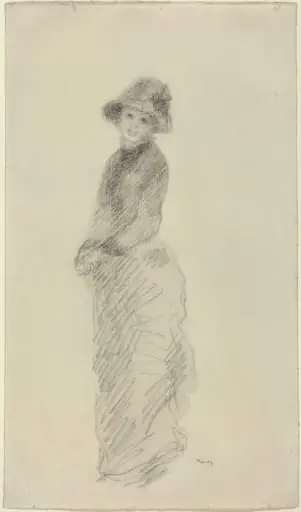
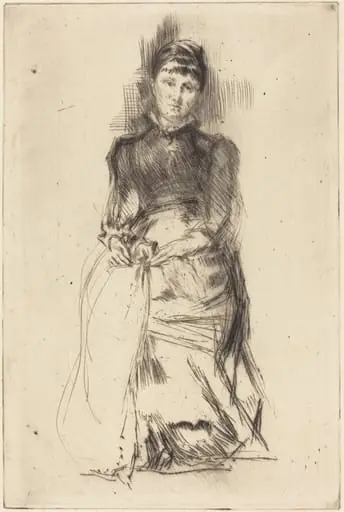
Portrait of Madame de Nittis ("Attenzione") is an ink print by the Impressionist artist Giuseppe De Nittis. It dates from 1874 and is held in the collection of the National Gallery of Art.
About this work
Overview
Its intimate scale and delicate handling distinguish it from his larger oil paintings, offering a quieter, more personal expression of his artistic concerns.
Created in 1874, this print by Giuseppe De Nittis portrays his wife using a combination of etching, drypoint, and lavis on laid paper. The work belongs to a body of graphic art that reflects De Nittis’s engagement with both academic traditions and emerging modern sensibilities. Its intimate scale and delicate handling distinguish it from his larger oil paintings, offering a quieter, more personal expression of his artistic concerns.
Subject & Meaning
The sitter is the artist’s wife, captured in a moment of quiet attentiveness. Her profile is turned slightly, the dark hat framing her face without obscuring its subtlety. The title, 'Attenzione,' suggests a suspended awareness—perhaps of the artist’s gaze, or an internal reflection. The image avoids theatricality, instead conveying presence through restraint, making the viewer aware of a private, unposed moment.
Technique & Style
De Nittis layered etching for fine linear structure, drypoint for rich, fuzzy darks, and lavis washes to create soft tonal gradients. The paper’s subtle grid texture emerges through the ink, adding a tactile quality akin to fine lace. The contrast between sharp, incised lines and blurred, atmospheric shadows produces a sense of depth without heavy modeling, aligning the work with emerging tonal approaches in printmaking.
History & Provenance
The print was made during De Nittis’s years in Paris, where he lived alongside French Impressionists and participated in their exhibitions. Though not widely exhibited at the time, it remained in the artist’s circle and was later acquired by institutions interested in 19th-century Italian graphic art. Its survival in good condition reflects its careful handling within private and museum collections.
Context
In the 1870s, Italian artists like De Nittis navigated between the expectations of the Salon and the innovations of French modernism. This etching reflects that tension: its subject is traditional, yet its technique—emphasizing light, texture, and spontaneity—echoes contemporary print experiments in Paris. It stands as a quiet counterpoint to the grand narratives favored in Italian academic circles.
Legacy
Though less known than his paintings, this print exemplifies De Nittis’s skill in graphic media and his ability to convey psychological nuance through minimal means. It influenced later Italian printmakers seeking to merge intimate subject matter with experimental techniques. Today, it is recognized as a significant example of how 19th-century Italian artists engaged with modern printmaking beyond national boundaries.
Artist & collection
Artist
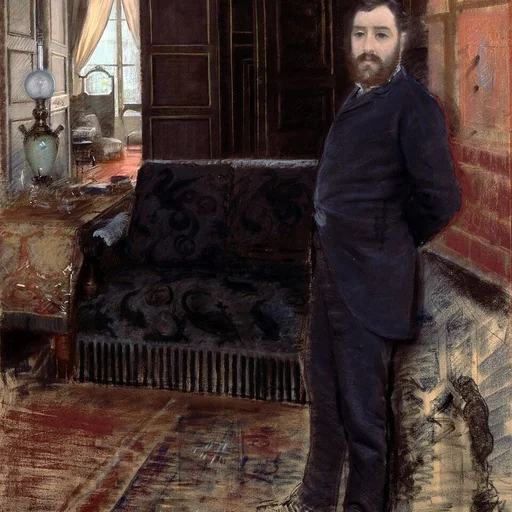
Giuseppe De Nittis (February 25, 1846 – August 21, 1884) was one of the most important Italian painters of the 19th century, whose work merges the styles of Salon art and Impressionism.