Artwork
Avenue du Bois de Boulogne, Paris
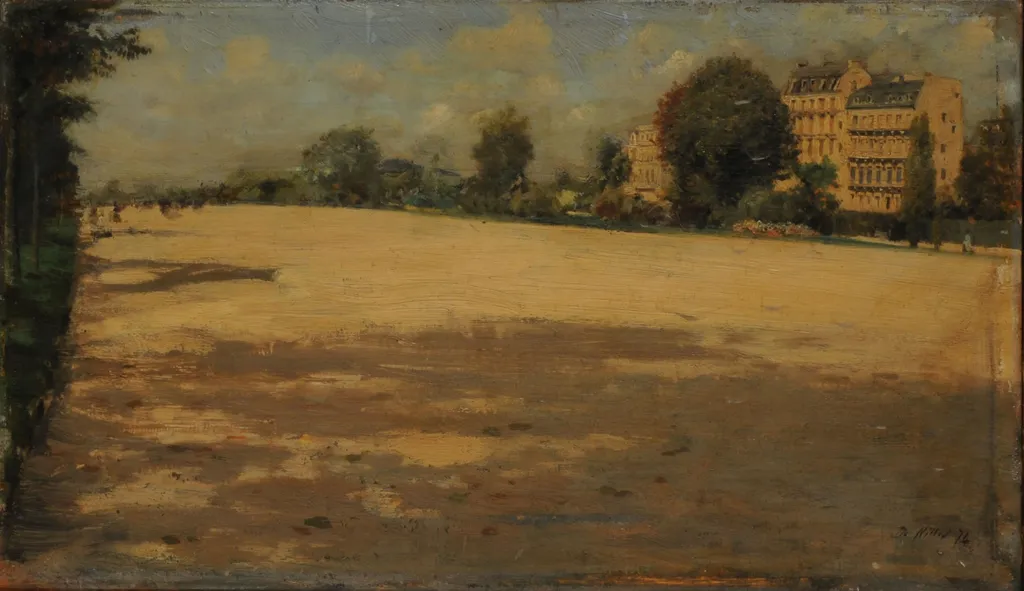
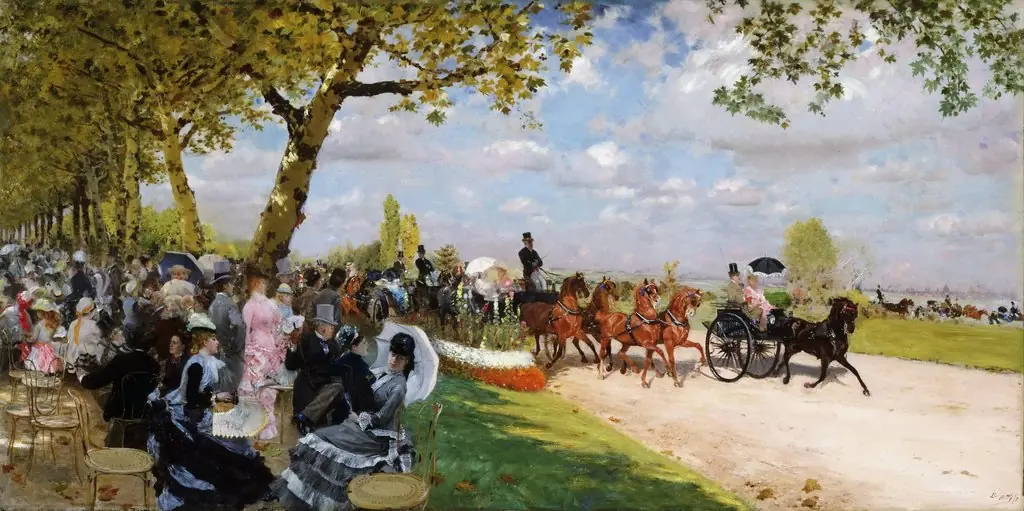
Avenue du Bois de Boulogne, Paris is an oil painting by the Impressionist artist Giuseppe De Nittis. It dates from 1874 and is held in the collection of the National Museum of Fine Arts, Argentina.
About this work
Overview
The composition presents a spacious, light‑toned street that recedes into a hazy horizon, bordered by a line of trees and modest buildings.
Giuseppe De Nittis painted *Avenue du Bois de Boulogne, Paris* in 1874, employing oil on canvas to capture a broad Parisian thoroughfare. The composition presents a spacious, light‑toned street that recedes into a hazy horizon, bordered by a line of trees and modest buildings. A muted, cloud‑filled sky dominates the upper field, while the overall palette leans toward warm browns and yellows, giving the scene a subdued, atmospheric quality.
Subject & Meaning
The work portrays a segment of Avenue Foch, then part of the Bois de Boulogne, emphasizing the quiet, almost deserted character of the urban landscape. By focusing on the interplay of light on the pavement and the shadowed foliage, De Nittis suggests a moment of stillness within the bustling capital, inviting contemplation of the city's peripheral spaces rather than its crowded centers.
Technique & Style
De Nittis combines the refined finish associated with Salon painting with the looser brushwork and fleeting light effects typical of Impressionism. The handling of oil creates soft transitions between the pale street surface and the darker architectural forms, while the cloudy sky is rendered with delicate, layered strokes that convey atmospheric depth without precise detail.
History & Provenance
Since its creation, the canvas has been part of the National Museum of Fine Arts in Buenos Aires. The museum acquired the painting as part of its 19th‑century European collection, where it remains on display, representing De Nittis’s transnational career and the broader exchange of artistic ideas between Italy, France, and South America.
Context
Executed during a period when De Nittis was integrating French Impressionist techniques into his Italian training, the painting reflects the artist’s exposure to Parisian artistic circles in the early 1870s. The choice of a suburban avenue, rather than a bustling boulevard, aligns with contemporary interests in everyday scenes and the effects of natural light on urban environments.
Artist & collection
Artist
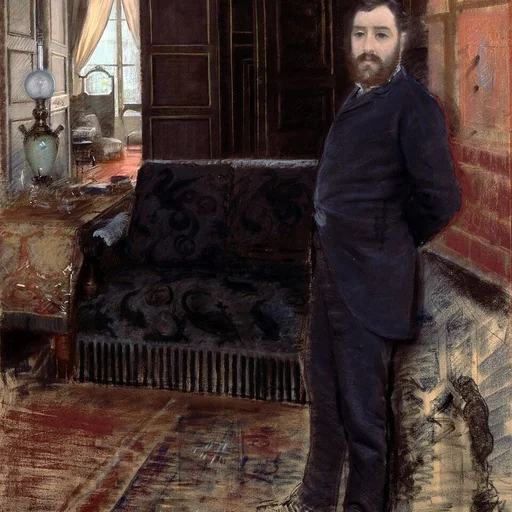
Giuseppe De Nittis (February 25, 1846 – August 21, 1884) was one of the most important Italian painters of the 19th century, whose work merges the styles of Salon art and Impressionism.

Museum
National Museum of Fine Arts, Argentina
Continue through works from the same source collection.