Artwork
Tutbury Castle, Staffordshire
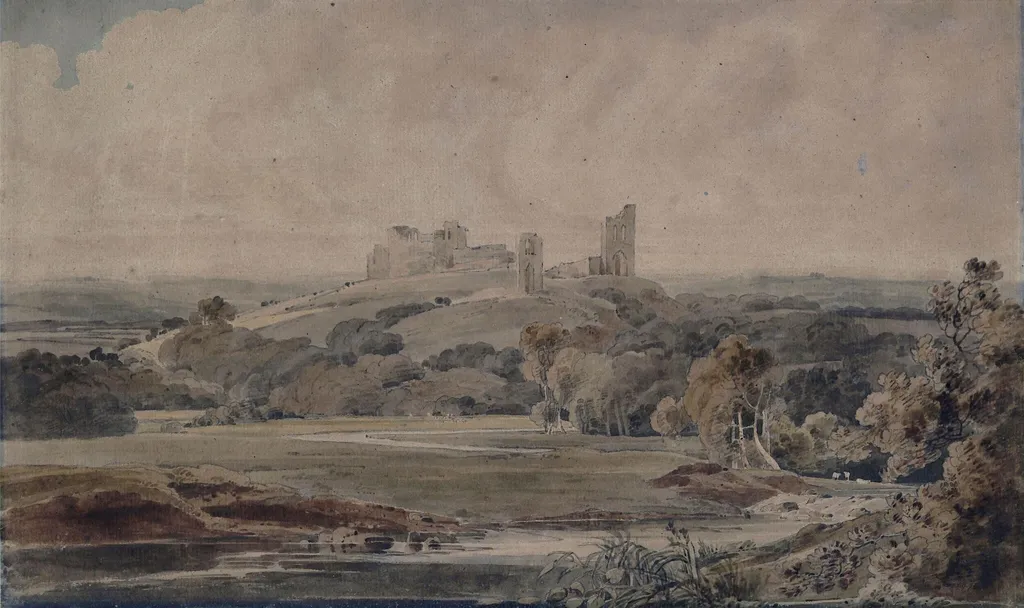
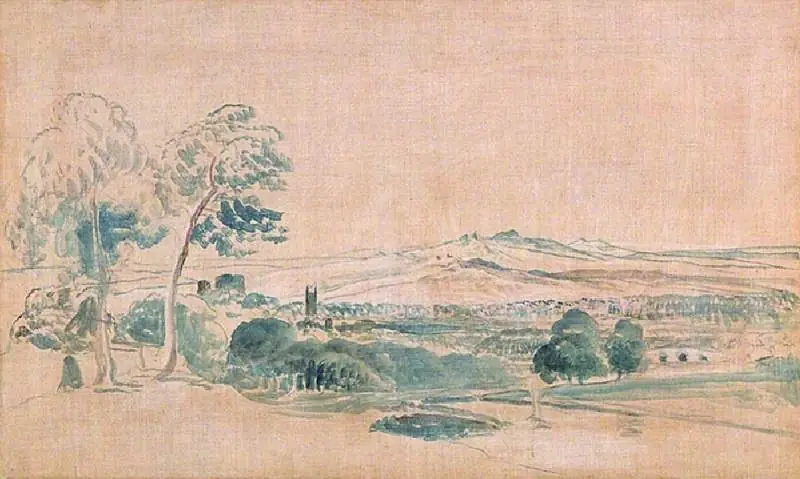
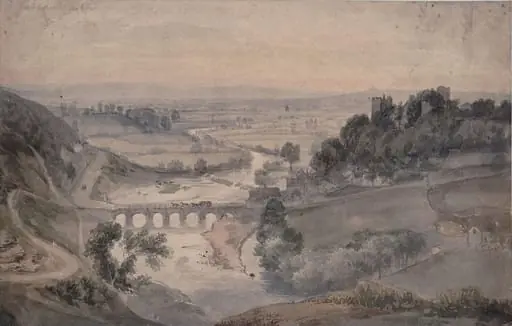
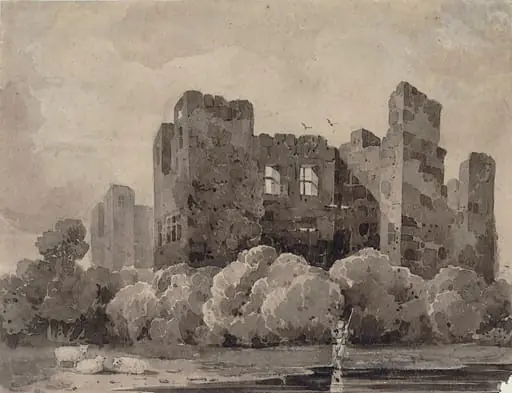
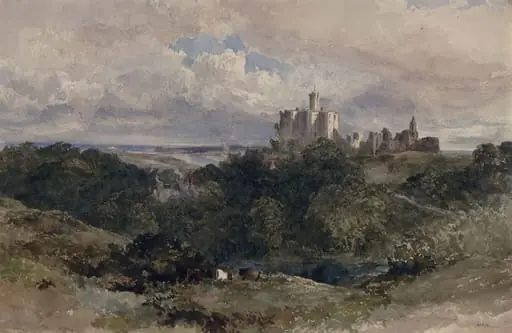
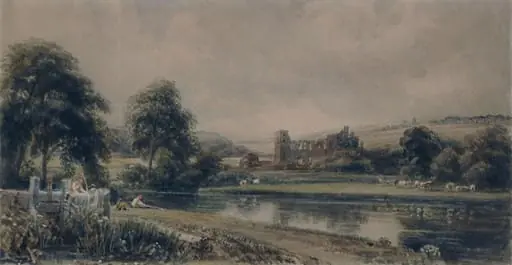
Tutbury Castle, Staffordshire is a watercolor work on paper by the Romanticist artist Peter De Wint. It dates from 1805 and is held in the collection of the Victoria and Albert Museum.
About this work
Overview
Soft washes of muted earth tones—ochres, greys, and pale greens—convey a subdued atmosphere, avoiding dramatic contrast in favor of atmospheric harmony.
Painted in 1805 by Peter de Wint, this watercolour depicts Tutbury Castle in Staffordshire as a weathered ruin nestled on a gentle rise. The composition emphasizes stillness and decay, with the castle’s fragmented stonework rising above a quiet rural expanse. Soft washes of muted earth tones—ochres, greys, and pale greens—convey a subdued atmosphere, avoiding dramatic contrast in favor of atmospheric harmony.
Subject & Meaning
The castle, once a seat of medieval power, appears absorbed into the landscape, its structural remnants softened by time and vegetation. De Wint presents it not as a monument to glory, but as a quiet witness to history’s passage. The absence of human figures and the gentle curvature of the river suggest a landscape untouched by urgency, inviting contemplation over narrative.
Technique & Style
De Wint employed transparent watercolour washes to build subtle tonal gradations, allowing the paper’s white to suggest light filtering through overcast skies. Delicate linework outlines architectural fragments without sharp definition, reinforcing the sense of erosion. The palette is restrained, avoiding vivid hues to preserve the scene’s somber, introspective mood.
History & Provenance
Created during de Wint’s early career, the work reflects his interest in topographical accuracy tempered by poetic sensibility. It likely stemmed from a sketching tour of the English Midlands, a common practice among artists of the period. The painting remained in private hands until entering a public collection, where it now serves as a record of the castle’s condition in the early 19th century.
Context
In the early 1800s, Romantic artists increasingly turned to ruins as symbols of transience and the sublime in nature. Tutbury Castle, though not a grand ruin like Tintern Abbey, fit this emerging aesthetic—its quiet decay resonated with contemporary ideals of melancholy beauty and the passage of time, aligning with broader cultural shifts in how history was visually interpreted.
Legacy
De Wint’s treatment of Tutbury Castle exemplifies a shift from topographical documentation to lyrical landscape. His restrained technique influenced later British watercolourists who favored emotional resonance over architectural precision. The work endures as a quiet testament to the period’s evolving relationship between land, memory, and the passage of time.
Artist & collection
Artist
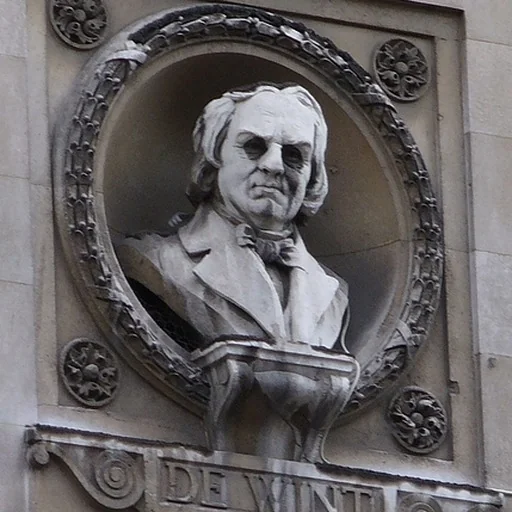
Peter De Wint was a prolific English painter, mostly in landscape painting in oils and watercolour. A number of his pictures are in Tate Britain, the Victoria and Albert Museum and The Collection, Lincoln. He died in London.