Artwork
Dunster, Somerset?
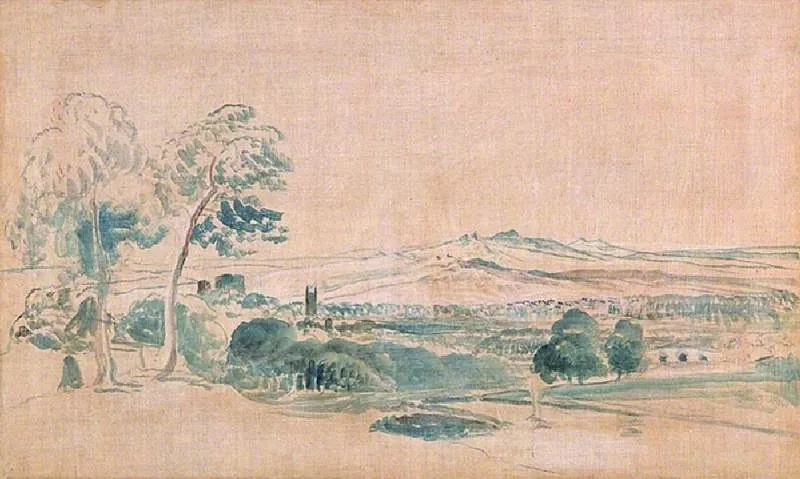
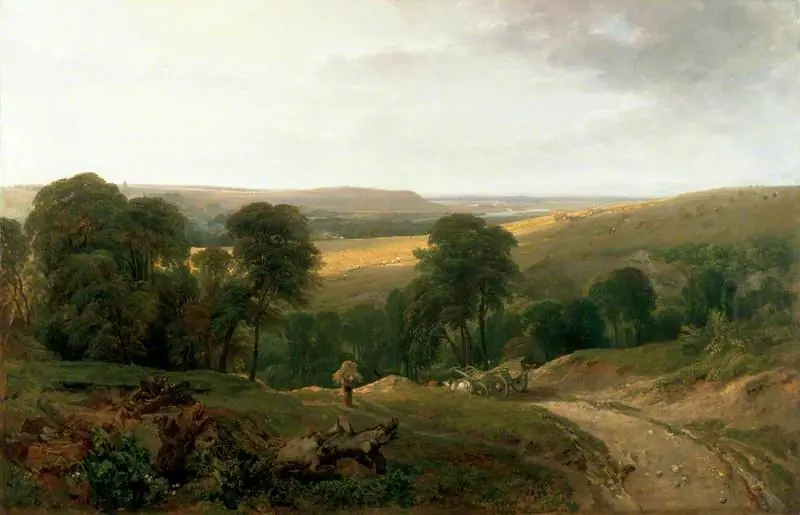
Dunster, Somerset? is an oil painting by Peter De Wint. It dates from 1848 and is held in the collection of the Fitzwilliam Museum.
About this work
Overview
Peter De Wint’s oil on canvas, dated 1848, portrays a tranquil rural landscape that is believed to represent the area around Dunster in Somerset. The work is part of the Fitzwilliam Museum’s collection, where it is displayed among other 19th‑century British paintings.
Subject & Meaning
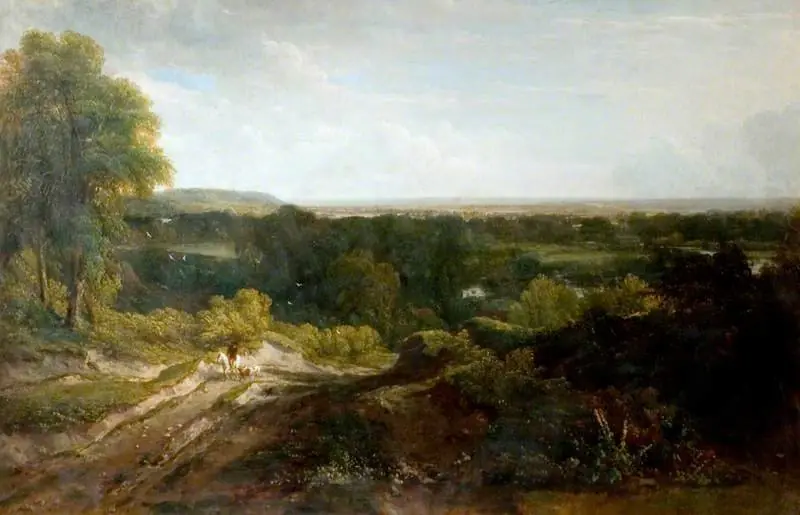
The composition features gently undulating hills and a scattering of trees that lead the eye toward a distant architectural silhouette, likely a castle or church, anchoring the scene in a specific locale. The quiet atmosphere suggests an appreciation of the English countryside’s modest beauty rather than dramatic narrative.
Technique & Style
De Wint employs a restrained palette of muted tones, applying oil paint with soft, blended brushwork that creates a sense of atmospheric depth. The delicate handling of light and shadow gives the hills a hazy, almost lyrical quality, characteristic of his landscape approach in the mid‑1800s.
History & Provenance
Created toward the end of De Wint’s career, the painting entered the Fitzwilliam Museum’s holdings through acquisition in the early 20th century. Its provenance prior to museum ownership is not extensively documented, but it has remained attributed to De Wint since its first cataloguing.
Context
During the 1840s, British artists increasingly turned to domestic scenery, emphasizing the pastoral charm of regions like Somerset. De Wint’s work aligns with this trend, reflecting contemporary interests in regional identity and the serene qualities of the English landscape.
Artist & collection
Artist
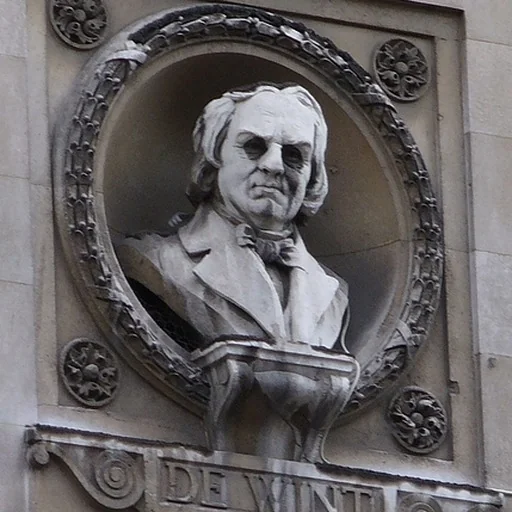
Peter De Wint was a prolific English painter, mostly in landscape painting in oils and watercolour. A number of his pictures are in Tate Britain, the Victoria and Albert Museum and The Collection, Lincoln. He died in London.

 The Thames, with Eton College and chapel
 Charterhouse School, Godalming
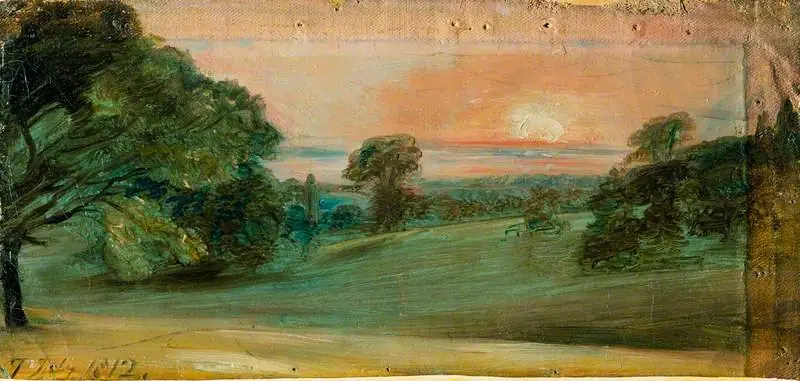 A Landscape near East Bergholt, Evening
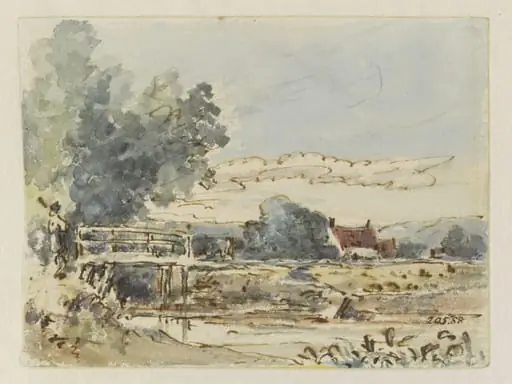 A bridge over a stream, with a cottage behind
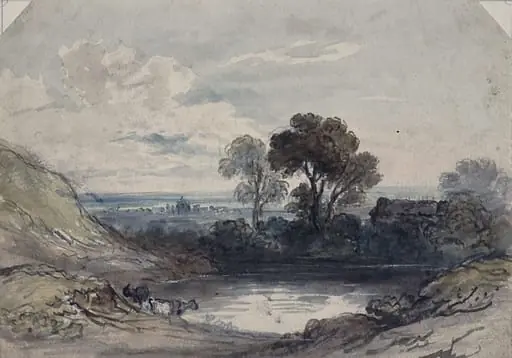 London from Hampstead Heath
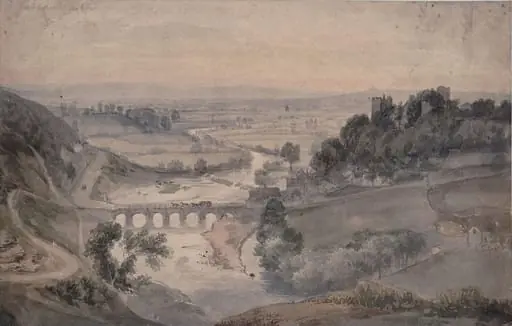 Ludlow Castle, overlooking the River Teme
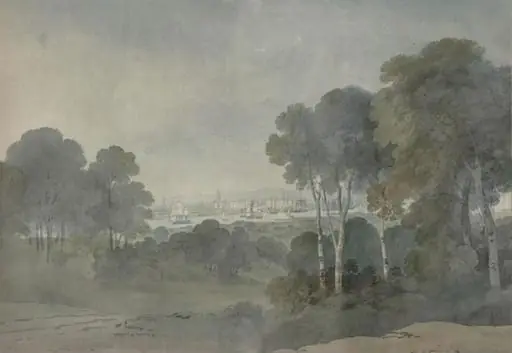 The Thames from Charlton
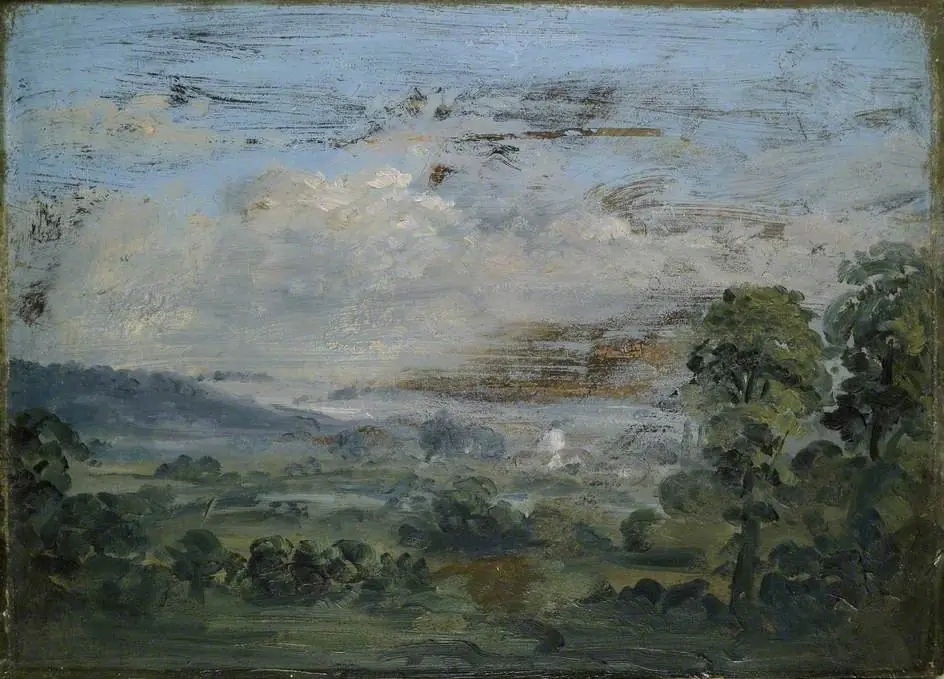 Britford Vale and Church
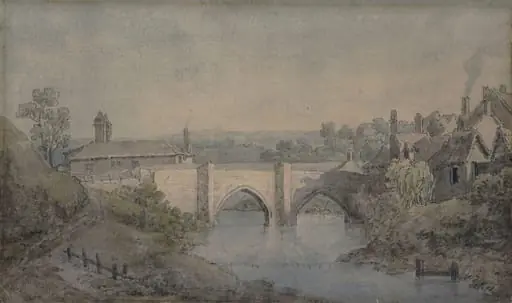 Bishop Gate Bridge, Norwich
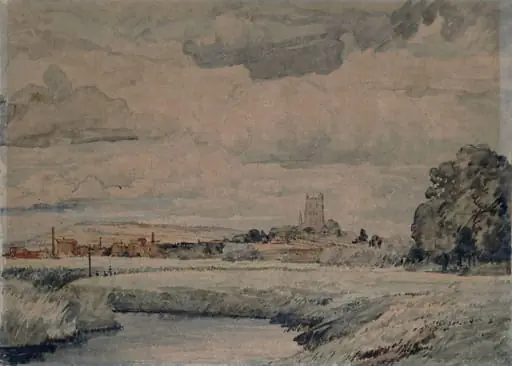 On the Avon
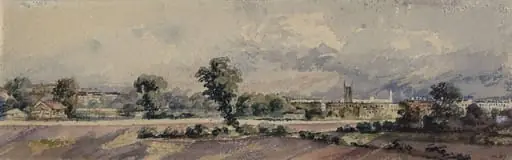 View from Gore Lane, Kensington, showing St. Luke's Church, Chelsea
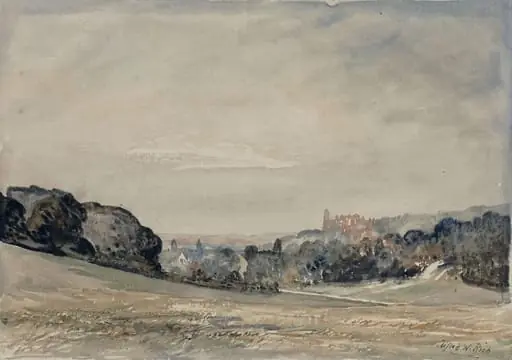 Berkhamsted