Artwork
Café-Concert
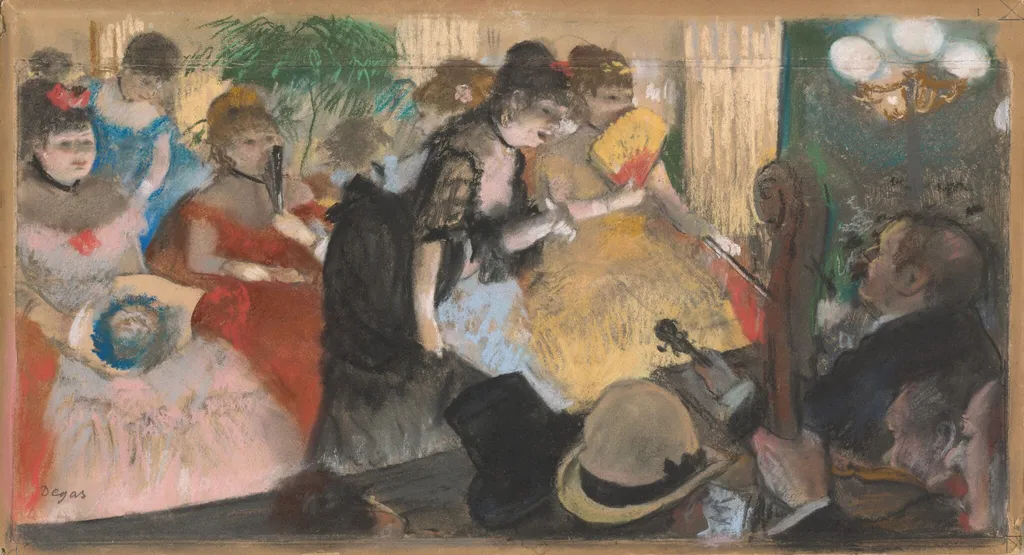
Café-Concert is a pastel drawing by the Impressionist artist Edgar Degas. It dates from 1876 and is held in the collection of the National Gallery of Art.
About this work
Overview
Created in 1876, *Café‑Concert* is a drawing by the French artist Edgar Degas. Executed on tan laid paper mounted on board, the work combines pastel, monotype and charcoal applied with fan‑shaped sticks. Though often linked to Impressionism, Degas identified himself more closely with realist concerns, focusing on contemporary urban life rather than natural scenery.
Subject & Meaning
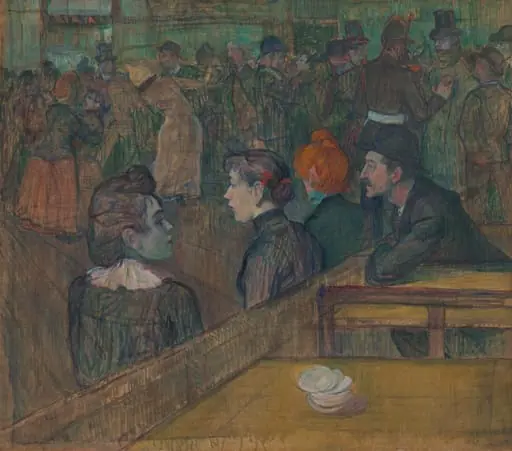
The composition captures a moment inside a Parisian café‑concert, a popular venue for music and socializing in the late nineteenth century. By depicting patrons in a relaxed, informal setting, Degas emphasizes the everyday leisure activities of the city’s middle class, reflecting his broader interest in the rhythms of modern urban existence.
Technique & Style
Degas employed a layered approach: a printed monotype provides a tonal foundation, over which he built delicate pastel washes and charcoal lines. The use of fan‑shaped charcoal sticks creates soft, gestural marks that suggest movement and atmosphere. This hybrid method illustrates his experimental handling of drawing materials, merging printmaking’s immediacy with the tactile qualities of pastel.
History & Provenance
The work was produced during Degas’s mid‑career, a period marked by intensive exploration of indoor scenes and performance spaces. It entered private collections shortly after its completion and later passed through several European dealers before being acquired by a museum in the early twentieth century, where it remains in the drawing department.
Artist & collection
Artist
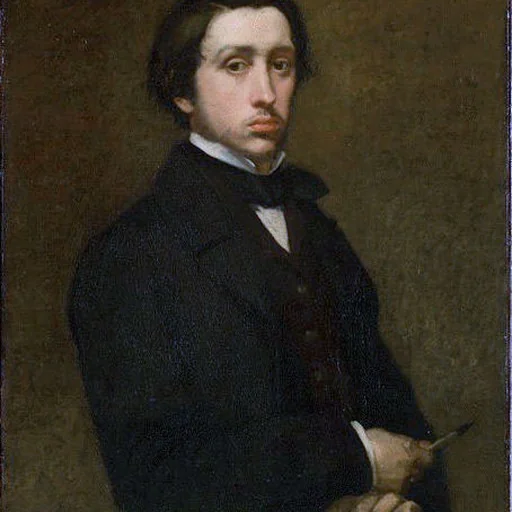
Born Hilaire-Germain-Edgar De Gas on 19 July 1834 in Paris, Edgar Degas came from an affluent banking family with aristocratic roots and spent his childhood among the cultivated circles of the French capital.