Artwork
At the Moulin Rouge
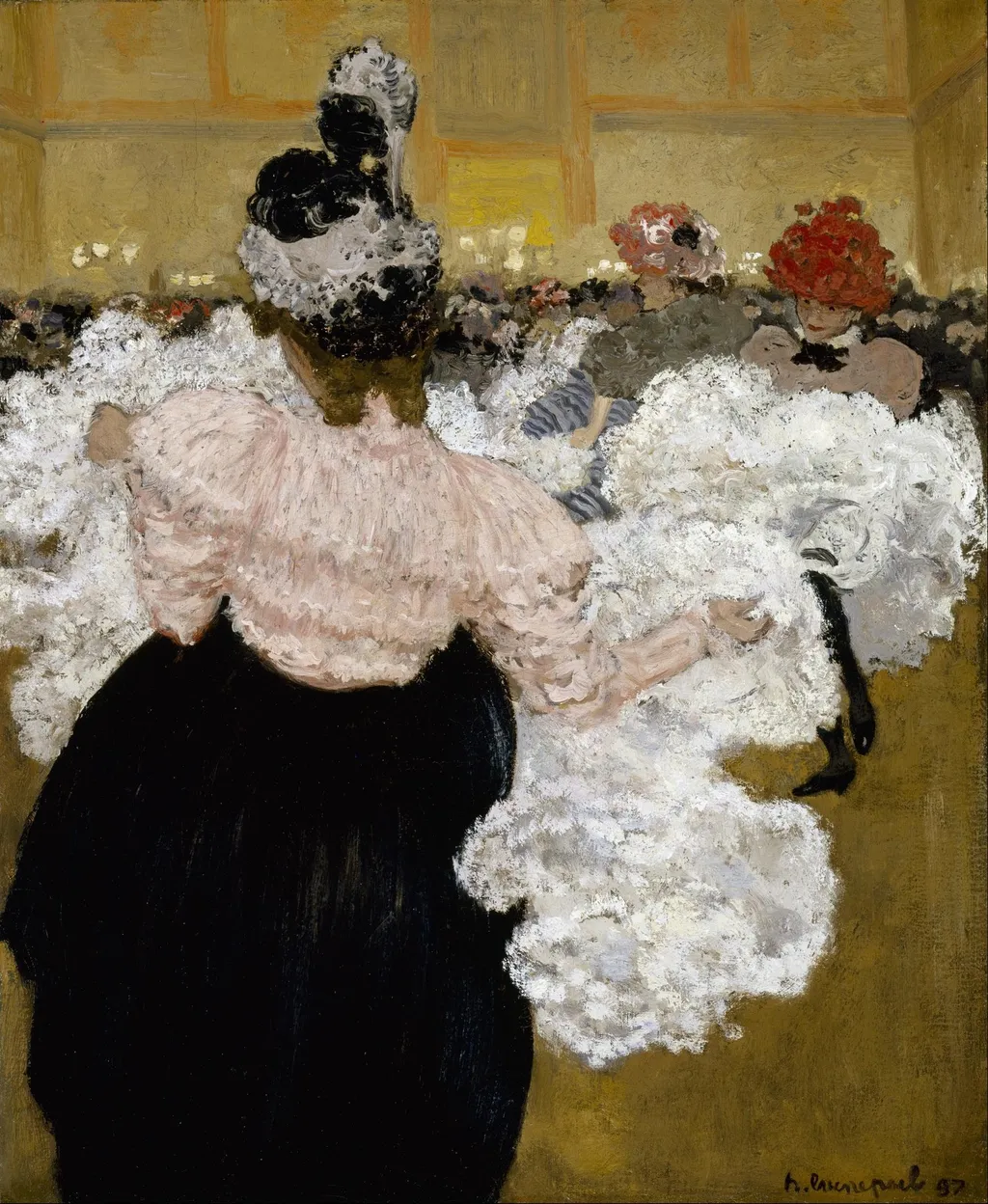
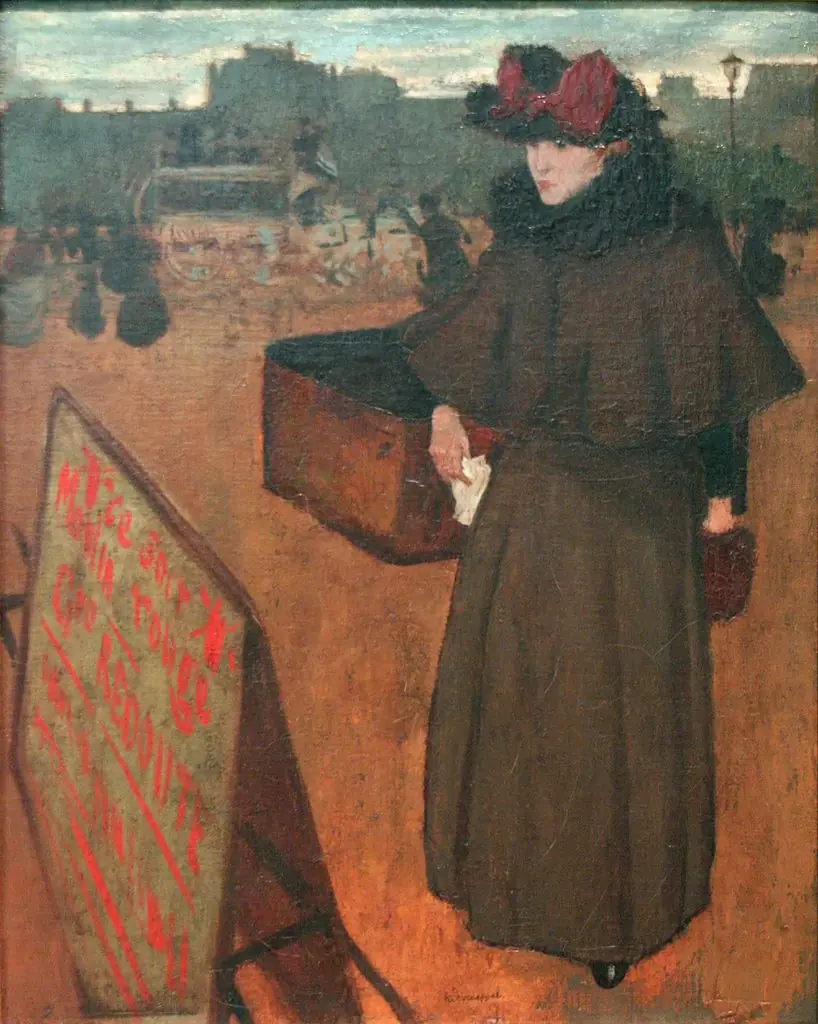
At the Moulin Rouge is an oil painting by the Post-Impressionist artist Henri Evenepoel. It dates from 1899 and is held in the collection of the Museum of Fine Arts, Houston.
About this work
Overview
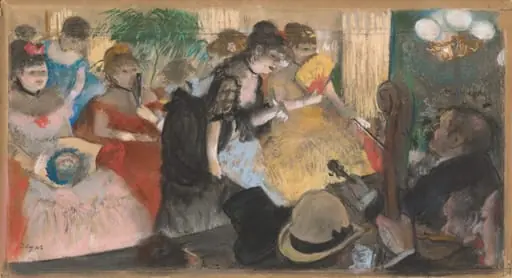
At the Moulin Rouge, created in 1899, is an oil painting by Henri Evenepoel, often categorized under Post-Impressionism. The work captures a scene from the renowned Parisian cabaret, the Moulin Rouge.
Subject & Meaning
The painting focuses on a woman in a distinctive black dress and pink, ruffled top, positioned with her back to the viewer, amidst a crowd of formally attired individuals. Her attire contrasts sharply with the subdued tones of the onlookers, drawing attention and possibly symbolizing individuality within a gathering.
Technique & Style
Evenepoel employs a vibrant color palette, notably yellow walls, to evoke the dynamic atmosphere of the Moulin Rouge. The composition conveys energy and movement, characteristic of the transitional period towards Fauvism, a movement more prominently associated with the artist's other works.
History & Provenance
Henri Evenepoel, a French-born Belgian artist, created this work at the age of 27, a year before his death. The painting is currently part of the Museum of Fine Arts, Houston's collection.
Context
Painted in 1899, At the Moulin Rouge reflects the artistic shift towards expressive, vibrant representations of modern life in late 19th-century Paris, where venues like the Moulin Rouge embodied the era's cultural and social vibrancy.
Legacy
While Evenepoel's career was short-lived, At the Moulin Rouge stands as a testament to his contribution to the evolution of Post-Impressionist and early Fauvist aesthetics, capturing the essence of a pivotal moment in Parisian artistic and social history.
Own this work as a print
Artist & collection
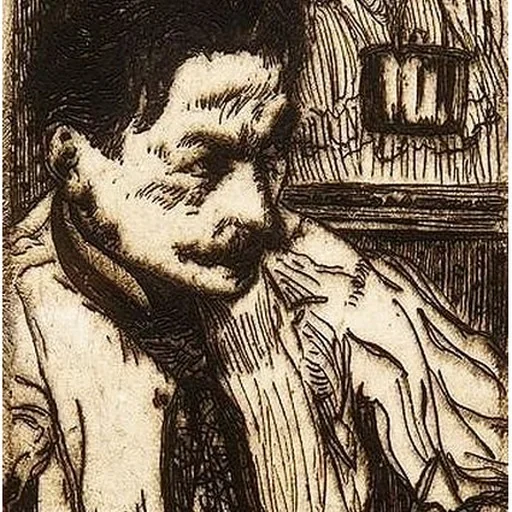
Artist
Henri-Jacques-Edouard Evenepoel (3 October 1872 – 27 December 1899) was a French-born Belgian artist whose most important works are associated with Fauvism.